Looking for Metal Roof Repair Here in Holly Hill Florida?
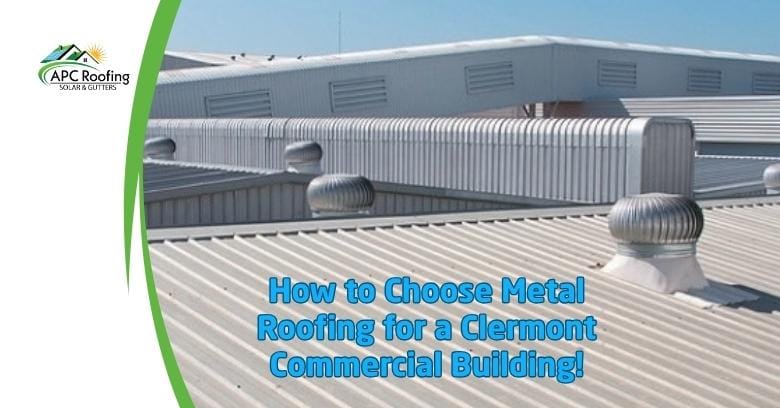
APC Roofing puts up and mends screw-down sheet and clip-held panels, from a pole barn to a family home.
Call 386-356-2111 and you will hear in plain words what condition the roof is in.
Telling Systems Apart: Hints in Plain Sight
Corrugated and ribbed sheet is held down by screws driven straight through the metal, while standing seam is clipped down beneath upright folds. Nearly every residential job uses coated steel, with aluminum and copper turning up less often.
A glance from a lawn at lines of screw heads points to a through-fastened roof, and smooth pans between tall ribs with nothing poking through are standing seam. Barns, workshops and porches often wear corrugated or ribbed sheet, and houses carry both styles.
The Cross-Section – Reach Between Supports
Corrugated sheet rises and falls in rounded, evenly spaced waves, while ribbed panels carry squared ribs with wide flats between. One length rides over a neighbor at a side lap, and fastener placement follows a published pattern.
Ribbed stock is stiffer and spans further between supports, and corrugated remains popular for a traditional farm look. Rib height governs how much water a long slope can move, while a low pattern handles short runs like a porch or lean-to.
Hardware in the Weather: Every Detail Counts
Each screw draws a panel snug against a rafter or purlin, and a washer under each head keeps rain out. Rubber in steady sunlight hardens and cracks with age, though the coated metal nearby stays sound far longer.
Driving a screw past snug crushes a washer and dimples the metal, and a shallow or off-square setting never seals fully.
Fresh Fasteners: Scope and Limits
On corrugated or ribbed sheet, every washer ages at one pace, so a complete re-screw comes due at some point. Every existing fastener is removed, and a wider replacement goes back in where threads can still find purchase.
A full re-screw with new washers closes leaks at each head and tightens loose sheets, but rust damage, open laps and failed flashing are untouched. Thread type follows whatever support lies below, since lumber and steel purlins take different screws, and color-matched tops blend in with a painted finish.
A Covering in Motion – Built to Allow Travel
A steel panel stretches in sunshine and draws in after dark, and a long run adds up to a measurable distance, while aluminum goes about double. A panel pinned at both ends slowly slots every screw opening, and water gets past a washer.
Popping and clicking on a sunny morning is expansion at work, and a roof built with slack is unharmed.
Under Upright Joints – Laid in Sequence
A long pan is locked down at a single band, while floating clips elsewhere allow the pan to slide. Trim at an unanchored end leaves a gap for travel, while a pan fastened hard along every foot pulls loose or ripples.
A pan is positioned and clips are screwed to the deck beside a long edge, so no fastener head is left out in the weather.
How Seams Close: Choosing Between Options
Snap-together panels latch by hand, and heavier-duty versions are folded over by a motorized tool. Double-lock construction resists uplift and ponding, and a gentler pitch is allowed.
Profiles come in different widths and heights, and building shape and personal taste steer a buyer. Parts made for one system rarely suit a rival brand, so any repair hinges on knowing exactly which panel is installed.
Heavier and Lighter Stock: Reading a Label
A steel panel is rated by gauge, and a lower figure means more metal per sheet. A shop or barn frequently has twenty-nine, while houses often take twenty-six or twenty-four.
Aluminum is called out in decimal inches, and in either metal thicker stock dents less and lies flatter. From the ground, light and heavy metal look alike, so a label or order sheet is what gets checked.
Factory Protection: What Lasts
At a steel mill, coil gets a metallic layer of zinc or zinc and aluminum, and baked-on primer and color follow. Scrapes confined to paint are harmless, whereas a gouge through to bare metal soon shows red.
High-end fluoropolymer finishes keep a bright look for years, while polyester grades dull faster in strong sun. An aluminum-zinc surface is damaged by contact with fresh mortar, and a separator goes wherever panels touch new brick.
Weighing Options – Trade-Offs
Aluminum carries less weight and does not redden, but a dropped tool or a falling branch dents a soft sheet sooner. Along the coastal end of our service area, salt in the air shortens the life of zinc-based coatings, so a marine-grade finish is often chosen for homes near a beach.
Copper appears mainly as small roofs on bays and cupolas, and years outdoors take bare metal to brown and then green.
Metals That React: A Slow Chemical Fight
Water that has crossed copper wears away any steel coating below, and a dark streak shows long before any hole. Pressure-treated framing corrodes aluminum laid directly on top, and fasteners of an unsuited metal leave a ring of damage.
Flashing added later should match whatever metal is already installed, or tape and membrane keep dissimilar metals from meeting.
An Appearance Question: Choices That Help
Oil canning means a slight bow in a wide stretch between seams, and faint hollows show at sunrise and fade by noon. A slightly distorted pan sheds rain like any other, and the roof lasts no less.
Thicker metal, a slimmer width and striations rolled into every pan tame rippling, and an even deck beneath helps as well. Pictures of houses with and without oil canning make comparison easy, and you make the call on profile.
Indoor Comfort – Sound and Temperature
Panels laid straight over bare purlins ring out in a downpour, because a single thin skin vibrates freely. Metal on a home rests on a deck and underlayment, over an insulated ceiling, and in a living room few can pick out any change from shingles.
A white, tan or light gray panel turns back much glare, and the attic beneath stays cooler on a summer afternoon. Deep shades absorb as much as dark asphalt, and ventilation and insulation underneath matter as much as finish. Panels cool fast at nightfall, and the attic eases off soon afterward.
Guard Rows – Only Where Needed
Across the colder end of our territory, snow does not cling to painted steel, and a slab arriving all at once can injure someone or rip a gutter off. Rows of cleats hold a load back until melting clears the roof, and hardware sits over entries, paths and meters.
A standing seam roof gets brackets that squeeze an upright joint rather than pierce a pan, while exposed-fastener sheet takes mounts screwed into framing, and in our warmer markets a house goes without.
Pounding From the Sky – A Record of What Happened
Hail is a fact of life at the colder end of our service area, and panels with an impact rating are an option. A crease that cracks paint exposes bare metal to rust, and a bent seam or a dislodged trim piece can let water in.
After a storm, we photograph and measure what we find, so the extent of damage is clear.
Holding On in a Gale – Rated Assemblies
Suction gathers along rakes and eaves, and a blast under a raised lip can tear a panel away. Finish trim is hemmed and caught on a cleat, so nothing sticks out to be grabbed.
Screw and clip spacing tightens at corners and around a perimeter, following a maker's layout for a site's exposure. On the hurricane coast at the far end of our territory, fastening counts rise again, and only systems with a high wind rating qualify.
Breaking Through the Metal: Detail Work
Each pipe takes a boot made for panel roofs, with a base pressed to follow corrugations, and placement is down in a pan rather than on a crest. Larger units get a raised curb plus a cricket on an uphill side, and water cannot pool at an upper edge.
Sealant finishes a joint already made watertight by folded metal, because a compound shrinks and pulls away with time.
Meeting Planes: Made to Shed
Each valley receives a wide flashing before panels arrive, and sheets are cut on a diagonal to suit. Exposed ends are bent back and gripped by cleats, so no fastener sits where water collects.
On a run too long for one sheet, an endlap joins pieces with sealant between, and screws pass through both thicknesses, upper over lower.
Near-Flat Areas: Gentle Spots on a House
Screw-down panels typically call for roughly three in twelve, and on a gentler slope, overlaps start to let water through. A mechanically locked seam can be installed far lower, with certain lines suited to decks that are nearly flat.
Many homes have a gentle stretch over a porch or a later addition, and a measured angle decides what goes on, and where metal does not belong, a membrane does.
Under Everything – Purlins on Outbuildings
Metal on a dwelling is installed over full sheathing, and a high-temperature synthetic underlayment goes between, as asphalt felt turns brittle up there. An outbuilding may have nothing but purlins under the metal, and distance between supports sets a minimum gauge.
On a tear-off, soft or rotted boards are cut out and replaced, because screws in decay have nothing to grip.
When the Old Roof Stays – Battens and Underlayment
Panels can often go on top of one shingle layer where code permits, and noise and a dumpster are avoided. New steel adds well under two pounds per square foot, and ordinary framing copes without trouble. Battens on top of a synthetic membrane are laid across existing shingles, and screws reach through into solid wood.
A second layer already in place, soft decking or stains from past leaks mean a full tear-off, because moisture trapped under new metal keeps doing damage.
Finishing Off: All Around
Shaped closures fill spaces under every rib at an upper line and a lower line, and driving rain and wasps are blocked. A ridge cover can include a vent or be solid, according to how an attic sheds heat and moisture.
Gutter aprons and rake trim wrap up a roof's outline, and fascia boards are kept out of runoff.
Care on Site: Where to Step
Standing seam panels are formed at full slope length, and no cross joint interrupts runoff. A long panel calls for several people spaced along the metal, and a creased pan should not be installed.
Each step should land in a flat with support right underneath, as a seam under a boot can bend open. Moisture turns a painted panel into a slide, so the safest place for the household is indoors.
Warning Signs – A Look From Below
- Rust rings around screw heads, low on a slope.
- Loose screws riding high, on a south exposure.
- Trim bent up at a corner, above a porch.
- A boot pulled away from a pipe, by a bathroom fan.
- Rust creeping from a trimmed end, along a rake.
- Uneven fading, on a south exposure.
- A drip that follows a row of screws, under a porch roof.
- A gap along a rib, at the low end of a panel.
How APC Roofing Takes On Metal Roof Repair in Holly Hill Florida – Step by Step
We start by identifying which panel type is installed and how the panels are held, and next come screw locations, perimeter trim, pipes, valleys and overlaps. Notes cover gauge, finish and every kind of hardware, and a trip into the attic catches past leaks.
Findings come to you in a report with pictures, and each recommendation carries reasons. Where a reseal will do, a reseal is what we propose, and a roof past saving is described plainly.
Metal Roof Repair in Holly Hill Florida: A Careful Look
Phone 386-356-2111 and a visit gets put on the calendar.
Fix or Redo: Guided by Evidence
An individual rusted sheet can be unscrewed and exchanged, although new paint never quite matches older metal. A properly resealed lap closes a drip, while a re-screw takes care of hardened washers.
Rust through sheet after sheet calls for a new covering, and a covering riddled with failed seams is no better off. A partial job on just one side is sometimes a sensible middle course, provided trouble goes no further.
Looking Down the Road: Upkeep Over Time
A carefully installed panel system can pass forty years, and every estimate is approximate. A seamed pan roof has fewer parts that age, whereas screw-down sheet has washers changed out at some point.
Metals of different kinds touching, unhemmed cuts and sealant used in place of flashing shorten a roof's service, and an occasional walk-over catches problems promptly. Pine needles packed into a valley trap water against coated steel, and brushing debris off protects paint.
If Metal Roof Repair in Holly Hill Florida is on the table, call APC Roofing at 386-356-2111. Every detail, including how the panels are fastened, is read in person, and a written report puts options in front of you.
Verified

Verified
Verified
Verified