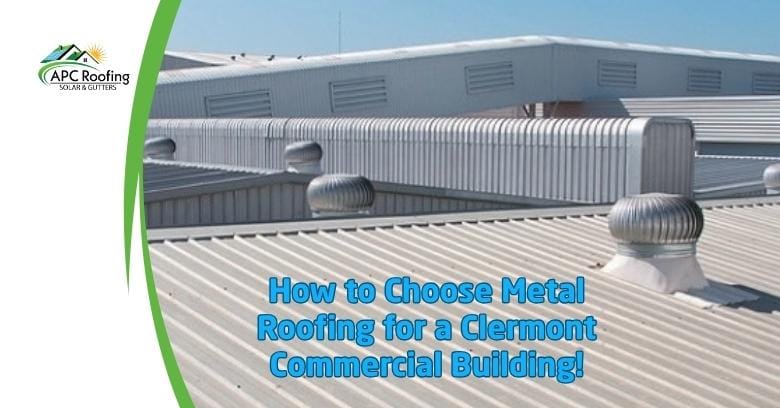
Thinking About Corrugated Metal Roofing Throughout Holly Hill Florida?
APC Roofing lays new panels and brings worn coverings back into shape, whether for a shop, a porch or a whole house.
Call us at 386-356-2111 and someone who knows the trade will come out to take a look.
Identifying a System: Hints in Plain Sight
Exposed-fastener roofing is pinned by screws passing through every panel, whereas standing seam hangs on clips hidden under tall ribs. Coated steel is what the great majority of metal-roofed homes carry, and aluminum or copper appears now and then.
A glance from a lawn at lines of screw heads points to a through-fastened roof, and clean flats between raised joints, bare of hardware, belong to standing seam. Barns, workshops and porches often wear corrugated or ribbed sheet, though a house can suit either.
Profile Options: Matching a Building
Corrugated sheet ripples in smooth, repeating curves, and ribbed panels pair tall square ribs with broad flat areas. Side by side, adjoining lengths overlap by one crest, and screw locations follow a published diagram.
A ribbed profile stands up to flexing and can bridge wider gaps, and corrugated suits older buildings and a farmhouse look. A tall rib keeps heavy rain inside a channel on a broad roof plane, and a lean-to or porch manages fine with a gentle pattern.
Exposed Hardware – Why Installation Matters
A screw pulls the metal tight against a purlin or the deck, and a washer under each head stops water getting in. Sun and temperature swings dry out neoprene over time, and the panels can go on for decades more.
Too much torque flattens a washer at once, while too little pressure or a crooked angle leaves an opening.
Fastener Replacement – Where Help Stops
On corrugated or ribbed sheet, every washer ages at one pace, and a full re-screw is an ordinary step somewhere along the way. Old fasteners are backed out one at a time, and a slightly fatter screw goes into each hole so a thread bites fresh wood or steel.
Re-fastening stops water at every head and holds down sheets that lift, but red rust, gaping laps and cracked flashing need other remedies. New screws are matched to whatever framing lies beneath, with wood threads for lumber and drill points for steel, and color-matched tops blend in with a painted finish.
Growth and Shrinkage: Room to Travel
Steel swells with heat and draws back as temperatures fall, and a long run can gain a quarter inch between noon and midnight, while aluminum goes about twice as far. Metal held too rigidly wears fastener holes into slots, and washers begin to leak.
Snapping sounds at sunrise come from panels shifting against clips, and a well-built roof takes no harm from some noise.
Anchoring Standing Seam: Hidden Hardware
A long pan is locked down at a single band, while floating clips elsewhere allow the pan to slide. Flashing at an unanchored end is shaped with space beneath, and metal with no play winds up torn or kinked.
Each pan is set in place, and clips are driven through into the deck along one side, so each new pan conceals all hardware below.
Joint Styles: A Choice With Consequences
A basic profile engages with a firm push along a full length, and heavier-duty versions are folded over by a motorized tool. A double-lock grips harder against wind-driven rain, and published ratings run down to lower slopes.
Profiles come in different widths and heights, and a home's design and a buyer's taste guide selection. Hardware and trim are sold for one system only, and a mismatch shows up as gaps and loose joints.
Choosing a Weight – Worth Confirming
Panel thickness in steel is stated in gauge, and a smaller number means a thicker sheet. Farm structures often use twenty-nine, while twenty-six and twenty-four are typical choices for houses.
Aluminum sheet is measured in decimal inches, and more material means fewer marks and less waviness. Standing in a yard, nobody can judge weight by eye, so a product data sheet is a reliable guide.
Rust Resistance: When Damage Matters
At a steel mill, coil gets a metallic layer of zinc or zinc and aluminum, and a baked primer goes on before a color coat. Damage no deeper than paint is cosmetic, but a cut that reaches base steel is where corrosion takes hold.
PVDF systems keep color and gloss for decades, but silicone-modified polyester goes dull and powdery earlier. Wet mortar and fresh concrete attack an aluminum-zinc coating, and a barrier belongs wherever panels meet new stonework.
Picking an Alloy: Near the Water
Aluminum is light and free of red rust, but a soft sheet dents from smaller blows. At the coastal end of our territory, salt spray breaks down galvanized coatings faster, and makers restrict certain products near surf.
Copper appears mainly as small roofs on bays and cupolas, and years outdoors take bare metal to brown and then green.
Mixing Metals – Matching or Separating
Copper upslope of a steel covering sends corrosive runoff over the panels, and discoloration arrives well before a panel gives way. Chemicals in treated lumber pit any aluminum resting on top, and fasteners of an unsuited metal leave a ring of damage.
Replacement flashing should come from a metal already present, or tape and membrane keep dissimilar metals from meeting.
A Frequent Complaint: Choices That Help
What the trade calls oil canning is a mild wave in a flat pan, and a midday sun hides what a low evening sun reveals. A warped look in the metal lets no rain through, and service life is unaffected.
Striations, heavier stock and narrower pans keep rippling in check, and an even deck beneath helps as well. Images of real houses show oil canning from obvious to barely there, and the decision on profile rests with you.
For People Inside: Rattle and Warmth
An outbuilding with bare framing under the metal makes a loud din in rain, since a single skin is the only barrier. On a house, a solid deck, underlayment and ceiling insulation sit below the panels, and loudness indoors is close to what asphalt gives.
A light-colored panel sheds much of the sun's warmth, and the attic beneath stays cooler on a summer afternoon. Dark finishes on metal get as hot as black shingles, and vents and insulation weigh as heavily as the choice of color. Thin steel cools off right after dusk, and the attic eases off soon afterward.
Guards and Placement: Chosen With Care
Where winters bring real snow in our territory, slick panels shed a snowpack quickly, and an avalanche off an eave can flatten shrubs, gutters or anyone underneath. Guards set along a roof hold a load in place until a thaw, and typical spots are above doors, walks, decks and gas meters.
For standing seam, bolted clamps grip each upright joint, while exposed-fastener sheet takes mounts screwed into framing, and at the warm end of our range snow gear is unnecessary.
Pounding From the Sky – A Record of What Happened
Hail visits the colder end of our range with some regularity, and stouter panels with striations hold shape better. A sharp blow that chips a color coat leaves metal bare to weather, and a flattened rib or a shifted cap can leak.
Once a storm has moved on, affected spots get photographed and measured, so the extent of damage is clear.
Resisting Uplift: Trim Held Tight
Perimeter bands of a roof take a heavier pull than a central field, and a loose flange gives moving air a handle. Finishing trim is hemmed and caught on a cleat for a whole run, leaving nothing for a storm to seize.
Screw and clip spacing tightens at corners and around a perimeter, per manufacturer guidance for local conditions. At the coastal end of our range, where hurricanes come ashore, rows of screws draw in further, and panels carry an uplift rating to suit.
Breaking Through the Metal: Detail Work
Each pipe takes a boot made for panel roofs, with a base pressed to follow corrugations, and a hole is cut in a flat, never across a crown. A chimney or skylight is built up on a curb with a cricket above, so no water dams up.
Caulk is a secondary barrier behind formed metal, since the steel outlasts any compound many times over.
Channels Between Roof Planes: Built to Drain
A broad flashing lines each valley in advance, and panels are trimmed on a diagonal to match. Raw ends are folded under and locked to a cleat, so no hole sits where runoff gathers.
An endlap on a long run holds sealant between overlapping sheets, and fasteners pass through both thicknesses, with uphill metal on top.
How Low Metal Can Go: Gentle Spots on a House
Most ribbed sheet is specified for about three in twelve or steeper, because on less, runoff lingers long enough to wick past laps. Mechanically seamed panels are approved much lower, and some products are allowed on nearly flat decks.
Porches, additions and back rooms often carry a barely tilted section, and each incline is measured on site, and anything under a panel's limit is finished in a membrane.
A Base Layer – Purlins on Outbuildings
Metal on a dwelling is installed over full sheathing, and a heat-rated synthetic membrane goes in between, since ordinary felt dries out under sun-heated steel. Pole buildings commonly have metal spanning between purlins with air below, and support distance dictates grade.
Once the deck is exposed, any board that gives underfoot comes out, because crumbling plywood cannot anchor a clip.
Leaving the Old Roof in Place: What Has to Be True
A single layer of shingles can usually remain under new metal, code permitting, and noise and a dumpster are avoided. New steel adds well under two pounds per square foot, and ordinary framing copes without trouble. Furring strips and a new underlayment go down over existing shingles, and clips or screws go down into solid structure.
If the decking flexes, or earlier leaks show from the attic, the old roof comes off, because moisture trapped under new metal keeps doing damage.
Finishing Off: All Around
Strips cut to match a profile close off space under each rib at high and low points, so blown rain and critters are shut out. A ridge cap can be vented to let warm air escape or left solid, according to how an attic sheds heat and moisture.
Drip edge, rake trim and a gutter apron finish every outer line, and fascia boards are kept out of runoff.
Working at Height: Slick When Wet
Standing seam panels are formed at full slope length, and nothing overlaps partway up. Big panels need a team so nothing buckles in transit, and a creased pan should not be installed.
Weight should go only into pans over framing, since pressure on a rib bends the metal out of shape. Dew or rain makes coated steel as slick as glass, so climbing up for a look is unwise.
Warning Signs – No Ladder Needed
- Orange halos at fasteners, near the top of a run.
- Hardware sticking up, mid-panel.
- Edge metal curled back, following a gusty night.
- A collar gapping around a stack, on a back slope.
- Rust creeping from a trimmed end, at a hip.
- Color gone patchy, on a south exposure.
- A drip that follows a row of screws, over a closet.
- A gap along a rib, at the low end of a panel.
How APC Roofing Approaches Corrugated Metal Roofing in Holly Hill Florida: What Happens on a Visit
Everything begins with identifying which panel system is installed and how the panels are fastened, and then every screw or clip, edge, opening, valley and lap is checked. Gauge, finish and hardware are noted as we go, while the underside of the deck is inspected from the attic.
Every finding goes into a report with images, and each recommendation carries reasons. If a covering needs only new screws, we say exactly that, and a roof past saving is described plainly.
Corrugated Metal Roofing for Holly Hill Florida Homes: Plain Findings
Phone 386-356-2111 and we will schedule an inspection.
Saving What Is There – Knowing Limits
A single ruined panel can come out and a sound panel go in, and a difference in shade stays visible. A properly resealed lap closes a drip, and new screws restore a roof full of aged seals.
When corrosion has gone through across a whole field, a tear-off is due, and a covering with every joint and collar given out is no different. Somewhere in between, a single worn plane of the roof can be redone, as long as nothing else shows wear.
Longevity: What Cuts Life Short
A carefully installed panel system can pass forty years, and an estimate varies from house to house. Standing seam asks for less upkeep, since nothing pierces a pan, whereas screw-down sheet has washers changed out at some point.
Copper runoff, bare edges and caulked joints where flashing belongs shorten the life of a roof, and an occasional walk-over catches problems promptly. Wet leaves left sitting on panels stain and dull a colored finish, and brushing debris off protects paint.
Before deciding on Corrugated Metal Roofing in Holly Hill Florida, dial APC Roofing at 386-356-2111. We will inspect all hardware, every edge and each penetration, and a written summary lays out what we saw so you can choose.
Verified

Verified
Verified
Verified