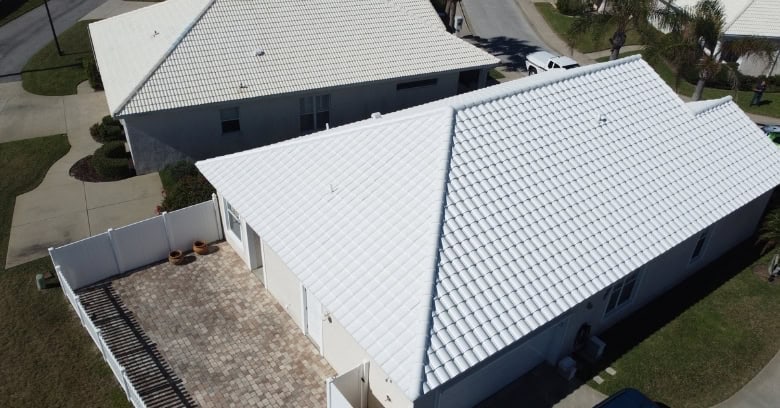
Searching for Roofing Services in Greater Orlando Metro Area?
APC Roofing covers everything from a routine checkup to a complete replacement, across asphalt, metal and tile alike.
Dial 407-270-1129, and a roofer arranges a visit to the house.
What a Roof Is Made Of: the Basics
The shingles or panels on top form the outer layer, and underlayment, decking and rafters sit beneath the surface. Metal flashing seals the seam at a wall, a pipe or a valley, and trouble nearby seldom means a failure in the surrounding shingles.
The air under the rafters counts as part of the roof, the same as any material, because trapped heat and damp age the deck and shingles above. A brown mark on a ceiling can originate at any level of the roof, and work confined to the outside can miss the real source.
Everyday Work of a Roof: Behind the Shingles
A sloped covering sheds every storm's water downhill, and the nailing keeps gusts from lifting the courses. The framing bears the load above, snow included at the colder end of our territory, and intake and exhaust let the attic breathe.
The covering deals with water, and nails and seal strips deal with wind, and what is underneath keeps the whole structure standing. Trouble in one element tends to show up far from the original problem, and the real remedy sits back where the fault started.
Small Components on a Roof: What Falls Behind First
Most of the slope is designed to hold up for decades, but a rubber collar at a vent pipe gives out far sooner. Runoff slips through and travels toward the room, and a ring shows up on the drywall beneath.
Sealant along metal edges dries and shrinks in strong sun, and coated metal rusts once the coating wears through. Hip and ridge caps open at the center crease, because wind and weather strike the peak harder than the slopes below.
Spotting Trouble Without a Ladder: Standing Back and Then Closer
Seen from the sidewalk, the shape of the roof shows dips, sags and wavy planes, and the eave boards and downspouts can be sized up as well. Through binoculars, torn collars, lifted tabs and bare patches come into focus, yet a few conditions still need a hand on the surface.
Crouched at each pipe, a roofer feels for gaps and traces the flashing along every wall, and the field is read for brittleness, granule shedding and loose edges. Nobody walks a covering that is wet or too steep, and the view comes instead from a ladder at the gutter line.
The Attic: What Owners Can Find
A tide line on a rafter shows where rain has entered, and a soft, wet feel means the entry point is still open. A glow through the planking in daytime marks a hole, and a measurement from the peak locates the spot for the outside look.
Rust on the nail shanks comes from moisture in the house, not rain, and a compressed, faded patch nearby points to the same cause. Insulation crammed against the eave, or an exhaust fan dumping into the attic, comes to light only from inside, so a yard-only look passes over faults like that.
The Follow-Up Paperwork: What Gets Handed Over
The visit produces photographs linked to particular spots on the roof, and a written line explains what each image shows. What is holding up gets named as clearly as what is not, and problem areas are ranked by urgency.
A saved report from an earlier stop gives the next check a baseline, and change over time is easier to judge than condition on a single day. A roof tracked across each year brings few surprises, and large jobs show warning signs well ahead of the work becoming pressing.
Routine Care for a Shingle Roof: the Basic List
New rubber boots go on the pipes ahead of any cracking, and brittle beads at the walls get cut out and run again. Pine straw and twigs get picked out of the valleys, and downspouts get flushed so water moves through.
A slipped shingle put back early is easy work, but delay through the wet months lets water get in from below. Lichen keeps the surface damp and works in under the shingles, and the growth gets treated and then brushed away, not blasted off.
A Simple Habit Worth Building: the Basics
Somebody trained in the trade should go over the roof once a year, timed for the point when local weather turns roughest. The goal is seeing deterioration ahead of any drip, and the household gets a fair sense of the remaining service life.
After rough weather, anyone can scan the roof from the yard, and bedroom ceilings upstairs can be watched for fresh spots. Checking the attic with a lamp each season makes sense: rust on nail tips, daylight and wet fill appear long before anything reaches the living space.
How Age Shows on a Roof: From New to Worn
A young shingle covering lies flat with an even tone, and by mid-life the sun-facing side fades ahead of the shaded side. Late in a roof's run, tabs cup and granules wash into the downspouts, and repairs stop holding.
An impression formed from outside has real value, but a walk on the roof is what confirms the condition. A covering that has reached the end of a normal service life raises a replacement question, and a straightforward contractor says so directly, instead of selling one more fix.
The Channel's Part in the System: What to Watch For
The covering's job on water stops at the drip edge, and the gutter line handles the flow after that. Blocked outlets send overflow over the back lip of the channel, and the rafter tails nearby rot over seasons.
A give in that spot points more often to a backup than a shingle problem, and replacing the roof leaves the real cause untouched. How each gutter runs and where the water discharges get checked, and the drip edge gets looked over where the metal meets the fascia line.
How the Roof Breathes: How the Design Works
A balanced system draws air in low and releases air up high, and the flow sweeps trapped heat and vapor out of the space. If the vents get blocked, the attic overheats each summer and stays sticky the rest of the year, and the covering wears out early.
A powered fan with too little inlet area draws cooled air through the ceiling, and stacking two setups the wrong way can leave one choking the other. Reroofing with poor airflow left alone carries the fault forward, so the underlying issue belongs in the scope of any re-roofing plan.
Roofing That Fits Where You Live: An Overview
Where winters bite hardest at the colder end of our territory, ice at the edge shapes the details, and a waterproof membrane covers the bottom few feet of deck. Near the coast, wind pressure sets how every panel gets nailed, and wind-rated materials and sealed flashing go into the plan.
Where hail falls hard at the colder end of our territory, an impact-rated covering is worth considering, while sun and heat age coverings everywhere we work. Specifications follow the weather at the house, not custom or what happened to be on the truck.
Homes and Businesses: One Steep, One Flat
Angle and overlap work together to move water off a pitched covering, and the material is commonly shingle, tile or metal panels. An office or warehouse roof depends on a flat, sealed surface, and scuppers and equipment penetrate that same surface.
Some houses have a gently sloped patch over a back room, and a shingled surface there lets rain linger long enough to work under the courses. A spot built that way needs a sealed membrane tucked under the pitched roof above, and a second round of shingles there fails the same way.
A Cover Until Things Get Fixed: What Works and What Fails
A barrier keeps rain off a hole before repairs begin, but a quick layer does not mend anything below. A properly installed cover wraps the ridge and gets pinned under wood strips, and the material gets drawn tight enough to hold quiet in a gale.
A cover has to reach well past the damaged area, as driven rain works in wherever an edge falls short. Material left on for a long stretch keeps the roof from drying out, and the shingles beneath start to deteriorate.
Where the Roof Changes Direction: No Room for Guesswork
Every course against a wall gets a dedicated step-flashing piece, and a cap of counterflashing laps down from above. A brick chimney gets an apron downhill and metal set in up each edge, and a broad stack gets a diverter built into the roof behind.
Tar smeared over a gap gives way as the metal moves, so the lasting answer is new metal laced in properly. Soft mortar lets water into the brick above the flashing, and a mason takes the stonework while a roofer takes the metal.
What a Proposal Should Say: Nothing Left Vague
A signed agreement should identify the shingle, the underlayment and the metal by name, and the document states whether the old covering comes off. A solid outline sets a rule for any soft sheathing found mid-job, and the flashing, the exhaust work and the final cleanup all get covered.
Offers from different contractors can be weighed point for point, and the gaps between the two sets of paperwork come into view. A crew that asks for trust instead of anything in hand has left out the part that matters, and memory is a poor record of what got agreed.
Redoing an Aging Roof: Start to Finish
Beds, bushes and walkways get protected before demolition begins, and the existing layers get torn off into a dumpster. With the old material gone, the plywood gets examined board by board, and anything that flexes underfoot gets sawn out and patched.
Ice barrier, underlayment and new flashing go down across the deck, and the surface material, the ridge caps and the vents close out the job. A magnetic sweep covers the yard and the drive at the end of the workday, and a last look confirms the gutters are clear.
Care for Non-Shingle Roofs: Particular Needs
Where panels get fastened through the face, a gasket under the head keeps rain out, and a cracked washer gets replaced along with a fresh screw. Concrete and clay tile get installed by mortar, by foam or by mechanical attachment, and the underlayment does the actual waterproofing.
A foot planted wrong breaks off a piece, and a spare of the same profile goes in where one fails. Flat sections show trouble as standing water and raised seams, and debris gets cleared from drains and scuppers.
Clues That Point to Trouble: From the Yard or the Attic
- A buildup of shingle granules in the drainage, long after the covering was installed.
- Shingle edges cupping upward, on planes that face the afternoon sun.
- A pipe boot with an open gap, easy to spot with binoculars.
- Paint blistering overhead after a storm, close to an outside wall or a chimney.
- Pinholes of light in the sheathing, with the lamp switched off.
- Moss packed into the laps, in spots that stay damp longest.
- A hollow spot in an otherwise even stretch, often pointing to trouble in the deck beneath.
- Dried beads separating at a skylight, easy to spot from the yard.
Roofing Services for Greater Orlando Metro Area Households: How APC Roofing Works
Before a scope gets drawn up, a roofer examines the whole covering and the attic, and what turns up gets delivered as pictures along with a written explanation. Solid parts get described as directly as weak ones, and the homeowner decides what happens from there.
Roofing Services in Greater Orlando Metro Area: a Roofer Who Reads the Whole Roof
Reach us at 407-270-1129 and set a time for a visit.
A Roof's Own History: A Short List
Writing down the installation date and the materials used is a smart habit, and each visit's report belongs with the earlier entries. Logging each repair by spot and by task builds a fuller picture, and after several years the weak spots become obvious.
Once a home hits the market, the roof's age and condition come up in conversation, and dated receipts make the answers easy to give. A backup copy of the whole file keeps one bad day from erasing the whole thing, because a single set can be destroyed in a flood or a fire.
What Good Work Looks Like: Points to Look For
The lines run true from eave to ridge, with rake cuts trimmed sharp, and no nail head shows on the finished surface. At each wall and chimney, fresh metal gets set in as the flashing climbs higher, and caulk, where used at all, forms a thin, careful line.
Air can move from the eaves to the peak without obstruction, and the downspouts remain connected and unclogged. A final sweep with a magnet tidies the yard and drive, and sawdust near a cut line is the most common leftover once the work wraps up.
Anyone researching Roofing Services in Greater Orlando Metro Area does not have to keep guessing about next steps. Contacting APC Roofing at 407-270-1129 sets the process moving. Every visit takes in the whole roof and the attic beneath, and no part of the roof goes unchecked.