
Water is dripping from the ceiling, a storm just tore shingles off the roof, or there’s a dark spot spreading across the drywall that wasn’t there this morning. You need emergency roof repair in Orlando, and you need someone who’ll find where the water is really getting in, not just smear tar on the first spot they see.
It’s a stressful spot to be in. You’re worried about the damage inside, about what this will cost and about calling the wrong company in a hurry. You deserve a straight answer about what’s wrong and what it’ll take to fix it.
APC Roofing is a GAF Certified contractor, licensed in Florida (CCC1337030) and insured. We repair leaks and storm damage across the greater Orlando area, and the inspection and estimate are free. Call 407-270-1129, tell us what you’re seeing, and we’ll set up a time for a roofer to come out.
Before emergency roof repair in Orlando: the first hour
Before anyone gets on the roof, a few things protect the inside of your house:
- Move furniture, rugs and electronics away from the drip, and put a bucket or towels under it.
- If the ceiling is sagging with water, keep people out from under it.
- Take photos of the ceiling, the walls and anything that got wet. Those help later, whether or not you file a claim.
- Stay off the roof. Wet shingles and metal are slick, and a storm-damaged roof can have soft spots you can’t see.
Then call a roofer. Leave the climbing to us.
Finding the real leak, not just the stain
The stain on your ceiling shows where the water fell, not where it got in. Water runs along the rafters and the underside of the deck before it drops, so the hole in the roof can be several feet uphill from the spot inside. A roofer who guesses from the stain fixes the wrong place, and the leak keeps coming back.
We start in the attic when we can get to it, find the highest wet mark on the framing, and match it to a spot on the roof. Most emergency leaks come from a short list of weak points:
- Pipe boots. The rubber collar around a plumbing vent cracks in the Florida sun, and a bathroom ceiling is often where it shows.
- Flashing. Metal where the roof meets a wall, a chimney or a skylight works loose or corrodes.
- Valleys. The inside corners carry the most water and wear out first, especially when leaves pile up.
- Wind-lifted shingles. A strong gust can break the seal on a row of shingles and fold them back, leaving nails bare.
- Old mounting holes. A dish or antenna that was removed years ago can leave open holes behind.
Tarps and temporary repairs
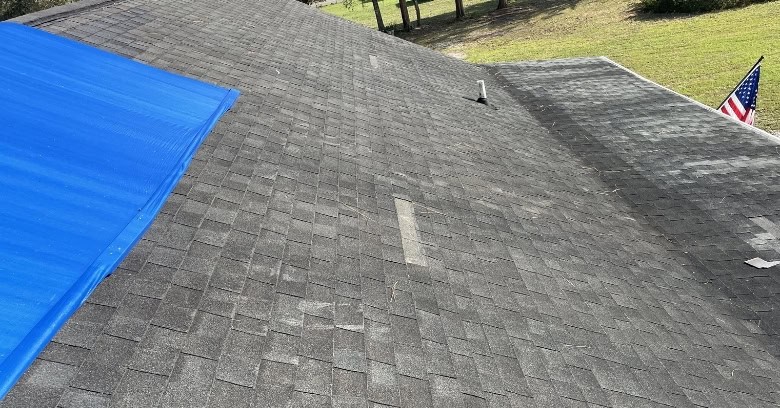
Sometimes the permanent fix has to wait for a dry deck or for materials. In that case, the job is to stop the water now. A tarp that laps over the ridge and is fastened down under wood strips will hold through more rain. A tarp held down with a few bricks usually ends up in the yard.
Keep in mind that a tarp isn’t a repair. Left on for months, it traps heat and moisture against the shingles and ages them faster. The goal is to get the real repair done as soon as the roof allows.
Storm damage in Central Florida
Most emergency calls in Orlando follow a summer thunderstorm or a tropical system. Hurricane season runs from June through November, and even a storm that passes well offshore can bring wind strong enough to lift shingles, crack tiles or peel back edge metal. Heavy afternoon downpours then find every opening.
If your roof took storm damage, we’ll photograph and measure it section by section and give you a written report. If you decide to file an insurance claim, we’ll provide the estimate and work with your adjuster. You file the claim yourself and you pay your own deductible. For more on what happens after a big storm, see our hurricane damage roof repair and wind damage roof repair pages.
Repair it, or is it time for a new roof?
On a roof with plenty of life left, a failed pipe boot or a few torn shingles is a small, local fix. We’ll repair it and show you the before and after photos.
On an older roof, it’s different. If the shingles are brittle and bare on every slope, or the leaks keep moving from one spot to another, patching one hole keeps the house dry for now but doesn’t make the roof any younger. We’ll tell you which situation you’re in and show you why, and the choice stays with you. If replacement makes more sense, our roof replacement in the greater Orlando area page explains how that works.
How it works with APC Roofing
- Book your free inspection. Call 407-270-1129 or request a free online estimate.
- Get a clear, honest assessment and estimate. We find the entry point, photograph it before and after, and write down what failed, why and what we did about it. Keep those photos for your records, a future buyer or your insurance company.
- Get the leak fixed and the site cleaned up. We repair the cause properly, check the same weak spots across the rest of the roof and pick up after ourselves.
For bigger jobs, we work with financing partners including Aqua Finance, Fortifi, Hearth and Home Run Finance.
Emergency roof repair questions
What should I do if my roof is leaking during a storm?
Protect what’s inside first. Catch the water, move your belongings and keep people away from a sagging ceiling. Stay off the roof until the storm passes, then call a roofer to find the source and stop it.
Can you put a tarp on my roof?
Yes, when a permanent repair can’t happen right away. A tarp should lap over the ridge and be fastened down properly. It’s a short-term fix, and the real repair should follow as soon as the deck is dry.
Why does my roof keep leaking after it was patched?
Usually because the patch went where the stain was, not where the water gets in. Water travels along the framing before it drips. Tracing it from the attic to the roof finds the real source.
Will insurance pay for an emergency roof repair?
That comes down to your policy and what caused the damage. Sudden storm damage is often covered, while wear and age usually aren’t. We document what we find so you and your adjuster have the same facts. You file the claim and pay your deductible.
Get back to a dry house
A roof leak doesn’t wait. Water that gets into the decking, insulation and drywall turns a small repair into a bigger one, so it pays to get it looked at soon. You don’t have to figure it all out on your own.
Once the leak is fixed, the next storm is just rain on the roof. Your ceiling stays dry, you know what was wrong, and you’ve got the photos to prove it was done right. Call 407-270-1129 to book your free inspection, or see all our roof repair services in the greater Orlando area.


















