Planning Shingle Roof Installation Anywhere in Denver Colorado?
APC Roofing puts down granule-surfaced coverings from the deck up for homes of every age and size.
Phone 720-902-6940 and a trained eye will check the details and report back.
Components and Construction: Plant to Pallet
A mat of glass fibers makes each shingle strong, and asphalt spread over the sheet stops water, and stone granules pressed into the upper face block sunlight.
Lines stacked side by side at a supplier are not always equal, and added mass tends to buy durability. A showroom sample tells nothing beyond appearance, while published data covers the wind and impact classes.
Flat or Dimensional: How the Designs Differ
The three-tab type is a single sheet notched twice along the bottom, and courses laid this way form tidy straight bands. An architectural product bonds a contoured upper strip to a solid backer, and the offset design reads as depth from the street.
Thicker double-layer shingles weigh more across a slope, and a higher wind rating typically comes along. Nails on a dimensional shingle go through the zone where the plies meet, and a wrapper diagram shows the exact position.
Uses for the Flat Style: Sensible Settings
Three-tab regularly serves a workshop, a garage or a porch, and new work can blend with existing courses of that kind. Many manufacturers have narrowed their ranges of that style, and a favorite shade may be gone for good.
Uneven plywood is less noticeable under a dimensional product, whereas a single-ply strip telegraphs each bump. Underlayment and flashings are the same under either style, while everything that differs is on top.
Loose Grit: Clues at Ground Level
A recently installed covering lets go of leftover grains for a while, and that shedding is expected. A steady stream of grit from an aging covering shows the top layer is going, and uncovered asphalt dries out and cracks in sunlight.
The sunniest exposures are the southern and western sides, and dull patches gather there.
The Factory Sealant Band – Cold-Weather Care
Glue is applied to every shingle at the plant as a narrow stripe, and heat from sunshine turns it tacky enough to grip the row above. An adhered course resists gusts that try to pry up its lower edge, while nails hold every shingle for its whole life on the house.
At the colder end of our territory, a covering installed in freezing temperatures can wait months to bond, and wind can peel back the tabs before then. Manufacturers' instructions call for dabs of roofing cement in that situation, and a printed label spells out quantity and spacing.
How Courses Are Attached: Height, Depth and Quantity
Nails are driven within a slim band set out by the manufacturer, where the shank also catches the headlap of the row below. Four fasteners per shingle meets the basic requirement, while a bundle wrapper asks for six on very steep or wind-exposed jobs.
A nail set too high misses the row underneath, an overdriven head cuts into the mat, and a cocked shank raises a hump in the shingle overhead. The wind resistance stated on the package depends on the specified pattern, while a bad compressor setting repeats itself on every shot.
The Wood Below – Replacing Weak Sections
Plywood or OSB panels form the deck under a shingle roof, and every fastener needs solid material there to hold. Many older homes still have spaced boards left from a wood-shake era, and new sheathing bridges them before any shingles.
Once the old covering is off, any soft or delaminated section is cut out and swapped for sound decking, since a nail in punky fibers pulls loose. A small gap is left between neighboring panels, as moisture makes the wood expand and ridge up when butted tight.
Underlayment Basics – What It Does
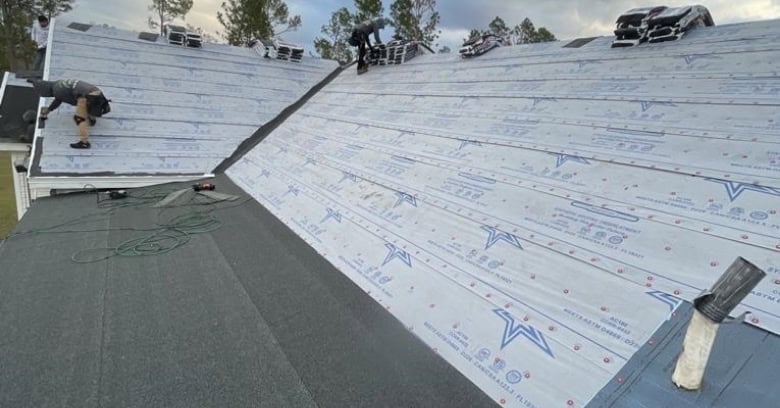
A water-shedding membrane covers the deck ahead of the shingles, and it goes down in horizontal runs that lap downhill. Synthetic sheet has largely replaced asphalt-saturated felt, because the replacement is lighter to carry and harder to rip.
Rain forced past a loose shingle is shed by the membrane below, though sunlight breaks it down if it stays exposed too long.
Self-Adhered Eave Membrane – How Far Up
At the colder end of our territory, heat leaking from the house thaws the snow on the upper slope, and meltwater goes solid again where the roof extends past the wall. Water pooling behind that buildup can back up under the shingles, and standard felt or synthetic sheet does not close around the nails.
Where ice dams form, building codes require an adhered membrane at the eave, and it continues until it passes the wall line inside the house. Across every part of our service area, valleys and skylight curbs frequently get it too, because runoff slows and gathers at those spots.
Finishing the Borders: Order of Layers
Every eave and rake gets a formed strip of metal, so rain falls free beyond the woodwork. The underlayment covers the lower flashing, while at the gable side the order flips.
Edge metal around the whole perimeter is a code requirement in many towns, as water tends to wrap under an unprotected rim.
Beginning at the Gutter: Uplift Concerns
A starter strip goes down beneath the first visible course, and its glue stripe sits at the extreme outer margin. A reversed field piece puts its sticky band too far up, so the lowest run relies entirely on its nails.
Most instruction sheets extend starter up both rakes, since wind crossing the roof tugs at its outer lines.
Drainage Between Planes – Methods Compared
An open valley shows a strip of metal running down the crease, and the closed-cut type carries one side's courses through while the other side is cut back. Woven work alternates rows from the two planes and suits three-tab, whereas two-ply shingles do not bend well enough.
Fasteners stay out of the center of the channel, and a waterproof underlayment is laid beneath along the full run. A mat of leaves lodged in a valley traps water and grime, and heavy rain can then spill sideways under the edges.
Tie-Ins to the Structure – Frequent Leak Points
Step flashing along a wall is set one to a course, and a counterflashing or trim board covers the raised leg. At the low corner by the house, a kickout piece bends outward, because otherwise rain soaks the framing.
A chimney gets an apron across its front, steps along its sides and counterflashing let into the mortar joints, while a wide one gets a small peaked cricket behind it.
Through-Roof Vents: Aging Components
A pipe boot is built from a flat base plate and a stretchy neoprene collar, and the sealing ring stiffens and cracks as it weathers. The flange slips under the courses higher up, so runoff flows across the downhill side instead of under it.
Collars frequently need attention while the rest of the covering is healthy, so a full reshingling normally includes fresh boots.
Finishing the Apex – Final Courses
The ridge and every hip are closed with cap shingles, and a dimensional line comes with its own heavier companion product. Tabs sliced out of flat strips are far thinner, and at the colder end of our territory a freeze can open splits along the bend.
A continuous ridge vent frequently lies under the cap row, and the fasteners are sized to penetrate that channel and the wood below.
Attic Airflow – Mixed Systems
Outside air should come in through vents under the eaves, and a ridge exhaust lets it out. Loose-fill insulation piled into the corners can smother the flow, and rafter baffles preserve a clear route.
A poorly vented attic turns into an oven under the deck, and moisture from the living areas lingers up there. At the colder end of our territory, frost can coat every protruding nail, and the water runs down as the day goes on. Adding a fan to an attic that already has a ridge vent can reverse the intended path, because suction then draws from the nearest opening instead of the soffits.
Local Extremes – Storms and Algae
Our markets take in mountain snow in one place and tropical heat in another, so the forces working on a shingle change from city to city. At the coastal end of our territory, a hurricane can drive powerful gusts for many hours, and product sheets set out an enhanced nailing method. Strong sun, season after season, makes the coating brittle, and moist air lets algae take hold.
At the colder end of our territory, ice forming in hairline cracks forces them apart, and packed snow sits on the slopes for days.
Frozen Pellets: Surface and Below
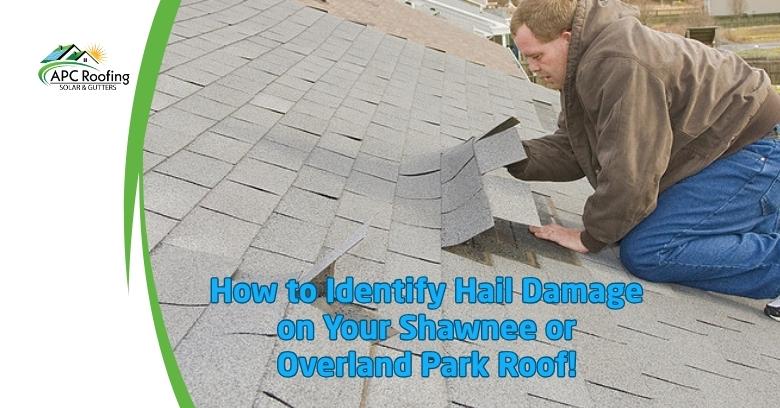
At the colder end of our territory, hail comes through often enough to plan around, so shingles designed to resist impact are widely sold. A hailstone knocks granules loose where it lands, and a hard enough blow can crack the mat underneath.
An impact class is assigned after steel balls are dropped on samples in a lab, and the better lines survive rough treatment more often. Plenty of makers use a polymer-modified coating, which lets the shingle flex instead of shattering.
Strong Gusts: Folded Tabs
Force builds most at the eaves, the rakes and each corner, and a shingle no longer stuck down lifts again and again. Bent up past a certain point, a tab takes a crease across it, and it is liable to tear off later. A shingle hurt like that is replaced with a new one, but a piece that simply came unstuck can be glued down by hand.
A missing tab leaves bare underlayment facing the sky, and ultraviolet light breaks that layer down quickly.
Streaks and Moss – Copper and Zinc
Algae is what paints the long black marks on many slopes, which survives by feeding on limestone filler. At the humid end of our territory, shaded north-facing roof planes grow it fastest, though the staining does little harm on its own.
Moss is more serious, because it stays wet for days, and as it creeps it breaks the tabs' seal. High-pressure spraying rips the grit away with the growth, so a light misting of a purpose-made solution is used instead. Copper-bearing mineral is blended into algae-resistant lines, while rain running over a zinc band near the ridge holds the stain back.
Color on the Slope – Blends and Batches
Deep tones take in more solar warmth and reach higher surface temperatures, and lighter shingles reflect more of the light. Some brands coat their granules to bounce back more heat, and a measured reflectance number comes with them.
Shingles from separate production runs may not match exactly, and the recommended practice is to shuffle packs during installation. Multicolored designs keep slight differences from showing, whereas a single flat shade gives them away.
Walking on Asphalt – Frost and Footing
By midday in warm weather the material becomes tender, so a shoe sole scrapes away grit. At the colder end of our territory, a course stiff with cold can break under weight, and a glaze of ice leaves nothing to grip.
Keeping both feet in the yard is safer for an owner, and a good pair of field glasses picks up loose or missing pieces.
Re-Covering Without a Tear-Off: The Deck Question
Local regulations commonly accept an overlay over an old roof, as long as there are not already two and the base is sound. Nothing about a layover uncovers the decking, which means damage stays trapped under fresh shingles.
Curled edges underneath leave a lumpy look on top, while aging flashing frequently stays put. A second layer's load sits on framing chosen decades ago, and short nails end up anchored only in the old shingles.
Things to Watch For: Outside and In
- Grit collects at the foot of a downspout, and the amount keeps growing year after year.
- Some tabs flap loose or are gone altogether, which tells you the glue line failed.
- The lower margins cup into a shallow dish, since age and heat have stiffened the material.
- Tabs show fine breaks from edge to edge, and the mat underneath takes on water.
- Shiny black spots stand out against the color around them, where the stone coating has worn off.
- A flue or vent collar has turned brittle and torn, and drips may reach the ceiling below.
- The metal where a slope meets siding sits bent or pulled back, and gusts can push weather in behind it.
- A water mark appears near a light fixture or a closet, and the source can lie well uphill of it.
How APC Roofing Approaches Shingle Roof Installation in Denver Colorado – Plain and Careful
An inspection starts by walking each slope in turn, and the flashings, valleys, vents and edges get a close look along the way. From inside, the attic is searched for water stains and pinholes of light, and darkened boards on the underside show past leaks.
Anything wrong is photographed, and its size is measured. The findings are written up in plain language, with a reason beside every recommendation. A modest problem is presented as modest, and a worn-out covering is identified as such. The homeowner decides what comes next, whether that means a repair, a replacement or waiting.

Shingle Roof Installation for Homes in Denver Colorado: Straight Answers From Up Top
Call 720-902-6940 to book a time.
Fix or Replace: Knowing the Limit
A split collar, a gap at a wall or some torn tabs makes a routine repair, and the rest of the shingles stay where they are. Patched areas show a visible contrast at first, while the manufacturer may have retired that design.
On a worn covering, tabs are brittle and crack when lifted to reach the nails, so the pieces beside the work may need to come out too. If hard, curled courses run from eave to ridge, a full tear-off is the honest recommendation.
Useful Lifetime: What Moves the Number
A three-tab product commonly gives around fifteen to twenty years, while laminated lines often reach close to thirty. Ventilation, exposure and fastening decide where a given covering lands, and a single violent storm may finish a covering off early.
The vent collars and flashings deserve an occasional look, because minor gaps closed promptly spare the sheathing.
For a roofer's view of Shingle Roof Installation in Denver Colorado, dial APC Roofing at 720-902-6940. Someone will walk every slope and look over the details, and the findings reach you in writing so the decision stays yours.