The roof on your building has been patched more times than anyone can count, and the last roofer said it’s time. Now you’re looking at a big decision with a lot of unfamiliar terms: TPO, EPDM, tear-off, recover, tapered insulation. You want commercial roofing installation in Denver that’s chosen for your building, explained in plain terms and done once.
It’s a lot to sort through, and the bids rarely compare apples to apples. One includes new insulation and the other doesn’t. One tears off and one goes over the top. You deserve a recommendation you can understand and check.
APC Roofing is a GAF Certified contractor, licensed and insured, and we install and repair commercial roofs across Denver. Your inspection and estimate are free. Call 720-902-6940 to get started.
Choosing a commercial roofing system in Denver
Most low-slope commercial buildings use one of these:
- TPO: a white single-ply membrane with heat-welded seams. It reflects sunlight, which helps on a building with a lot of cooling load.
- EPDM: a black rubber single-ply membrane with taped or glued seams. It handles cold well and is easy to repair later.
- Modified bitumen: reinforced asphalt laid in rolls, usually in two plies. It stands up well to foot traffic around rooftop equipment.
- Built-up roofing: alternating layers of felt and asphalt, often with gravel on top. Heavy and long-proven.
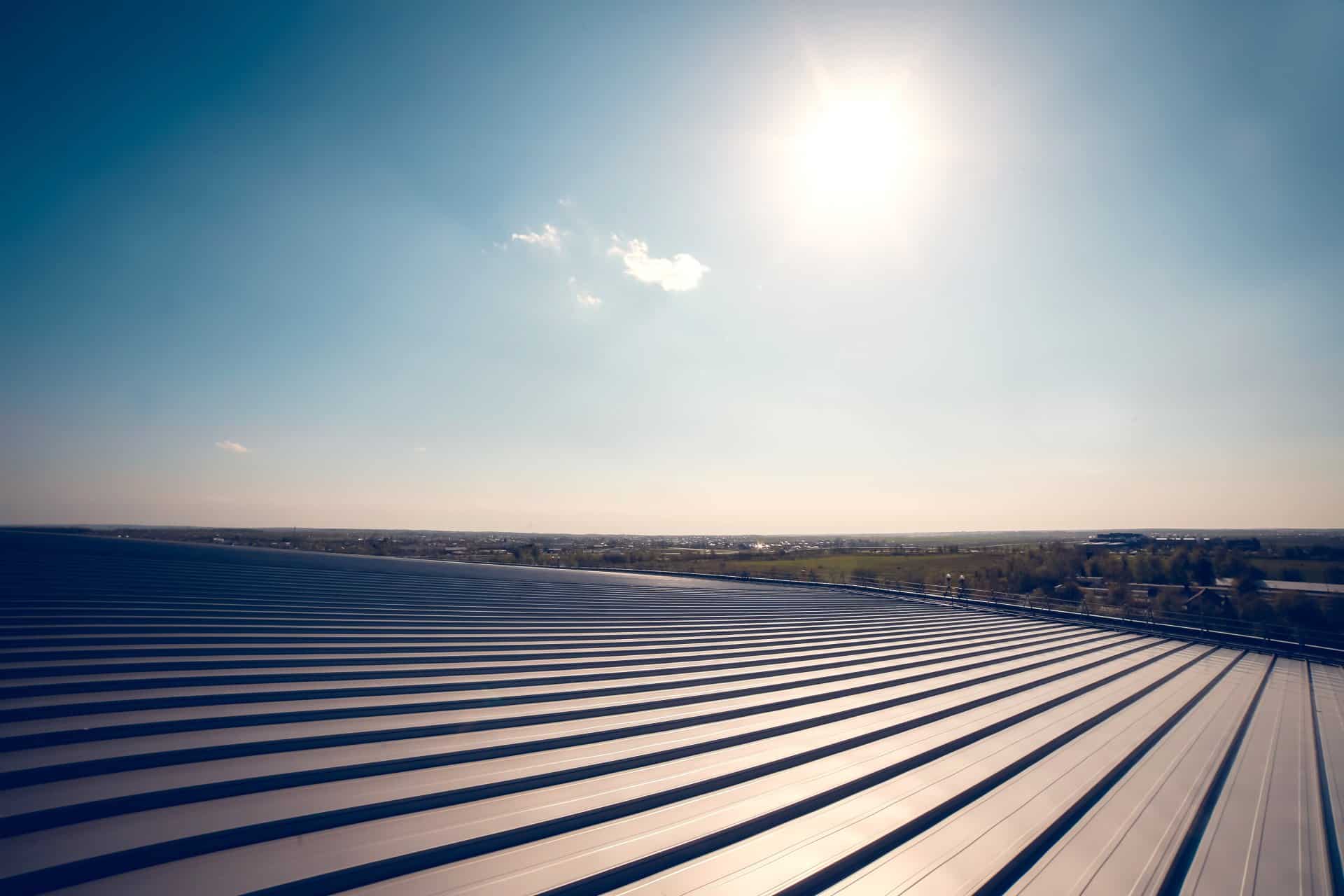
- Metal panels: standing-seam or screw-down panels on buildings with enough slope to shed water.
No system is best for every roof. The right one depends on your deck, how much equipment sits up top, how often people walk on it, what the building is used for and how long you plan to own it. For a closer look at two of the most common options, see TPO roofing in Denver and EPDM roofing in Denver.
What goes under the membrane matters as much
The membrane gets the attention, but the layers beneath it decide a lot about how the roof performs.
The deck. Steel decks take screws, concrete decks need adhesive or anchors, and older buildings sometimes have wood or gypsum decks with their own fastening rules. Rusted or soft spots get replaced before anything goes on top.
Insulation. Rigid foam boards keep heat in during winter and out in summer. Tapered boards can also build slope into a dead-flat deck so water reaches the drains instead of pooling.
Cover board. A thin, hard board over the insulation spreads out foot traffic and gives the membrane a firmer base, which also helps it stand up to hail.
Attachment. The membrane can be mechanically fastened, fully adhered or held down with ballast. Building height, wind exposure and what the structure can carry all steer that choice.
Designing a roof for Denver weather
Hail is the first thing to plan for along the Front Range. A firmer cover board and a membrane suited to impact give the roof a better chance in a hard storm.
Snow load comes next. Heavy, wet spring snow adds weight, and a flat roof holds it rather than shedding it. If a new system adds weight, like a recover or ballast, the structure’s capacity should be checked first.
Wind loads are highest at corners and edges, so fastening gets denser there, and edge metal is matched to the building’s height and exposure. The strong high-altitude sun and Denver’s daily temperature swings mean the membrane, seams and flashing all have to handle constant expansion and contraction.
Recover or full tear-off?
A recover puts a new roof over the existing one, usually with a cover board in between. It can save time and disposal cost, but it only works when the old roof is dry and there’s only one roof on the building. Building codes generally don’t allow a third layer.
A tear-off strips everything down to the deck. It costs more up front, but it lets you see and repair the deck, replace wet insulation and correct drainage with tapered insulation at the same time. If moisture readings show wet insulation across large areas, a tear-off is usually the right call.
Drains, curbs and edges get new details too
A new roof is the time to fix the details that caused trouble on the old one. That includes rebuilding curb flashing around rooftop units, new boots on every pipe, new edge metal and coping, and making sure drains and overflow scuppers are sized and placed correctly. If condensate lines were dumping onto the roof, they can be routed to a drain. These details are where a new roof either stays dry for years or starts leaking in its first season.
Planning the installation around your building
Commercial roofs are rarely installed with the building empty. Before work starts, you’ll want a plan for access, staging, noise, deliveries, and how tenants or customers will be informed. On larger roofs, the work can often be phased so only part of the building is affected at once. Membrane work also needs the right weather, so the schedule is built around the forecast.
How it works
- Book your free inspection. Call 720-902-6940 or request a free estimate online.
- Get a clear, honest assessment and estimate. We check the existing roof, the deck where we can see it and the moisture in the insulation, then give you photos and a written estimate that spells out the system, the layers and the scope.
- The roof gets installed and the site gets cleaned up. You get a realistic schedule up front, and you’ll know what’s happening on each phase.
Putting off a replacement that’s truly due tends to cost more later. Every season of leaks soaks more insulation, and wet insulation is one of the most expensive parts of a commercial roof to replace.
Commercial roofing installation questions
How long does a commercial roof installation take?
The size of the roof, tear-off versus recover and the weather all affect it. You’ll get a realistic timeline with your estimate.
Is TPO or EPDM better for a Denver building?
Both work well here. TPO’s white surface reflects the strong sun, and its seams are welded. EPDM handles cold well and is simple to patch. Your deck, rooftop equipment and building use decide which fits better.
Do rooftop units have to come off during a reroof?
Often they need to be lifted or disconnected so the curbs can be reflashed properly. That should be coordinated with your HVAC contractor ahead of time.
Can you install a new roof over the old one?
Sometimes. If there’s only one existing roof and the insulation is dry, a recover can work. Otherwise, a tear-off is the better choice.
Plan your commercial roofing installation in Denver
Call 720-902-6940 or schedule a free inspection online. If you’re not sure yet whether you need a new roof, start with our commercial roof repair in Denver page, or see our full Denver commercial roofing services.
You’ll end up with a roof that drains, a building that stays dry and a clear picture of what you paid for. Trust matters.