Comparing contractors for Skylight Installation in Deltona Florida?
APC Roofing goes over attic conditions and the state of everything above the ceiling, and sets any storm damage down in writing.
Call 386-259-8425, and a roofer will drive out and go over the house in person.
The Stack Effect – True for the Whole Setup
A supply of outside air has to enter down low before a vent up near the peak can pull anything through, because a sealed attic gives that high vent nothing to draw on. Shelf after shelf of venting stock turns out to be outlet equipment, and an add-on getting no feed keeps most of the stale air sitting in place.
The Roof Overhang: Worth Knowing Before Insulation Goes In
Right above the wall line, the rafter bay pinches down to a few inches of clearance, and that few-inch gap is the entire supply route into the space above. A blower run out to the eave seals that choke point under the fill, an easy mistake for a fast-moving crew.
A Vent Baffle: Inexpensive, and Easy to Skip
A shaped panel set between rafters keeps the narrow gap clear of insulation piled against that framing, leaving an open route from the wall plate all the way toward the peak. Setting a baffle is carpentry worked from inside the attic, never from the roof surface, a detail some crews rush through late in the day.
The Sizing Math – Worth Getting Right
Trade guidance calls for one square foot of net free vent area for every 150 square feet of attic floor, and the benchmark eases to one-in-300 once the ceiling below stays well air-sealed with intake and exhaust close to even. The number a vent’s label states falls short of the opening cut to receive that vent, and a sizing calculation depends on that figure, never on how big the hole appears.
Summer’s Long Months – Building Through the Day
An attic with no airflow at all climbs well past the outdoor temperature on a sunny afternoon, and the difference is obvious to anyone who steps up to look. Asphalt ages mainly from sunlight hitting the surface, rather than the space underneath. In the hottest part of our service area, a balanced vent setup lowers the temperature and the moisture of the deck and framing beneath the shingles, which keeps curling and premature granule shedding to a minimum.
How an Ice Dam Forms: Building Up, Not Just Cold
At the colder end of our territory, the target for a winter attic is staying near the outdoor reading, but the risk shifts once the warmer months arrive. Heat escaping from the living space below melts the snow against the deck, and the water freezes once more at the unheated eave. A ridge shaped there blocks later runoff, and the backup travels beneath the courses above.
Where the Duct Terminates – Judged by the Finish Point
A bathroom fan exists to carry steam all the way outdoors, not only from the room. On a fair share of homes the run for that duct quietly lets out in the attic, a gap between plan and reality that shows up years later. Boards over that particular room stain black from damp air landing there again and again, plain to see on any visit into that section of the attic. Running that duct to a real outdoor outlet clears the trouble, worked from inside.
Sorting Out the Stain – Different Sources, Different Fixes
Air from the living space seeps into the attic wherever a fixture or hatch leaves a gap, carried up by ordinary stack effect throughout the house. On a cold night that same air beads up into clear droplets on the underside of the decking, with enough condensation collecting to run down onto the floor below. A patch that appears during a dry stretch points to humidity rising indoors, whereas darkening that only follows a storm traces back to water entering from outside.
The Seam Around a Skylight: the Joint, Not the Panel
The factory seal on a glazed unit is set before installation, and hardly ever gives way without some other cause. Leaks tend to begin at the transition between that fixture and the covering nearby, the spot where two different materials connect. Makers ship each unit’s flashing kit, which is built from step pieces, a head piece and an apron.
Matching Intake to Exhaust – a Detail Easy to Get Backward
Vent area on a job is meant to run close to evenly between the openings down low and the openings up high, so neither end carries most of the weight. When an exact match is not possible, more of the share shifts to whichever set sits lower, because too little exhaust just slows the airflow down, while too little intake shuts the airflow off.
Choosing an Exhaust Type: Picking a Route
A vent running the length of the ridge draws along the entire peak, formed from a slot cut at the very top of the deck. Each box vent handles just a small section of the surface, which is why hips in place of one long high edge often call for a handful. A fan set into the roof draws air from whichever source is easiest to reach, and a soffit that is blocked leaves the rooms below taking on that role.
Skylight Base Styles – a Choice Worth Understanding
A curb-style unit rests on a wood frame raised above the deck, with the covering material brought up along the sides. A raised-frame mount suits a low-slope section of roof where water can stand near the opening, because that structural rise holds the opening higher than the surface nearby. A deck-mount unit fastens directly to the sheathing and holds up on roofs built to shed rain without assistance, and sits at a lower profile than the curb-mounted version.
Skylight Styles – Not Just One Design
A fixed unit contains no moving parts and cannot be opened, placed there for daylight alone, with no other function. A venting assembly lifts open on a crank, a pole or a small motor, allowing warm air to escape the room below. A tubular unit brings daylight down through a reflective tube to a hallway or closet, via a roof opening considerably narrower than a standard fixture calls for.
Skylight Installation Work – More Involved Than the Outside Suggests
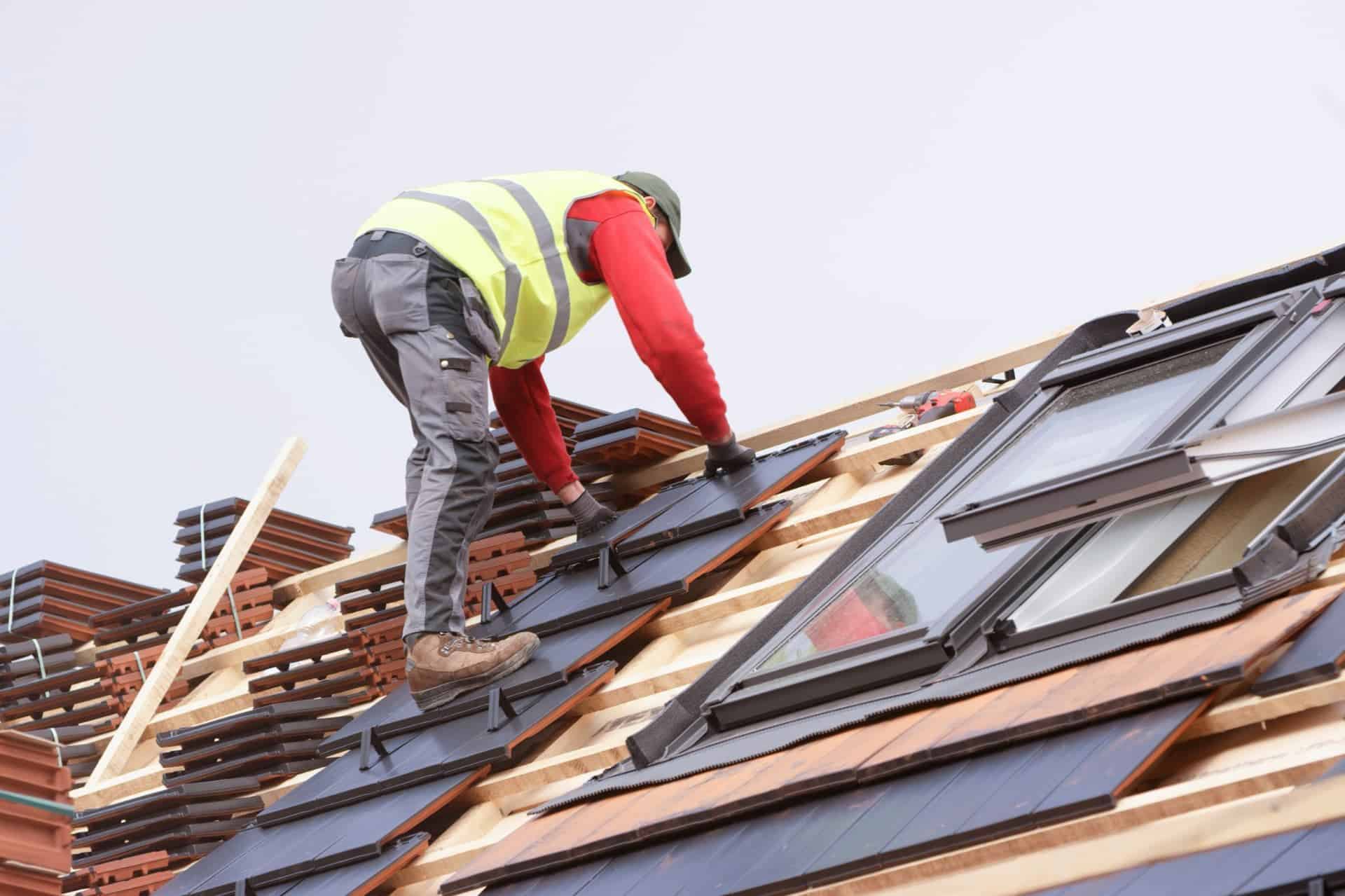
An opening beyond the width of the rafter spacing requires cutting one rafter and framing a header into the resulting gap, with the new support taking over the load the missing piece once carried. Wiring, a duct run or a plumbing vent found in that bay must be rerouted, before the surrounding carpentry can be completed. The space between the roof gap and the ceiling below needs framing, insulation and a finished interior surface, so nothing escapes into the attic through that opening along the way.
Skylight Sweating – a Case of Mistaken Identity
Over a bathroom or kitchen, the glazing often ends up the coldest surface once humidity builds, colder than any other surface nearby. Condensation that gathers and moves to the frame before dripping can look just like a leak, even when the roof shows no problem at all. Fixing the trouble happens indoors, not on the roof, either a fan matched to the room and run longer or an insulated shaft.
Signs to Recognize – Things Worth Mentioning
- Rust-toned marks around nail points inside the attic, plain to see with a flashlight aimed upward.
- Loose insulation packed out to the eave with no baffle in place, a common gap left by a rushed blow-in job.
- Curling shingles or early granule shedding on the surface, often a sign of poor attic airflow.
- An ice ridge forming along the eave after snowfall, at the colder end of our territory, often followed by darkening near the inside of the roofline.
- A ceiling stain that shows up in dry weather, unrelated to what the sky is doing.
- Water tracking from a skylight’s corner after a hard rain, most often linked to the flashing around that opening.
- A bathroom fan duct lying loose in the attic instead of run to an outlet, simple to spot on a walk through the attic.
APC Roofing works directly with the homeowner on Skylight Installation in Deltona Florida
The attic gets looked at first, before the slope, since conditions overhead often trace back to how the space breathes. Every part of the roof gets evaluated at the same time, not only the specific item mentioned. Where a job needs financing, it is arranged through a partner; we are a roofing contractor, not a lender. A recommendation comes with reasons, and the homeowner has the final say.
Thinking Through Skylight Installation in Deltona Florida – a House Worth a Roofer’s Visit
Get in touch at 386-259-8425 and get the attic and the slope checked out.
Following Up Once a Storm Clears – What We Take Care Of
An inspection covers the roof, and damage found gets photographed and measured, section by section, so nothing is missed, with the homeowner receiving that written account afterward. Pieces that come loose are held onto, not thrown away, until checked, a step that keeps things complete.
Getting the Sequence Right – Not Something to Rush
Insulation pushed beyond the baffle line closes off the very intake meant to stay clear, defeating the whole purpose of that piece. Putting in vents before the ceiling is closed up pulls conditioned house air out instead of moist air from the attic, solving the wrong problem entirely. Sealing comes before insulation, which in turn comes before vent sizing, with baffles set in place at the same time.
Anyone who arrived here asking about Skylight Installation in Deltona Florida can call APC Roofing at 386-259-8425 and get a roofer out to look at the attic and the roof. Every stop takes in what is worth seeing, with no question marks left over.
« All Services in Deltona Florida