In Need of Metal Roof Repair Throughout Deltona Florida?
APC Roofing puts up and mends screw-down sheet and clip-held panels, from a pole barn to a family home.
Call 386-259-8425 and a visit ends with a straight account of what was found.
Sorting Out Types – A Glance Up
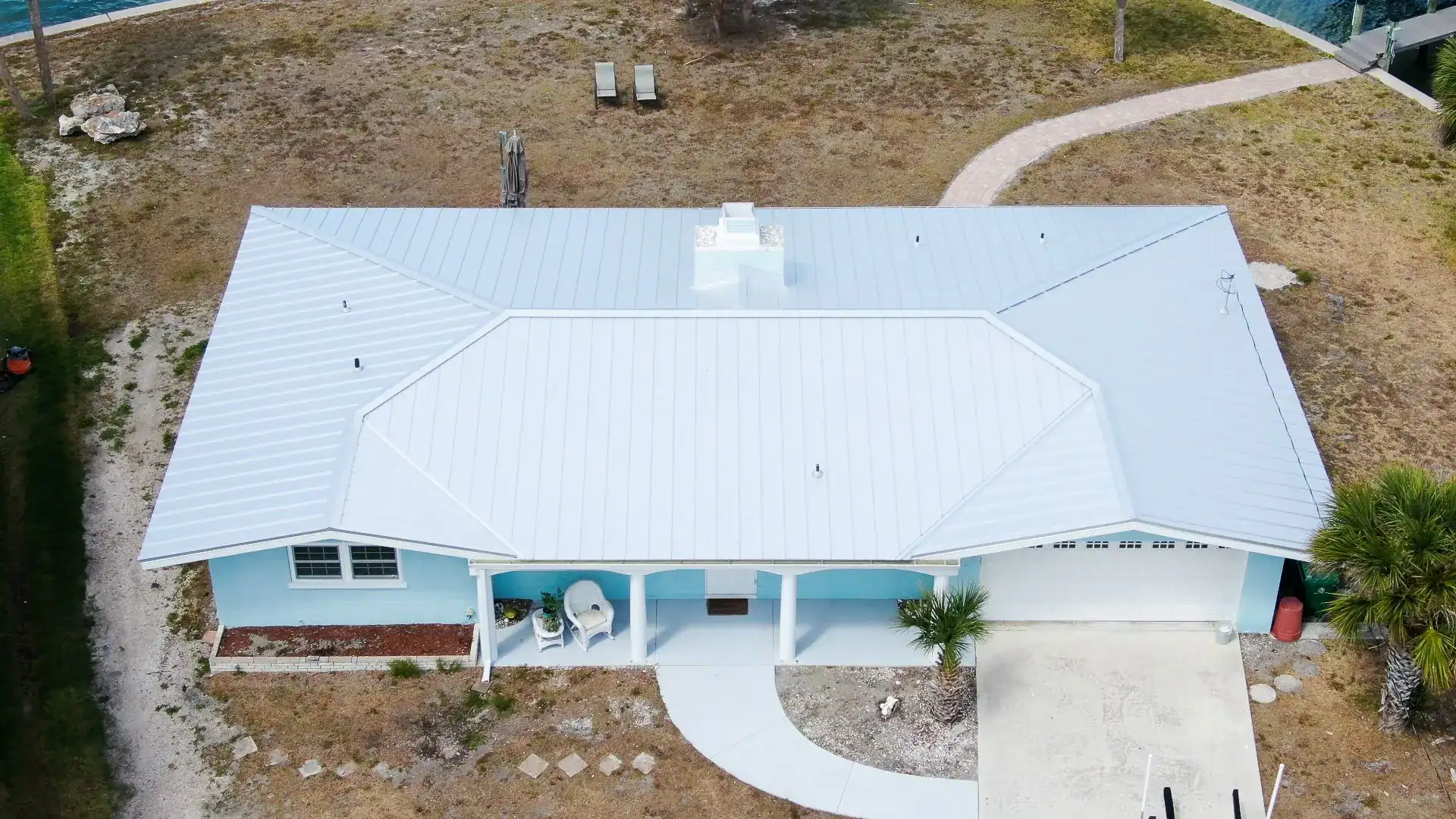
A corrugated or ribbed covering is secured with screws set through the metal, but standing seam is anchored by clips concealed beneath upright folds. Coated steel is what the great majority of metal-roofed homes carry, though aluminum and copper have a place too.
A glance from a lawn at lines of screw heads points to a through-fastened roof, while plain pans and tall ribs with nothing in sight are standing seam. Farm buildings and garages commonly have ribbed or wavy sheet, while residences take either style.
The Cross-Section – Span and Style
Corrugated goods swell and dip in gentle, repeating arcs, and ribbed panels pair tall square ribs with broad flat areas. Adjacent lengths share a narrow side lap, and every screw lands where a maker’s layout calls for.
Ribs make a stiffer panel that crosses longer spans, while corrugated keeps a place on vintage buildings and farmhouse designs. A tall rib keeps heavy rain inside a channel on a broad roof plane, and a lean-to or porch manages fine with a gentle pattern.
Hardware in the Weather: Every Detail Counts
A screw pulls the metal tight against a purlin or the deck, and a gasketed washer under each head does the sealing. Years of sun and heat stiffen synthetic rubber until cracks form, and the panels usually last a great deal longer.
An overdriven screw squashes a washer flat, and a shallow or off-square setting never seals fully.
Fresh Fasteners: Part of Upkeep
Every washer across a ribbed or corrugated field weathers at the same rate, so at some stage all seals get changed. Worn hardware is taken out in turn, and an oversized screw returns to every hole to catch undamaged fibers or metal.
Re-screwing with new washers fixes leaks at screw heads and snugs down sheets that flutter, though perforations, split laps and faulty trim remain as before. Replacements are chosen for whatever framing lies underneath, lumber or steel, and a factory color on every top suits most finishes.
Movement Through the Day – Stress at Screw Holes
Steel lengthens on a hot afternoon and shortens on a cold night, and a long run can gain a quarter inch between noon and midnight, and aluminum changes nearly twice as much. A panel pinned at both ends slowly slots every screw opening, and seals start to fail.
Creaks as the day warms come from steel adjusting, and a roof built with slack is unharmed.
Holding Down a Seamed Covering: Out of the Weather
Each long pan is fixed solid in one short zone, and sliding clips everywhere else let the metal move with temperature. Trim at an unanchored end leaves a gap for travel, whereas a pan with no play lets go or distorts.
Each pan is set in place, and clips are driven through into the deck along one side, so nothing that holds the roof down is left exposed.
Closing a Seam – Wind and Water
One kind of rib clicks shut under a firm push, and mechanical versions are turned over with a powered seamer. A double-lock seam holds far better against strong gusts and standing water, so maker ratings reach lower pitches.
Profiles come in different widths and heights, and a choice depends on the home and a preferred style. Clips, trim and closures are bought to suit one particular panel, so a repair calls for knowing exactly which panel is up there.
How Much Material Is Up There – Worth Confirming
Steel thickness is given as a gauge, and numbers fall as sheet gets thicker. Pole buildings frequently carry twenty-nine, while twenty-six and twenty-four are typical choices for houses.
Aluminum is called out in decimal inches, and in either metal thicker stock dents less and lies flatter. From the ground, light and heavy metal look alike, so a label or order sheet is what gets checked.
Corrosion Defense – Aging in Sunlight
Roofing steel leaves a mill with a zinc or aluminum-zinc layer over plain sheet, and an oven-cured primer and color coat are applied on top. A mark in a topcoat alone keeps steel protected, but a sheared edge exposes steel that will corrode.
Fluoropolymer finishes remain true to color for many years, and polyester types chalk white sooner. Uncured concrete and mortar harm an aluminum-zinc coating, so metal and new brick are kept apart.
Weighing Options: Matching a Location
Aluminum has less mass than steel and cannot turn red with rust, though an impact leaves a deeper mark. Close to salt water, at the coastal end of our range, metallic coatings break down faster, and some makers limit steel products by distance from a shoreline.
Copper is usually kept to small accent roofs over a bay or a porch, and the metal is left bare to weather.
Metals That React: Treated Lumber and Wrong Screws
Water that has crossed copper wears away any steel coating below, and a stain shows up before a leak does. Treated wood touching aluminum pits the metal at each contact, and an ordinary screw of an unsuited alloy fails as well.
A new piece of flashing belongs in a metal that matches existing work, or a separator tape sits wherever unlike metals meet.
Looks, Not Leaks – Surface, Not Structure
Oil canning names shallow dips and bulges across a flat pan, and low sun at dawn or dusk shows up every hollow. Metal with a visible warp stays just as watertight, and the roof lasts no less.
Stiffening ribs, a stouter grade and a smaller pan width lessen waves, and a smooth, straight base under the panels counts. Photos of finished roofs give a fair idea of how much oil canning shows, and the choice of panel is yours.
Indoor Comfort: What Reaches Living Space
Panels laid straight over bare purlins ring out in a downpour, because a single thin skin vibrates freely. Metal on a home rests on a deck and underlayment, over an insulated ceiling, and indoors most people hear little more than on shingles.
A light-colored panel sheds much of the sun’s warmth, so the space under the roof runs cooler. A charcoal or black panel gets hot, and without venting and insulation, color alone does little. After sunset, metal sheds stored warmth quickly, and the attic below catches up before long.
Guards and Placement: Chosen With Care
At the colder end of our range, snow lets go of a metal surface easily, and an avalanche off an eave can flatten shrubs, gutters or anyone underneath. Stops attached to the metal let a load leave slowly, and a doorway, walkway or meter below decides placement.
A standing seam roof gets brackets that squeeze an upright joint rather than pierce a pan, whereas corrugated panels get mounts anchored through to purlins, and in our warmer markets a house goes without.
What Ice Does: When Paint Cracks
Hail visits the colder end of our range with some regularity, and heavier grades with stiffening ribs shrug off more stones. A crease that cracks paint exposes bare metal to rust, and a trim piece pushed out of place can channel rain inside.
Following a storm, our roofer takes pictures and measurements, so the extent of damage is clear.
Holding On in a Gale: Trim Held Tight
Suction gathers along rakes and eaves, and a blast under a raised lip can tear a panel away. Trim hooks over a continuous strip fastened to the deck, leaving nothing for a storm to seize.
An attachment pattern grows denser toward every corner, per manufacturer guidance for local conditions. On the hurricane coast at the far end of our territory, fastening counts rise again, and products are chosen with a wind rating to match.
Openings in a Covering: Sealant as Backup
A plumbing pipe gets a flexible boot with a base that bends to a panel profile, and a hole is cut in a flat, never across a crown. A skylight, chimney or larger unit sits on a raised curb with a cricket uphill, so no water dams up.
A bead of sealant supports a properly formed detail rather than working alone, since weather hardens and splits any compound long before the panels are done.
Meeting Planes – No Screws in the Water
Each valley gets a separate pan in advance of the panels, and sheets are cut on a diagonal to suit. Exposed ends are bent back and gripped by cleats, so no hole sits where runoff gathers.
A sealed endlap connects consecutive lengths on an extended run, and fasteners through both thicknesses keep water from backing up.
How Low Metal Can Go – When a Membrane Wins
Makers of exposed-fastener sheet commonly list three in twelve, because on less, runoff lingers long enough to wick past laps. A mechanically locked seam can be installed far lower, with certain lines suited to decks that are nearly flat.
Porches, additions and back rooms often carry a barely tilted section, and a measured angle decides what goes on, and below every panel limit, a membrane goes on.
Support for the Roof – Out of Sight Once Done
Residential panels are laid on a solid deck, and a high-temperature synthetic underlayment goes between, because old felt bakes and sticks under hot steel. On a barn or shop, panels often span open purlins, and wider spacing calls for heavier stock.
Once an old covering comes off, spongy sheathing is found and swapped, since punky fibers offer a screw no bite.
Tear-Off First: Seeing the Deck
We tear the old roof off down to the deck before any metal goes on, so we can see and fix the wood first. If the decking flexes, or earlier leaks show from the attic, those boards get replaced before the panels go down.
Completing the Job: Done Properly
Profile-cut closures fill openings beneath each rib at the upper and lower lines of a run, so wind-blown rain and nesting animals stay out. A ridge cap may be vented or sealed, and attic airflow needs are what decide.
Drip edge, rake trim and a gutter apron finish every outer line, so rain does not run down behind fascia.
Care With the Metal: Where to Step
A seamed panel comes off a forming machine cut to the length of a run, and nothing overlaps partway up. A long panel needs several people to steady the metal on the way up, and a pan that gets bent should not go on the roof.
Feet go in a flat where something solid lies below, as a seam under a boot can bend open. Dew or rain makes coated steel as slick as glass, and a homeowner is better off staying on the ground.
What to Watch For: Plain to See
- Orange halos at fasteners, on a slope facing afternoon sun.
- Hardware sticking up, by a peak.
- Flashing flapping in a breeze, after a windstorm.
- A vent cap knocked askew, by a bathroom fan.
- Corrosion along a cut, at a hip.
- Blotchy color, on a sunny slope.
- A drip that follows a row of screws, down a hallway.
- A joint gaping open, above a gutter.
How APC Roofing Tackles Metal Roof Repair in Deltona Florida: Order of Work
Everything begins with identifying which panel system is installed and how the panels are fastened, followed by every screw or clip, edge, boot, valley and lap. Gauge, finish and hardware are noted as we go, and the attic is searched for water marks.
Findings come to you in a report with pictures, and every piece of advice comes with an explanation. Where a reseal will do, a reseal is what we propose, and a finished roof is described without softening.
Metal Roof Repair Across Deltona Florida – Straight Answers
Dial 386-259-8425 and we will pick a time together for a visit.
Saving What Is There – When a Tear-Off Makes Sense
A panel torn by a falling limb can be changed individually, but brand-new paint stands out against faded neighbors. Resealing a lap or replacing a boot stops a local leak, while new fasteners seal screw holes again.
When corrosion has gone through across a whole field, a tear-off is due, and a covering failing at nearly every joint is in the same position. One tired face of the house can be redone alone, as long as nothing else shows wear.
The Long View – Upkeep Matters
A carefully installed panel system can pass forty years, though any figure is an estimate, not a promise. Standing seam, with no holes through a pan, gets by on less maintenance, while through-fastened sheet needs a re-screw somewhere along the way.
Metals of different kinds touching, unhemmed cuts and sealant used in place of flashing shorten a roof’s service, and a check every few years catches small faults early. Leaves and twigs that collect against a curb or in a valley hold moisture against coated steel, so clearing debris away helps paint last.
Whenever Metal Roof Repair in Deltona Florida comes up, call APC Roofing at 386-259-8425. Someone will climb up and read how the panels are attached, along with every edge and opening, and a written report puts options in front of you.
« All Services in Deltona Florida