Looking for Storm Damage Roofing Near Daytona Beach Florida?
APC Roofing climbs onto the shingles once bad weather has passed through, noting where the elements took the heaviest toll.
Phone 386-356-2111 and set a time for a roofer to stop by.
A Roof Shaped by Moving Air – Reading the Uneven Pull
Pressure concentrates at the eaves, the rakes and the ridge, while an open middle section stays comparatively calm. Air slipping beneath a raised lip pushes upward on the shingle set over the lip, and a single fastener ends up holding that shingle down alone.
A corner of a house sits where two paths of wind meet, which is why an installer sets more attachment points into that area. A course near a structure's outside edge absorbs more force than a course out in the open field, and a crew's layout accounts for that extra pull in advance.
A Roof's Quiet Final Step: No Machinery Involved
A strip of sealant under every shingle grips the course sitting beneath, so every shingle is anchored top and bottom. A sharp gust can tear a bond apart across a length of roof, while a section with a frayed seam still looks untouched from the ground.
A broken seal stays hidden until the wind picks up again, and rain then reaches nail heads left bare for the first time. A lone row loosened from a bond changes little alone, but a long band of parted shingles turns into a way in.
The Rating on a Bundle – What Gets Left Out
Technicians secure factory-fresh material to a sample and close every seal, and moving air is then driven across the surface at a measured speed. A roof that has carried several seasons of weather no longer acts like unweathered shingles straight off a supplier's truck, and a rating drawn from the original goods stops counting once weather sets in.
Fastening outside the marked zone leaves a shingle with a weaker hold, which puts the actual limit under a label's stated figure. An aged mat loses flexibility a new mat still carries, which is why an early rating belongs to day one alone.
Ice From the Sky: More Than a Dimple
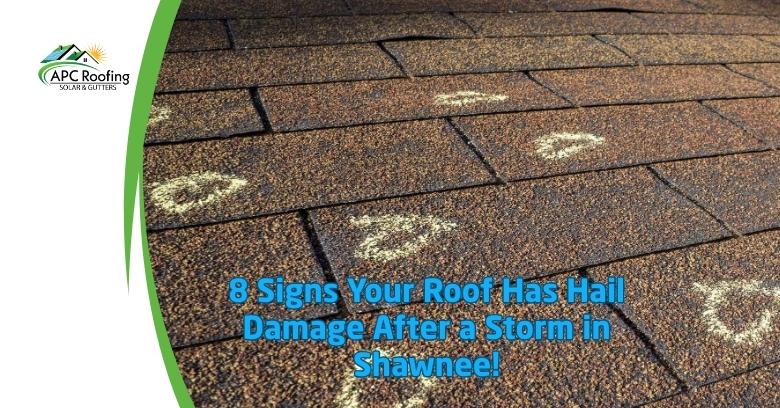
Storms crossing the colder end of our territory carry the largest stones, and the size eases as a storm tracks eastward. An impact packs the top dressing into the body of a shingle, and a dimple stays on a shingle after a storm passes.
A shingle blocks water through an inner core, not the shingle's own face, and a dent at that depth reaches the material that matters most. A struck area of a shingle runs down faster than a sound area beside a struck spot, so a covering with widespread hail damage develops trouble in scattered places.
Beyond the Roofline – a Second Place to Look
Impact a shingle survives leaves a mark on a metal cap, and nothing pushes a bent surface back into shape once calm returns. A collar broken by a strike quits sealing where a pipe passes through a roof, so a stain indoors turns up close under the opening. Dents along a gutter's face seldom stop a gutter from doing a full job, though a squashed downspout keeps the length above a squashed section from emptying out.
Every light-gauge piece up on a roof gets a separate look on the same trip, which keeps a whole roof in one set of findings. A storm strong enough to scar the shingles usually leaves a matching toll on the metal, and the state of that hardware often hints at how hard the shingles were struck.
A Trickle of Sediment: Worth a Second Glance
Crushed rock on a shingle's surface stands between sunlight and the asphalt below, and a bare patch left exposed hardens and splits within a season. Wind and rain together push stray silt toward a downspout, so a drift of sand at that point tells a roofer something worth knowing.
Bare spots widen as the sheet beneath a bare patch dries out, so a minor fault becomes a reason for replacement later on. Whatever collects at an outlet used to be part of the covering, so the next question is simply which face shed the most.
Wind-Blown Rain: Why a Sound Roof Still Drips
Every overlap in a shingle assembly assumes gravity alone does the moving, which is why angled weather overwhelms defenses built only for a plumb, downward arrival. A turbine housing passes rain through once wind reaches a certain speed, and dampness pulled in that way lands on the insulation nearby.
A Falling Limb: Worth Opening Up
Considerable energy arrives through one narrow patch, and the framing bears force the finish alone never reveals. A board can crack even though the covering keeps a normal shape from above, and the underside tells a roofer what a glance from above cannot.
Limbs raking a roof leave sweeping lines of exposed asphalt along the way, and the outline stands out clearly once the pattern is known. Reaching a cracked board usually means lifting the shingles above the break, and the scope of the job depends on what lies beneath the surface.
What the Attic Shows – Quick to Check
A gleam higher up signals a gap in the roof, and the precise location can be pinpointed against a truss or the end wall. A wet section of decking darkens and rust often follows at fastener tips, and the darkest mark generally sits closest to the actual opening.
A sunken patch in loose fill points to a regular drip somewhere overhead, because crushed fibers hold far less warmth than fibers left airy. Wind forcing air through an opening can carry moisture well past the covering, so nothing on the covering needs disturbing at all in a case like that.
Ceilings and Walls – What the Damage Tells You
Discoloration overhead turns up well beyond the leak, not right next to the start, because the flow often runs along a rafter for some distance before falling. Blistered coating shows paint pushed away from behind by trapped moisture, and appearance on that surface says almost nothing about the size of a break.
A drip at a fan or a light is reason to cut the breaker without delay, and live wiring beside water is left to an electrician. Staining on both sides of a chase usually points at the metal overhead, and the reglet sawn into the brick is examined as part of the same check.
Where Surfaces Come Together: What a Gale Finds
Counterflashing set into masonry has to pin an apron in place at the same time, so the entire system is only as strong as the weaker of the two parts. Uplift at a gable can twist a strip of edge metal out of line, and the damage travels along that whole run once the break starts.
Caps at the summit of a roof are unshielded on either side of the peak, and the seam stays unsealed the entire distance the instant that connection fails. A section that lifts leaves an unbroken slot running the same length, and the volume getting in through a gap like that is large, not a trickle.
Glass Placed Into the Roof – Points of Failure
A curb under a skylight is built above deck level for a reason, and every face of that structure gets a flashing cut just for that face. A direct knock can craze the outer pane of the unit while the inner pane stays sound, and nothing laminated gets mended in place.
A polycarbonate cover can take a hit and end up scored across the surface, and warm weather can lengthen a split that started out tiny. Cloudiness inside the glass is a broken seal, not everyday dirt, and that fixture gets swapped rather than dried out.
Swamped Within Seconds: the Overshoot
Half an inch of rain in a few minutes can overwhelm what sits at the eave, and whatever misses the channel runs down the siding underneath. Leaves and grit washed off a roof can choke the drain opening at the point of collection, which puts strain on brackets never designed to take that much moisture.
Not the Final Answer: Made to Outlast the Wind
A patch of poly over a break can buy time until conditions allow proper work, so nobody should mistake that covering for a completed repair. A covering run over the ridge and down both slopes moves water downhill as designed, which curbs a sudden surge from ripping the covering free.
A sheet left loose at the corners can turn into a sail in a stiff wind, which does more harm than leaving a gap exposed in the first place. Nailing a cover to a clean slope adds unnecessary work down the line, so a roofer plans exactly where every screw for that cover lands.
Sizing Up the Aftermath: What a Roofer Writes Down
Every affected area gets photographed before anything is disturbed, and the record shows the roof exactly as things stood after the storm. Comments in everyday language accompany a description of each spot, since scale is difficult to judge without a fixed reference.
Conditions keep changing what a later look would actually find, and the earliest check usually captures the fullest state. Anyone reviewing the file sees the same pictures and notes a homeowner already has, and the record describes the roof, and nothing beyond the roof.
When Everyone Arrives Together – Why the Hurry
Vehicles with out-of-area plates can work a neighborhood for days after a big storm, though picking the sound ones out from the rest can be difficult. Paperwork handed over on a driveway still counts as a real contract, and nobody should feel rushed through terms that matter.
A contractor whose office sits nearby stays reachable long after the work is done, which is no small consideration when picking who does the work. A deal that cannot survive a single night of thought is not worth taking, and sleeping on a choice like that is simply good sense.
Another Blow Lands – What Gets Left Behind
A covering with parted bonds has less holding capacity in reserve, and each following round can claim more than the round that came first. A fold formed in one storm marks a weak line that never fully disappears, and granules often shed heavily from exactly that spot.
A second wave of runoff can travel past a roof deck and straight indoors, so work that started on a roof can spread into the rooms below. Repeated soaking softens the wood fibers surrounding every fastener, which turns what should be a simple job into a larger, structural one.
What to Watch For After a Storm – a List for a Homeowner
- Corners of shingles curled or torn loose, plain enough from a driveway.
- Bruises along an aluminum edge, wherever thin sheet sits exposed.
- Sandy drifts along a gutter run, heaviest right after a hard rain.
- A visible gap in a deck seen from inside, best looked for at midday.
- A wet patch upstairs that returns again and again, however small a mark looks at first.
- Peeling near the top of a wall, strongest on the side wind blew from.
- A skylight with bent flashing around the frame, once a storm has cleared.
- Gutter spikes backed partway out of the wood, where a fall has gone visibly wrong.
How APC Roofing Takes On Storm Damage Roofing in Daytona Beach Florida – A Closer Look
The first steps happen at ground level, watching the yard for debris before a ladder comes out, and stray pieces scattered nearby offer the first clue about what gave way overhead. Up top, each accessible plane gets covered end to end, and the framing gets checked from inside once the surface pass is done.
The pictures and dimensions go into a plain account kept on file, and each page gets built so a reader can trace every point on the house. The advice gets explained, not simply stated as a conclusion, and what happens after that is entirely up to the homeowner.
Storm Damage Roofing for a House in Daytona Beach Florida: Getting a House Sound Again
Call 386-356-2111 to have a roofer come out.
Snow Banked on a Slope: Built to Take More
In the colder end of our territory, a deep white blanket bears down on the framing beneath, and freezing and thawing in cycles makes the load denser over time. Ice built up along an eave can hold meltwater back behind that ridge of frost, and water held back that way can find a path up under the lowest courses.
Up at the colder end of our territory, a lower roof beside a taller section collects drifting snow, which is often where sagging first becomes visible. A mass shedding off the eaves can strip away hardware never meant to hold that force, which can leave dents wherever a large piece comes down.
A Harder Environment Near the Shoreline – More Upkeep for Fixtures
At the coastal end of our territory, a large system can take a full day to move through, longer than a short spell anywhere else in our service area ever would. Sustained force can tire sealant strips and nail holes alike, and failures can multiply the more that sort of weather lingers.
Water thrown at a house again and again can test every joint in the building envelope, so leaks during that kind of storm can show up in spots that never see water otherwise. Homes at the coastal end of our territory generally go up with tighter nailing along every edge, so replacement pieces go on using the stricter local pattern.
A Patch on an Established Surface – How Close a Repair Can Get
A newly made batch rarely lines up in shade with an aged covering nearby, which holds true across every manufacturer's lineup. A mended area on a visible elevation can show up as a distinct patch, while work on the back of a house draws far less attention.
When a specific line has been dropped, a similar design takes over that spot, and the outline rarely lines up with total precision. Scattered repairs across one plane tend to stand apart from a distance, and an even surface is often the whole point of a full redo.
What a Homeowner Should See Afterward – the Details That Hold Up
New shingles settle smoothly into place once installation finishes, and the reveal of each course matches the courses nearby. Metal at a wall gets stepped in stages as the shingles rise, and caulk never ends up as the thing actually keeping water out.
A fastener lands in the strip built to receive a nail, and the count per shingle matches the maker's specification. An image of new shingles taken soon after the work finishes makes a handy reference, since a later inspection can see exactly what section was replaced and when.
If Storm Damage Roofing is on your mind after a hard blow in Daytona Beach Florida, phone APC Roofing at 386-356-2111 and a roofer will come out and look the covering over. Every mark gets checked, measured and photographed on the visit, and a homeowner gets walked through exactly what was found.
Verified

Verified
Verified
Verified