There’s a water stain on the ceiling, but from the yard your tile roof looks fine. Or a storm cracked a handful of tiles near the ridge, and you’re wondering if it’s a quick fix or the start of something expensive. Either way, the hardest part of tile roof repair in Clermont is that the real problem is usually hidden under the tile.
You might also be nervous about who you let up there. Tile cracks under the wrong step, and a careless repair can leave you with more broken pieces than you started with. You deserve someone who finds the actual source of the leak, fixes that, and tells you honestly if the roof needs more.
APC Roofing is GAF Certified, licensed in Florida (CCC1337030) and insured, and based right here in Clermont. Your inspection is free. Call 407-270-1129 to set it up.
Why a tile roof leak is hard to track down
On a tile roof, the tile sheds most of the rain, but the underlayment beneath it is what keeps your house dry. Water that slips past a cracked tile or a gap at the flashing lands on that underlayment and runs downhill until it finds a weak spot. By the time it drips through, it may be several feet from where it got in.
So a good repair starts in two places. From the attic, the underside of the roof deck shows stains and soft spots that point toward the entry. From the roof, a careful look at the tiles, valleys, ridge and flashing above that area narrows it down. Patching the spot right over the stain, without finding the source, is how a leak comes back next summer.
Common tile roof repair in Clermont
These are the problems that come up most on Central Florida tile roofs.
Cracked and broken tiles
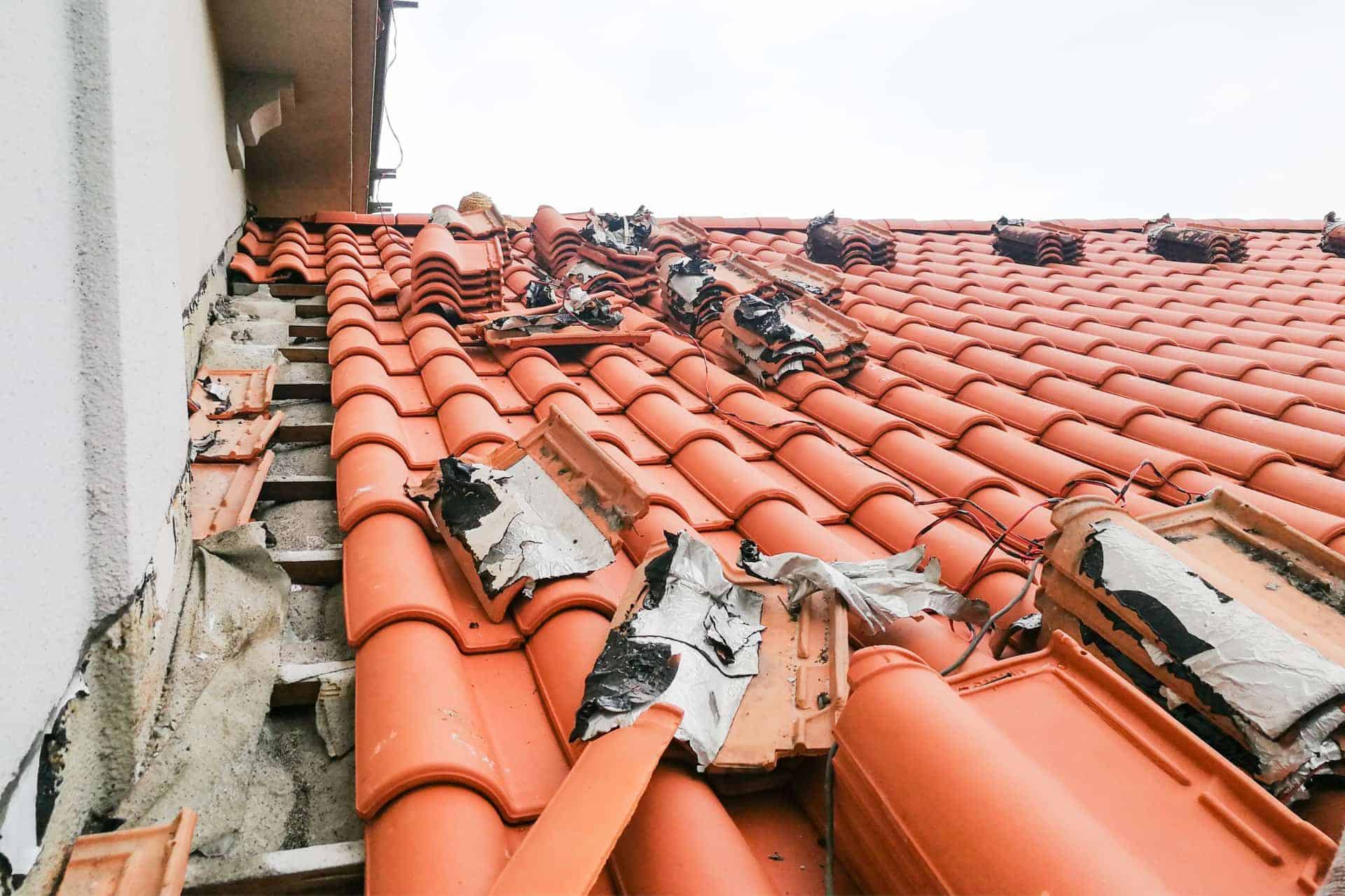
Falling limbs, wind-blown debris, hail and foot traffic all crack tile. One broken tile leaves the underlayment beneath it open to sun and rain. The fix is to remove the broken piece and set a matching one in its place, fastened the way Florida’s building code requires.
Slipped or loose tiles
Tiles held with adhesive or fasteners can loosen over time, especially after hurricane-season wind. A slipped tile leaves a gap and puts strain on its neighbors. Loose tiles get reset and secured.
Ridge and hip caps
The rounded caps along the peaks and outside corners take more wind than any other part of the roof. On older roofs they’re often set in mortar, and years of daily heating and cooling crack that mortar until the caps rock or let water in. Those caps get reset and secured.
Valleys
Valleys carry more water than any other spot on the roof, and they’re where leaves and pine needles pile up. When debris dams a valley during an afternoon downpour, water backs up under the tile edges. Clearing it, and repairing the valley metal if it’s rusted or damaged, usually stops the leak.
Flashing at walls, chimneys and pipes
Wherever the roof meets a wall or something pokes through it, metal flashing seals the joint. Sealant along those edges dries out in the Florida sun, and pipe flashings crack or pull loose. A proper repair lifts the nearby tiles and replaces or re-seals the flashing underneath, rather than smearing more sealant on top.
Worn underlayment in one area
Sometimes the underlayment has failed in one section, often below a valley or a spot that held debris for years. The tiles in that area come off, new underlayment goes down and overlaps the old layer correctly, and the tiles go back on.
How the repair is done
Tile has to be handled with care. Experienced roofers step only where tiles overlap and are supported, and they lift surrounding tiles by hand to reach the damage instead of breaking them out. Removed tiles are set aside and reinstalled.
Matching is the other piece. Some tile profiles and colors have been discontinued, and new tiles may not match weathered ones perfectly. Salvaged tiles from a less visible part of the roof can sometimes fill in a front-facing spot. You’ll see your options before the work starts.
When repair isn’t enough
If the underlayment has worn out across most of the roof, spot repairs turn into a chase from one leak to the next. At that point, there are two better options. If the tiles are still sound, they can be lifted, the whole roof re-underlaid and the same tiles reinstalled. If the tiles themselves are failing, or you want a different look, a full tile roof installation may make more sense. Our tile roofing in Clermont page compares all three.
After a storm
If a storm cracked or shifted your tiles, have the roof looked at even if nothing is leaking yet. If you decide to file an insurance claim, you file it with your insurance company and pay your deductible. We document the damage with photos, give you a written estimate and work with your adjuster. Our insurance roof claims page explains the process.
How it works with APC Roofing
- Book your free inspection. Call 407-270-1129 or request your free estimate online.
- Get a clear, honest assessment and estimate. You’ll get photos from the roof and the attic, a plain explanation of where the water is coming from, and a written estimate for the repair.
- The repair gets done and the site gets cleaned up. Broken pieces and debris leave with the crew.
A slow tile leak can rot the roof decking for months before it shows on the ceiling. Fixing it early keeps it a repair.
Tile roof repair questions from Clermont homeowners
Can you replace just one cracked tile?
Usually, yes. A single broken tile can be removed and replaced with a matching one, as long as the underlayment beneath it is still in good shape.
Is it safe for me to walk on my tile roof?
It’s better not to. Tile cracks easily when it’s stepped on in the wrong place, and it’s slippery when wet. Check it from the ground, or take photos with a zoom lens instead.
Will the repaired tiles match the rest of my roof?
They’ll be close. Exact matches aren’t always possible on older or discontinued tile, and new tile may look brighter than weathered tile at first.
How much does tile roof repair cost?
It depends on what’s damaged and how much tile has to come off to fix it. The inspection and written estimate are free, so you’ll know before you commit.
Get your tile roof dry again
Call 407-270-1129 to book your free inspection. You’ll know where the water is getting in, what it takes to stop it and whether your roof has years left, so you can stop watching the ceiling every time it rains.