
Water is dripping through the ceiling, a limb just came down on the house, or the wind peeled a strip of shingles off and the next storm is already building. When you need emergency roof repair in Altamonte Springs, everything feels urgent at once, and it’s hard to know what to do first.
Take a breath. Most roof emergencies can be brought under control the same way: protect the people and things inside, stop the water, then fix the roof properly once it’s safe. You don’t need to make a big decision tonight.
APC Roofing repairs storm-damaged and leaking roofs across Central Florida. We’re GAF Certified, licensed in Florida (CCC1337030) and insured. Call 407-270-1129 and tell us what’s happening.
What to do right now
Before anyone thinks about the roof itself, a few steps inside the house can save a lot of damage:
- Stay off the roof. A wet roof is slick, storm damage can hide weak spots, and lightning often lingers after the rain. Leave the climbing to a roofer once the weather allows.
- Move what you can. Get furniture, electronics, rugs and papers out from under the leak, and put down buckets and towels.
- Watch the ceiling. If the drywall is sagging or bulging with water, keep everyone out from under it. If water is near light fixtures or outlets, turn off power to that area at the breaker if you can do it safely.
- Take photos. Snap pictures of the ceiling, the wet areas and anything you can see of the roof from the ground. If you file an insurance claim later, those photos help.
Then call us at 407-270-1129. We’ll ask what you’re seeing, talk through what makes sense and set up a time to get the roof looked at.
What causes most roof emergencies in Central Florida
Altamonte Springs gets the same weather as the rest of the Orlando area, and that weather creates a predictable set of emergencies.
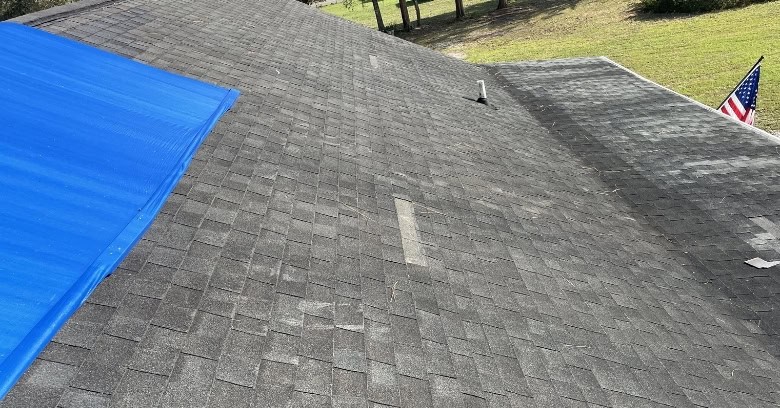
Wind damage. Summer thunderstorms and hurricane season both bring strong gusts. Shingles lift at the edges and ridge first, and once a few tabs are gone, rain gets straight to the underlayment.
Falling limbs. Large shade trees are common in established neighborhoods. A heavy branch can crack tiles, puncture decking or knock flashing loose in one hit.
Wind-driven rain. A roof that’s fine in a gentle rain can leak in a sideways downpour. Water gets pushed up under shingles, through worn pipe boots and behind flashing at walls and chimneys.
Aging roofs giving out. Sometimes there’s no storm at all. A roof near the end of its life reaches a point where sealant, boots and flashing fail together, and a slow problem turns into an active leak.
Emergency roof repair in Altamonte Springs, step by step
Stopping the water
The first goal is getting the house dry. If the damage can be repaired right away, it is. If it can’t, because of weather, the size of the damage or materials that need to be ordered, the damaged area gets a secure temporary cover. A tarp only works if it’s fastened properly and runs up over the ridge or past the damaged area, so wind can’t get under it and rain can’t run beneath it.
Finding the real cause
A leak’s stain is often several feet from where water got in. Water can travel along the deck and rafters before it drips. We trace the path from the stain back to the source and check the attic for wet insulation and decking, so the fix lands where the problem actually is.
The permanent repair
Once it’s safe and dry enough to work, the damaged area gets repaired properly: new decking where wood is soft, new underlayment, matching shingles or tiles where possible, and new flashing or pipe boots where the old ones failed. You get photos of what was found and what was done. For more on tracing slow leaks, see our page on roof leak repair in Altamonte Springs.
If the damage came from a storm
Storm damage is often an insurance matter. You file the claim with your insurance company and pay your own deductible. We document the damage with photos, provide a written estimate and work with your adjuster. Our storm damage roof repair page explains that process in more detail, and if a hurricane was involved, see hurricane damage roof repair.
After a big storm, out-of-town crews often go door to door. Ask for a Florida license number and proof of insurance before you let anyone on your roof, and don’t sign anything on the spot.
How it works with APC Roofing
- Book your free inspection. Call 407-270-1129 or request a free estimate online.
- Get a clear, honest assessment and estimate. You’ll hear what failed, whether a repair will do or the roof needs more, and get a written estimate with photos.
- The roof gets fixed and the site gets cleaned up. Damaged material and debris leave with the crew.
Emergency roof questions from Altamonte Springs homeowners
Should I get on the roof to put a tarp on myself?
We’d recommend against it. Wet, storm-damaged roofs are dangerous, and a tarp that isn’t secured well can blow off and let even more water in.
Will my insurance cover an emergency roof repair?
That depends on your policy and what caused the damage. Many policies cover sudden storm damage. Your insurance company makes that call, and we provide the photos and estimate they’ll want to see.
Can a leak be fixed, or do I need a new roof?
Most emergency leaks can be repaired. If the roof is old or damaged all over, we’ll show you the evidence and you decide.
What if it’s still raining?
Do what you can inside to catch water and protect your things, and call us. Permanent repairs need dry weather, so a temporary cover may come first.
From a scary night to a sound roof
A roof leak never comes at a good time. Getting it covered and properly repaired early keeps a ceiling stain from turning into wet insulation, soft decking and a much bigger job.
Call 407-270-1129 and tell us what’s going on. Soon you’ll have a dry house, a roof you can trust again and a clear idea of what it cost and why.


















