
If the low roof over your porch, carport or addition is covered in black rubber, it’s almost certainly EPDM. Maybe a seam has started lifting at one corner, or there’s a soft brown stain on the ceiling under it, and you’re wondering whether someone can patch it or whether the whole thing has to go.
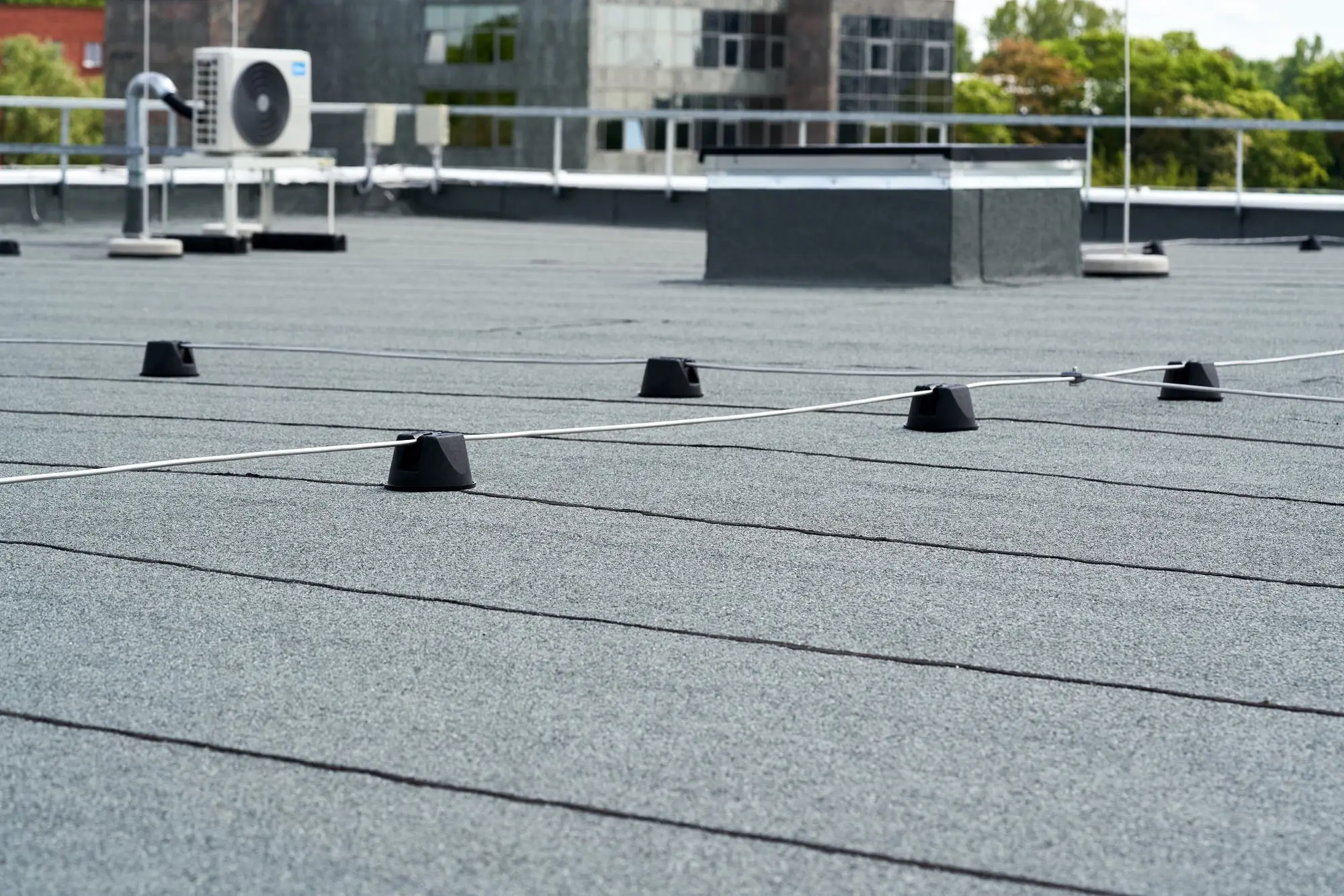
EPDM roofing in Altamonte Springs has been on homes for decades, and plenty of it still has years left. Some of it doesn’t. You deserve an honest read on which kind you have before you spend money.
APC Roofing is GAF Certified, licensed in Florida (CCC1337030) and insured, and your inspection is free. Call 407-270-1129 and we’ll take a look.
What EPDM is
EPDM is a synthetic rubber membrane that comes in wide, flexible sheets. It’s laid over insulation or a cover board on a low-slope roof, and the sheets are joined at overlapping seams that are cleaned, primed and sealed with special tape or adhesive. Around pipes and along walls, the rubber gets turned up and flashed so water can’t get behind it.
It’s tough, it stretches without cracking and it handles foot traffic reasonably well. Its weak points are almost always the seams and the flashing details, not the open sheet.
How EPDM ages under the Florida sun
Black rubber absorbs heat. On a summer afternoon in Altamonte Springs, an EPDM roof surface gets very hot, and some of that heat moves straight down into the room below. If your Florida room or addition feels much warmer than the rest of the house, the roof is often part of the reason.
Heat also works on the seams. The tape and adhesive that hold each lap together soften and harden through daily temperature swings. Over the years, a seam can start to release, usually first at a corner where two laps meet. Once a corner curls up, wind-driven rain from a summer storm can find its way under it.
Older EPDM can also shrink a little over time. As it pulls tight, it can tug at the flashing along walls and at the edges, opening small gaps where the membrane turns up.
Florida’s afternoon downpours are the other strain. Water that ponds on a low spot for days keeps the seams wet and speeds up wear. And during hurricane season, a loose edge gives wind a place to get under the sheet.
EPDM roofing in Altamonte Springs: repair or replace?
A lot of EPDM problems are repairable. A curled seam corner, a small puncture from a falling branch or a cracked flashing around a pipe can usually be fixed with a cover patch. The area gets cleaned and primed, and a new piece of membrane with rounded corners goes on over the damage. Rounded corners matter because square ones tend to lift. All of this needs a dry surface to bond, so in the rainy season repairs get timed around the weather.
Replacement starts to make sense when seams are failing along much of their length, the rubber has gone brittle, or water has soaked the insulation across a wide area. A patch can’t dry out wet insulation, and covering it just traps the moisture. Our flat roof repair in Altamonte Springs page goes into how leaks get traced.
If you replace it, should you stay with EPDM?
That’s a fair question in Florida. A new EPDM roof is still a good roof when it’s installed well. Many homeowners here switch to a white membrane instead, mostly for the heat. TPO roofing in Altamonte Springs reflects much of the sun’s energy, and its seams are heat-welded rather than taped.
Membrane thickness matters with either choice. It’s measured in mils (thousandths of an inch), and 45 and 60 mil are common on homes. Every thickness looks the same from the yard, so make sure the estimate you get lists it.
Whichever way you go, the roof also needs proper slope toward its drain, solid edge metal and a correct tie-in where the flat section meets the main roof. Those details decide whether a new membrane stays dry. You can see how all of it fits together on our flat roofing in Altamonte Springs page.
How it works with APC Roofing
- Book your free inspection. Call 407-270-1129 or request a free estimate online.
- Get a clear, honest assessment and estimate. We check every seam, the flashing, the edges and the drain, and look for wet insulation where there’s a leak. You get photos and a written estimate. If a patch will do, that’s what we’ll recommend.
- Your roof gets done and the site gets cleaned up. Financing is available through Aqua Finance, Fortifi, Hearth and Home Run Finance.
EPDM questions from Altamonte Springs homeowners
Can a rubber roof be patched?
Yes, in most cases. Seam corners, small punctures and flashing leaks can usually be repaired with a primed cover patch, as long as the insulation underneath is still dry.
Why is the seam on my rubber roof lifting?
Usually the seam tape or adhesive has weakened with years of heat. It tends to show up first at corners where laps meet. Catching it early keeps water out of the insulation.
Is EPDM or TPO better for a Florida home?
Both can work. TPO’s white surface keeps the roof cooler, which is why many Florida homeowners choose it. EPDM is flexible and handles foot traffic well. Your roof’s layout and drainage matter more than the label.
How long does an EPDM roof last?
A lot depends on how it was installed, how well it drains and how much sun it takes. Ponding water and failed seams shorten its life. An inspection will show you where yours stands.
Keep the room below dry
A lifted seam on a rubber roof lets in a little water at a time, and the insulation hides it until the ceiling stains. Call 407-270-1129 to book your free inspection. You’ll find out whether a repair will carry you for years or whether it’s time for something new, and you’ll make that call with the facts in front of you.


















