Looking for Commercial Roofing Installation in Altamonte Springs Florida?
APC Roofing replaces and patches membranes on warehouses, shops and offices, taking in the edges, the outlets and every curb.
Dial 407-270-1129 and a roofer will go up top and check every part.
Workplaces and Storefronts – Some Background
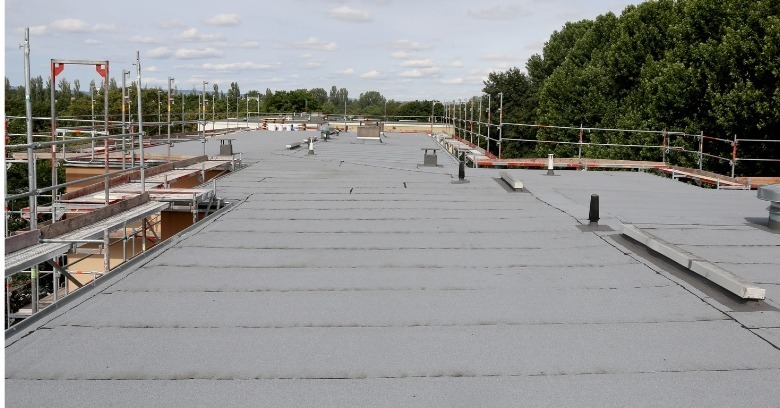
Customers, goods and running machines fill the space beneath the covering, and dripping water can idle a conveyor or spoil a pallet of product. Wide commercial buildings carry a top surface that is nearly flat, so drainage and wind resistance are worked out by calculation.
Mechanical units, vents and satellite dishes share the space overhead, and every line or support is a hole that must be flashed. The business inside shapes the choice of system, and a freezer warehouse needs details an office never does.
Membrane Families: a Short Guide
A single-ply job uses one layer of TPO, PVC or EPDM, modified bitumen is asphalt toughened with polymers and laid from rolls, and built-up roofing mops hot tar between plies of felt. Thermoplastic seams are welded with heated air, whereas rubber splices rely on primer and adhesive tape.
Restaurant hoods blow grease out beside the fans, and oily buildup degrades asphalt and EPDM coverings, so PVC is a common pick for the spot. Built-up plies under a gravel layer make a heavy, durable assembly, because the loose aggregate keeps ultraviolet light off the bitumen.
Commercial Steel: What to Watch
Through-fastened sheets take a screw at intervals across the flats, and the threads bite into the purlins beneath. Rubber washers under the heads harden and crack in the sun, and the fasteners wiggle loose as the sheets expand and contract.
Standing-seam panels attach with clips tucked under the raised seams, which lets each pan glide lengthwise. Rust is often found at overlaps and cut edges, and a coating over steel that is still sound can slow the damage.
The Deck – Why the Base Counts
Attachment methods are limited by what the original builders put in, and reroofing leaves the framing in place. Fluted steel accepts screws readily, concrete is glued or drilled for anchors, and plywood takes nails or plate fasteners.
Moisture trapped for years can rust through metal decking, and failing stretches are replaced rather than covered. Wherever the interior is exposed, the underside gets a look from a lift, and exploratory openings from above reveal the remainder.
How a Membrane Is Secured: Weighing the Choices
Some commercial sheets go down with plates and screws at the seams, adhered work is glued from edge to edge, and ballasted sheets stay put under a blanket of stone. The kind of deck, the height and the wind at the site decide the pick, and an engineer confirms the framing can carry any added weight.
Between the plates, a fastened sheet balloons in stiff gusts, whereas glue keeps a sheet calm only over a dry, clean base. Inspecting a ballasted system takes time, since rock or pavers have to be cleared before a lap can be read.
Wind on Low-Slope Work: What Codes Expect
Suction peaks at the corners, because swirling eddies form where the air crosses the perimeter. A band along each side takes somewhat less, and the open middle is loaded more gently.
Fasteners go in closer together near corners and edges, with the layout drawn from design tables for the site. A thinly anchored outer angle can peel back, and the opening grows as each gust gets beneath.
Rigid Foam – Several Jobs at Once
Polyisocyanurate panels cover the deck with offset joints, and a firm cover board spreads concentrated weight. Insulation reduces the load on air conditioning and furnaces, and tapered pieces create the fall that sends rain to the outlets.
Moisture in polyiso drives the R-value down sharply, and damp material sits against steel until the flutes corrode. An infrared scan at dusk, backed by cores, outlines the affected zone, and nothing ruined is left under a new covering.
Drainage Hardware – Parts of the System
Each interior sump wears a cast strainer dome, and the bars catch bags, leaves and gravel before the pipe. When the grate mats over, rain has nowhere to go, and a pond spreads across the field.
Codes call for a backup outlet mounted above the main drain, and a stream from the upper spout shows the ordinary route has stopped. Ponding piles extra weight onto joists sized for far less, and a puddle still there two days after a storm indicates a sag or a matted strainer.
Locating an Opening Overhead: Why Care Pays
The mark on a suspended ceiling shows where moisture landed, but the split in the sheet is often somewhere else entirely. Steel decking guides runoff down the corrugations, and joints between boards lead a trickle further still.
Up top, the laps, curbs and outlets uphill from the mark are inspected, and a flood test on a small section can reveal a stubborn leak. Repairs aimed at the spot directly over the drip tend to miss, so a fresh ring appears in the next shower.
Rooftop Mechanical Units – Leak-Prone Spots
Each machine is bolted to a curb that rises from the deck, and the sheet is carried up the faces and tucked under metal. Each folded inside corner takes careful work to stay watertight, and a rushed job leaves gaps for rain.
An equipment change often brings an adapter curb that no roofer ever flashed, so a new leak follows within a season. A trickle from a condensate pipe wears a streak of slime into the membrane, so the flow should be carried to a drain.
Smaller Openings: Details That Add Up
Each round stack wears a prefabricated boot with a clamp, and anything irregular is dammed with a pan and filled with pourable sealer. Sun and seasons shrink the compound until cracks open, so topping up is part of routine upkeep.
Conduit and gas lines belong on free-standing supports, since every screw driven through the sheet is a future leak. A rubber pad beneath every foot distributes the weight, and the buffer takes the wear as everything expands and shifts.
Domes and Hatches: Where Attention Goes
Years of strong sun make plastic lenses chalky and brittle, and cracks spread from the screws at the rim. A tired gasket on a skylight admits water, and the stain below often gets blamed on the membrane.
The hatch at the top of the ladder sees daily traffic on some buildings, so the latch, springs and weatherstrip eventually give out. Automatic smoke vents are built to burst open during a fire, so nothing placed during roofing work may pin the covers down.
Masonry Above the Roofline – What Goes Where
At the vertical face, the sheet climbs as base flashing, a screwed termination bar secures the top, and counterflashing hangs down to shield the fastened line. A coping cap crowns the parapet and throws rain clear, but an open joint between sections lets storms into the wall below.
Brick and block that have weathered let water migrate indoors, and the ceiling stain that follows mimics a membrane problem. An inspection covers the coping, the counterflashing and the wall as well as the membrane, and cracked mortar gets repointed rather than smeared with sealant.
Gravel Stops and Fascia: Rated for Uplift
A cleat screwed to the nailer catches the folded hem of the flange, and a cover strip ties the sheet to the upper face. The profile chosen has to be rated for wind at the building's elevation, and an underrated section can let go in a gale.
Gutters on a large building must swallow drainage from an enormous area, so hanger spacing and outlet size follow the flow. Crumpled or raised trim is a clear repair item, because a firm refastening spares the sheet a blow-off.
Everyone Who Goes Up There – Guarding the Surface
Electricians, cable installers and HVAC crews all make regular trips up, and a path gets a little more scuffed each season. A stray sheet-metal screw is driven into the membrane underfoot, and an access panel set down on a corner slices a gash.
Heavy walkway pads laid along the route show where to tread, so heels grind on a tough layer and spare the waterproofing. A note at the ladder can ask every trade to stay on the protected strips, and screws and scraps can be bagged and taken down.
Planned Care for a Membrane: Small Jobs Kept Small
A walk-through twice annually suits most commercial coverings, plus a further check after a storm with high wind. Upkeep includes emptying every strainer, the seams are traced with a probe, and hardened sealant is noted for redoing.
Before the stormy part of the year, attention goes to outlets and perimeter flashing, and a follow-up hunts for whatever a harsh stretch of weather pulled apart. Little defects go into a log, each tied to a spot on the plan, which lets repairs be scheduled instead of rushed.
Paperwork Worth Keeping – Notes That Help
A clear drawing pins down the position of each unit, drain and hatch, and the assembly is described from the structure to the membrane. Each fix is logged with a date and photographs, and core and scan results are added whenever taken.
Older properties frequently hold no notes on the covering, and each roofer who climbs up has to investigate afresh. Roof records stay with the site office, so a later buyer or manager starts out informed.
Mend, Coat or Start Over: Reading the Evidence
Isolated defects on an otherwise healthy membrane call for patches, and a worn surface with dry layers beneath can take a fluid-applied finish. Widespread waterlogged boards signal a full replacement, and so do seams that crack wherever flexed, though years alone never decide the matter.
Cleaning, priming and repairs underneath come before any coating, while lingering dampness gets bottled up. Removing only the ruined parts can make sense as a middle option, provided the rest of the field has good years left.
Reroof Paths – the Rules and the Reasons
Recovering adds another membrane on top of the current roof, and a cover board sits in between. Code permits a second covering, never a third, as long as the insulation below is dry.
A full tear-off removes every layer, right down to bare metal or concrete, so rusted or soft decking gets fixed in the open. A tapered system can be designed to empty the low spots, and crickets set between outlets push runoff aside.
Warning Signs: Before a Small Fault Grows
- A steady stream from the backup scupper in a storm, which betrays a choked everyday outlet.
- A ceiling tile whose stain spreads after every shower, which reveals the foam above is getting soaked.
- Algae streaks on the siding beneath a scupper outlet, which can suggest flashing trouble near the top.
- Fascia metal that flutters or rattles in a gust, which can put the membrane at risk in a storm.
- A ceiling that sags or bows between the joists, which can indicate an overloaded deck or a plugged outlet.
- A hazy plastic dome over the warehouse floor, which may give way under a misstep.
- Rust spots spreading on the underside of a steel deck, which suggests an opening some distance uphill.
- A gutter that overflows along the front edge in rain, which can send runoff behind the fascia.
How APC Roofing Works on Commercial Roofing Installation in Altamonte Springs Florida – Our Sequence
The first thing we examine is each drain, scupper and overflow, and after the outlets we move to the laps, curbs and edge metal. If there is a leak, the layers under the membrane are tested, so nothing is proposed until the results are in.
Each visit ends with a written account, a plan sketch and photographs, and each item carries a location note. The conclusion is repair, restore or replace, and you get reasons to weigh for yourself.
Commercial Roofing Installation for Property Owners in Altamonte Springs Florida – A Clear Picture First
Phone 407-270-1129 and a time to look things over gets agreed.
Life Under the Job – Planning Together
Drilling a steel deck sounds like thunder to everyone below, and adhesive fumes can drift into rooftop air intakes. The loud stages are planned with the building manager ahead of time, and vents beside the work can be covered while the cement sets.
Torn-off material goes down a chute or on a hoist, and shelving or machinery directly below can be tarped. Low-odor adhesives cut down the smell considerably, which makes the gentler kind a sensible pick over offices.
Sequencing a Big Replacement: Avoiding Surprises
Crews remove only as much old covering as can be made watertight by evening, and fresh foam and sheet cover the bare area without delay. A cutoff between finished and untouched portions keeps rain out overnight, and the patch is trimmed off when roofers return.
Radar and forecasts govern how much comes off, and a threatening sky scales the plan back. A sudden soaking ruins exposed insulation, and runoff may find a path to the offices underneath.
Regional Conditions – What Changes by Market
At the colder end of our territory, hailstones and drifted snow are real concerns, so a hard cover board and an engineer's review of the framing are sensible. Across all the towns we serve, UV and high temperatures age a membrane, and a white reflective surface cuts the warmth absorbed.
Hurricanes at the coastal end raise the bar for anchoring, and tropical downpours need generous overflow capacity. Some adhesives will not cure below a set temperature, but heat-welded seams tolerate chilly air as long as the deck is dry.
Guarding Against Falls: a Standard Part of the Job
A perimeter without a tall parapet leaves an open drop, and anyone close to the edge wears a harness tied to an anchor. Skylight lenses cannot take a body falling onto the plastic, so every opening should get a screen or a railing.
Permanent anchors help everyone who services the units, and a gated ladder hatch adds another safeguard. Any missing guard is noted in our findings, since a fall from even a single story can cause serious injury.
For help with Commercial Roofing Installation in Altamonte Springs Florida, contact APC Roofing at 407-270-1129. We will go over the entire field, drain by drain and seam by seam, and a written report follows, with the next step up to you.
Verified

Verified
Verified
Verified
Verified