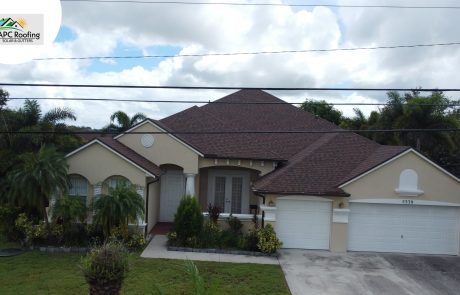
Comparing Options for Clay Tile Roofing for a Home in Kansas City Missouri?
APC Roofing fixes and relays barrel, S-shaped and flat profiles, including the valleys, ridges and wall flashings.
Reach us at 913-398-5020 and the answers you get will be in everyday language.
How the Covering Is Built – an Overview
Rows of clay or concrete pieces carry the bulk of the rain down to the gutters, but an underlayment beneath the surface is what keeps the house dry. A hard blow drives some moisture between the joints in any storm, so the layer beneath has to guide that seepage out at the eave edge.
One broken tile rarely means water inside the house, because the underlayment underneath has not been disturbed. Water that finds a hole in the underlayment may travel down the boards for some distance, and the damp patch may form far from where it entered.
Choosing Between Materials: Differences Worth Knowing
A clay piece starts as earth pressed to a profile and baked, and the color runs all the way through the body. Decades in strong sunlight change its appearance hardly at all, and sound stock drinks in very little rain.
A cement-and-sand mix is molded to a profile and cured to make concrete tile, but the pigment on many lines stops just under the face. The sunny side of the house fades gradually, and any chipped edge shows up gray against the weathered front. A just-installed piece looks brighter than those around it, and only seasons outdoors soften the mismatch.
A concrete piece soaks up more rain than a well-fired clay one, and toward the colder end of our territory, moisture taken in swells as it freezes. Cycle after cycle, the face can start to flake, so each product is graded for how it copes with that stress.
Common Shapes – What Differs Up Close
Mission-style barrel work lays separate pans and covers in alternating rows, and the design comes from centuries of Mediterranean building. An S-shaped tile folds the dip and the crown into a single unit, and newer houses carry it in large numbers.
The flat kind sits nearly level on the deck and resembles slate or thick shake, and rain moves over the exposed faces rather than along a trough. Needles and leaves gather in the dips of a rolled pattern, while smoother surfaces let the wind clear most of the debris.
Weight Considerations: Lighter Products Too
Per square foot, standard tile carries several times the pounds of shingles, and a house built under tile had its rafters sized for that from the start. Converting from a lighter material brings a load the original design never counted on, and an undersized frame can sag under it over the years.
The rafters, spans and bearing points get an engineer's review before a conversion like that proceeds, and strengthening is sometimes part of the answer. Low-density concrete trims much of the heft, and a house that would struggle under the standard version may take the reduced version.
Anchoring the Roof – Code and Exposure
A piece can be nailed or screwed through a hole near its head, and plenty of installations hook the courses over wood strips set across the slope. Foam-set roofs rely on beads of adhesive beneath the tiles, and a mortar bed under every unit is used on others. Wire ties or storm clips give extra hold on particular installations, and the manufacturer's instructions plus local code decide what is allowed.
Gusts tug most at the outer rows and along the hips and ridge, so the perimeter carries a denser pattern of attachment. At the coastal end of our territory, building rules written for hurricanes demand more hold-down, and the amount of foam and the number of screws are spelled out in advance. A replacement is fastened to match the surrounding courses, because levering out a glued unit without care snaps the next ones along.
Waterproofing Underneath – Gaps in the Covering
Doubled asphalt felt was the norm for a very long time, but modern jobs often get a synthetic or a self-adhered bitumen roll. Heat gathers in the space under clay or concrete and ages whatever is beneath, so the wrong sheet cracks years too soon.
Every unit shields the material under it from ultraviolet light, but a hole ends that protection and the uncovered spot deteriorates rapidly. An unstained ceiling is a poor guide to whether a missing piece can wait, because rain soon finds its way into the deck.
Work Below the Surface: Step by Step
A major job on clay or concrete can keep the original pieces, removed by hand and stacked in the yard, and damaged plywood is cut out and replaced. Brand-new waterproofing follows, and the saved tile is relaid over it. The home keeps the appearance it was built with, while everything that stops water is starting over.
A portion of the tile breaks on the way down or back up, and a brittle, weathered roof loses more than a younger one. New tile needs the same curve as the old to lap properly, and a line still in production supplies an identical match. Where nobody sells the old style any more, reclaimed tile or a close lookalike is used, though the tone can still differ a little.
Cracked and Broken Pieces – What Helps
Much of the harm on these roofs is done by someone walking, and the one responsible was often on the roof for some other job. A ladder leaned on the eave can crack the lowest course, but a standoff that holds the rails out prevents the damage.
A dead branch landing on the roof shatters everything under it, so keeping trees clear of the house removes most of that risk. At the colder end of our territory, large hail can crack a tile outright, but small stones rarely scar the face.
Moving Across a Slope – Planning a Path
Where a unit sits on the course beneath, it can take a person's weight, but its unsupported middle can crack when stood on. On rolled shapes, the pan takes a step far better than the raised crown, while boards laid over the covering take the traffic.
From above, a unit trodden on in the wrong spot can look intact, so breakage builds up on a roof without anyone knowing. A company putting panels on this material ought to involve a roofer early, so brackets land on the deck with the covering reset around them.
Valley Lines – Litter and Overflow
Where adjoining slopes meet, a single fold gathers rain from both, and on tile it gets a metal pan. How far back the pieces are trimmed sets the open width, and too tight a space spills water sideways in a cloudburst.
The shortened pieces flanking the metal usually lack a hole, and adhesive foam, clips or wire hold them instead. Debris lodged in the valley holds the runoff back, so water finds its way sideways under the covering.
At the Ridge – Air and Closures
The outside joints where slopes meet are covered by a run of trim, and on many roofs it sits in mortar. Daily heating and cooling cracks old bedding over the years, so the pieces loosen and crumbs wash down the slope.
Many newer roofs mechanically fasten the trim to a raised support rail, with foam or a flexible strip sealing beneath. Breathable versions double as exhaust vents, and their baffles still keep out rain and insects.
Walls and Chimneys: Lifting and Reworking
The inside corner at a vertical face is lined with bent sheet metal, and an overlapping counterflashing keeps weather from getting behind its upper edge. Tile calls for a wide pan at the base, with a turned-up hem, and the tile beside it is trimmed back so rain can flow freely.
Caulk used as a shortcut loses its grip after a few summers, and water comes back through the same place. A durable repair removes the pieces nearby and reshapes or replaces the metal, and that strip of underlayment is redone while everything is exposed.
Through-Roof Parts: Where Shingle Parts Fall Short
A drain line through the deck is wrapped by a base flashing joined to the underlayment, with a soft lead or aluminum skirt molded to the tile above. A standard neoprene boot cannot follow the rise and fall of a rolled piece, and water finds its way under its edge.
Skylights, attic vents and solar mounts each need flashing made for a tile shape, and anything drilled through a piece without it becomes a leak.
Eave Details – Weep Holes and Drainage
Where a rolled covering stops at the gutter, every piece ends over an open arch, which lets in birds, wasps and wind-blown rain until something fills the hollow. A contoured closure lines the fascia beneath the covering, and slots in it let moisture out.
Pieces in the last course have nothing under them for the same tilt, and a riser strip gives them the rise they need. Without that support, the end pieces hold water on their faces, and an uneven line at the bottom shows from the ground.
Built-In Cooling – Debris at the Edges
On battens or through their own curve, many coverings sit up off the wood, leaving a channel where outside air can flow. The current draws off heat that would otherwise pass inward, so less of it soaks into the attic.
Across a long summer, air conditioning tends to run less, and the mass of dense pieces also slows warmth on its way inside. A packed eave or a fully mortared ridge blocks the draft, so the cavity heats up.
Growth on the Slopes – Washing Without Damage
Efflorescence, a pale mineral bloom, often appears on concrete in its early years, and weather tends to clear it without help. Moss packed into the overlaps holds rain where it should drain, and at the colder end of our territory freezing then flakes the face.
Blasting a slope with a pressure washer takes the coating off concrete, and it can break pieces as the operator walks the slope. A cleaner made for roofs, rinsed off gently, removes growth more safely, while clearing litter from the valleys and gutters by hand prevents damming.
What Shows Inside and Out: Before Damage Spreads
- One unit sits lower than its neighbors, which points to a broken fastener or a failed bond.
- A gap shows where a piece is missing altogether, and the sun is reaching the membrane below.
- Shattered tile is found on the patio after wind, even when the slope looks whole from below.
- Small lumps of mortar sit near the porch, which suggests the bedding at the top is deteriorating.
- A brown ring spreads on a ceiling below the roof, and the way in outside may be well uphill of it.
- Plaster softens on the wall beside a dormer, and the metal pan there may be clogged or torn.
- Mats of green or black growth choke the laps, and the affected pieces stay wet long after rain.
- The line along the bottom edge dips or waves when seen from the yard, which may point to rotted wood behind the gutter.
How APC Roofing Works on Clay Tile Roofing in Kansas City Missouri: Findings You Can Use
The opening step is walking every slope, and the kind of material, its shape and its fastening are noted. The valleys, the ridge, every wall junction and the eave each get a close look, and where the answer depends on the underlayment, a few pieces come up so it can be seen. Indoors, the attic is searched for stains and spongy decking, because darkened wood shows where water has been.
Any problem is photographed, and the extent is measured. What was seen is set out in a written report, and the reasoning behind each suggestion is spelled out. Cracked pieces on a sound sheet are described as repair work, and a spent underlayment is identified plainly. Choosing a path is left to the owner, with waiting one of the options.
Clay Tile Roofing for Properties in Kansas City Missouri – Looked at Closely
Call us at 913-398-5020 to ask about a visit.
Patch or Relay – Weighing the Options
A cracked piece, a loose cap or a leaking wall joint is usually a contained problem, and attention there leaves everything else alone. The condition of the underlayment determines whether a relay is needed, while the look of the pieces tells very little.
When the waterproofing is spent across one side of the house, the pieces there are relaid, while the sound slopes are not disturbed. A layer put down in one go tends to reach the end of its life all over, so a relay of the rest may come soon after.
Tile and Time: Estimates, Not Promises
Well-made clay can remain on a house for generations, and concrete lasts for decades, though usually not as many. Underlayment gives out well before the pieces do, so its state is normally what schedules the next big job.
Routine checks and clean valleys let a tile roof go the distance, whereas neglect lets a single gap ruin the sheet early. A stated age is a rough guide, not a pledge, since the product grade, the fastening and the flashings decide where it lands.
Pitch and Decking: The Groundwork
Each course of tile overlaps the next instead of being sealed to it, so the roof must be steep enough for runoff to keep moving. Near the bottom of the allowed range, the underlayment is upgraded, and below the minimum a different covering is the right choice.
Every board under the tile needs to be firm, so damaged sheets are swapped out while everything is exposed. Gutters play a real part in keeping tile dry, and when they back up, water rises beneath the lowest course.
If you are thinking of Clay Tile Roofing in Kansas City Missouri, reach out to APC Roofing at 913-398-5020. What the slopes show is photographed and set out in writing, and the decision stays with you.
Verified

Verified
Verified
Verified
Verified