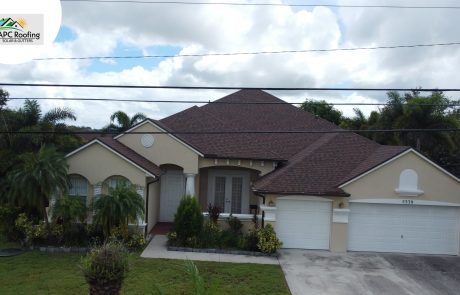
Trying to Find Storm Damage Roofing for a House in Deltona Florida?
APC Roofing examines a slope in the calm after a rough spell, measuring every mark before anything is touched.
Phone 386-356-2111 to have a roofer come take a look.
Wind Against a Roofline: Not Spread Out Evenly
Pressure concentrates at the eaves, the rakes and the ridge, while an open middle section stays comparatively calm. Air slipping beneath a raised lip pushes upward on the shingle set over the lip, so a nail under a shingle ends up doing the whole job alone.
Where two exterior faces meet, wind tumbles rather than running smooth, and builders space the attachment points closer together at that spot. A row of shingles at that outside edge carries more push than a row set farther out, and a crew's added fastening there answers exactly that need.
A Last Step the Sun Finishes: No Machinery Involved
A band of adhesive along a shingle's underside catches the row sitting below, so every shingle is anchored top and bottom. A sharp gust can tear a bond apart across a length of roof, while a section with a frayed seam still looks untouched from the ground.
A course carrying a broken seal only reveals trouble when the wind stirs again, and water reaches wood that had remained dry before that joint failed. A single shingle adrift on a wide slope is a small matter alone, but a whole run of parted shingles is an opening for the weather.
A Manufacturer's Printed Figure – Often Misread
A laboratory fastens new shingles to a test panel and seals every tab by hand, and only then does a machine bring the airflow up to speed. Years of sun and cold change how a shingle performs compared with the shingle's very first months in place, and a rating drawn from the original goods stops counting once weather sets in.
Fastening outside the marked zone leaves a shingle with a weaker hold, which puts the actual limit under a label's stated figure. A shingle ages from the moment installation finishes, and stiffness follows, which is why an early rating belongs to day one alone.
A Bruise in a Shingle's Mat – What the Eye Misses
Stones grow largest in storms that cross the colder end of our territory, and the size eases as a storm tracks eastward. The force of a hailstone buries granules in the layer set below, so a hollow forms where the surface gave way.
The core doing real waterproofing lies under a shingle's visible face, and a fault at that depth is never merely cosmetic. A damaged section of a shingle breaks down ahead of the surface nearby, and a slope carrying many such spots fails unevenly over time.
Beyond the Roofline – Damage With No Warning
What a thick shingle takes without complaint can bruise a light-gauge trim piece, and a mark left that way keeps the same shape for years. A cracked collar no longer grips a pipe a collar once surrounded, and a ceiling below takes drips within a day or two. Marks on a gutter's surface rarely stop a gutter from working, while a crimped downspout carries water over the leading lip without help.
A pitted vent cap sits alongside a dimpled fascia and a scuffed drip edge on one visit, and pictures of trim sit beside pictures of the shingles in a report. Small dings in the metal and craters in the asphalt tend to come from a single storm, and the state of that hardware often hints at how hard the shingles were struck.
What Washes Off a Slope – a Sign With a Source
Colored granules bedded into a shingle block sunlight from reaching the asphalt below, which keeps a covered stretch flexible for years longer. Wind and rain together push stray silt toward a downspout, and a heap of sand there says a great deal about the slope above.
A section exposed like that shortens the years a covering has left, and small trouble in one place tends to spread outward from there. A drift of grit at a downspout fell from the roof plane overhead, so a look at that spot after a storm is worth the effort.
Driven Rain on a Slope: a Different Kind of Path
A shingle's lap directs a vertical descent down across the surface, and a strong gust uncovers a route that ordinary wet weather never finds. Gable louvers admit blown moisture through open slats in a hard blow, and drops fall well away from any actual break in the covering.
A Falling Limb: Harder Than the Damage Looks
A hard knock concentrates pressure into a tight area, which puts extra strain on whatever framing lies beneath. Sheathing under a strike can split while the shingle above shows only a graze, and the underside tells a roofer what a glance from above cannot.
A branch dragged across a roof by wind scours curved tracks through the granules, and the outline stands out clearly once the pattern is known. Fixing a split board means taking the covering off above the split, and the scope of the job depends on what lies beneath the surface.
The View From the Rafters: Seen From Below
Open sky glimpsed from within means a piece of the covering is gone, so the precise place gets logged before anything else is disturbed. Moisture leaves rust at nail tips and a darkened trail through the wood, so tracing the mark toward the highest point reveals the source.
Compressed insulation records a history of repeated soaking over time, so that stretch is worth replacing even as the top layer still looks intact. A gable vent can let driven rain reach framing well away from any break in the covering, and the fix there is a baffle rather than a shingle.
What a Bubbling Ceiling Says: Tracing a Source Upward
A brown ring on the drywall lands downhill of where rain first entered, as water follows the wood down to the lowest reachable point. Bubbling up above means the finish has separated from the board beneath, and a small mark can sit directly under a much larger fault.
A drip at a fan or a light is reason to cut the breaker without delay, because live wiring beside standing water is the greater danger. Staining on both sides of a chase usually points at the metal overhead, which puts the search exactly where two different materials meet.
Flashing, Ridge and Rake: Quietly Doing Real Work
Counterflashing set into masonry has to pin an apron in place at the same time, and one weak point undermines the protection for the entire span. A squall catching the end of a course can tear the drip edge loose, and the damage travels along that whole run once the break starts.
Caps at the summit of a roof are unshielded on either side of the peak, so a flaw at the crown means the seam stays unsealed for the full distance. A vent unfastened at one end can rattle loose in a following gale, so insulation across a wide stretch can end up wet, not just underneath.
Openings for Daylight – Not the Same as a Window
Every skylight frame stands taller than the surrounding shingles, because water must never arrive at that base head-on. A blow can shatter the outer glass of the unit and spare the inner one, so the entire assembly gets replaced together.
A dome struck by hail can splinter into a web of fine lines, so a hairline flaw rarely stays hairline for long in bright weather. Fogging inside a double-glazed skylight shows the seal around the glass has gone, and that fixture gets swapped rather than dried out.
Too Much, Too Fast – Watching for the Backup
Sheet flow off a wide slope can outpace the capacity built into that edge, which sends standing water toward the wall rather than clear of the house. Anything gathering on the roof can pile up at the single opening meant to move debris onward, and a blocked length can sag out of line over time.
An Interim Measure: Made to Stay Put
Plastic pulled across a break can stop rain from reaching rooms below, because anything temporary is meant to come off once real repairs begin. A covering anchored on both faces of a slope moves water the way overlapping courses would, which curbs a sudden surge from ripping the covering free.
Anything simply sitting on top can leave with the next hard blow, and a gap in the covering can scatter granules in the same blast. Nailing a cover to a clean slope adds unnecessary work down the line, and the solid part of a roof stays untouched by that kind of work.
Keeping Everything in Order: Useful Later On
A camera goes over the roof while the marks a storm left are still fresh, which matters more than most homeowners expect going in. Each damaged spot gets a number attached in ordinary figures, and a ruler answers what the eye alone cannot.
The next rain shower can change what is visible on a damaged slope, so a fresh look afterward can turn up something different entirely. Whatever gets requested for review comes from that same set of photographs and measurements, and none of that material gets altered for anybody's benefit.
When Everyone Arrives Together – Slow Down Before Signing
Canvassing teams can appear on a block within a week of a bad night, and a share of that traffic does solid, honest work. A deal reached at a front door carries the same weight as one signed indoors, which is reason enough to ask for a copy to review overnight.
A firm listed at a local address remains easy to reach later on, which is no small consideration when picking who does the work. Urgency coming from a salesperson rather than the condition of a roof deserves suspicion, and a reliable roofer has no trouble giving a homeowner time to decide.
How Weakness Builds Up: Back Again
Shingles that have already let go once are more likely to go again, and less force is required with each fresh round of damage. Where a course folded over once, the mat carries a break along that fold, which no amount of resealing along the edge actually cures.
A path opened by one storm lets the next storm's water travel further, so work that started on a roof can spread into the rooms below. Plywood swollen and dried repeatedly holds a nail less firmly with each cycle, and covering over material in that condition wastes the new stock used.
What a Storm Leaves Behind – From the Yard to the Attic
- Tabs missing, creased or turned up along a rake, visible without climbing a ladder.
- Dents in a vent hood, a cap or a length of trim, still evident long after weather has passed.
- Coarse sand lying in a trough, heaviest right after a hard rain.
- A visible gap in a deck seen from inside, anywhere along a ridge line.
- A brown ring on a ceiling that grows after rain, in a bedroom or a hallway.
- Wetness at the top of a wall beside a chimney, drying out between storms.
- A cracked dome over a light shaft, or daylight showing where the unit meets the roof.
- Gutter spikes backed partway out of the wood, anywhere along that run.
The Way APC Roofing Works on Storm Damage Roofing in Deltona Florida – Our Method
Our roofer opens with a slow circuit of the house from ground level, so anything unusual gets flagged before the review wraps up. A roofer moves across every plane that can be walked safely, and a flashlight goes over the rafters from the attic hatch.
The results get measured, pictured and set down in writing for the file, and every finding stays tied to a specific spot on the roof. Every suggestion carries the thinking behind that call, and the decision on what happens next stays with the homeowner.
Storm Damage Roofing Throughout Deltona Florida: Getting a House Sound Again
Call us at 386-356-2111 to book a time for an inspection.
A Slope Massed With Snow – A Sturdier Kind of Build
The colder end of our territory sees falls deep enough to press down on the framing, which strains the wood beneath more than fresh powder would. Ice built up along an eave can hold meltwater back behind that ridge of frost, so a leak from that kind of blockage can show up on an exterior wall.
At the colder end of our territory, valleys and the sides of a dormer fill well past the general depth, and pressure in that spot concentrates well beyond the surrounding area. A sheet coming free from a metal surface can drop without warning, and hangers can bend under strain from a sudden release like that.
Extra Wear Near the Shoreline: Hardware That Fails First
At the coastal end of our territory, a large system can take a full day to move through, longer than a short spell anywhere else in our service area ever would. Sustained force can tire sealant strips and nail holes alike, and failures can multiply the more that sort of weather lingers.
Water thrown at a house again and again can test every joint in the building envelope, so leaks during that kind of storm can show up in spots that never see water otherwise. Coastal practice generally asks more of every roof edge, and new work in that area follows the pattern already set locally.
New Work Beside Old – How Close a Repair Can Get
Granules fade with age, so freshly made stock looks noticeably brighter, so a perfect match is never really on offer. A repair on the street-facing side can be noticeable from the sidewalk, and time takes some of the edge off a mismatch like that.
Shingles no longer manufactured get swapped for the nearest equivalent, so a gap in tone or texture remains even with careful selection. A slope covered in individual patches tends to read as pieced-together rather than one continuous surface, so a homeowner sometimes chooses to redo one full side instead of patching further.
Signs of Careful Work – the Details That Hold Up
The row over a repair sits flush against the deck below, and the courses run true with the shingles set on either side. Metal at a wall gets stepped in stages as the shingles rise, so sealant only backs up the main barrier, not the whole defense.
Every nail head on a mended spot sits beneath the next course up, so nothing on that work is left open to the weather. A photo of new work, dated, becomes useful the next time a question comes up, as that record gives anyone looking later something firm to compare against.
If Storm Damage Roofing is on your mind after a hard blow in Deltona Florida, phone APC Roofing at 386-356-2111 and a roofer will come out and look the covering over. The covering gets gone over, measured and pictured from every angle, and the next step gets described without any pressure attached.
Verified

Verified
Verified
Verified