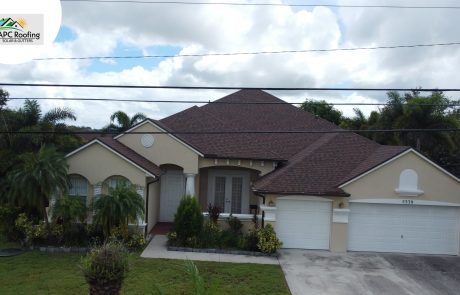
Planning Clay Tile Roofing for a Home in Republic Missouri?
APC Roofing works on earthenware and cement coverings, new and old, treating the underlayment below as part of the job.
Reach us at 913-398-5020 and a roofer will say in everyday words what is overhead.
Anatomy of the Covering: The Basics
What shows from the yard is a run of heavy pieces that throws off the bulk of any rain, but an underlayment beneath the surface is what keeps the house dry. Wind-blown moisture finds its way beneath the courses when a storm is fierce, and the layer beneath leads that seepage down and off the slope.
A chipped or broken tile seldom shows up as a drip in a room, because the underlayment below is generally still whole. Moisture that slips through failed underlayment tends to run along the wood for a while, so the mark it leaves can sit well away from the opening.
Picking a Material: Sun and Moisture
A clay piece starts as earth pressed to a profile and baked, and nothing on the face can peel off. Decades in strong sunlight change its appearance hardly at all, and a quality product takes up next to no rain.
A concrete piece is cast from a wet mix of sand and cement and left to harden, and on a lot of lines the pigment sits in a slurry near the face. Constant sun slowly bleaches the brightest side, while a broken corner shows the gray inside. A replacement set among older neighbors stands out at once, and only seasons outdoors soften the mismatch.
Concrete absorbs noticeably more rain than good clay does, and at the colder end of our territory, soaked-up moisture turns to ice within the body. Enough of those cycles can chip away the outer layer, so each product is graded for how it copes with that stress.
Profiles on the Market – Style Meets Function
Mission-style barrel work lays separate pans and covers in alternating rows, and the look goes back to old Spanish colonial buildings. A single S-shaped tile does the work of the older two-piece layout, and a lot of newer houses carry it.
Low, flat pieces imitate slate or shake when viewed from the ground, while runoff sheds across each course with no channel to follow. Barrel and S patterns collect pine needles and leaves in their hollows, but a smoother surface gives a breeze the chance to blow debris off.
Weight and Structure – Switching Coverings
Standard tile puts several times as many pounds per square foot on a house as asphalt shingles do, and a home with tile from day one was built to bear it. Converting from a lighter material brings a load the original design never counted on, and an undersized frame can sag under it over the years.
Ahead of a conversion, a structural engineer checks the rafters, the spans and the walls they bear on, and extra bracing or sistered joists are sometimes required. Low-density concrete trims much of the heft, which puts the look of tile within reach of more houses.
Anchoring the Roof: Wind and Repairs
Nails or screws driven through the head are a standard hold, and plenty of installations hook the courses over wood strips set across the slope. A foam adhesive laid under the tiles is another common method, and a mortar bed under every unit is used on others. Wire ties or storm clips give extra hold on particular installations, while local code and the manufacturer decide which mix is permitted.
Along the rakes and the top edges, a gale sucks upward with greater force, so those courses get additional fastening. Hurricane rules at the coastal end of our territory call for firmer anchoring, and foam placement and screw counts are specified to comply. Any fix must suit the method already used around the damage, since careless prying at a glued unit breaks more than it frees.
Waterproofing Underneath – Gaps in the Covering
Old roofs mostly carry asphalt felt, frequently doubled, but modern jobs often get a synthetic or a self-adhered bitumen roll. Warmth trapped under the pieces cooks the waterproofing season after season, so the wrong sheet cracks years too soon.
Every unit shields the material under it from ultraviolet light, and wherever a gap opens, sunlight breaks the exposed patch down quickly. The absence of a leak inside is no reason to leave a missing piece alone, since the decking takes whatever gets through a worn-out sheet.
New Waterproofing: Handling and Breakage
On a big project the pieces often come off one at a time and are stacked nearby, and damaged plywood is cut out and replaced. Fresh underlayment is then spread over the prepared roof, and the salvaged tile goes back on top. Passers-by see the familiar face the house has always had, but the protection underneath is at the start of its years.
A portion of the tile breaks on the way down or back up, and old, brittle stock fails more often than newer stock. New tile needs the same curve as the old to lap properly, and where the original profile is still in production, an exact match is possible. When a style has been dropped by its manufacturer, salvage or a near equivalent fills the gaps, and even the best option can differ slightly in shade.
Cracked and Broken Pieces – Ladders and Limbs
Plenty of the tile that fails was stepped on, and the walker is frequently a painter, a sweep or a satellite installer. An extension ladder laid on the bottom course can break it, and a standoff bracket that bears on the wall avoids that.
A heavy bough dropping onto the slope ruins many tiles at once, and pruning trees away from the house stops it before it happens. At the colder end of our territory, severe hail punches through clay and concrete, while smaller pellets seldom mark so hard a surface.
Walking on Tile – Planning a Path
The lapped end of each piece bears weight well, but the unbacked middle snaps under a work boot. On barrel and S profiles, a step belongs low in the pan, never on the crown, and boards or foam pads carry the load on a busy route.
A trodden-on unit may look whole while its underside is split, and problems add up quietly from one visit to the next. Before panels or a dish go up, the installer is wise to bring in a roofer, and every bracket then rests on flashing rather than on broken tile.
Valleys: Width and Upkeep
The inside corner where slopes meet collects the runoff of both, and on tile it gets a metal pan. The point where the covering stops sets how wide the exposed band is, and a cramped gap lets a hard rain climb out over the tile.
Edge pieces beside the metal end up short, without their fastening holes, and adhesive foam, clips or wire hold them instead. A buildup of debris in the trough backs water up against the pieces, and the water then works sideways beneath the pieces.
Hips and Ridges: Weather and Wear
Along the peak and the sloping outside corners, a run of curved trim closes the joint, and on many roofs it sits in mortar. As the seasons swing, aged bedding under the pieces cracks and crumbles, so the pieces loosen and crumbs wash down the slope.
On more recent roofs the trim is screwed to a raised board run along the joint, and a flexible closure or foam seals the gap beneath. Certain versions breathe, letting attic air escape at the peak, and their baffles still keep out rain and insects.
Chimney and Wall Junctions: Lifting and Reworking
A vertical surface rising from a slope gets an angle of sheet steel turned up its face, with a counterflashing set above it to cover its upper edge. With tile, that flashing is broad at the base and ends in a raised lip, and the tile beside it is trimmed back so rain can flow freely.
Tar or sealant spread over a seam dries out and pulls away, and water finds that gap once more. A durable repair removes the pieces nearby and reshapes or replaces the metal, with fresh underlayment laid at that edge before the pieces go back.
Pipes and Other Openings: Details That Differ
A drain line through the deck is wrapped by a base flashing joined to the underlayment, with a soft lead or aluminum skirt molded to the tile above. A shingle-style rubber collar has no way to seal over curved tile, so rain tracks in beneath its flange.
Skylights, attic vents and solar mounts each need flashing made for a tile shape, and a bolt driven through a piece without it opens a path for rain.
At the Bottom Edge – Keeping the Line Straight
At the gutter, each curved piece leaves an open mouth beneath it, and birds, wasps and blown rain get in unless something fills the gap. A contoured closure lines the fascia beneath the covering, and weep holes in it still let water drain out.
The pieces in the lowest course have no course beneath to tilt them up, so a riser brings them up to match. Pieces laid too flat at the gutter let water linger and back up, and the lower edge looks wavy from the street.
Thermal Performance – Debris at the Edges
Curved pieces and batten-hung courses sit raised off the deck, leaving a channel where outside air can flow. Much of the sun's heat leaves with that draft instead of sinking inward, which keeps the underlayment from baking.
Through a hot season, the air conditioner has less to do, while the weight of the material delays warmth reaching the living areas. An eave stuffed with debris or a ridge closed with mortar cuts off the current, and heat builds up in the dead space.
Growth and Stains – Pressure Washers
A chalky white bloom on newer concrete pieces is efflorescence, salts drawn out of the mix, and weather tends to clear it without help. A mat of moss or lichen keeps the joints between pieces wet, and at the colder end of our territory repeated freezing can spall the surface.
A pressure washer can blast the color layer off concrete pieces, and it can break pieces as the operator walks the slope. A mild cleaning solution takes care of moss and lichen gently, while clearing litter from the valleys and gutters by hand prevents damming.
Warning Signs to Notice: Before Damage Spreads
- A piece has slid down out of line with its row, so whatever held it has let go.
- An empty space interrupts the pattern of tile, and the sun is reaching the membrane below.
- Broken shards lie on the ground below the eave, even when the slope looks whole from below.
- Small lumps of mortar sit near the porch, and the capping above may be working loose.
- A water stain appears on an upstairs ceiling, though the leak itself may start far from that spot.
- An inside wall near where the roof meets it turns blotchy, which suggests trouble with the flashing there.
- Heavy growth darkens whole sections of the covering, and the affected pieces stay wet long after rain.
- The line along the bottom edge dips or waves when seen from the yard, and a missing riser or rotten fascia may lie behind it.
How APC Roofing Works on Clay Tile Roofing in Republic Missouri: What to Expect
An inspection starts with a walk across each slope, while the material, the profile and the way the pieces are held are noted. Valleys, ridges, wall junctions and the eave are then looked at closely, and where the answer depends on the underlayment, a few pieces come up so it can be seen. Indoors, the attic is searched for stains and spongy decking, since the wood underneath keeps a record of old leaks.
What turns up is photographed, and its size is measured. What was seen is set out in a written report, with each recommendation explained. Cracked pieces on a sound sheet are described as repair work, and an underlayment that has failed is named as such. The next step is chosen by the owner, with waiting one of the options.
Clay Tile Roofing on Homes in Republic Missouri: Explained Plainly
Call us at 913-398-5020 to ask about a visit.
Patch or Relay – Weighing the Options
A cracked piece, a loose cap or a leaking wall joint is usually a contained problem, and the fix stays right there. Whether the job grows into a relay depends on what lies beneath, while the appearance from the yard is a poor guide.
When the waterproofing is spent across one side of the house, the pieces there are relaid, while the sound slopes are not disturbed. A layer put down in one go tends to reach the end of its life all over, so the untouched parts may need the same work before long.
Tile Over the Years – What Shortens the Span
Well-made clay can remain on a house for generations, while concrete lasts decades, usually fewer of them. Underlayment gives out well before the pieces do, and its condition usually sets when major work comes due.
A covering that is inspected now and then and kept free of litter tends to go the distance, but a missing piece ignored for seasons cuts the sheet's life short. A stated age is a rough guide, not a pledge, as grade, hold-down and flashing detail all change it.
What Has to Be Underneath – Code and Maker Rules
Rain runs off tile because each course laps over the one below, not because the joints are sealed, and the roof needs a steep enough angle to clear water. On lower pitches, maker's rules call for a heavier or doubled underlayment, while under the stated minimum tile is not the right covering.
Solid sheathing is a must under the new covering, and rotten or delaminated wood is replaced while the roof is open. Clean gutters matter to the covering above them, and once they fill, water can climb under the front row.
For a roofer's read on Clay Tile Roofing in Republic Missouri, dial APC Roofing at 913-398-5020. What the slopes show is photographed and set out in writing, and what happens next is up to you.
Verified

Verified
Verified
Verified