In Need of Metal Roof Installation Across Deltona Florida?
APC Roofing puts up and mends screw-down sheet and clip-held panels, for houses as well as workshops and barns.
Call 386-356-2111 and a roofer will look closely and explain plainly what is up there.
Telling Systems Apart: Hints in Plain Sight
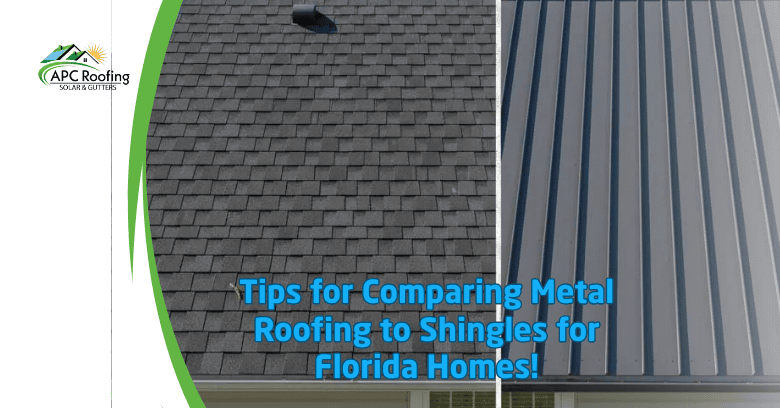
Exposed-fastener roofing is pinned by screws passing through every panel, while standing seam is clipped down beneath upright folds. Coated steel is what the great majority of metal-roofed homes carry, with aluminum and copper turning up less often.
Seen from a sidewalk, dotted lines of screws signal an exposed-fastener system, and uninterrupted pans separated by raised folds mean standing seam. Pole buildings, sheds and porches frequently get ribbed sheet, while residences take either style.
Shapes Rolled Into Steel: Which Suits a Building
Corrugated goods swell and dip in gentle, repeating arcs, and ribbed panels pair tall square ribs with broad flat areas. Each sheet laps over a neighbor along a long edge, and fastener placement follows a published pattern.
Ribs make a stiffer panel that crosses longer spans, and corrugated remains popular for a traditional farm look. High ribs carry a heavy downpour across an extended slope, and a lean-to or porch manages fine with a gentle pattern.
What Keeps Sheet Down – Driven Right or Wrong
Each screw clamps a panel down onto wood or steel framing, and a gasketed washer under each head does the sealing. Rubber in steady sunlight hardens and cracks with age, and the panels usually last a great deal longer.
Overdriving tears a washer and dishes the metal, and a slack or crooked fastener leaks on one side.
Refreshing Hardware – Benefits and Gaps
Rubber rings across a ribbed or corrugated field wear out together, and a whole-roof re-screw is routine over the years. Worn hardware is taken out in turn, and an oversized screw returns to every hole to catch undamaged fibers or metal.
A re-screw stops drips around screw heads and draws lifting sheets back down, but corrosion, parted laps and bad flashing are left as found. Thread type follows whatever support lies below, since lumber and steel purlins take different screws, and tops painted in a panel color keep new work from standing out.
Growth and Shrinkage: Room to Travel
Steel swells with heat and draws back as temperatures fall, and a longer run shifts farther still, with aluminum going about twice as far. A panel pinned at both ends slowly slots every screw opening, and washers then stop sealing.
A tick from warming metal after sunrise is normal, and a well-built roof takes no harm from some noise.
Under Upright Joints – Laid in Sequence
A long pan gets one fixed point, often near a ridge or an eave, and floating clips everywhere else let the pan glide. Flashing at an unanchored end is shaped with space beneath, and a pan held rigid throughout tears loose or buckles.
As a pan is laid, clips are driven into the deck along one leg, so no fastener head is left out in the weather.
Closing a Seam – Wind and Water
Some profiles snap together under hand pressure as each pan goes down, while other designs are crimped over by a machine. Double-lock construction resists uplift and ponding, and approvals extend to flatter roofs.
Profiles come in different widths and heights, so the house and a preferred look guide a decision. Clips, trim and closures are bought to suit one particular panel, so any repair hinges on knowing exactly which panel is installed.
Stock Weight – Worth Confirming
Steel thickness is given as a gauge, and numbers fall as sheet gets thicker. A shop or barn frequently has twenty-nine, while houses often take twenty-six or twenty-four.
For aluminum, sheet is sized in thousandths, and in either metal thicker stock dents less and lies flatter. A view from below reveals nothing about grade, so only a maker's label or data sheet can confirm what was bought.
Factory Protection: What Lasts
Steel for roofing is hot-dipped in zinc or an aluminum-zinc blend, and an oven-cured primer and color coat are applied on top. Damage no deeper than paint is cosmetic, but an unprotected cut or a gouge to bare steel is where red rust starts.
PVDF finishes hold color for decades, but silicone-modified polyester goes dull and powdery earlier. Lime in fresh concrete eats into an aluminum-zinc layer, so a gap or barrier separates panels from new block or stone.
Which Metal Suits – Trade-Offs
Aluminum is light and free of red rust, though a thicker grade is needed to resist dents. Salt air at the coastal end of our territory attacks zinc-based layers, and some makers limit steel products by distance from a shoreline.
Copper is usually kept to small accent roofs over a bay or a porch, and the metal is left bare to weather.
Galvanic Trouble – Isolation and Compatibility
Copper upslope of a steel covering sends corrosive runoff over the panels, and a stain shows up before a leak does. Aluminum on pressure-treated boards turns white and pits, and fasteners of an unsuited metal leave a ring of damage.
Replacement flashing should come from a metal already present, or an isolating layer separates unlike metals.
An Appearance Question – Why Installation Counts
In trade terms, oil canning describes soft ripples across a broad flat between seams, and a midday sun hides what a low evening sun reveals. A slightly distorted pan sheds rain like any other, and the roof lasts no less.
Thicker metal, a slimmer width and striations rolled into every pan tame rippling, and a deck without humps or dips matters too. Photographs of finished houses show how noticeable oil canning can be, and the decision on profile rests with you.
Inside the House: Rattle and Warmth
An outbuilding with bare framing under the metal makes a loud din in rain, because nothing there soaks up impact. Residential metal goes over plywood and underlayment, with insulation above each ceiling, and loudness indoors is close to what asphalt gives.
Cool-pigment coatings return the bulk of the sunshine, so upstairs spaces bake less. Deep shades absorb as much as dark asphalt, and venting and insulation under the deck do as much for comfort as color. Within an hour of sundown, a metal covering is cool, and the attic eases off soon afterward.
Guard Rows: Position Matters
At the colder end of our territory, snow slides readily off smooth coated steel, and a whole mass may come down at once on anything under an eave. Guards break a load into small harmless chunks, and hardware sits over entries, paths and meters.
For standing seam, bolted clamps grip each upright joint, while screw-down sheet takes mounts fastened into framing with sealed screws, and at the warm end of our range snow gear is unnecessary.
What Ice Does: Documented Plainly
Hail is common across the colder end of our territory, and a heavier gauge or striated pans resist dents better. A strike sharp enough to break a finish lets rust start, and a trim piece pushed out of place can channel rain inside.
Once a storm has moved on, affected spots get photographed and measured, and the depth of each dent is gauged.
Holding On in a Gale – A Denser Pattern
Suction gathers along rakes and eaves, and a blast under a raised lip can tear a panel away. Trim along every outer line is hemmed and hooked onto a continuous cleat, and no gap is left to work into.
Clips and screws are packed closer in high-load zones near corners, according to a published schedule for how sheltered a site is. Along the coastal end of our service area, hurricane risk raises fastener counts again, and products are chosen with a wind rating to match.
Vents and Stacks – Flashing Done Right
Each pipe takes a boot made for panel roofs, with a base pressed to follow corrugations, and a hole is cut in a flat, never across a crown. Larger units get a raised curb plus a cricket on an uphill side, so no water dams up.
Sealant finishes a joint already made watertight by folded metal, as ultraviolet light turns soft compounds brittle in a few seasons.
Inside Corners: Hooked and Clear
A broad flashing lines each valley in advance, and panels are sheared to a matching slant. Exposed ends are bent back and gripped by cleats, so no fastener sits where water collects.
On a run too long for one sheet, an endlap joins pieces with sealant between, and fasteners pass through both thicknesses, with uphill metal on top.
Shallow Sections: Where Locked Seams Help
Screw-down panels typically call for roughly three in twelve, and on a gentler slope, overlaps start to let water through. A mechanically locked seam can be installed far lower, and product literature states an exact minimum.
Nearly level spots over sunrooms and porches turn up on plenty of houses, and a measured angle decides what goes on, and a part too low for any panel gets a membrane instead.
A Base Layer: Rot and Spacing
A house takes panels on a solid, continuous deck, and a synthetic sheet rated for heat is sandwiched between, since ordinary felt dries out under sun-heated steel. Pole buildings commonly have metal spanning between purlins with air below, so wider gaps call for thicker steel.
On a tear-off, soft or rotted boards are cut out and replaced, because screws in decay have nothing to grip.
An Overlay: Light Enough to Add
A single layer of shingles can usually remain under new metal, code permitting, and the mess and hauling of removal are avoided. A steel covering adds only slight dead load, so rafters rarely need reinforcing. Battens over a fresh membrane go across existing shingles, and panels are fastened through into sound wood.
A roof that was recovered once before, or a deck with decay underneath, comes off entirely, since trapped dampness under metal has no way to dry.
Finishing Pieces – Fillers and Trim
Shaped closures fill spaces under every rib at an upper line and a lower line, and driving rain and wasps are blocked. A ridge cover can include a vent or be solid, and attic ventilation is what decides.
A drip edge along an eave and trim on each rake complete a border, and fascia boards are kept out of runoff.
Care With the Metal – Sheet by Sheet
A seamed panel comes off a forming machine cut to the length of a run, so no crosswise joint sits in the path of runoff. Carrying an extended panel takes people spaced along the metal, and a crimped or creased pan is no longer usable.
On panels, a step belongs in a flat above a purlin or deck, because a raised joint dents and deforms under load. Morning dew alone can make metal treacherous, and nobody without a harness should go up.
Warning Signs: Easy to Notice
- Red staining around each screw, low on a slope.
- Loose screws riding high, on a south exposure.
- A peeled drip edge, facing prevailing wind.
- A collar gapping around a stack, by a bathroom fan.
- Rust creeping from a trimmed end, at a hip.
- Peeling paint, on a south exposure.
- A drip that follows a row of screws, over a closet.
- A lap that has separated, above a gutter.
How APC Roofing Approaches Metal Roof Installation in Deltona Florida: Order of Work
We start by identifying which panel type is installed and how the panels are held, and then every screw or clip, edge, opening, valley and lap is checked. Notes cover gauge, finish and every kind of hardware, and a trip into the attic catches past leaks.
What we find goes into a report with photographs, and each repair is explained. If a covering needs only new screws, we say exactly that, and a roof past saving is described plainly.
Metal Roof Installation for Deltona Florida Homes – Straight Answers
Phone 386-356-2111 and someone will arrange to stop by.
Repair or Replacement: Weighing Choices
An individual rusted sheet can be unscrewed and exchanged, although new paint never quite matches older metal. A new pipe boot or a resealed lap ends a local drip, and new screws restore a roof full of aged seals.
Rust through sheet after sheet calls for a new covering, and a covering the wind has twisted out of shape is in the same position. Somewhere in between, a single worn plane of the roof can be redone, if everything else is sound.
Aging Gracefully: Upkeep Over Time
A carefully installed panel system can pass forty years, and every estimate is approximate. A seamed pan roof has fewer parts that age, while corrugated and ribbed sheet calls for fresh screws in time.
Copper runoff, bare edges and caulked joints where flashing belongs shorten the life of a roof, and a visit now and then spots trouble early. Pine needles packed into a valley trap water against coated steel, so removal pays off in longer-lasting paint.
For a roofer's view on Metal Roof Installation in Deltona Florida, dial APC Roofing at 386-356-2111. Every screw or clip, edge and boot gets a close look, and you get photographs, notes and a recommendation to consider.
Verified

Verified
Verified
Verified