
If the black rubber roof over your garage, porch or addition has started pulling away at the edges or leaking at a seam, you’re probably wondering whether it can be saved. EPDM roofing in Daytona Beach lives a hard life. It sits flat under the Florida sun all year and soaks in every afternoon downpour, and the problems tend to stay hidden until a ceiling stain shows up.
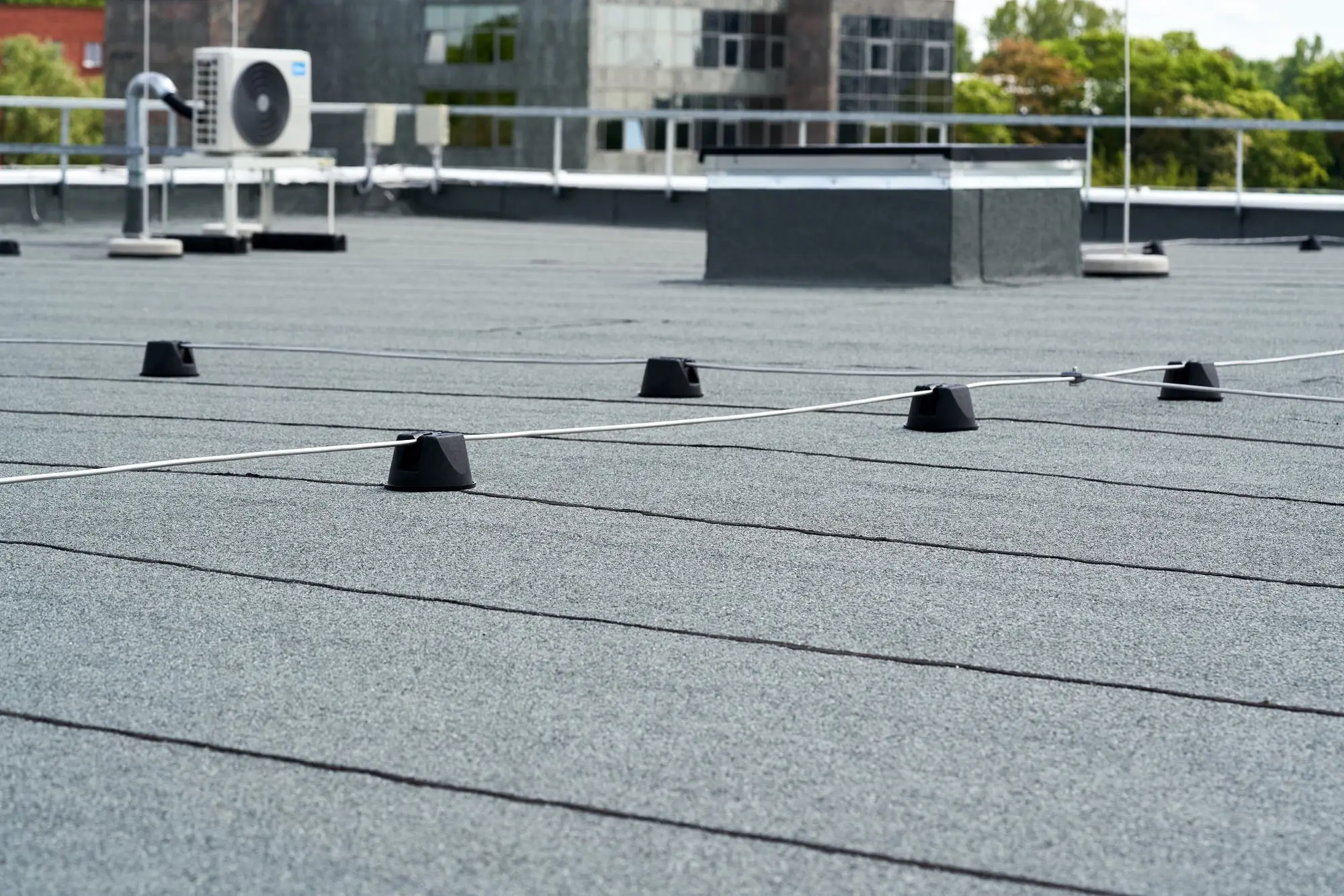
It’s frustrating not to know whether you’re looking at a quick patch or a whole new roof, and harder still when two people tell you two different things. You deserve someone who gets up there, finds the real cause and explains it in plain words.
APC Roofing is GAF Certified, licensed in Florida (CCC1337030) and insured, and we’ve worked on Florida homes since 2017. Your inspection is free. Call 386-259-8425 and we’ll take a look.
What EPDM roofing is and where you’ll see it in Daytona Beach
EPDM is a synthetic rubber membrane, almost always black, that comes in wide sheets. It’s laid over a low-slope roof deck, either glued down, mechanically fastened or held by ballast, and the sheets are joined with primer and seam tape. On Daytona Beach homes it usually covers a porch, a carport, a garage or a lower wing of the house. You’ll also find it on small commercial buildings.
People like rubber roofing for a few reasons. It stays flexible, it handles the expansion and contraction that comes with big temperature swings, and a small puncture can usually be patched cleanly.
How the Florida sun and storms wear on rubber
A black roof absorbs heat. On a July afternoon in Volusia County, an EPDM surface gets far hotter than the air around it, and that heat cycles up and down every single day. Over years, the rubber can shrink a little. When it does, it pulls on the edges and corners, and you’ll see the membrane tenting away from the wall or the edge metal.
The seams are the other weak point. EPDM laps are held by adhesive and tape, and older roofs often used liquid adhesive that dries out with age. A seam that’s lifting at one corner is often where the leak starts.
Then there’s the rain. Low roofs drain slowly, so a blocked drain or a sagging spot holds water against the membrane after every storm. In hurricane season, wind tugs at the perimeter, and a loose edge is an open door for the next gust.
Common EPDM problems on Daytona Beach homes
- Open seams and lifted corners. The most frequent cause of an EPDM leak.
- Shrinkage. The membrane pulls tight at walls and curbs and stretches the flashing.
- Punctures. A dropped screw, a branch or a careless AC service visit can poke a hole.
- Failed flashing at pipes and curbs. Rubber boots and seals age in the sun.
- Ponding. Water that sits for days wears the membrane faster and grows algae.
Most of these can be repaired if the rest of the roof is sound. A seam gets cleaned, primed and covered with fresh seam tape. A puncture gets a patch with rounded corners so it doesn’t catch and peel. For leaks that are harder to pin down, our flat roof repair page explains how we trace them.
EPDM or TPO for a Daytona Beach home?
This is a fair question, and there’s no single right answer. A white TPO roof reflects more sunlight, which can keep the room below more comfortable in a Florida summer, and its seams are heat-welded. EPDM is flexible, has a long track record and can be easier to patch years down the road.
The choice depends on the roof you have now, how it drains, what sits on top of it and how much sun the room underneath gets. We’ll lay out both options with the trade-offs, and the decision is yours. If you’re comparing all the low-slope options, start with our flat roofing in Daytona Beach overview.
When it’s time to replace the rubber roof
Replacement makes sense when seams are failing in several places, the membrane has shrunk badly or gone brittle, or the insulation underneath is wet. A new membrane laid over wet insulation traps the moisture and rots the deck, so we check for that before recommending anything. If a full replacement is the answer, our flat roof installation page covers what the work involves.
How it works
- Book your free inspection. Call 386-259-8425 or request your estimate online.
- Get a clear, honest assessment and estimate. We probe the seams, check the edges, drains and flashings, and give you photos with a written estimate. Financing is available through Aqua Finance, Fortifi, Hearth and Home Run Finance.
- The work gets done and the site gets cleaned up. EPDM adhesives need a dry surface, so the work is planned around the forecast.
A lifted seam won’t close on its own. Each storm pushes a little more water underneath, and a quick repair now can keep the insulation dry.
EPDM roofing questions
Can you repair an old EPDM roof, or does it all have to come off?
Often it can be repaired. If the membrane is still flexible and the insulation is dry, open seams and punctures can be patched. If the rubber has gone brittle or the insulation is soaked, replacement is the better use of your money.
Why is my rubber roof pulling away from the wall?
That’s usually shrinkage. As EPDM ages it can contract slightly and pull on the flashing at walls and edges. It needs to be fixed before the flashing tears.
Is EPDM a good choice in Florida’s heat?
It can be. It handles heat cycling well, but a black surface absorbs a lot of sun. If the room below gets hot, a white membrane may be worth considering.
Do you work on commercial EPDM roofs?
Yes. EPDM is part of the light commercial low-slope work APC Roofing does.
A roof you can stop checking after every storm
Call 386-259-8425 or book your free inspection online. You’ll get a clear look at your rubber roof, an honest repair-or-replace answer and a dry garage or porch you don’t have to think about.


















