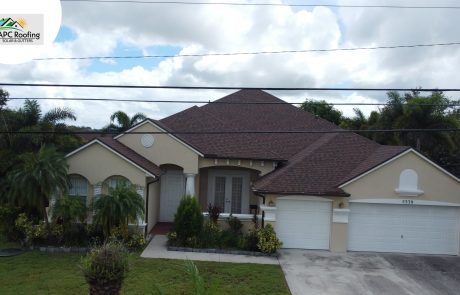
Comparing Options for Tile Roof Repair for a Property in Daytona Beach Florida?
APC Roofing lays kiln-fired and cement-based coverings and restores worn ones, from one cracked piece to a whole slope taken up and put back.
Dial 386-356-2111 and you will get a plain account of the condition of the house.
The Parts Above the Ceiling – Worth Knowing
Rows of clay or concrete pieces carry the bulk of the rain down to the gutters, and the real waterproofing is an underlayment laid across the boards. Gusts can push a little moisture up under the courses during a downpour, so the layer beneath has to guide that seepage out at the eave edge.
Damage to a single tile is not usually a leak on its own, as the sheet below is still doing its work. Moisture that slips through failed underlayment tends to run along the wood for a while, and the damp patch may form far from where it entered.
Weighing the Materials – Key Differences
Clay is dug, shaped and baked in a kiln until it is hard right through, and the color runs all the way through the body. Long exposure to sunlight does almost nothing to the way such a roof looks, and a well-made piece absorbs very little rain.
A cement-and-sand mix is molded to a profile and cured to make concrete tile, and on a lot of lines the pigment sits in a slurry near the face. Constant sun slowly bleaches the brightest side, while a fresh break reveals plain gray underneath. Any replacement dropped into an aged roof is easy to spot, and the contrast eases only with seasons outdoors.
A concrete piece soaks up more rain than a well-fired clay one, and at the colder end of our territory, soaked-up moisture turns to ice within the body. Over many seasons that cycle can spall the outer skin, so makers grade products by how well they resist that damage.
Common Shapes: Rolled or Level
A barrel system pairs upturned channels with overturned caps, and the look goes back to old Spanish colonial buildings. An S-shaped tile folds the dip and the crown into a single unit, and it is widely used on newer houses.
The flat kind sits nearly level on the deck and resembles slate or thick shake, and rain moves over the exposed faces rather than along a trough. The hollows of a barrel or S roof trap tree litter, but smoother surfaces let most of the debris blow away.
Weight Considerations: Lighter Products Too
Clay or concrete at full thickness is several times heavier than asphalt shingles, and rafters under a roof tiled when new were sized with that in mind. A move up from a lighter covering adds weight the house was never meant to carry, and a sagging ridge line can be the result.
Ahead of a conversion, a structural engineer checks the rafters, the spans and the walls they bear on, and extra bracing or sistered joists are sometimes required. Low-density concrete trims much of the heft, so a modest house is sometimes a candidate after all.
How Tile Stays Put – What Varies by House
The head of each piece often carries a hole for a nail or a screw, while other jobs hang the courses on battens set over the sheathing. Other roofs rely on a roofing foam adhesive under each tile, and mortar-set work beds every unit in a pad of mortar across the field. Certain systems add a clip that hooks the nose of each piece, and the maker's instructions and the local code set which combination applies.
Along the rakes and the top edges, a gale sucks upward with greater force, and attachment there is increased. Toward the coastal end of our territory, hurricane requirements raise the bar for securing each piece, and the amount of foam and the number of screws are spelled out in advance. Any fix must suit the method already used around the damage, since forcing loose a glued unit tends to break the ones next to it.
The Layer Below: What Is at Stake
Doubled asphalt felt was the norm for a very long time, and more recent work relies on synthetics or self-sealing modified bitumen. Heat gathers in the space under clay or concrete and ages whatever is beneath, and anything not intended for such exposure turns brittle early.
Every unit shields the material under it from ultraviolet light, so a knocked-out tile opens a patch that degrades fast. An unstained ceiling is a poor guide to whether a missing piece can wait, since the decking takes whatever gets through a worn-out sheet.
A New Sheet Under Old Tile: Step by Step
A large project on this material often means pulling the pieces by hand and stacking them, and sagging boards get repaired. Fresh underlayment is then spread over the prepared roof, and the same tile goes back where it came from. The finished result looks just like the original, while everything that stops water is starting over.
A portion of the tile breaks on the way down or back up, and old, brittle stock fails more often than newer stock. Fresh units must lock into the pattern already on the roof, and a profile still being made means a perfect match. Where nobody sells the old style any more, reclaimed tile or a close lookalike is used, and even the best option can differ slightly in shade.
Damaged Pieces: Reducing the Risk
Much of the harm on these roofs is done by someone walking, and the walker is often a contractor there for a dish, a chimney or a gutter. An extension ladder laid on the bottom course can break it, while a stabilizer arm set against the siding keeps the weight off.
A heavy bough dropping onto the slope ruins many tiles at once, and a tree service can remove the threat before a storm. Large hailstones at the colder end of our territory can split a unit clean through, but small stones rarely scar the face.
Access Across the Slopes – Advice for Installers
A piece bears weight where it laps over the course below, while the center has no backing and fractures under a shoe. On rolled shapes, the pan takes a step far better than the raised crown, and walk boards spread the load along a route used again and again.
From above, a unit trodden on in the wrong spot can look intact, and faults of that kind pile up unreported. A company putting panels on this material ought to involve a roofer early, so brackets land on the deck with the covering reset around them.
Valley Lines – Points Worth Knowing
Where adjoining slopes meet, a single fold gathers rain from both, and a tile roof puts a formed metal trough along it. Where the pieces are cut back decides how wide the open strip is, and a gap left too slim overflows in a heavy downpour.
Many shortened pieces at the edge are too small to keep a nail hole, and adhesive foam, clips or wire hold them instead. Needles packed into the channel slow the water and pool it, so water finds its way sideways under the covering.
At the Ridge – Fastening and Venting
Where slopes meet at the peak and down the outside corners, a row of rounded trim covers the joint, and many older roofs hold it in mortar. Bedding that has seen years of temperature swings opens up in cracks, so the pieces loosen and crumbs wash down the slope.
A raised nailer along the joint gives the trim something solid to screw into on newer work, with foam or a flexible strip sealing beneath. Certain versions breathe, letting attic air escape at the peak, yet rain and insects are still kept outside.
Chimney and Wall Junctions: Wide Channels
The inside corner at a vertical face is lined with bent sheet metal, and a counterflashing cut into mortar joints covers it. Under tile, the flashing widens into a pan with an upturned rim, and the tile is trimmed so nothing blocks the flow.
Tar or sealant spread over a seam dries out and pulls away, and water comes back through the same place. A proper repair means lifting the pieces and redoing the flashing under them, and new underlayment goes in at the same time.
Through-Roof Parts – Rubber Boots
Each plumbing stack has a base flashing attached to the underlayment below, and a pliable metal sleeve is worked down onto the surrounding tile. A boot designed for asphalt cannot close the gaps a curved piece leaves, so water runs in under its flange.
Vents, skylights and panel mounts all take flashing made around the tile shape, and anything drilled through a piece without it becomes a leak.
The Eave Edge: What to Watch
At the gutter, each curved piece leaves an open mouth beneath it, and birds, wasps and blown rain get in unless something fills the gap. A formed closure is set along the fascia, and slots in it let moisture out.
Pieces in the last course have nothing under them for the same tilt, so a riser strip props them up. Pieces laid too flat at the gutter let water linger and back up, and a crooked lower line can be seen from the street.
Staying Cooler: The Warm-Weather Advantage
Pieces on battens or with a rolled shape stand clear of the sheathing, leaving a channel where outside air can flow. The draft strips heat away before it travels downward, and the sheet below is spared much of it.
Over a scorching summer, indoor comfort holds steadier, and dense clay or concrete holds warmth back for hours. An eave stuffed with debris or a ridge closed with mortar cuts off the current, and heat builds up in the dead space.
What Collects Up There – Washing Without Damage
A whitish crust on fairly new concrete is usually efflorescence rising from within, and weather tends to clear it without help. Moss packed into the overlaps holds rain where it should drain, and at the colder end of our territory repeated freezing can spall the surface.
Pressure washing strips the color coat from concrete, and the stream drives water under the courses. A roof cleaner and a light rinse loosen growth without force, while clearing the valleys and gutters by hand keeps drainage open.
Clues Around the House – Easy to Spot
- A single piece hangs crooked below the course, so whatever held it has let go.
- One spot has lost its covering entirely, and the exposed sheet begins to degrade in sunlight.
- Chunks of tile collect along the driveway or walk, even when the slope looks whole from below.
- Crumbs of mortar gather in the gutters, which suggests the bedding at the top is deteriorating.
- A yellowed mark grows across a ceiling, even though the way in may be some distance off.
- Plaster softens on the wall beside a dormer, so the counterflashing above may be letting water behind it.
- Lichen and moss crowd the shaded side of the house, and the affected pieces stay wet long after rain.
- The lowest course sags between the corners of the building, and the board under the last course may have softened.
How APC Roofing Takes On Tile Roof Repair in Daytona Beach Florida – Seen, Recorded, Explained
A visit begins with a walk over every slope, and the material, the shape and the way the pieces are set are identified. Valleys, ridges, wall junctions and the eave are then looked at closely, and a handful of pieces are raised where the sheet below is in doubt. The attic is checked from inside for water marks and weak boards, because discolored plywood shows the path of any leak.
Any problem is photographed, and its size is measured. A report in plain words follows, with each recommendation explained. Cracked pieces on a sound sheet are described as repair work, while a failed underlayment is named plainly. The owner picks what to do, and deferring the work is a valid choice.
Tile Roof Repair for Houses in Daytona Beach Florida: Clear Findings
Phone 386-356-2111 to ask about a visit.
Spot Work Versus Relaying – Slope by Slope
Many faults on tile remain in one place, such as a broken piece, a rocking cap or a split flashing, so the effort is confined to that area. Whether the job grows into a relay depends on what lies beneath, while the appearance from the yard is a poor guide.
A slope with a failed sheet from top to bottom is relaid, and any slope still serviceable is not touched. Underlayment installed in a single job generally gives out at about the same point, so the untouched parts may need the same work before long.
How Tile Ages: Estimates, Not Promises
Well-made clay can remain on a house for generations, and concrete lasts for decades, though usually not as many. The waterproofing below is replaced well before the pieces, and its condition usually sets when major work comes due.
Regular looks and clear gutters keep the covering in good order, but a neglected one may lose its underlayment early under one missing piece. Every service figure is an approximation, not a commitment, and the grade of the product, the fastening and the flashing work all move it.
Basic Requirements: The Groundwork
Water leaves a tile roof by running over lapped courses rather than through sealed seams, so the roof must be steep enough for runoff to keep moving. At lower slopes, manufacturers ask for extra underlayment protection, while under the stated minimum tile is not the right covering.
Every board under the tile needs to be firm, and any rot found is cut out and replaced during the work. Gutters are part of how the roof drains, and when they back up, water rises beneath the lowest course.
For a roofer's read on Tile Roof Repair in Daytona Beach Florida, dial APC Roofing at 386-356-2111. Someone who works on tile looks the covering over and writes up what is found, and what happens next is up to you.
Verified

Verified
Verified
Verified