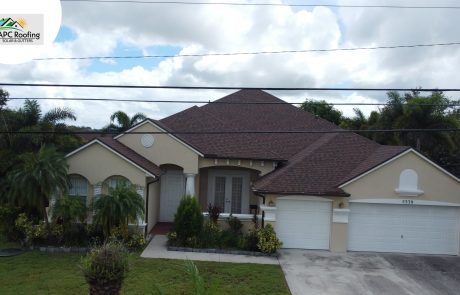
Planning Tile Roof Installation for Your House in Altamonte Springs Florida?
APC Roofing fixes and relays barrel, S-shaped and flat profiles, whether the job is a single slipped piece or an entire slope reset.
Call 407-270-1129 and a roofer will say in everyday words what is overhead.
What Sits Over the Attic: For Homeowners
The visible pieces take the weather and send most rain toward the gutters, but the watertight work is done by an underlayment on the deck below. Wind-blown moisture finds its way beneath the courses when a storm is fierce, and the layer beneath leads that seepage down and off the slope.
A split tile is not the same thing as a leak indoors, as the sheet below is still doing its work. Rain that does get past a worn underlayment can run along the deck before it drops, and the wet spot may appear several feet off.
Material Choices – Key Differences
Clay is dug, shaped and baked in a kiln until it is hard right through, and the pigment goes clear through rather than sitting on the face. Years of sun leave a slope of this kind looking much as it did, and a well-made piece absorbs very little rain.
Concrete is pressed from sand, cement and water, then cured instead of fired, and on a lot of lines the pigment sits in a slurry near the face. Constant sun slowly bleaches the brightest side, while a broken corner shows the gray inside. A just-installed piece looks brighter than those around it, and the contrast narrows as time ages the newcomer.
Concrete is thirstier in a rainstorm than fired clay, and at the colder end of our territory, moisture held inside can freeze and expand. Season upon season, that cycle can peel the face off in flakes, so makers grade products by how well they resist that damage.
Choosing a Profile: Rolled or Level
Mission-style barrel work lays separate pans and covers in alternating rows, and the look echoes centuries-old Mediterranean houses. An S-shaped tile folds the dip and the crown into a single unit, and builders put it on many newer homes.
Flat pieces have no curve and mimic slate or shake at a distance, and rain runs over the face of each course instead of along a channel. Barrel and S patterns collect pine needles and leaves in their hollows, while smoother surfaces let the wind clear most of the debris.
The Structural Question: Lighter Products Too
Standard tile has several times the mass of asphalt shingles, and a home planned for tile was given rafters to match. Trading a light covering for a heavy one puts new demands on an older house, and an undersized frame can sag under it over the years.
Ahead of a conversion, a structural engineer checks the rafters, the spans and the walls they bear on, and reinforcement may follow where the structure lacks strength. Some manufacturers offer a lighter concrete tile, so a house with less margin can still be considered.
How Tile Stays Put: Edges and Middle
Nails or screws driven through the head are a standard hold, and plenty of installations hook the courses over wood strips set across the slope. A foam adhesive laid under the tiles is another common method, and mortar-set work beds every unit in a pad of mortar across the field. Nose clips supply added restraint on certain products, and what a given job gets is set by the maker's literature and the code.
Uplift is strongest around the borders of each slope, so the perimeter carries a denser pattern of attachment. Hurricane rules at the coastal end of our territory call for firmer anchoring, so screw spacing and foam coverage are designed to pass inspection. Any fix must suit the method already used around the damage, since careless prying at a glued unit breaks more than it frees.
Beneath the Tile – Durability Factors
Heavy asphalt felt is the classic product, while self-adhered bitumen and synthetics are the newer options. The underlayment spends summers in a warm, enclosed pocket, and a membrane of the wrong kind dries out years ahead of schedule.
Tile acts as a sunshade for the layer under it, so any gap exposes a strip to rapid decay. A ceiling with no stain does not make a missing piece safe to ignore, because rain soon finds its way into the deck.
Starting Over Underneath – Matching Replacements
The existing pieces on a major project are frequently hand-removed and set aside, after which rotten boards are swapped for sound ones. A new underlayment is laid across the whole area next, and the saved tile is relaid over it. The home keeps the appearance it was built with, and the watertight layer underneath begins a second service life.
A portion of the tile breaks on the way down or back up, and a brittle, weathered roof loses more than a younger one. Fresh units must lock into the pattern already on the roof, and a design that is still manufactured can be matched exactly. Discontinued tile is replaced with salvage or the nearest alternative, though the tone can still differ a little.
Damage to Single Units: Prevention and Care
Much of the harm on these roofs is done by someone walking, and the visitor is often a sweep who came up for the chimney or an antenna. An extension ladder laid on the bottom course can break it, and a standoff bracket that bears on the wall avoids that.
A falling limb can shatter a group of tiles in one blow, and pruning trees away from the house stops it before it happens. At the colder end of our territory, large hail can crack a tile outright, but small stones rarely scar the face.
Walking on Tile: Unseen Damage
A piece bears weight where it laps over the course below, while the center has no backing and fractures under a shoe. On barrel and S profiles, a step belongs low in the pan, never on the crown, and boards or foam pads carry the load on a busy route.
From above, a unit trodden on in the wrong spot can look intact, and harm accumulates over the years with no one aware. Before panels or a dish go up, the installer is wise to bring in a roofer, and tile beneath every bracket gets removed and put back properly.
Valley Framing: Width and Upkeep
The inside corner where slopes meet collects the runoff of both, and on tile it gets a metal pan. How far back the pieces are trimmed sets the open width, and a gap left too slim overflows in a heavy downpour.
The shortened pieces flanking the metal usually lack a hole, and foam, clips or tie wire keep them from sliding. Litter that piles up in the valley dams the flow, and the water then works sideways beneath the pieces.
Ridge and Hip Lines – Fastening and Venting
The joints at the peak and the outside corners are covered with shaped trim, and many older roofs hold it in mortar. Bedding that has seen years of temperature swings opens up in cracks, and pieces work loose while grit collects in the gutters.
Current practice ties each trim piece to a raised nailer set along the joint, with foam or a flexible strip sealing beneath. Some of those materials are made to let air pass for attic ventilation, while their shape still keeps rain and insects from getting in.
Walls and Chimneys: Wide Channels
The inside corner at a vertical face is lined with bent sheet metal, while a counterflashing tucked in above covers its top. Under tile, the flashing widens into a pan with an upturned rim, and the tile beside it is trimmed back so rain can flow freely.
Sealant smeared along the joint cracks within a few seasons, so the same spot takes on water again. The lasting fix takes up the pieces along the wall and rebuilds the flashing, and the underlayment along that edge is redone while it is open.
Through-Roof Parts: Details That Differ
Each plumbing stack has a base flashing attached to the underlayment below, and a malleable lead cover is shaped down over the tile. A standard neoprene boot cannot follow the rise and fall of a rolled piece, and rain gets under its flange.
Every skylight, vent and panel mount requires flashing suited to the tile, and a rail foot fastened through a piece without it takes on water.
The Eave Edge – Weep Holes and Drainage
Barrel and S shapes leave an arched opening at the lower end of every piece, and birds, insects and driven rain move in when nothing blocks the entry. A formed closure is set along the fascia, and drain holes let water run free.
Eave pieces have nothing below them to angle them up, and a riser strip gives them the rise they need. Without that support, the end pieces hold water on their faces, and a visible droop shows from the driveway.
Built-In Cooling – When Debris Interferes
On battens or through their own curve, many coverings sit up off the wood, leaving a channel where outside air can flow. Heat picked up by the pieces is swept out before it sinks through, so the underlayment stays cooler.
Through a hot season, the air conditioner has less to do, and dense clay or concrete holds warmth back for hours. Leaves packed at the eave or mortar filling the ridge can shut the airflow off, and the pieces then hold heat against the deck.
Caring for the Surface: Safe Cleaning
Concrete pieces can develop a light, powdery bloom of salts, known as efflorescence, and rain carries it off over time. Lichen and moss keep the overlaps damp long after a storm, and at the colder end of our territory repeated freezing can spall the surface.
Power washing strips the finish that gives concrete its color, and the stream drives water under the courses. A roof cleaner and a light rinse loosen growth without force, and it helps even more to clear valleys and gutters by hand.
Clues Around the House: Before Damage Spreads
- A single piece hangs crooked below the course, which means its nail, clip or foam has failed.
- One spot has lost its covering entirely, leaving the layer underneath exposed to daylight.
- Fragments land on the lawn or among the shrubs, and the break they came from may be out of sight.
- Small lumps of mortar sit near the porch, as the old bedding up top gives way.
- A damp patch shows on the ceiling after heavy rain, and the source is often several feet away.
- Wallpaper lifts or drywall discolors on a wall under a roof junction, so the counterflashing above may be letting water behind it.
- Moss has spread along the overlaps on the north side, so water lingers where it should run off.
- The lowest course sags between the corners of the building, and the board under the last course may have softened.
APC Roofing and Tile Roof Installation in Altamonte Springs Florida – Plain and Careful
A visit begins with a walk over every slope, with the material, profile and fastening noted. Valleys, ridges, wall junctions and the eave are then looked at closely, and pieces are lifted in places where the underlayment has to be seen. Indoors, the attic is searched for stains and spongy decking, since the wood underneath keeps a record of old leaks.
Anything wrong is photographed, and its size is measured. What was seen is set out in a written report, and the reasoning behind each suggestion is spelled out. Where the sheet under the pieces is sound and only pieces are broken, the answer is a repair, while an underlayment at the end of its life is named for what it is. The owner decides how to proceed, and holding off for now is a fair option.
Tile Roof Installation for Houses in Altamonte Springs Florida: Clear Findings
Call us at 407-270-1129 to talk about what you are seeing.
Spot Work Versus Relaying: Where the Line Falls
A split unit, loose trim or a tired flashing at a chimney tends to be a problem of one place, and the surrounding courses stay untouched. Whether the job grows into a relay depends on what lies beneath, while the look of the pieces tells very little.
If the sheet is gone from eave to ridge on one side, the courses there are taken up and relaid, and any slope still serviceable is not touched. Where the whole roof got its underlayment together, it ages at a similar pace, so the rest can be close behind.
Looking Ahead – Upkeep Matters
Clay of high quality can hold up for a century or longer, while concrete endures for decades without quite matching it. Underlayment gives out well before the pieces do, and the timing of a relay usually follows it.
Routine checks and clean valleys let a tile roof go the distance, but a missing piece ignored for seasons cuts the sheet's life short. A quoted number is an estimate rather than a promise, since grade, attachment and flashing quality push it up or down.
Basic Requirements – Gutters Included
Each course of tile overlaps the next instead of being sealed to it, so the roof must be steep enough for runoff to keep moving. Near the bottom of the allowed range, the underlayment is upgraded, and below the minimum a different covering is the right choice.
The decking must be solid before anything is laid on top, and rotten or delaminated wood is replaced while the roof is open. Gutters are part of how the roof drains, and once they fill, water can climb under the front row.
To look into Tile Roof Installation in Altamonte Springs Florida, phone APC Roofing at 407-270-1129. The slopes are walked and the findings are put in writing, and the decision stays with you.
Verified

Verified
Verified
Verified
Verified