
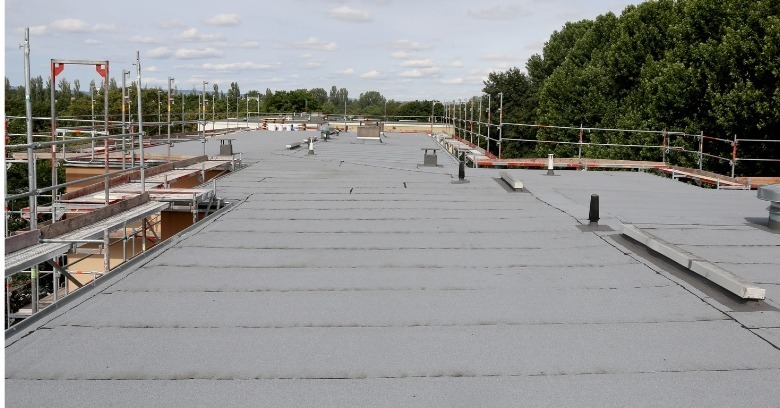
A commercial roof in Central Florida works harder than almost anywhere else in the country. Between blistering summer sun, months of tropical humidity, and hurricane season bearing down every year, the building envelope over your business takes a beating that most roofing systems were never designed to handle. APC Roofing has spent more than 20 years installing and maintaining commercial roofing across the greater Orlando area, working out of our Clermont headquarters to serve business owners who need a roof that actually holds up to Florida conditions rather than one built for a milder climate.
Commercial roofing built for Central Florida's climate
Standard roofing materials degrade faster here than almost anywhere else in the country. UV exposure in Central Florida is intense and near-constant, and that steady bombardment breaks down membrane materials, dries out sealants, and shortens the usable life of a roof that might last decades in a cooler, drier region. Add in the humidity that blankets the region for most of the year, and you have conditions that invite moisture intrusion, trapped condensation, and slow structural damage that isn't always visible until it's expensive.
Then there's wind. Hurricane season puts every commercial roof in the region to the test, and a roof that isn't rated for high wind uplift or windborne debris impact is a liability, not an asset. Commercial-grade systems are engineered with fastening patterns, membrane thickness, and impact ratings that standard residential-style roofing simply doesn't offer. We size every system to Florida Building Code wind and impact requirements before we ever get to color or aesthetics, because a roof that can't pass that test isn't a roof worth installing here.
Why commercial roofs fail faster in Florida
A few specific failure patterns show up again and again on properties we've serviced across Orlando, Sanford, Kissimmee, and the surrounding area:
- Heat cycling: repeated expansion and contraction from daily temperature swings stresses seams and flashing.
- UV breakdown: unprotected membranes become brittle and crack years ahead of their expected lifespan.
- Trapped moisture: humidity that gets under a membrane or into insulation doesn't dry out the way it would in a drier climate, leading to rot and mold.
- Wind uplift: improperly fastened or aging systems are far more vulnerable during tropical storms and hurricanes.
- Ponding water: flat and low-slope roofs common on commercial buildings can hold water for days if drainage wasn't designed correctly from the start.
Understanding these failure points is exactly why we don't treat commercial roofing as a one-size-fits-all installation. Every system we put on a building is selected and engineered around how it will actually perform in this climate, not just how it looks on a spec sheet.
Our commercial roofing process
Every project starts with a real evaluation, not a guess. We look at the existing structure, the age and condition of the current roof, drainage patterns, insulation, and any rooftop equipment that affects how a new system needs to be installed. That assessment tells us what the building actually needs rather than what's easiest to sell.
From there, material selection is a conversation, not a default. We walk business owners through the tradeoffs between systems so the decision fits the building's use, budget, and expected lifespan.
From assessment to completed project
- Site visit and structural evaluation, our crew inspects the roof deck, drainage, flashing, and any problem areas before recommending a system.
- Material and system selection, TPO, EPDM, metal, or a hybrid approach, chosen based on the building's slope, use, and exposure.
- Scheduling built around your operations, we plan installation phases to minimize disruption to employees, customers, and daily business activity.
- Installation, crews follow manufacturer specifications and Florida Building Code requirements for wind and impact resistance, which matters given how frequently Orange and Seminole County properties see permit inspections tied to storm-hardening standards.
- Final inspection and testing, seams, flashing, drainage, and fastening are checked before we consider the project complete.
- Walkthrough and handoff, we review warranty coverage and maintenance recommendations with the property owner or manager.
This structure keeps projects predictable. Business owners know what's happening at each stage and aren't left guessing about timelines or scope.
Materials and systems we install
Most commercial buildings in the Orlando area, whether in Clermont, Sanford, or Kissimmee, have flat or low-slope roofs, and that's where a large share of our expertise is concentrated. Flat roofing has different failure points than pitched residential roofing, and it demands membrane systems designed specifically for standing water resistance, UV exposure, and long-term seam integrity.
We install and service a range of systems depending on the building:
- TPO membrane roofing, reflective, energy-efficient, and a strong choice for retail spaces and offices looking to reduce cooling costs in the Florida heat.
- EPDM rubber roofing, durable and flexible, well suited to buildings that see a lot of rooftop foot traffic or equipment.
- Metal roofing, a common choice for warehouses and industrial properties that need long-term durability and strong wind performance.
- Roof coatings and restoration systems, for buildings where a full tear-off isn't necessary yet, coatings can extend service life and improve water resistance at a lower cost than replacement.
Choosing between these options depends on the building's age, structural load capacity, budget, and how long the owner plans to hold the property. We lay out the real tradeoffs rather than pushing whichever system is most profitable to install.
Local commercial roofing challenges we solve
Central Florida's flat terrain creates drainage challenges that don't exist in hillier regions. Ponding water is one of the most common issues we find during inspections on properties near the Orlando headquarters and throughout Clermont, and it's rarely a design flaw from day one; it's usually the result of roof settling, clogged drains, or insulation that has degraded unevenly over time. Left unaddressed, standing water accelerates membrane breakdown and can eventually lead to leaks and structural damage.
Algae and mold growth is another persistent issue tied directly to the region's humidity. Roofs that don't drain well or that have shaded, damp areas become breeding grounds for organic growth that stains materials and, in some cases, degrades the roofing surface itself.
Roof lifecycles in this climate also run shorter than the national average. Where a well-installed commercial roof might last 20 to 25 years in a milder climate, heat and UV exposure in Central Florida often compress that to something closer to 15 to 20 years, depending on the material and maintenance history. Planning for that shorter cycle, rather than being surprised by it, is part of how we help property owners budget for roof replacement before it becomes an emergency.
All of our installations are built to meet Florida Building Code wind and impact standards, which matter both for insurance compliance and for how well a roof performs when a storm actually hits.
APC Roofing's track record
APC Roofing has spent more than two decades working on commercial properties throughout Central Florida, building a portfolio that includes schools, warehouses, retail centers, and office buildings. That range matters because a warehouse roof and a retail storefront roof have different structural demands, different traffic patterns, and different priorities around cost and downtime.
One property manager we worked with near Kissimmee described finding standing water on a retail roof after every summer storm for two years before calling us; once we corrected the drainage slope and replaced degraded insulation beneath the membrane, the ponding stopped showing up on their next three inspections. That kind of before-and-after is typical of what we see across aging flat roofs in this area.
Property owners working with us get:
- A team with two decades of hands-on experience in Florida's specific roofing conditions.
- A portfolio spanning multiple commercial property types, not just one niche.
- Proper insurance coverage and manufacturer-backed warranty options on installed systems.
- A Clermont-based crew that understands the region's weather patterns, code requirements, and common building types firsthand.
That track record is the reason business owners across the region come back to us for repairs, restorations, and full replacements rather than shopping around every time something goes wrong.
Coverage and service area
Operating out of Clermont, we provide commercial roofing services throughout Altamonte Springs, Daytona Beach, Deltona, Holly Hill, Kissimmee, Orlando, Palm Coast, and Sanford. Because our headquarters sits centrally within this coverage area, we're able to offer same-day assessments in many cases and respond quickly when storm damage puts a business at risk.
Emergency response matters most right after a storm, when a compromised roof can lead to interior damage, inventory loss, or a forced closure. Having a local team that already knows the building stock and code requirements in this part of Florida means faster answers and faster repairs when timing is critical.
If your commercial property is due for an inspection, showing signs of wear, or recovering from storm damage, the smartest next step is to get a professional assessment before small issues turn into costly structural repairs. APC Roofing offers free commercial roof inspections for business owners throughout Clermont, Orlando, Sanford, Kissimmee, and the surrounding communities, and our team can walk your property, explain exactly what condition your roof is in, and lay out honest options for repair, restoration, or replacement. The bottom line is simple: Central Florida's heat, humidity, and storm cycles will find every weak point in a commercial roof faster than they would almost anywhere else, so waiting until a leak appears or a storm exposes damage almost always costs more than acting early. Call APC Roofing or request an inspection through our website, and one of our own crew members, not a subcontractor, will walk the roof with you and lay out what it actually needs. Acting now means you control the timeline and the budget instead of scrambling after the next named storm moves through. The sooner you know where your roof stands, the more leverage you have over cost, scheduling, and how long the current system has left before it needs real intervention.
















