Looking for Commercial Roofing Installation in Deltona Florida?
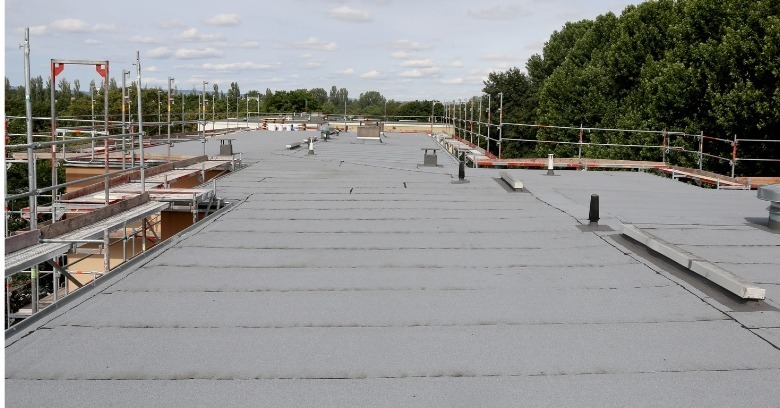
APC Roofing lays new membranes and metal panels on company property, taking in the edges, the outlets and every curb.
Dial 386-356-2111 and a roofer will inspect the whole surface and report back.
Workplaces and Storefronts – the Basics
Customers, goods and running machines fill the space beneath the covering, and dripping water can idle a conveyor or spoil a pallet of product. A big footprint is covered at a gentle grade, so rain runoff and wind loads are set by design numbers.
Mechanical units, vents and satellite dishes share the space overhead, and each support, line or duct gets careful flashing. The work done below decides which assembly suits, so a refrigerated plant is specified unlike a clinic.
The Principal Membranes: a Plain Primer
Single-ply means one factory-made layer of TPO, PVC or EPDM, modified bitumen is asphalt blended with polymer and rolled out, and built-up roofing stacks felt and hot tar in plies. Thermoplastic overlaps are heat-welded into a continuous piece, but rubber sheets are joined with primer and splice tape.
Kitchen exhaust leaves a film of grease around a restaurant's fans, and EPDM and asphalt swell and weaken beneath oily residue, so PVC tends to be installed across the exposed zone. Built-up plies under a gravel layer make a heavy, durable assembly, and the rock cover screens the bitumen from the sun.
Commercial Steel: Where Trouble Shows
Exposed-fastener sheets are secured with screws through the flats, and each shank anchors in the framing below. Sunlight bakes the washers until the rubber splits, and the fasteners wiggle loose as the sheets expand and contract.
Standing-seam panels attach with clips tucked under the raised seams, and the pans slide freely along the length. Corrosion sets in at side laps and sawn ends, and a coating applied while the steel is sound can slow the spread.
The Deck: Reading the Substrate
Attachment methods are limited by what the original builders put in, and reroofing leaves the framing in place. Fluted steel accepts screws readily, a poured slab gets adhesive or anchors in bored holes, and wood planking takes ring-shank nails or plates.
Moisture trapped for years can rust through metal decking, and failing stretches are replaced rather than covered. Wherever the interior is exposed, the underside gets a look from a lift, and exploratory openings from above reveal the remainder.
Keeping a Membrane in Place: Weighing the Choices
A fastened install uses plates and screws in the overlaps, adhered work is stuck down across the full surface, and ballasted sheets are held down by rock or pavers. The deck, the building's height and the site's exposure steer the decision, and a heavy design goes ahead only once the framing is confirmed adequate.
Gusts make a screwed membrane ripple between the fastener lines, whereas glue keeps a sheet calm only over a dry, clean base. Inspecting a ballasted system takes time, since the stone or pavers must be carried off to reach the laps.
Uplift on a Big Building: Planning the Attachment
Pull is greatest at the outside angles, since the flow tumbles and speeds up on turning over the edge. Along the sides, a narrower band sees a little less, and the open middle is loaded more gently.
The fastening pattern gets denser toward corners and edges, with the layout drawn from design tables for the site. An under-fastened outer angle lets the sheet curl up, and the opening grows as each gust gets beneath.
Foam Insulation – an Overlooked Component
Polyiso is set on the deck in one or more courses, and a firm cover board spreads concentrated weight. Good insulation trims the demand on the HVAC system, and tapered stock tilts the finished surface toward the drains.
Waterlogged foam barely resists heat flow, and the heavy mass adds weight and rusts a steel deck. Scanning at dusk, with a few cores for proof, marks out the damage, and nothing ruined is left under a new covering.
Drains and Overflows – Parts of the System
A domed strainer sits over every interior sump, and the slots hold back gravel and plastic bags. A clogged grate slows the outflow to a trickle, so a shallow lake forms across the low area.
An overflow opening is placed higher than the regular drain, and runoff spilling at the upper level points to a plug further down. Ponded water adds load that the framing may not be sized for, and a wet patch that stays two days reveals a dip or a packed strainer.
Tracing a Leak – Patience Pays
Ceiling stains record where rain finally came through inside, but the fault on the surface can lie a long way off. Runoff travels along the flutes of a steel deck, and board joints carry a trickle further.
The roofer works uphill of the stain along laps, curbs and outlets, and an electronic scan can pinpoint a hidden leak. Repairs aimed at the spot directly over the drip tend to miss, so the trouble returns with the following storm.
HVAC Equipment Up Top – Leak-Prone Spots
A built-up curb lifts each machine above the field, and flashing wraps the sides up to a sheet-metal cover. The corners are the fussiest detail up there, and a poorly sealed crease admits rain.
A replacement condenser frequently arrives on an adapter curb nobody flashes, and drips show up indoors within weeks. Condensate discharged straight onto the covering discolors and softens the surface, and the water should be routed to a drain.
Pipes, Vents and Conduit: Details That Add Up
Round stacks take a factory-made boot with a stainless band, while awkward profiles are boxed in a pitch pocket and packed with filler. The compound hardens, shrinks and separates at the edges, which makes a refill a normal maintenance task.
Electrical conduit and gas lines ride on blocks simply set in place, since a bracket screwed through the covering becomes a leak. Pads cut from spare roofing stock go under each base, and the buffer takes the wear as everything expands and shifts.
Openings With Lids: Where Attention Goes
Acrylic panes yellow and turn fragile after years of sun, and splits appear around the screws along the rim. A shrunken gasket or a separated miter lets water through, yet the membrane usually takes the blame.
Every trip up the ladder means lifting the hatch cover, which wears out the springs, latch and weatherstrip. Smoke vents are life-safety devices that pop open in a fire, and nothing stacked or sealed nearby is allowed to jam the lid.
The Low Wall Around the Edge – What Goes Where
The field sheet continues upward as base flashing, a screwed termination bar secures the top, and a strip of counterflashing overlaps from higher up. Formed metal coping caps the parapet to keep rain off the top, yet a gap between sections funnels runoff downward.
Weathered brick and block take on water through the faces, and to anyone downstairs the wet ceiling seems like a roof leak. An inspection covers the coping, the counterflashing and the wall as well as the membrane, and cracked mortar gets repointed rather than smeared with sealant.
Perimeter Trim on Open Edges: Holding the Line
A continuous cleat is fixed along the eave and locks the hem of the flange, and a cover strip seals the sheet to the horizontal face. Tested wind ratings decide which profile suits a given height, since loose metal becomes a lever that gusts use against the field.
Gutters on a large building must swallow drainage from an enormous area, so hanger spacing and outlet size follow the flow. Dented or lifting trim counts as a repair item, because a firm refastening spares the sheet a blow-off.
Visitors Who Are Not Roofers – Guarding the Surface
Electricians, cable installers and HVAC crews all make regular trips up, and the route wears a visible track into the field. An abandoned screw gets forced through the sheet by a passing boot, and a toolbox dragged across the top tears the surface.
Thick rubberized pads trace a safe path to each unit, and the abuse lands on something made to take the wear. Service agreements can tell outside trades to stick to the protective strips, and loose screws and scraps should leave in a bucket.
A Regular Look Up Top: Timing and Tasks
A commercial covering should get a professional walk-through twice annually, plus a further check after a storm with high wind. Routine care lifts and empties each strainer, a probe is drawn along each lap, and caulked joints are examined for cracking.
The trip ahead of the stormy months focuses on outlets and perimeter metal, and the next round, after a hard season, searches for fresh movement. Each small defect found is logged with the location on a plan, which lets repairs be scheduled instead of rushed.
Roof Records: Knowledge That Lasts
A scaled drawing shows where each unit, drain and hatch sits, and a written build-up traces each component from the deck to the membrane. A dated photo log follows each repair, and moisture readings are added as taken.
Countless older buildings reach new owners with no history attached, so each contractor has to learn the build-up from scratch. Documentation stays with the building, and a copy passes to the next manager or buyer.
Repair, Restore or Replace: Reading the Evidence
Localized faults on a healthy sheet are patched in place, and a weathered surface that is still dry can take a fresh liquid layer. Widespread waterlogged boards signal a full replacement, as do laps cracking across the whole field, while a date on the calendar decides little.
Pressure washing and repairs have to precede the coating, while lingering dampness gets bottled up. Now and then the answer is replacing just the spoiled sections, if the rest of the sheet remains in good shape.
Reroofing Options: What Codes Allow
In a recover, a fresh membrane goes directly over the old surface, and a cover board separates the surfaces. Codes permit an overlay on a single existing covering, and only where the insulation underneath is dry.
A tear-off strips everything down to the structure, and the exposed deck can be inspected and repaired. A new tapered layout can shed standing water, and crickets set between outlets push runoff aside.
Things to Flag: What to Look Into
- Rain gushing out of the high overflow, which exposes a blocked lower drain.
- Discolored ceiling panels that darken after wet weather, which reveals the foam above is getting soaked.
- Blotches or efflorescence on brick under the coping, which can signal water entering the masonry.
- Fascia metal that flutters or rattles in a gust, which can put the membrane at risk in a storm.
- Standing water in the same place long after a downpour, which may reflect a depression or a sluggish drain.
- A skylight whose plastic has turned chalky, which can admit rain at the frame.
- Water trickling down an interior column in a storm, which shows a leak traveling inside the assembly.
- Water spilling over the lip of an eave gutter, which can mean a clog or an undersized run.
How APC Roofing Plans Commercial Roofing Installation in Deltona Florida: What Happens and When
Our first stop is every drain, scupper and overflow, and after the outlets we move to the laps, curbs and edge metal. On a leaking building, cores and a meter check the foam, since the condition underneath shapes the advice.
A written report, photos and a sketch record what we found, and every trouble spot is pinned to a location. The recommendation names repair, restoration or replacement, and the why is explained in terms you can verify.
Commercial Roofing Installation Across Deltona Florida: Answers on Paper
Reach us at 386-356-2111 and a time is agreed with whoever runs the building.
Life Under the Job – Planning Together
Screwing into a steel deck rings through the rooms beneath, and adhesive vapors may be pulled in by the air handlers. The facility manager hears in advance when the noisy stage is coming, and vents close to the work can be blocked until curing ends.
A crane or chute takes stripped material to a bin, and desks and machines under an open section can be shielded. A water-borne glue smells much milder than a solvent type, so gentle formulas are often specified above working space.
Sequencing a Big Replacement – the Discipline Involved
The amount torn off is capped by what can be dried in by nightfall, and the bare deck gets new boards and membrane promptly. A temporary tie-in joins the finished work to the existing covering overnight, and the patch comes out once progress picks up.
Radar and forecasts govern how much comes off, and a front on the way shrinks the stretch. Unprotected boards caught in a cloudburst soak through, and drips can reach the rooms below.
Seasons and Storms: How Specifications Adapt
The colder end of our territory adds hail and snow load to the list, so a hard cover board and an engineer's review of the framing are sensible. Intense sunshine in every city we cover breaks a membrane down over time, and white TPO or PVC keeps the top cooler.
Hurricanes at the coastal end raise the bar for anchoring, and tropical storms require ample secondary drainage. Glues and primers carry a temperature floor, whereas welded seams can go down in cool weather but never onto a wet deck.
Guarding Against Falls: Rules on the Job
Where the wall is low or missing, nothing catches a misstep over the side, so warning lines or harnesses tied to anchors are used near the edge. Skylight lenses cannot take a body falling onto the plastic, so every opening should get a screen or a railing.
Permanent tie-off points benefit the service crews who visit later, and a gated ladder hatch adds another safeguard. Our findings name each missing screen or rail, since a fall from even a single story can cause serious injury.
For Commercial Roofing Installation in Deltona Florida, call APC Roofing at 386-356-2111. We will cover the surface on foot, from the outlets to the parapets, and everything goes down on paper while the decision stays yours.
Verified

Verified
Verified
Verified