
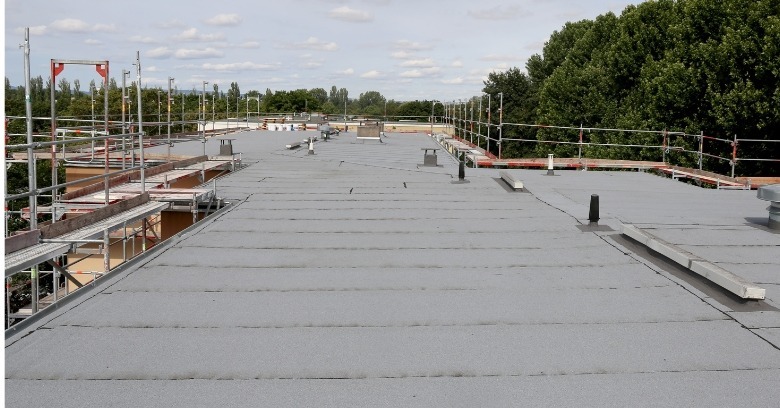
In the market for Commercial Roof Repair in Mineola Florida?
APC Roofing lays new membranes and metal panels on company property, along with the details at units and drains.
Dial 407-270-1129 and a roofer will inspect the whole surface and report back.
Buildings Where People Work – Some Background
Staff, stock and machinery sit beneath the membrane, so a drip can shut down a shift instead of staining a tile. A large building is usually topped by a broad, nearly level surface, so drainage and wind resistance are worked out by calculation.
Mechanical units, vents and satellite dishes share the space overhead, and each duct, line or support passes through the waterproofing. The work done below decides which assembly suits, so a refrigerated plant is specified unlike a clinic.
Kinds of Low-Slope Covering – Sorting the Catalog
Single-ply means one factory-made layer of TPO, PVC or EPDM, modified bitumen is asphalt blended with polymer and rolled out, and built-up roofing stacks felt and hot tar in plies. Thermoplastic seams are welded with heated air, but rubber gets primer and tape at every splice.
A commercial kitchen pushes greasy vapor up through the exhaust fans, and EPDM and asphalt swell and weaken beneath oily residue, so PVC usually covers the affected stretch. A stone-covered built-up system is weighty and tough, and the rock cover screens the bitumen from the sun.
Commercial Steel: Where Trouble Shows
Screws through the flats hold an exposed-fastener sheet in place, and each shank anchors in the framing below. The neoprene washer at each head dries out under years of sunlight, and daily expansion and contraction slowly back the fasteners out.
A standing-seam system uses clips hidden inside raised ribs, and the hardware lets each pan travel. Corrosion sets in at side laps and sawn ends, and a retrofit coating can give sound metal more years of service.
Deck Construction: Age and Condition
How the system is held down is set by the structure under the insulation, and reroofing leaves the framing in place. Steel with flutes holds screws securely, concrete wants adhesive or expansion anchors, and wood planking takes ring-shank nails or plates.
Old, slow leaks corrode patches of a metal deck, and a weakened section is taken out and replaced before new layers go down. The underside can be viewed from below where no ceiling blocks the view, and small cores from above show the rest.
Securing the Field: Choosing an Approach
A fastened install uses plates and screws in the overlaps, glued-down systems rely on adhesive over the entire back, and ballasted sheets stay put under a blanket of stone. The deck, the building's height and the site's exposure steer the decision, and a frame with no spare capacity rules out a heavy layout.
Between the plates, a fastened sheet balloons in stiff gusts, but an adhered sheet lies quiet and demands a dry, clean base. Inspecting a ballasted system takes time, as every seam remains hidden until the stone or pavers are shifted.
Wind on Low-Slope Work: What Codes Expect
Corners take the strongest suction, because moving air curls and speeds up on spilling over the edge. The strips along the sides rank next, and the interior bears a light load.
Attachment rows tighten on the approach to corners and edges, with spacing taken from code tables for the building's height and exposure. A thinly anchored outer angle can peel back, and air forced underneath keeps widening the opening.
Insulating Foam: Beyond Energy Savings
Polyisocyanurate panels cover the deck with offset joints, and a gypsum or fiber cover board commonly caps the stack. The layer cuts energy use across the building, and tapered stock tilts the finished surface toward the drains.
Wet polyiso loses much of the R-value, and the added weight and dampness corrode metal decking. Infrared scans, capacitance meters and core cuts map the affected area, and every ruined section is replaced rather than covered.
Drainage Hardware: Clogs and Standing Water
A metal strainer bolts over each interior opening, which keeps litter from entering the pipe. Silt plastered over the grate cuts the flow to a dribble, and a pond spreads across the field.
A raised overflow waits above each primary drain, so a gush at the upper spout means the normal path is shut. Standing water loads the frame with weight beyond the design, and water lasting two days suggests a depression or a clogged strainer.
Following Water Back to the Entry Point: The Method
The mark on a suspended ceiling shows where moisture landed, and the break in the membrane can sit many yards away. Steel decking guides runoff down the corrugations, and joints between foam panels open more paths.
On the membrane, every lap, curb and outlet on the high side gets examined, and electronic leak detection can locate a pinhole. Patching straight above the damp tile usually lands in the wrong place, so a fresh ring appears in the next shower.
HVAC Equipment Up Top – Leak-Prone Spots
A built-up curb lifts each machine above the field, and the covering turns up the sides beneath metal counterflashing. The corners are the fussiest detail up there, and a rushed job leaves gaps for rain.
An equipment change often brings an adapter curb that no roofer ever flashed, so a new leak follows within a season. A trickle from a condensate pipe wears a streak of slime into the membrane, and the water should be routed to a drain.
Pipes, Vents and Conduit: Handling Each Type
Each round stack wears a prefabricated boot with a clamp, while odd shapes go into a pitch pocket filled with sealant. Aging compound contracts and opens hairline gaps, which makes a refill a normal maintenance task.
Electrical conduit and gas lines ride on blocks simply set in place, as a stand screwed into the deck punctures the waterproofing. A rubber pad beneath every foot distributes the weight, so heat and vibration scuff the buffer instead of the membrane.
Hinged Covers Up Top: What Wears
Ultraviolet light leaves acrylic and polycarbonate hazy and weak, and fractures tend to start at the fastener holes. A shrunken gasket or a separated miter lets water through, and the drip is often charged to the covering.
Every trip up the ladder means lifting the hatch cover, and constant use loosens hinges and flattens the weatherstrip. Automatic smoke vents must deploy when heat melts a link, so work nearby leaves every mechanism free.
Parapets on Commercial Buildings – Sealing the Junction
The membrane turns up the vertical face as base flashing, a termination bar pins the upper margin, and a counterflashing strip sheds water outward. A coping cap crowns the parapet and throws rain clear, but an open joint between sections lets storms into the wall below.
Brick and block that have weathered let water migrate indoors, and to anyone downstairs the wet ceiling seems like a roof leak. The coping, the wall and every flashing are reviewed together with the field, and open mortar joints are repointed instead of caulked.
Metal Trim Where the Field Ends: What to Inspect
A cleat screwed to the nailer catches the folded hem of the flange, and a cover strip of membrane is laid over the upper face. Tested wind ratings decide which profile suits a given height, because a loose run of metal lets gusts pry up the membrane.
Commercial gutters catch far more runoff than a house ever sends, so hanger spacing and outlet size follow the flow. Trim that is kinked or raised deserves prompt attention, since securing the metal now keeps the sheet from tearing.
Visitors Who Are Not Roofers – Keeping Damage Down
Refrigeration mechanics may call on a large store every few weeks, and the direct path slowly abrades the covering. Screws left lying about are pushed into the membrane by work boots, and an access panel set down on a corner slices a gash.
Walkway pads outline a lane from the hatch to each unit, so heels grind on a tough layer and spare the waterproofing. Service agreements can tell outside trades to stick to the protective strips, and screws and scraps can be bagged and taken down.
Scheduled Inspections: What Gets Done
A commercial covering should get a professional walk-through twice annually, and heavy wind is reason for an extra check. Regular servicing clears the strainers of collected debris, seam edges are tested with a probe, and sealant at pockets and terminations is pressed for give.
Preparing for the stormy months means close scrutiny of outlets and perimeter metal, and the next round, after a hard season, searches for fresh movement. Minor faults get noted and pinned to a sketch, and repairs can be grouped and timed sensibly.
Keeping Track of a System: What Belongs in the File
A useful dossier includes a plan with every unit, drain and hatch marked, and a layer-by-layer description runs from the deck upward. Each fix is logged with a date and photographs, and new moisture findings are added over the years.
Many older properties change hands without a scrap of information about the covering, and every crew works out the layers again. Roof records stay with the site office, and a copy travels with a sale.
Choosing the Scope: The Main Signals
Isolated defects on an otherwise healthy membrane call for patches, while an elderly but dry surface can accept a new liquid system. Extensive saturated boards make the job a replacement, and so do seams that have turned brittle everywhere, though years alone never decide the matter.
A silicone or acrylic coat demands a clean, mended substrate, while lingering dampness gets bottled up. Swapping only the ruined sections is sometimes a sensible middle course, provided the rest of the field has good years left.
Reroofing Options – Guided by What Lies Beneath
With a recover, the old sheet stays and a new membrane goes over the top, and a cover board sits in between. Code permits a second covering, never a third, provided the insulation beneath is dry.
A tear-off strips everything down to the structure, and an open view shows what needs mending. New tapered insulation can correct ponding during the same project, and saddles between drains steer water sideways.
Things to Flag – Deserving a Closer Look
- A steady stream from the backup scupper in a storm, which signals a clogged primary drain.
- A tan mark on acoustic tile that keeps growing, which reveals the foam above is getting soaked.
- Algae streaks on the siding beneath a scupper outlet, which can come from open joints up top.
- Loose screws or gaps along the perimeter trim, which can hand a gale a lever.
- A dip in the ceiling line under a flat section, which may mean a low spot or a blocked outlet.
- A skylight dome gone cloudy or crazed, which can shatter under a person's weight.
- Drips from light fixtures or sprinkler heads after a storm, which suggests an opening some distance uphill.
- A gutter pulling away from the hangers, which can mean a clog or an undersized run.
How APC Roofing Tackles Commercial Roof Repair in Mineola Florida: What Happens and When
We look first at the drains, scuppers and overflows, and after the outlets we move to the laps, curbs and edge metal. Where there is a leak, the insulation is metered for moisture, because saturation below changes the answer.
What we see is set down in writing, photographs and a drawing included, and every defect is keyed to a location. Our advice names a repair, a restoration or a new system, and the reasons are set out for you to check.
Commercial Roof Repair Around Mineola Florida – Get the Facts
Phone 407-270-1129 and we will schedule a time to come out.
Life Under the Job – Clear Communication
Fastening into metal decking carries a racket into the offices underneath, and glue fumes can travel down through open intakes. Noisy steps are discussed with the manager beforehand, and outside-air vents next to the work can be sealed for the day.
A crane or chute takes stripped material to a bin, and stock under the open area can be covered over. Low-odor adhesives cut down the smell considerably, which makes the gentler kind a sensible pick over offices.
Staged Work on a Big Surface – the Discipline Involved
A careful tear-off exposes only what can be dried in before the crew leaves, and new insulation and membrane go onto the opened area in the same pass. A holding seal ties the completed edge to the untouched field each night, and the patch comes out once progress picks up.
The forecast sets how much covering comes off, and a chance of showers keeps the opening small. A sudden soaking ruins exposed insulation, and drips can reach the rooms below.
The Weather We Work In – What Changes by Market
The colder end of our territory adds hail and snow load to the list, so a hard cover board and an engineer's review of the framing are sensible. Across all the towns we serve, UV and high temperatures age a membrane, so a bright, reflective finish reduces solar gain.
At the coastal end, attachment is engineered for hurricane gusts, and tropical storms require ample secondary drainage. Glues and primers carry a temperature floor, whereas welded seams can go down in cool weather but never onto a wet deck.
Fall Protection Up Top – No Shortcuts
Where the wall is low or missing, nothing catches a misstep over the side, and anyone close to the edge wears a harness tied to an anchor. A dome breaks through easily under a misplaced step, so a screen or guardrail at each opening prevents a plunge.
Permanent anchors help everyone who services the units, and a self-closing gate at the hatch adds a barrier. Any missing guard is noted in our findings, because a fall from a low roof can still be serious.
For Commercial Roof Repair in Mineola Florida, speak with APC Roofing at 407-270-1129. A roofer will walk the membrane, the drains and the perimeter, and a written report follows, with the next step up to you.
Verified

Verified
Verified
Verified
Verified


















