
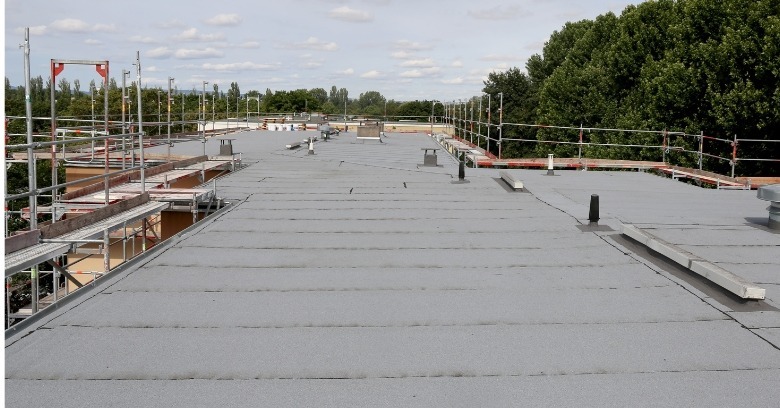
Searching for Commercial Roofing Installation in Groveland Florida?
APC Roofing builds and mends the wide, low coverings above places of work, taking in the edges, the outlets and every curb.
Phone 407-270-1129 and a roofer will climb up and look closely.
Business Property – an Overview
Customers, goods and running machines fill the space beneath the covering, so a drip can shut down a shift instead of staining a tile. A large building is usually topped by a broad, nearly level surface, so rain runoff and wind loads are set by design numbers.
Exhaust fans, condensers and antennas are mounted up top, and each duct, line or support passes through the waterproofing. How the building is used guides the specification, and a freezer warehouse needs details an office never does.
Sheet Systems in Wide Use: a Short Guide
TPO, PVC and EPDM are single-ply products made as one flexible layer, modified bitumen is asphalt with polymers added, supplied in rolls, and built-up roofing piles felt and tar ply on ply. The laps on a thermoplastic sheet are fused by a welding machine, whereas rubber splices rely on primer and adhesive tape.
Cooking vents on a restaurant leave fat beside the fans, and oily residue softens asphalt and EPDM, so PVC tends to be installed across the exposed zone. Built-up plies under a gravel layer make a heavy, durable assembly, since the aggregate protects the felts from ultraviolet light.
Commercial Steel – Details Worth Knowing
Screws through the flats hold an exposed-fastener sheet in place, and the threads grip purlins or joists underneath. Sunlight bakes the washers until the rubber splits, and fasteners loosen as the metal moves with temperature.
Clips concealed in the raised seams secure a standing-seam roof, and the hardware lets each pan travel. Corrosion gathers where sheets overlap and at trimmed ends, and a coating applied while the steel is sound can slow the spread.
Deck Construction – What to Check
Attachment methods are limited by what the original builders put in, and reroofing leaves the framing in place. Fluted steel accepts screws readily, a poured slab gets adhesive or anchors in bored holes, and wood planking takes ring-shank nails or plates.
Rust from old leaks can leave soft spots in metal decking, and the failed section is removed and rebuilt. Where a drop ceiling lifts out, the bottom of the structure is examined, and cores drilled from above confirm the remainder.
Anchoring the Membrane: Choosing an Approach
Mechanically fastened sheets carry rows of plates and screws in the laps, adhered systems are rolled into a coat of adhesive, and ballasted sheets stay put under a blanket of stone. The kind of deck, the height and the wind at the site decide the pick, and a heavy design goes ahead only once the framing is confirmed adequate.
A mechanically fastened sheet billows between fastener rows in strong gusts, whereas glue keeps a sheet calm only over a dry, clean base. A ballasted layout turns inspection into a slow job, because gravel or pavers must come off before anyone sees a joint.
Gusts and the Membrane – Numbers Behind the Pattern
Each corner feels the hardest pull, since the flow tumbles and speeds up on turning over the edge. The strips along the sides rank next, and the middle of the field takes a small fraction.
More plates per square foot go in at corners and edges, as set out in engineering tables for height and wind speed. Where anchoring falls short, the membrane can lift at an outer angle, and a blow-off can run well across the field.
Foam Insulation – Several Jobs at Once
Polyiso sheets are laid across the deck with joints staggered, and a thin, hard cover board is often added last. Good insulation trims the demand on the HVAC system, and tapered sections supply the gradient that carries rain to the drains.
Wet polyiso loses much of the R-value, and the added weight and dampness corrode metal decking. Infrared scans, capacitance meters and core cuts map the affected area, and spoiled sections come out while new stock goes in.
Drainage Hardware: The Path Down
A domed strainer sits over every interior sump, so debris stays out of the leader below. When the grate mats over, rain has nowhere to go, and a ring of ponding widens outward.
Codes call for a backup outlet mounted above the main drain, so a steady discharge up high means a jam below. Ponding piles extra weight onto joists sized for far less, and a pool that outlasts a downpour by two days marks a low spot or a fouled strainer.
Leak Hunting on a Large Building – No Guesswork
A stained ceiling tile marks only where the drops fell, and the break in the membrane can sit many yards away. Corrugated decking channels seepage the length of the building, and seams in the foam layer offer extra routes.
A roofer probes the laps, curbs and outlets upslope of the stained area, and a low-voltage test can trace an elusive leak. Repairs aimed at the spot directly over the drip tend to miss, so the trouble returns with the following storm.
Rooftop Mechanical Units – a Closer Look
A sturdy curb holds each machine clear of the membrane, and a flashing sleeve climbs the walls to a formed metal hood. Tight inside corners resist neat work, and any open seam lets rain get behind.
A new unit from the HVAC contractor may sit on an adapter with no flashing, and water reaches the office below soon enough. A condensate tube emptying onto the sheet keeps a patch constantly damp, so the stream ought to be carried to a drain.
Objects That Rise Above the Surface – the Small Stuff
A snug molded boot slides over each round stack, and anything irregular is dammed with a pan and filled with pourable sealer. Aging compound contracts and opens hairline gaps, so a fresh layer goes on every maintenance list.
Conduit and gas lines belong on free-standing supports, because a mount fastened through the sheet lets rain in. A rubber pad beneath every foot distributes the weight, and the cushion saves the sheet from abrasion as the piping moves.
Hinged Covers Up Top: Where Attention Goes
Years of strong sun make plastic lenses chalky and brittle, and fractures tend to start at the fastener holes. A shrunken gasket or a separated miter lets water through, and the covering gets accused of a fault in the glazing.
Technicians lift the access hatch many times a year, which wears out the springs, latch and weatherstrip. Smoke vents release automatically when a fusible link melts, so work nearby leaves every mechanism free.
Parapets on Commercial Buildings: Common Trouble Spots
The field sheet continues upward as base flashing, a termination bar holds the top margin, and metal counterflashing laps down from higher up. A coping cap spans the crest to push rain aside, yet a single open butt joint sends runoff downward.
Porous brick or block can pass water straight through to the interior, so the stain that appears gets blamed on the membrane. Inspection extends past the sheet to the coping, the flashings and the wall, and open mortar joints are repointed instead of caulked.
Fascia Metal at the Outer Edge: Rated for Uplift
A continuous cleat is fixed along the eave and locks the hem of the flange, and a cover strip ties the sheet to the upper face. The profile chosen has to be rated for wind at the building's elevation, since a bent clip can let a gust peel a whole stretch.
Commercial gutters catch far more runoff than a house ever sends, and the hangers, joints and leaders must be sized generously. Bent or lifted trim belongs on the repair list, because refastening early lowers the risk of a blow-off.
Visitors Who Are Not Roofers: Setting Some Ground Rules
Refrigeration mechanics may call on a large store every few weeks, and a worn lane appears between the hatch and the units. A forgotten screw is stepped straight into the covering, and a toolbox dragged across the top tears the surface.
Walkway pads set out a marked route to the equipment, and grinding hits dense material instead of the field. Property managers can ask each contractor to keep off bare membrane, and screws and scraps can be bagged and taken down.
Upkeep Through the Year: Small Jobs Kept Small
Owners of commercial property do well to arrange a walk-through twice annually, plus an extra check after a severe storm. A service call clears leaves and trash from the strainers, any open lap is found with a probe, and the sealant at each pocket is inspected.
A walk before the stormy months concentrates on outlets and the perimeter, and a later round looks for anything a punishing season loosened. Small problems are noted against a drawing of the building, and repairs can be grouped and timed sensibly.
Keeping Track of a System – a Long Memory
A sketch of the whole area places each unit, drain and hatch, and a section view names each material from deck to membrane. Dated photographs of each repair go in alongside, and core samples and scan readings are appended when available.
Older properties frequently hold no notes on the covering, which leaves every new contractor guessing. Documentation stays with the building, and a copy can go to a successor or a buyer.
Choosing the Scope: Reading the Evidence
A membrane that is mostly intact needs only spot patching, while an elderly but dry surface can accept a new liquid system. Big stretches of waterlogged insulation make a new covering the sensible answer, as does brittleness at every lap, though years alone never decide the matter.
A silicone or acrylic coat demands a clean, mended substrate, and over damp material the new layer only seals the trouble in. A partial tear-off of the spoiled areas can be a reasonable compromise, where the surrounding membrane still has life left.
Routes to a Reroof: What Codes Allow
A recover puts a fresh membrane over the current roof, and a cover board separates the surfaces. Codes permit an overlay on a single existing covering, and only over dry insulation.
A complete strip-off clears away every layer, and an open view shows what needs mending. Tapered insulation installed at the same time can reduce chronic puddling, and crickets between drains split the runoff.
Signs Worth Reporting – Before Leaks Spread
- A steady stream from the backup scupper in a storm, which signals a clogged primary drain.
- A brown ring overhead that widens with each downpour, which indicates water reaching the interior.
- Algae streaks on the siding beneath a scupper outlet, which can come from open joints up top.
- Rattling trim along an open eave, which can give wind a place to pry.
- A ceiling that sags or bows between the joists, which may reflect a depression or a sluggish drain.
- A skylight whose plastic has turned chalky, which is ready to fail at the frame or under a load.
- Rust spots spreading on the underside of a steel deck, which often traces back to a lap or a curb.
- Downspouts that gush at the joints, which can send runoff behind the fascia.
How APC Roofing Approaches Commercial Roofing Installation in Groveland Florida – Step by Step
We begin with every drain, scupper and overflow, and the seams, curbs and edges are next in line. On a leaking building, cores and a meter check the foam, because saturation below changes the answer.
A written report, photos and a sketch record what we found, and each fault is marked at the exact spot. Our advice names a repair, a restoration or a new system, and each reason is spelled out for the owner.
Commercial Roofing Installation in Groveland Florida: Plan the Next Step
Call us at 407-270-1129 and a time to look things over gets agreed.
Working Above Occupants – What Gets Agreed
Screwing into a steel deck rings through the rooms beneath, and glue fumes can travel down through open intakes. Noisy steps are discussed with the manager beforehand, and outside-air vents next to the work can be sealed for the day.
Debris leaves by chute into a dumpster, and stock under the open area can be covered over. Solvent adhesives carry a strong smell that water-based products lack, which makes the gentler kind a sensible pick over offices.
Section by Section – Order and Timing
The amount torn off is capped by what can be dried in by nightfall, and new insulation and membrane go onto the opened area in the same pass. A temporary tie-in joins the finished work to the existing covering overnight, and the stopgap is lifted at the restart.
The weather report limits the size of each tear-off, so an approaching storm means a smaller opening. Unprotected boards caught in a cloudburst soak through, and drips can fall on whatever sits underneath.
The Weather We Work In – What Changes by Market
Hail and the weight of snow matter at the colder end of our territory, which argues for tough cover boards and a structural check. Across all the towns we serve, UV and high temperatures age a membrane, and light-colored surfaces bounce much of the glare away.
Hurricane wind at the coastal end demands tighter anchoring, and torrential downpours need outlets sized with room to spare. Many adhesives have a minimum application temperature, but a welder copes with cool air far better than with a shower.
Staying Safe Aloft: Rules on the Job
A knee-high parapet or a bare perimeter leaves a sheer drop, and anyone close to the edge wears a harness tied to an anchor. A dome breaks through easily under a misplaced step, so every opening should get a screen or a railing.
Permanent anchors help everyone who services the units, and a safety gate at the ladder completes the setup. Where a screen or warning line is missing, our findings say so, as a single-story drop can still cause grave harm.
When you need Commercial Roofing Installation in Groveland Florida, speak with APC Roofing at 407-270-1129. We will go over the entire field, drain by drain and seam by seam, and everything goes down on paper while the decision stays yours.
Verified

Verified
Verified
Verified
Verified


















