
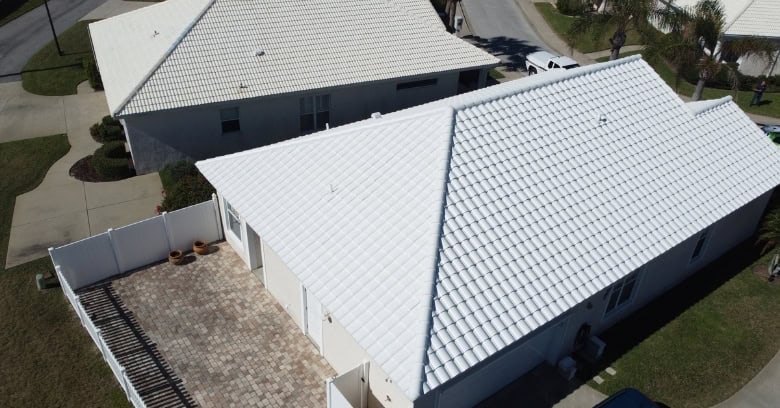
In Search of Roof Maintenance in Ocala Florida?
APC Roofing takes on anything from a checkup to a full replacement, on asphalt, steel and clay coverings alike.
Reach us at 407-270-1129, and a roofer heads out for a look at the house.
What Keeps a Roof Working: What Holds a House Together
The visible covering on top is only the outer layer, and a water barrier, plywood and framing sit below the surface. Strips of flashing cover the gap at a chimney, a pipe or a valley, and a drip there rarely points to worn shingles on the slope.
The attic air beneath the deck counts as part of the roof assembly, as heat trapped under the boards shortens the life of the shingles above. Water showing indoors may come from any level of the structure, so attention paid only to the outside can miss where the water entered.
The Duties of a Roof: Behind the Shingles
A pitched covering sends rain down toward the gutters, and the nailing keeps gusts from lifting the courses. What lies below carries the weight of everything on top, snow included at the colder end of our territory, and openings low and high let moisture escape the attic.
The covering deals with water, and nails and seal strips deal with wind, while what is underneath holds the whole thing steady, out of sight. A failure in one part puts pressure on neighboring parts, so the cause gets traced instead of the symptom being patched.
The Smaller Details Up Top: The First to Weaken
A field of sound shingles can go for decades, but a neoprene sleeve at a pipe fails well ahead of that span. Moisture gets behind the covering and moves toward the room, and paint bubbles on the ceiling below.
Caulk along a wall joint hardens and pulls away in the heat, and aluminum flashing pits at the bends in salt air. Ridge caps split across the crease, since the peak catches more weather than the rest of the roof.
What Appears Early: What Turns Up at Each Point
From across the street, the profile of the roof exposes dips, sags and wavy planes, and the gutters and painted trim show up in the same look. A zoom lens singles out torn collars, lifted tabs and bare patches, though some faults cannot be judged without climbing onto the roof.
Moving across the planes, a roofer tests every connector and traces every flashing joint, and the field is read for brittleness, granule shedding and loose edges. A slippery or steep slope rules out walking, and the eave, reached by ladder, provides the vantage point instead.
Behind the Ceiling: Signs Worth Finding
A watermark on the decking shows where rain has gotten in, and dampness under the fingers shows the entry is still active. Daylight visible between the boards marks an opening, and the distance from the ridge and gable gets measured so the spot can be found outside.
Nail points gone orange signal damp air, not a leak, and a darkened patch under the deck tells the same story. Fill pushed into the eave opening, or a fan duct ending in the attic, turns up only from inside, so a street-level glance never catches faults of that kind.
After the Roofer Leaves: a Plain Account
A record of the visit takes the form of photographs keyed to spots on the roof, and a short note describes what each image covers. What is holding up gets named as clearly as what is not, and problem areas are ranked by urgency.
A record saved from an earlier check sets a baseline for the next inspection, and how the covering is aging shows up better than a single day's reading. A roof tracked across each year brings few surprises, and large jobs show warning signs well ahead of the work becoming pressing.
Upkeep on a Shingle Roof: What Gets Done
New rubber boots go on the pipes ahead of any cracking, and aging caulk at skylights gets cut out and redone. Debris gets swept from the valleys and from the crickets, and the gutters get kept running and secured.
A shingle corner resealed in good weather takes little effort, but a season of neglect can end in a ceiling mark. A mat of moss holds water along the lower edges, and a biocide treatment clears the growth, with no pressure washer involved.
Staying Ahead of Trouble: What to Expect
A roofer should walk the roof once a year, timed for right after the season that is hardest on roofs locally. Catching things early is the whole point of a regular check, and repair work gets planned rather than rushed.
After rough weather, anyone can scan the roof from the yard, and ceilings on the top floor are worth a look for new rings. A few minutes under the deck with a lamp each season pay off: discolored boards, light through the deck and damp insulation turn up long before anything reaches the space below.
How Age Shows on a Roof: Clues at Each Stage
A young shingle covering lies flat with an even tone, and past the midpoint the south-facing side lightens ahead of the others. At the very end, tabs turn brittle and crack, and new leaks appear in different spots.
Judging from the street supplies a reasonable idea, but the true condition shows only from up top. A roof near the finish line is better replaced than patched again, and an honest contractor states that plainly, rather than pitching another repair.
A Channel That Has Given Up: What to Watch For
A sloped roof delivers water only to the eave, and the gutter picks up the flow at the edge. A channel hung the wrong way holds a pool against the house, and the wood underneath begins to rot.
Trouble along that edge usually comes from standing water, not the covering, and reroofing alone will not solve a fault at that spot. The direction of fall along each gutter gets checked, together with the outlets, and the flashing along the eave gets looked over for bent or missing pieces.
A Two-Way Exchange: The Basics
Outside air should enter under the eaves and leave near the peak, and that flow carries built-up heat and dampness away from the attic. With the opening closed, the attic turns hot in summer and clammy in humid months, and the whole build's service life shortens.
A fan starved of intake draws air from the rooms below, not from outdoors, and a mismatched pairing at the ridge and gables can cut the draft short. Swapping the surface with the vents untouched repeats the same problem, so the arrangement gets corrected while the deck is already open.
Roofing That Fits Where You Live: Set by What's Nearby
At the colder end of our territory, ice at the eaves and the weight of snow shape the build, and a waterproof membrane covers the bottom few feet of deck. Closest to the ocean, gusts decide how the covering gets anchored, and impact-and-wind-rated shingles and sealed seams get chosen.
In towns at the colder end of our territory, where hailstones run large, a harder product makes sense, while intense sun dries out asphalt everywhere we work. Every material choice answers to the weather at that house, not habit or a standard default.
Homes and Shops: Different Structures Entirely
Angle and overlap work together to move water off a pitched covering, finished in asphalt, clay or steel. Most commercial buildings use a single-ply or built-up membrane, and internal drains and heating units share space on that roof.
Some houses have a gently sloped patch over a back room, and a lapped product there lets water back up under the tabs. A spot like that needs a welded or adhered membrane, laced under the pitched covering above, and putting shingles back on that spot solves nothing.
A Cover Until Things Get Fixed: What Lasts a Few Weeks
A secured sheet keeps rain out while repairs get scheduled, but the broken parts stay broken all the same. A sound cover sits over the ridge and gets held down by wood battens screwed through the material, and the material gets drawn tight enough to hold quiet in a gale.
Extra reach past the opening matters on any temporary cover, because rain slips in around a snug fit. Material left on for a long stretch keeps the roof from drying out, and mildew and rot follow underneath.
Doing the Vertical Joints Properly: No Room for Guesswork
Step flashing gets woven in with each course along a wall, and an overlapping strip above keeps runoff off that metal. A brick chimney gets an apron downhill and metal set in up each edge, and a broad stack gets a diverter built into the roof behind.
Sealant slathered on a weak spot lets go as the metal expands and contracts, so the lasting answer is new metal laced in properly. Crumbling mortar lets rain soak into the masonry higher up, and a mason takes the stonework while a roofer takes the metal.
Putting Requirements on Paper: a Careful Look Before the Ink Dries
The plan for a job names every product by brand, and the document states whether the old covering comes off. The account explains how rotten decking gets handled if any turns up, and the flashing, the exhaust work and the final cleanup all get covered.
Offers from different contractors can be weighed point for point, and the gaps between the two sets of paperwork come into view. A roofer who waves off the specifics gives no genuine protection, since a spoken promise cannot be checked later.
What a Re-Roof Involves: the Basic Sequence
Beds, bushes and walkways get protected before demolition begins, and the existing covering gets removed completely. The bare deck gets checked plane by plane once the old covering is off, and rotten sections get rebuilt before anything gets put back down.
A water-resistant membrane, fresh flashing and ice protection get installed next, and the main covering, the ridge line and the vents finish the work. A magnet pass covers the grass and pavement at the end, and a last look confirms the gutters are clear.
Upkeep on Other Coverings: Details by Material Type
Screw-down metal panels depend on a gasket beneath each fastener, and a worn spot gets cured with a new screw rather than caulk. Across our markets, tile sets by mortar, by foam or by clips, based on the property, and the underlayment handles the water, not the surface material.
Walking on the wrong spot cracks a piece, and a damaged unit gets lifted out and replaced with one of the same profile. Where part of a roof runs nearly flat, ponding and split seams are the warning signs, and the drain openings get kept free of debris.
What Owners Tend to Notice: Easy to Act On
- Coarse grains washing out after every rain, from a covering that is no longer new.
- Corners turned up across a slope, in patches that widen every year.
- A vent seal that has pulled loose, with a stain trail on the covering below.
- Paint blistering overhead after a storm, soft at the center.
- Pinholes of light in the sheathing, spotted during a flashlight check.
- Moss on a shaded slope, growing thicker every spring.
- A sag along the ridge line, visible against the sky.
- Dried beads separating at a skylight, often after a hot summer.
Roof Maintenance for Ocala Florida Households: What APC Roofing Does
Before anything gets suggested, a roofer takes in the whole covering and the attic together, and the report shows up as photographs and a clear written account. Good sections get the same plain treatment as problem areas, and the homeowner decides what happens from there.
Roof Maintenance Across Ocala Florida: a Roofer Who Reads the Whole Roof
Dial 407-270-1129 and get a date on the calendar.
A Roof's Paperwork: Best Done Early
Noting when the covering went on, along with the brands used, is worth doing, and each inspection report deserves a spot in the same folder. Including a line for every repair, the spot and the method, rounds out the picture, and after several years the weak spots become obvious.
At sale time, questions about the roof's age and history always come up, and a folder of dated pages settles things quickly. A backup copy of the whole file keeps one bad day from erasing the whole thing, since a spill or a move should not be able to wipe out everything.
Signs of a Job Done Right: a Homeowner's Guide
Every row lines up, and the ends at the gables get trimmed evenly, and the nailing stays out of sight across the roof. Around chimneys and dormers, the flashing gets replaced rather than reused, and no gob of roofing cement stands in for a missing piece.
Ventilation openings stay in place and free of debris, and every gutter ends up hanging correctly. A final sweep with a magnet tidies the yard and drive, and sawdust near a cut line is the most common leftover once the work wraps up.
Anyone who came here searching for Roof Maintenance in Ocala Florida is closer to an answer than a listings page ever gives. Contacting APC Roofing at 407-270-1129 moves the scheduling forward. Every visit looks at the roof as a whole, not one spot alone, and no part of the roof goes unchecked.
Verified

Verified
Verified
Verified
Verified


















