
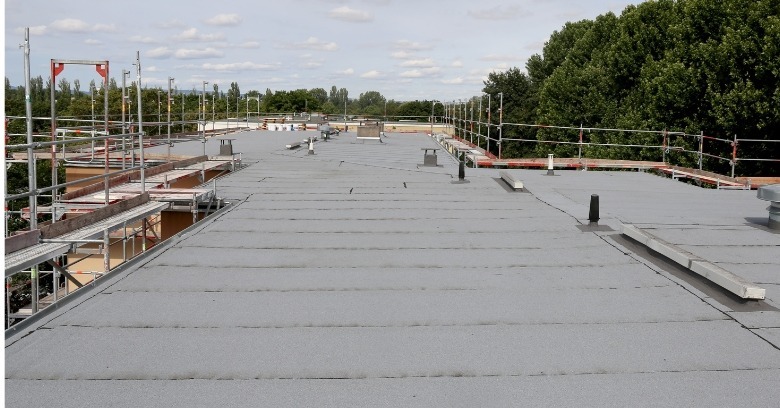
In the market for Commercial Roof Repair in Groveland Florida?
APC Roofing replaces and patches membranes on warehouses, shops and offices, with the flashings, outlets and trim included.
Call us at 407-270-1129 and a roofer will inspect the whole surface and report back.
Buildings Where People Work – Some Background
Workers, merchandise and equipment depend on a sound covering, and seepage can empty an aisle or stall a packing station. The area on top of a big building stretches wide at a very shallow pitch, so outlet sizes and wind design come from engineering figures.
Exhaust fans, condensers and antennas are mounted up top, and every line or support is a hole that must be flashed. The purpose of the building drives the design, and a freezer warehouse needs details an office never does.
The Principal Membranes – Names Decoded
A single-ply job uses one layer of TPO, PVC or EPDM, modified bitumen comes as polymer-rich asphalt on a roll, and built-up roofing stacks felt and hot tar in plies. A walk-behind welder fuses the overlaps on thermoplastic material, but rubber sheets are joined with primer and splice tape.
Fryer exhaust coats the area around a restaurant's fans, and oily buildup degrades asphalt and EPDM coverings, so PVC is often specified in the affected zone. A built-up roof topped with gravel is heavy and long-wearing, and the aggregate shields the bitumen from sunlight.
Steel Over a Warehouse: What to Watch
Exposed-fastener sheets are secured with screws through the flats, and the threads grip purlins or joists underneath. The sealing washers age and harden on a hot, sunny surface, and fasteners loosen as the metal moves with temperature.
A standing-seam roof is held by clips folded into the ribs, so each pan can creep as the metal grows and shrinks. Rust tends to appear at side laps and cut edges, and a retrofit coating can give sound metal more years of service.
The Deck: Reading the Substrate
The structure underneath decides how everything above is secured, and a reroof almost never replaces the framing. Fluted steel accepts screws readily, a concrete slab needs glue or anchors set in drilled holes, and wood or gypsum plank uses fasteners rated for the material.
Old, slow leaks corrode patches of a metal deck, and a weak area gets a new panel before anything goes on top. The underside can be viewed from below where no ceiling blocks the view, and a few test openings from the surface fill in the gaps.
How a Membrane Is Secured: Choosing an Approach
Many installations are fastened with plates screwed along every lap, glued-down systems rely on adhesive over the entire back, and a ballasted build lies loose under gravel or pavers. Building height, site exposure and deck material shape the choice, and an engineer confirms the framing can carry any added weight.
Between the plates, a fastened sheet balloons in stiff gusts, but adhered work stays motionless and needs a dry surface to grip. A ballasted layout turns inspection into a slow job, since the stone or pavers must be carried off to reach the laps.
Gusts and the Membrane: What Codes Expect
The strongest suction lands at each corner, since the flow tumbles and speeds up on turning over the edge. The strip down each side carries a smaller share, and the center is loaded far more lightly.
More plates per square foot go in at corners and edges, as set out in engineering tables for height and wind speed. An outer angle with too few anchors allows the sheet to lift, and trapped air balloons the free piece and rips further.
Insulating Foam – an Overlooked Component
Polyiso panels go down over the deck in staggered courses, and a dense cover board often goes on top. Insulation reduces the load on air conditioning and furnaces, and tapered stock tilts the finished surface toward the drains.
Moisture in polyiso drives the R-value down sharply, and damp material sits against steel until the flutes corrode. Scanning at dusk, with a few cores for proof, marks out the damage, and nothing ruined is left under a new covering.
Drains and Overflows – Parts of the System
Every interior sump is guarded by a strainer dome, and the slots hold back gravel and plastic bags. Silt plastered over the grate cuts the flow to a dribble, and a pond spreads across the field.
A secondary outlet is set slightly above the everyday drain, so a gush at the upper spout means the normal path is shut. Rain held across a wide area can put tons onto the beams, and a puddle still there two days after a storm indicates a sag or a matted strainer.
Following Water Back to the Entry Point – Patience Pays
A stained ceiling tile marks only where the drops fell, but the fault on the surface can lie a long way off. Corrugated decking channels seepage the length of the building, and joints between boards lead a trickle further still.
On the membrane, every lap, curb and outlet on the high side gets examined, and an electronic scan can pinpoint a hidden leak. Patching straight above the damp tile usually lands in the wrong place, so a fresh ring appears in the next shower.
HVAC Equipment Up Top – a Closer Look
Every heavy machine rests on a curb built up from the deck, and the covering turns up the sides beneath metal counterflashing. Tight inside corners resist neat work, and a rushed job leaves gaps for rain.
A replacement condenser frequently arrives on an adapter curb nobody flashes, so a new leak follows within a season. A trickle from a condensate pipe wears a streak of slime into the membrane, so the stream ought to be carried to a drain.
Objects That Rise Above the Surface: Details That Add Up
A preformed boot, cinched with a band, covers each round stack, and irregular shapes sit in a pitch pan of pourable sealer. Aging compound contracts and opens hairline gaps, so topping up is part of routine upkeep.
Electrical conduit and gas lines ride on blocks simply set in place, because anchoring a stand through the membrane invites a leak. Pads cut from spare roofing stock go under each base, and the cushion absorbs rubbing as temperatures swing.
Glazing and Access Points: What Wears
Sunlight slowly turns acrylic bubbles dull and fragile, and the screwed-down rim is where cracks start. A tired gasket on a skylight admits water, and the drip is often charged to the covering.
An access hatch is opened by every trade that climbs up, so the latch, springs and weatherstrip eventually give out. Automatic smoke vents must deploy when heat melts a link, so nothing placed during roofing work may pin the covers down.
Masonry Above the Roofline: Common Trouble Spots
At the vertical face, the sheet climbs as base flashing, a termination bar clamps the upper end, and counterflashing tucked into a reglet covers the fastened line. Coping over the crest steers rain to either side, but an open joint between sections lets storms into the wall below.
Brick and block that have weathered let water migrate indoors, and occupants below mistake the damp for a roof leak. Coping, wall and flashing are all looked at in the same inspection, and loose mortar is repointed rather than coated over.
Fascia Metal at the Outer Edge – Parts and Purpose
The folded hem of the flange hooks over a cleat on the nailer, and a strip of membrane seals the joint on top. The profile chosen has to be rated for wind at the building's elevation, and an undersized section flexes until the metal pulls away.
Gutters on a large building must swallow drainage from an enormous area, so hanger spacing and outlet size follow the flow. Any trim that has bent or lifted needs fixing, since early work protects the covering behind the edge.
Visitors Who Are Not Roofers – Guarding the Surface
Mechanics who tend the condensers make the same trip many times a year, so a scuffed trail builds along the usual line. Screws left lying about are pushed into the membrane by work boots, and a cabinet panel leaned on a corner cuts a slit.
Walkway pads set out a marked route to the equipment, and the abuse lands on something made to take the wear. Contracts with service firms can spell out where crews may walk, and nobody should leave scraps or screws behind.
Maintenance Visits – Staying Ahead of Leaks
Owners of commercial property do well to arrange a walk-through twice annually, with an added check after any violent storm. A service call clears leaves and trash from the strainers, every lap is probed for loose spots, and the sealant at each pocket is inspected.
A walk before the stormy months concentrates on outlets and the perimeter, and a return after rough weather finds what shifted. Little defects go into a log, each tied to a spot on the plan, so repairs can be arranged before a leak starts.
A Building's Roof History – a Long Memory
A marked-up plan locates every unit, drain and hatch, and a written cross-section lists every layer from the deck up. Each fix is logged with a date and photographs, and core and scan results are added whenever taken.
Lots of aging buildings have nothing on paper about the assembly overhead, and every crew works out the layers again. Roof records belong with the building, not with whoever did the work, and a copy can go to a successor or a buyer.
Choosing the Scope – Matching Work to Condition
A sound membrane with a handful of local faults simply gets patched, and a worn surface with dry layers beneath can take a fluid-applied finish. Insulation ruined over broad areas points to tear-off, and so do seams that have turned brittle everywhere, while a date on the calendar decides little.
A liquid coating needs a scrubbed surface and sound mending beneath, since damp layers below stay hidden and soggy. A partial tear-off of the spoiled areas can be a reasonable compromise, if the rest of the sheet remains in good shape.
Planning a Reroof – Guided by What Lies Beneath
A recover puts a fresh membrane over the current roof, and a thin board keeps the surfaces apart. Building codes accept an overlay where only a single covering is in place, and the foam underneath must be dry.
A full tear-off removes every layer, right down to bare metal or concrete, so rusted or soft decking gets fixed in the open. Tapered insulation installed at the same time can reduce chronic puddling, and a cricket between outlets divides the flow.
Early Warnings – Reasons to Call
- Splashing from the upper overflow opening, which exposes a blocked lower drain.
- A tan mark on acoustic tile that keeps growing, which shows moisture has worked through the insulation.
- White salt deposits across the parapet face, which can come from open joints up top.
- Fascia metal that flutters or rattles in a gust, which can set up a blow-off.
- Ponding visible from a higher window days after rain, which may reflect a depression or a sluggish drain.
- A skylight dome gone cloudy or crazed, which can shatter under a person's weight.
- Wet insulation hanging from an open ceiling, which tells of moisture moving along the flutes.
- Water spilling over the lip of an eave gutter, which can soak the wall and the ground below.
How APC Roofing Carries Out Commercial Roof Repair in Groveland Florida – Step by Step
Our first stop is every drain, scupper and overflow, and the laps, curbs and perimeter come next. On a leaking building, cores and a meter check the foam, so nothing is proposed until the results are in.
A written report, photos and a sketch record what we found, and each item carries a location note. Our advice names a repair, a restoration or a new system, and the why is explained in terms you can verify.
Commercial Roof Repair in Groveland Florida – Get the Facts
Call 407-270-1129 and a time to look things over gets agreed.
Life Under the Job – What Gets Agreed
Power fastening through steel echoes through the space beneath, and glue fumes can travel down through open intakes. Noisy steps are discussed with the manager beforehand, and vents beside the work can be covered while the cement sets.
Waste is sent to the ground through an enclosed chute, and tarps can go over whatever sits below. Most of the odor comes from solvent, and water-based glue has far less, and the gentle option fits a store that stays open.
Tie-Ins Between Sections: Planning the Steps
A careful tear-off exposes only what can be dried in before the crew leaves, and the bare deck gets new boards and membrane promptly. A cutoff between finished and untouched portions keeps rain out overnight, and the patch comes out once progress picks up.
The outlook decides how far the tear-off goes, and a chance of showers keeps the opening small. Bare foam hit by a downpour absorbs a great deal of water, and drips can fall on whatever sits underneath.
Our Service Area's Range – Market by Market
At the colder end of our territory, hail and snow load both count, which argues for tough cover boards and a structural check. Strong sun across every town we serve slowly bakes a membrane, and a pale surface sends much of the radiation back.
Hurricanes at the coastal end raise the bar for anchoring, and torrential downpours need outlets sized with room to spare. Adhesives come with a cold limit printed on the label, but a welder copes with cool air far better than with a shower.
Staying Safe Aloft – No Shortcuts
A knee-high parapet or a bare perimeter leaves a sheer drop, and anyone close to the edge wears a harness tied to an anchor. Skylights look solid yet break under a careless step, and fixed screens rule out a plunge into the space below.
Anchor points installed for good serve every trade that follows, and a gated ladder hatch adds another safeguard. Any missing guard is noted in our findings, as a single-story drop can still cause grave harm.
When Commercial Roof Repair in Groveland Florida is on your list, reach APC Roofing at 407-270-1129. Someone will go up and check the outlets, the laps and the edge metal, and everything goes down on paper while the decision stays yours.
Verified

Verified
Verified
Verified
Verified


















