
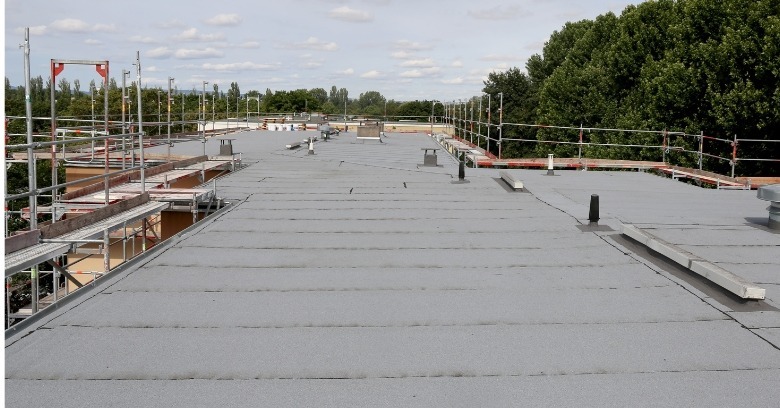
Searching for Commercial Roofing in Mineola Florida?
APC Roofing builds and mends the wide, low coverings above places of work, taking in the edges, the outlets and every curb.
Phone 407-270-1129 and a roofer will walk the surface and explain the findings.
Workplaces and Storefronts: Setting the Scene
Staff, stock and machinery sit beneath the membrane, and a leak can halt sales rather than just mark a ceiling. A big footprint is covered at a gentle grade, and the drainage layout and fastening pattern are calculated.
Condensing units, exhaust stacks and antennas are spread across the top, and each duct, line or support passes through the waterproofing. The work done below decides which assembly suits, because a bakery and a document archive ask for different things.
Sheet Systems in Wide Use: a Short Guide
Single-ply means one factory-made layer of TPO, PVC or EPDM, modified bitumen is asphalt with polymers added, supplied in rolls, and built-up roofing piles felt and tar ply on ply. Seams in thermoplastic membranes melt together under a welding nozzle, but rubber is spliced with tape over a primed surface.
Restaurant hoods blow grease out beside the fans, and asphalt or EPDM turns soft under oily buildup, so PVC tends to be installed across the exposed zone. A built-up roof topped with gravel is heavy and long-wearing, and the aggregate shields the bitumen from sunlight.
Steel Over a Warehouse: Where Trouble Shows
Through-fastened sheets take a screw at intervals across the flats, and the threads bite into the purlins beneath. Sunlight bakes the washers until the rubber splits, and daily heating and cooling gradually loosen the fasteners.
A standing-seam system uses clips hidden inside raised ribs, so each pan can creep as the metal grows and shrinks. Corrosion sets in at side laps and sawn ends, and a coating over steel that is still sound can slow the damage.
The Supporting Deck – What to Check
The structure underneath decides how everything above is secured, and a reroof almost never replaces the framing. Ribbed steel accepts screws with no trouble, concrete wants adhesive or expansion anchors, and wood or gypsum plank uses fasteners rated for the material.
Moisture trapped for years can rust through metal decking, and a damaged area is removed and a new piece fastened in place. The structure's underside is checked from indoors when access permits, and small cores from above show the rest.
Keeping a Membrane in Place: Choosing an Approach
Many installations are fastened with plates screwed along every lap, adhered work is stuck down across the full surface, and ballasted sheets are held down by rock or pavers. The kind of deck, the height and the wind at the site decide the pick, and the framing's spare load capacity limits how much weight can go on top.
Gusts make a screwed membrane ripple between the fastener lines, whereas an adhered sheet stays still but needs a clean, dry substrate. Ballast makes any inspection slow, as every seam remains hidden until the stone or pavers are shifted.
Gusts and the Membrane: What Codes Expect
Each corner feels the hardest pull, because moving air curls and speeds up on spilling over the edge. Along the sides, a narrower band sees a little less, and the open middle is loaded more gently.
Fasteners go in closer together near corners and edges, with the layout drawn from design tables for the site. A thinly anchored outer angle can peel back, and air forced underneath keeps widening the opening.
Thermal Resistance – an Overlooked Component
Polyiso sheets are laid across the deck with joints staggered, and a firm cover board spreads concentrated weight. Insulation keeps conditioned temperatures indoors, and tapered units can slope a dead-flat deck to the outlets.
Soaked foam gives up most of the thermal resistance, and trapped water weighs on the structure and corrodes steel. Scanning at dusk, with a few cores for proof, marks out the damage, and each sodden piece is removed instead of buried.
Outlets on a Big Building: Main and Backup
A metal strainer bolts over each interior opening, which keeps litter from entering the pipe. Silt plastered over the grate cuts the flow to a dribble, and a pond spreads across the field.
An overflow opening is placed higher than the regular drain, and runoff spilling at the upper level points to a plug further down. Ponded water adds load that the framing may not be sized for, and water lasting two days suggests a depression or a clogged strainer.
Leak Hunting on a Large Building – a Careful Search
Ceiling stains record where rain finally came through inside, but the split in the sheet is often somewhere else entirely. Steel decking guides runoff down the corrugations, and joints between boards lead a trickle further still.
A roofer probes the laps, curbs and outlets upslope of the stained area, and an electronic scan can pinpoint a hidden leak. Patching straight above the damp tile usually lands in the wrong place, and the next rain brings the trouble back.
Package Units Overhead: Where Care Is Needed
A sturdy curb holds each machine clear of the membrane, and base flashing climbs the sides under a metal cap. Each folded inside corner takes careful work to stay watertight, and a pinhole at the crease lets rain run down behind.
When a heating contractor swaps a machine, an adapter curb often goes on unflashed, and stains appear below a few storms later. A condensate tube emptying onto the sheet keeps a patch constantly damp, and a short extension to a drain ends the problem.
Everything Else That Passes Through: Details That Add Up
Each round stack wears a prefabricated boot with a clamp, and irregular shapes sit in a pitch pan of pourable sealer. The compound shrinks and cracks as the years pass, which makes a refill a normal maintenance task.
Electrical conduit and gas lines ride on blocks simply set in place, since a bracket screwed through the covering becomes a leak. A rubber pad beneath every foot distributes the weight, so heat and vibration scuff the buffer instead of the membrane.
Skylights, Hatches and Smoke Vents – Service Notes
Ultraviolet light leaves acrylic and polycarbonate hazy and weak, and fractures tend to start at the fastener holes. Water gets in through a hardened gasket or a loose frame joint, and the sheet nearby is wrongly suspected.
The access hatch is lifted on every service visit, and constant use loosens hinges and flattens the weatherstrip. Smoke vents are life-safety devices that pop open in a fire, and nothing stacked or sealed nearby is allowed to jam the lid.
The Low Wall Around the Edge: Staying Dry
Base flashing carries the membrane up the inside face, a termination bar holds the top margin, and counterflashing tucked into a reglet covers the fastened line. Coping over the crest steers rain to either side, yet a gap between sections funnels runoff downward.
Brick and block that have weathered let water migrate indoors, and occupants below mistake the damp for a roof leak. Coping, wall and flashing are all looked at in the same inspection, and open mortar joints are repointed instead of caulked.
Perimeter Trim on Open Edges – Wind at the Border
Along the eave, a long cleat grips the hemmed lip of the flange, and a cover strip of membrane is laid over the upper face. Gauge and profile are matched to the wind exposure at the building's height, since loose metal becomes a lever that gusts use against the field.
An eave gutter on a big building collects runoff from a vast surface, which calls for sturdy hangers and oversized downspouts. Trim that is kinked or raised deserves prompt attention, since early work protects the covering behind the edge.
Other Trades Overhead: Setting Some Ground Rules
Refrigeration mechanics may call on a large store every few weeks, and the route wears a visible track into the field. A stray sheet-metal screw is driven into the membrane underfoot, and an access panel set down on a corner slices a gash.
Heavy walkway pads laid along the route show where to tread, and grinding hits dense material instead of the field. Service agreements can tell outside trades to stick to the protective strips, and loose screws and scraps should leave in a bucket.
Scheduled Inspections: Timing and Tasks
Owners of commercial property do well to arrange a walk-through twice annually, and a damaging storm earns an additional check. Regular servicing clears the strainers of collected debris, seam edges are tested with a probe, and caulked joints are examined for cracking.
A walk before the stormy months concentrates on outlets and the perimeter, and a follow-up hunts for whatever a harsh stretch of weather pulled apart. Minor faults get noted and pinned to a sketch, and repairs can be grouped and timed sensibly.
Keeping Track of a System: Knowledge That Lasts
A useful dossier includes a plan with every unit, drain and hatch marked, and the assembly is described from the structure to the membrane. Each fix is logged with a date and photographs, and core and scan results are added whenever taken.
Many older properties change hands without a scrap of information about the covering, so each contractor has to learn the build-up from scratch. Roof records belong with the building, not with whoever did the work, so a later buyer or manager starts out informed.
Fix, Refresh or Rebuild: What Tips the Balance
Localized faults on a healthy sheet are patched in place, and a weathered surface that is still dry can take a fresh liquid layer. Widespread waterlogged boards signal a full replacement, as does brittleness at every lap, but the calendar alone is no verdict.
Any restoration coating depends on a washed, repaired substrate, and material below that holds water never dries out. Taking out just the spoiled areas occasionally works as a halfway measure, when the surrounding field is still performing.
Reroof Paths – the Rules and the Reasons
A recover lays new membrane over what is already there, and a board is placed between old and new. Codes limit an overlay to buildings with a single covering in place, as long as the insulation below is dry.
A tear-off strips everything down to the structure, and the exposed deck can be inspected and repaired. Fresh tapered boards can give a dead-flat surface some fall, and a saddle between drains turns the flow toward each outlet.
Clues Around the Building: Before a Small Fault Grows
- Splashing from the upper overflow opening, which announces a stalled main outlet.
- A brown ring overhead that widens with each downpour, which reveals the foam above is getting soaked.
- White salt deposits across the parapet face, which can signal water entering the masonry.
- Fascia metal that flutters or rattles in a gust, which can give wind a place to pry.
- Ponding visible from a higher window days after rain, which hints at a low area in the structure or a slow drain.
- A yellowed, brittle skylight lens, which can admit rain at the frame.
- Drips from light fixtures or sprinkler heads after a storm, which often traces back to a lap or a curb.
- Downspouts that gush at the joints, which can soak the wall and the ground below.
How APC Roofing Plans Commercial Roofing in Mineola Florida: What Happens and When
The first thing we examine is each drain, scupper and overflow, and after the outlets we move to the laps, curbs and edge metal. On a leaking building, cores and a meter check the foam, since the condition underneath shapes the advice.
A written report, photos and a sketch record what we found, and each problem is labeled with a location. Our advice names a repair, a restoration or a new system, and the why is explained in terms you can verify.
Commercial Roofing for Property Owners in Mineola Florida – A Clear Picture First
Call 407-270-1129 and a time is agreed with whoever runs the building.
Business as Usual Downstairs: Practical Arrangements
Fastening into metal decking carries a racket into the offices underneath, and the smell of primers can reach the fresh-air intakes. The loud part of the job is planned with whoever runs the building, and vents beside the work can be covered while the cement sets.
A crane or chute takes stripped material to a bin, and tarps can go over whatever sits below. A water-borne glue smells much milder than a solvent type, and the gentler choice suits a building full of people.
Staged Work on a Big Surface: Avoiding Surprises
Crews remove only as much old covering as can be made watertight by evening, and the bare deck gets new boards and membrane promptly. A temporary tie-in joins the finished work to the existing covering overnight, and the stopgap is lifted at the restart.
Radar and forecasts govern how much comes off, and any hint of showers shortens the stretch. Unprotected boards caught in a cloudburst soak through, and leaks can then reach stock and staff below.
Regional Conditions – Market by Market
Toward the colder end of our territory, hail and heavy snow both figure in, so impact-resistant cover boards and a framing check make sense. Across all the towns we serve, UV and high temperatures age a membrane, so a bright, reflective finish reduces solar gain.
At the coastal end, attachment is engineered for hurricane gusts, and torrential downpours need outlets sized with room to spare. Some adhesives will not cure below a set temperature, but a welder copes with cool air far better than with a shower.
Keeping People Safe Overhead: a Standard Part of the Job
Short parapets and bare perimeters leave nothing between a worker and the ground, so a warning line keeps crews back from the edge. Skylights look solid yet break under a careless step, and a wire screen or a rail around every opening stops a plunge.
Permanent anchors left in place serve the technicians who come later, and a gated ladder hatch adds another safeguard. Our findings mention any guard that is lacking, since even a low building is high enough for a serious fall.
When you need Commercial Roofing in Mineola Florida, contact APC Roofing at 407-270-1129. We will cover the surface on foot, from the outlets to the parapets, and everything goes down on paper while the decision stays yours.
Verified

Verified
Verified
Verified
Verified


















