
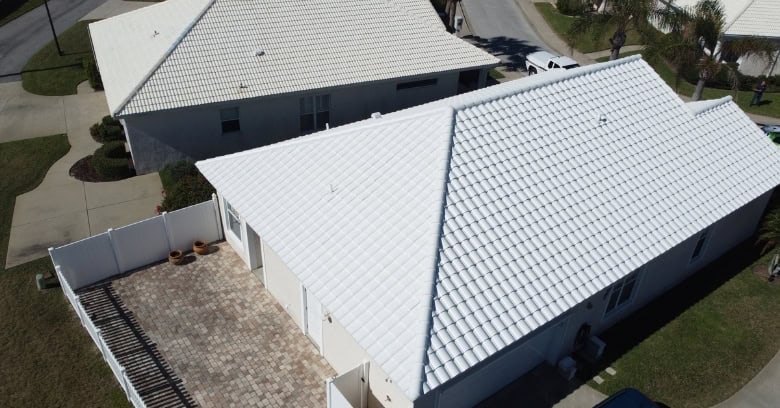
Looking for Roofing Companies in Ocala Florida?
APC Roofing takes care of a routine checkup right up to a complete replacement, on shingle, metal and tile alike.
Phone 407-270-1129, and a roofer comes out to see the house firsthand.
The Roof's Inner Build-Up: What's Tucked Away
The shingles or panels on top form the outer layer, and underlayment, decking and rafters sit beneath the surface. Flashing bridges the crossing wherever a wall, a pipe or a valley breaks the field, and trouble nearby seldom means a failure in the surrounding shingles.
Airflow through the attic belongs to the roof system as much as any material, since trapped summer heat bakes the deck from underneath. A stain on an upstairs ceiling can trace back to any level of the roof, so patching only what the yard shows can fail to reach the real cause.
The Duties of a Roof, Component by Component
A sloped covering sheds every storm's water downhill, and the fastening pattern resists wind uplift. What lies below carries the weight of everything on top, snow included at the colder end of our territory, while vents give damp attic air a way out.
Water is the covering's job, and wind is the fastening's task, and holding the whole thing up falls to what is underneath. A failure in one part puts pressure on neighboring parts, so the cause gets traced instead of the symptom being patched.
The Minor Pieces of a Roof: Different Timelines
The shingled field is built to last for decades, but a rubber collar at a vent pipe gives out far sooner. Runoff slips through and travels toward the room, and paint bubbles on the ceiling below.
Caulk along a wall joint hardens and pulls away in the heat, and galvanized flashing corrodes at folds and nail holes. Ridge caps split across the crease, since the peak catches more weather than the rest of the roof.
Different Stages, Different Details: What Turns Up at Each Point
From the driveway, the outline of the roof shows dips, sags and wavy planes, and the fascia and gutter runs are visible at the same time. A zoom lens singles out torn collars, lifted tabs and bare patches, but a weak spot underfoot tells what optics cannot.
Crouched at each pipe, a roofer feels for gaps and traces the flashing along every wall, and every course is checked for edges that have come loose. A steep or wet roof is not walked, and the eave, reached by ladder, provides the vantage point instead.
The Underside of a Roof: Clues From Below
A tide line on a rafter shows where rain has entered, and a soft, wet feel means the entry point is still open. Light passing through the decking reveals a breach, and a tape measure fixes the distance from the peak and gable wall.
Rusted nail tips point to condensation, not a leak, and a matted, faded patch nearby confirms the same condition. Insulation stuffed into the eaves, or a bath fan ducted into the attic instead of outside, gets found only from inside, so a yard-only look passes over faults like that.
The Follow-Up Paperwork: the Basics
What turns up gets documented with photographs matched to locations on the roof, and a caption states what each picture reveals. Parts in fine shape are covered as plainly as parts that are not, and faults are ranked by how soon repair is needed.
A report kept on file lets the next check be measured against a known starting point, and change over time is easier to judge than condition on a single day. A roof tracked across each year brings few surprises, and a serious repair shows warning signs long before the work turns urgent.
Maintenance Tasks: the Basic List
Worn boots around the stacks get exchanged for new ones, and shrunken caulk along the flashing gets a fresh bead. Debris gets swept from the valleys and from the crickets, and downspouts get flushed so water moves through.
A shingle corner resealed in good weather takes little effort, but delay through a wet season can let water reach the ceiling below. Moss holds shingle edges up and traps water against the courses, and the growth gets killed with a treatment and swept off by hand.
How Often the Checkup Should Happen: What to Expect
A roofer should walk the roof once a year, timed for right after the season that is hardest on roofs locally. The point is finding small faults before a leak forms, and the family hears plainly where the roof stands.
Between visits, an owner can look at the roof from the yard after rough weather, and bedroom ceilings upstairs can be watched for fresh spots. Looking around the attic with a flashlight now and then makes sense: damp wood, daylight and wet insulation are easy to see long before anything reaches the space below.
How Age Shows on a Roof: Clues at Each Stage
Newer asphalt lies smooth and uniform in tone, and later in life the sun-exposed plane fades before the shaded side does. Near the end, corners curl and granules gather in the gutters, and a repair rarely holds for long at that stage.
An impression formed from outside has real value, but a ladder and a closer look tell the fuller story. When shingles are exhausted, the candid conversation turns to replacement, and a reliable contractor says so outright, instead of offering another fix.
The Channel's Part in the System: The Stakes Explained
The covering carries runoff only to the lower edge, and from there a gutter does the remaining work. A run choked with leaves sends overflow behind the trim board, and the material there softens over time.
A soft spot along that edge points more often to drainage trouble than to worn shingles, and a new covering will not fix what backed-up water caused. Gutter pitch and downspout discharge get checked on a visit, and the metal at the drip edge gets looked over for gaps and poor overlap.
Why the Area Above Needs to Work Right: The Basics
Intake at the overhang and exhaust at the top keep air moving through the attic, and the draft clears warmth and humidity from under the sheathing. Where the opening gets sealed off, the attic runs hot in summer and stays sticky through humid stretches, and the whole build's service life shortens.
A roof opening installed with no matching intake draws air from the living space below, and one high point pulling toward a nearby high point can choke flow at the soffits. A roof placed over bad ventilation inherits an existing weakness, so the underlying issue belongs in the scope of any re-roofing plan.
Specifications That Follow the Weather: What Shifts From Place to Place
Toward the colder end of our territory, frozen gutters and heavy snow set the priorities, and a sticky underlayment protects the lowest courses. Nearest the coast, uplift resistance governs the fastening choices, and reinforced edge metal and sealed seams get specified.
Where hail falls hard at the colder end of our territory, an impact-rated covering is worth considering, while strong sun bakes asphalt across every market we serve. The details get set by conditions at that specific location, not routine, and not whatever a past project called for.
Homes and Businesses: Different Demands
A sloped covering sheds rain by lap, finished in asphalt, clay or steel. Most commercial buildings use a single-ply or built-up membrane, and mechanical equipment and drains break through that surface.
A fair number of homes have a shallow strip over a porch, and shingles in that spot often leak because runoff moves too slowly. A low spot like that calls for a sealed sheet, tucked beneath the steeper roof above, and re-laying shingles there repeats the same fault.
Tarps and Emergency Covers: What Works and What Fails
Plastic over a break keeps the rooms beneath dry for a time, but the trouble below stays untouched. A sound cover sits over the ridge and gets held down by wood battens screwed through the material, and enough tension keeps gusts from finding any slack.
A sheet cut too small leaves the edges of the opening exposed, since water slips in under any edge that ends too soon. A cover left up through a whole season holds heat against the surface, and mildew and rot follow underneath.
Where the Roof Changes Direction: Getting the Work Right
Short metal steps get laced between the courses up the side of a dormer, and an overlapping strip above keeps runoff off that metal. A brick chimney gets an apron downhill and metal set in up each edge, and any stack wider than a small one calls for a cricket set into the slope uphill.
Caulk troweled onto a bad seam lets go once temperatures shift the metal, so a fresh tie-in, installed correctly, is the dependable way to go. Porous or cracked mortar lets moisture into the masonry higher up, and a mason may need to handle the stonework while a roofer handles the metal.
The Written Scope: a Careful Look Before the Ink Dries
A signed agreement should identify the shingle, the underlayment and the metal by name, and the document states plainly whether the work is a tear-off or a layover. A firm outline settles ahead of time how bad wood gets handled, and the flashing, the exhaust work and the final cleanup all get covered.
Thorough scopes from rival bidders can be checked point by point, and any gap between the two versions stands out. A crew that asks for trust instead of anything in hand has left out the part that matters, since a handshake settles nothing once a dispute starts.
A Tear-Off and Rebuild: What Happens
Plants take tarps and hard surfaces take padding before the crew begins, and the old shingles get pulled off in pieces. Opened up, the decking gets checked for soft spots and breaks, and rotten sections get rebuilt before anything gets put back down.
A protective membrane, new flashing and full underlayment get installed, and the covering, the ridge caps and the vents go on to finish the job. A magnetic sweep covers the yard and the drive at the end of the workday, and nothing from the cleanup stays behind in the gutters.
Maintenance Beyond Asphalt: What Differs by Material
A metal system with exposed fasteners relies on the gasket beneath every fastener, and a leaking screw gets paired with a fresh washer. Across our markets, tile sets by mortar, by foam or by clips, based on the property, and the layer underneath carries the job of shedding water.
A heavy step on an unsupported piece causes a crack, and a spare of the same profile goes in where one fails. Where part of a roof runs nearly flat, ponding and split seams are the warning signs, and leaves get removed from the outlets regularly.
Signs Worth a Closer Look: a Checklist
- Sand-like mineral grains in the gutter runs, long after the covering was installed.
- Tabs curling at the corners, spread across more than one row.
- A split rubber collar around a plumbing vent, above a bathroom or a kitchen exhaust.
- Paint blistering overhead after a storm, soft at the center.
- A glimpse of sky from under the deck, spotted during a flashlight check.
- Clumps of moss under overhanging trees, pushing up the lower edges of the shingles.
- A hollow spot in an otherwise even stretch, widening a little each season.
- Rust streaks below a metal joint, often after a hot summer.
Roofing Companies Across Ocala Florida: APC Roofing's Approach
Before a scope gets drawn up, a roofer examines the whole covering and the attic, and what turns up gets delivered as pictures along with a written explanation. Solid parts get described as directly as weak ones, and the next step is left to the homeowner.
Roofing Companies Around Ocala Florida: a Full Look, Not a Guess
Get in touch at 407-270-1129 and set a time for a visit.
An Archive for the Roof: Best Done Early
Saving the install date and the product names on the invoice pays off later, and every yearly report can go into the same file. Marking down every repair, with the location and the work done, leaves useful detail, and over time the pattern shows which areas keep needing attention.
Once a home hits the market, the roof's age and condition come up in conversation, and paperwork with dates carries more weight than recollection. A backup copy of the whole file keeps one bad day from erasing the whole thing, since paper can be damaged or destroyed over the years.
Judging the Result: Details to Check
The lines run true from eave to ridge, with rake cuts trimmed sharp, and nails stay covered by the layer above. The wall joints carry new flashing, tucked to match the way water runs, and nothing gets troweled on to cover a shortcut.
The attic keeps intake and exhaust moving after the job, and every gutter ends up hanging correctly. The lawn and driveway get a magnetic pass at the end of the job, and wood shavings from a trimmed edge are the most common leftover from the work.
Anyone researching Roofing Companies in Ocala Florida is closer to an answer than a listings page ever gives. Getting in touch with APC Roofing at 407-270-1129 gets a date on the calendar. Every stop covers the full roof, top to bottom, with nothing left to chance.
Verified

Verified
Verified
Verified
Verified


















