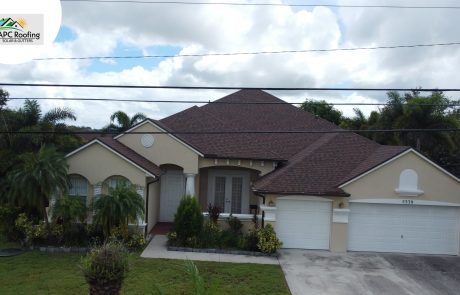
Planning Architectural Shingle Roofing Across Holly Hill Florida?
APC Roofing strips worn coverings and lays fresh courses in their place on ranch homes, two-story houses and detached garages.
Dial 386-356-2111 and a trained eye will check the details and report back.
Behind the Colored Finish: Plant to Pallet
A fiberglass mat gives each shingle its strength, and asphalt spread over the sheet stops water, and mineral granules across the top guard against sun damage.
Two lines that appear matched may be put together quite differently, and a heavier build generally adds years on a house. Hue is all a sample chip can show, while published data covers the wind and impact classes.
Comparing the Styles: Appearance and Build
A three-tab piece has one layer and two notches that divide its face into tabs, and courses laid this way form tidy straight bands. Architectural shingles are built as a base with a second, trimmed ply fused on top, so the uneven profile casts shadows.
A laminated bundle holds considerably more asphalt than a strip bundle, and a stronger wind class is commonly assigned. Nailing on a two-ply shingle aims at the strip where the plies are joined, and the maker marks the correct spot on each piece.
The Case for Strip Shingles: A Narrow Niche
Three-tab regularly serves a workshop, a garage or a porch, while a house already wearing that type can be matched. Several makers now offer that style in fewer colors than before, and discontinued hues cannot be ordered at all.
An architectural surface conceals small humps in an aging deck, while a thin strip follows every undulation. Either profile sits on the same underlayment and flashings, and only the visible layer differs.
The Granule Surface: Clues at Ground Level
Some surplus grains rinse off a recently installed covering, and that shedding is expected. A steady stream of grit from an aging covering shows the top layer is going, and exposed asphalt turns brittle and splits.
South- and west-facing planes bake the longest each afternoon, so the damage is usually heaviest on them.
Sealant Lines – Wind Resistance
Glue is applied to every shingle at the plant as a narrow stripe, and bright sunshine activates it so the row above clings. Adhered courses keep their bottom edges down in a gust, while the nails keep doing their share for decades.
At the colder end of our territory, shingles laid in late fall may not seal for weeks, and strong wind may raise tabs in the meantime. Makers' directions cover this with cement placed by the installer, and each bundle label marks the right locations.
Holding Pieces Down – Frequent Errors
Roofing nails go into a narrow band marked by the manufacturer, and from there the shank reaches the top of the underlying row too. The basic schedule calls for four fasteners on each shingle, while a bundle wrapper asks for six on very steep or wind-exposed jobs.
A nail driven high pins one layer instead of two, an overdriven head slices the fiberglass, and a crooked shank makes a bump that wears through the shingle above it. A listed wind class is valid only for the pattern the manufacturer specifies, while a bad compressor setting repeats itself on every shot.
Under the Underlayment – Before New Courses Go On
A deck of plywood or OSB lies beneath every shingle, since shanks need continuous solid material to stay put. Many older homes still have spaced boards left from a wood-shake era, and full sheathing is added on top before any shingles.
Once the old covering is off, any soft or delaminated section is cut out and swapped for sound decking, since a nail in punky fibers pulls loose. Panels go down with a narrow space along each joint, as moisture makes the wood expand and ridge up when butted tight.
Old Paper, New Fabric: Felt or Synthetic
Building rules in most places require a water-resistant membrane over the deck, and its runs overlap from the bottom edge upward. Synthetic sheet has largely replaced asphalt-saturated felt, as the modern fabric is tougher and does not ripple after rain.
Rain forced past a loose shingle is shed by the membrane below, but it was never designed to serve as the only covering.
Self-Adhered Eave Membrane: Seasonal Detail
At the colder end of our territory, a heated attic thaws rooftop snow, and a frozen band builds along the chilly lower edge. Water pooling behind that buildup can back up under the shingles, and plain underlayment admits it around each nail hole.
Where ice dams form, building codes require an adhered membrane at the eave, and it extends upslope beyond the point directly above the heated interior. Across every part of our service area, valleys and skylight curbs frequently get it too, since flow concentrates in such places.
Border Protection: Under and Over
A metal drip edge wraps the eaves and the rakes, and a flange throws runoff away from the fascia. Down low, the flashing is installed before the underlayment, while at the gable side the order flips.
Edge metal around the whole perimeter is a code requirement in many towns, since rain creeps back onto the decking where nothing guards it.
Beginning at the Gutter: A Common Shortcut
A starter strip goes down beneath the first visible course, so the sealant is positioned right at the lip. A rotated field piece strands the adhesive several inches up, and nails alone then keep the lowest tabs from lifting.
Most instruction sheets extend starter up both rakes, because gusts pry at a roof's perimeter.
Where Slopes Meet: Construction Methods
In an open design, a formed metal liner carries water down the valley, while the closed-cut type runs shingles from one side across and trims the other side along a chalk line. A woven junction interlaces rows from both planes, which works with three-tab, but most laminated shingles are too stiff for that.
Nailing close to the fold is avoided, and a sealed membrane is placed below as backup. Leaves and pine needles that settle in a valley hold moisture against the shingles, which can push rain beneath the trimmed shingles.
Masonry Connections: Water Shedding Order
An individual step flashing, one to a course, climbs beside a wall, and siding or counterflashing laps down over its upright leg. At the low corner by the house, a kickout piece bends outward, and skipping it sends water into the studs.
Chimney flashing combines a front apron, side steps and counterflashing cut into the brick joints, and a wide stack also needs a cricket upslope to split the flow.
Roof Penetrations: Aging Components
Every pipe boot pairs a flat base of metal or plastic with a snug neoprene collar, and sunlight gradually hardens that seal until it splits. The top portion of the flange goes under the uphill shingles, so runoff flows across the downhill side instead of under it.
Neoprene collars regularly fail well before the field shingles do, so a full reshingling normally includes fresh boots.
Along the Peak – Vents Beneath
Cap shingles straddle the ridge and run down every hip, and on a laminated covering the manufacturer supplies a thicker matching version. Tabs sliced out of flat strips are far thinner, and at the colder end of our territory a freeze can open splits along the bend.
A continuous ridge vent frequently lies under the cap row, and longer nails are needed to reach through it into the deck.
Attic Airflow – Heat and Moisture
Soffit vents are where outdoor air is supposed to enter, while a slot along the ridge lets it rise and exit. Blown fill crowding the corners can cut off movement, so a baffle in each rafter bay keeps the way clear.
An attic holding in heat warms the deck from underneath, and it also holds moisture rising from the house. At the colder end of our territory, frost can form on the nail tips poking through overhead, and the water runs down as the day goes on. A powered fan or gable vents alongside a ridge vent can scramble the pattern, and the soffits stop doing their job.
Local Extremes – Storms and Algae
The area we serve spans cold, dry high country and warm, wet flatlands, so a shingle ages in its own way depending on the setting. At the coastal end of our territory, hurricanes bring spells of fierce wind, and product instructions call for extra nails there. Strong sun, season after season, makes the coating brittle, while streaks spread faster where the air stays sticky.
At the colder end of our territory, each overnight freeze works on any opening, and heavy snow adds weight on top of that.
Frozen Pellets: Surface and Below
At the colder end of our territory, hail is a familiar part of the storm calendar, and several makers build shingles meant to take the hits. A strike strips the coating from a spot about the size of the stone, and a heavy blow may fracture the fiberglass below.
An impact class is assigned after steel balls are dropped on samples in a lab, and a line that passes at the top level holds up better. Rubber-modified asphalt is common in these designs, so the surface gives a little under a strike.
Gusty Days: Bare Patches of Sheet
Force builds most at the eaves, the rakes and each corner, so a piece with a failed bond begins to lift and drop. A tab folded back far enough creases along its width, and it is liable to tear off later. A piece in that state is swapped out, while an unfolded one can be sealed again with roofing cement.
A missing tab leaves bare underlayment facing the sky, and ultraviolet rays wear it down fast.
Streaks and Moss – Cleaning Without Harm
Black lines trailing down a slope are usually algae, and it thrives on the limestone mixed into the asphalt. At the humid end of our territory, the shady side of a building is where it spreads, and the stain itself is mostly a cosmetic problem.
Moss is more serious, because it stays wet for days, and as clumps thicken they wedge the tabs upward. High-pressure spraying rips the grit away with the growth, so a gentle rinse with a cleaner made for roofing is the safer route. Shingles sold as algae-resistant carry copper in their top layer, while rain running over a zinc band near the ridge holds the stain back.
Shade and Color: Looks and Lots
Dark shingles soak up more sunlight and run hotter, and pale shingles stay cooler. Some brands coat their granules to bounce back more heat, and the share they return is listed.
Stock can vary from one production lot to another, and makers advise mixing bundles across a slope. Blends that combine many colors mask small mismatches, while plain shades display every one of them.
Getting Up There: Knowing When to Stay Down
Midday sun softens the surface noticeably, so treads rub the stone off in patches. At the colder end of our territory, cold tabs grow brittle and crack when stepped on, while dew that freezes overnight leaves a slippery glaze.
Keeping both feet in the yard is safer for an owner, and a look from across the street tells a great deal.
A Second Layer – Hidden Trade-Offs
Local regulations commonly accept an overlay over an old roof, but not where two are already stacked or the wood is damp and decayed. The current shingles stay on top of the decking throughout the job, so any weakened patch gets buried under the added courses.
Humps and hollows in the courses below show through, while aging flashing frequently stays put. A second layer's load sits on framing chosen decades ago, while the fasteners need more length to bite into the boards.
Early Warnings: A Homeowner's Guide
- Mineral grains build up in the gutter troughs, and more arrives after every heavy rain.
- Some tabs flap loose or are gone altogether, so wind has broken the bond.
- The lower margins cup into a shallow dish, as years of sun shrink the top.
- Cracks run across the tabs, and moisture soaks into the mat.
- Some spots look dull and flat, and the asphalt now bakes in the sun.
- A pipe boot has gaps between its collar and the pipe, and rain slips through into the house.
- The metal where a slope meets siding sits bent or pulled back, and wind-driven storms can get behind it.
- A damp patch shows up on the ceiling after heavy rain, though the entry is often some distance off.
How APC Roofing Works on Architectural Shingle Roofing in Holly Hill Florida – Plain Talk, Clear Photos
Every slope is walked first during an inspection, and the details at every valley, vent, flashing and edge are read. Inside, the attic is checked for stains and daylight, since the underside of the deck keeps the marks of any old leak.
Every fault is photographed, and its size is measured. The findings are written up in plain language, and each recommendation carries its reasons. A small fix is described as small, and a worn-out covering is identified as such. What happens next is the owner's decision, be it a repair, a replacement or no work yet.
Architectural Shingle Roofing for Homes in Holly Hill Florida – Inspected, Photographed and Explained
Phone 386-356-2111 and say what you have noticed.
Mending or Starting Over: Where the Line Falls
Changing a boot, resealing a flashing or swapping a few torn tabs is everyday repair work, while the surrounding shingles are left alone. Fresh shingles stand out against faded neighbors at first, and the tone that went on years ago may be out of production.
A sun-dried tab breaks as soon as it is pried back, so the disturbed zone keeps widening. Where the whole field is cupped and losing grit, a patch simply moves the problem along.
Useful Lifetime: Extending the Span
Three-tab work generally holds up for fifteen to twenty years, while dimensional ones often manage a decade more. Attic airflow, sun exposure and the quality of the nailing move that figure, while one bad storm can end the run early.
Checking the flashings and pipe seals now and then is sensible upkeep, since spotting a fault quickly keeps the damage small.
If you are thinking about Architectural Shingle Roofing in Holly Hill Florida, call APC Roofing at 386-356-2111. The covering is inspected from the gutters to the ridge, and the findings reach you in writing so the decision stays yours.
Verified

Verified
Verified
Verified