In the market for Commercial Roof Repair in Shawnee Kansas?
APC Roofing installs and mends membrane and metal coverings on business buildings, including the drains, curbs and flashings.
Dial 913-398-5020 and a roofer will come out and look everything over.
Workplaces and Storefronts – Some Background
Customers, goods and running machines fill the space beneath the covering, so a small opening can interrupt a full day of trade. A big footprint is covered at a gentle grade, so drainage and wind resistance are worked out by calculation.
Air handlers, fans and communications gear sit on the membrane, and each duct, line or support passes through the waterproofing. The purpose of the building drives the design, and a freezer warehouse needs details an office never does.
Common Low-Slope Materials – Names Decoded
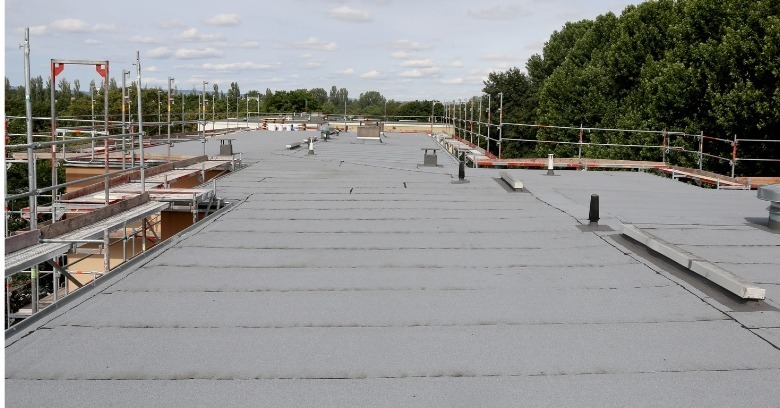
One flexible layer of TPO, PVC or EPDM is what single-ply describes, modified bitumen is asphalt toughened with polymers and laid from rolls, and built-up roofing piles felt and tar ply on ply. The laps on a thermoplastic sheet are fused by a welding machine, whereas a rubber splice depends on primer and tape.
Cooking vents on a restaurant leave fat beside the fans, and asphalt and EPDM membranes break down under oily buildup, so PVC usually covers the affected stretch. Gravel-surfaced built-up roofing weighs a lot and wears well, since the aggregate protects the felts from ultraviolet light.
Panel Roofs on Low Buildings: What to Watch
Through-fastened sheets take a screw at intervals across the flats, and each shank is set into a purlin or joist. Rubber washers under the heads harden and crack in the sun, and daily heating and cooling gradually loosen the fasteners.
A standing-seam roof is held by clips folded into the ribs, so each pan can creep as the metal grows and shrinks. Corrosion sets in at side laps and sawn ends, and a coating applied while the steel is sound can slow the spread.
Deck Construction – What to Check
Attachment methods are limited by what the original builders put in, and a new covering goes over the same framing. Fluted steel accepts screws readily, concrete calls for adhesive or drilled anchors, and wood or gypsum plank uses fasteners rated for the material.
Rust from old leaks can leave soft spots in metal decking, and failing stretches are replaced rather than covered. From inside, the underside is inspected wherever the ceiling allows, and cores drilled from above confirm the remainder.
Keeping a Membrane in Place: Matching the Choice to the Site
Some commercial sheets go down with plates and screws at the seams, fully adhered systems are glued across the whole underside, and ballasted sheets lie free beneath river rock or concrete pavers. The kind of deck, the height and the wind at the site decide the pick, and extra weight is used only where the structure can bear the load.
Gusts make a screwed membrane ripple between the fastener lines, but adhered work stays motionless and needs a dry surface to grip. A ballasted layout turns inspection into a slow job, as every seam remains hidden until the stone or pavers are shifted.
Uplift on a Big Building – Numbers Behind the Pattern
Corners take the strongest suction, as vortices form where the flow crosses the parapet line. A band along each side takes somewhat less, and the interior bears a light load.
Screws and plates are packed tighter toward corners and edges, as set out in engineering tables for height and wind speed. Skimping on anchors at the outside angle lets the covering pry loose, and trapped air balloons the free piece and rips further.
The Insulation: Doing Double Duty
Polyiso is set on the deck in one or more courses, and a gypsum or fiber cover board commonly caps the stack. Insulation reduces the load on air conditioning and furnaces, and tapered pieces create the fall that sends rain to the outlets.
Wet polyiso loses much of the R-value, and damp material sits against steel until the flutes corrode. An infrared scan at dusk, backed by cores, outlines the affected zone, and nothing ruined is left under a new covering.
Outlets on a Big Building: Main and Backup
Each interior sump wears a cast strainer dome, and the slots hold back gravel and plastic bags. Silt plastered over the grate cuts the flow to a dribble, and a broad puddle collects at the low spot.
An overflow opening is placed higher than the regular drain, so a steady discharge up high means a jam below. An inch of standing water weighs about five pounds per square foot, and a wet patch that stays two days reveals a dip or a packed strainer.
Finding the Source of a Drip: Why Care Pays
A brown ring on an acoustic tile shows where rain reached the room, and the break in the membrane can sit many yards away. The valleys in a steel deck steer seepage lengthwise, and seams in the foam layer offer extra routes.
Laps, curbs and outlets upslope of the stain are checked by hand, and a controlled hose test can isolate a hidden entry point. Guesswork patches above the ceiling spot usually miss, so the trouble returns with the following storm.
HVAC Equipment Up Top – Practical Notes
A built-up curb lifts each machine above the field, and base flashing climbs the sides under a metal cap. Corner work calls for patient hands, and a rushed job leaves gaps for rain.
When a heating contractor swaps a machine, an adapter curb often goes on unflashed, and the ceiling underneath begins to spot. Condensate discharged straight onto the covering discolors and softens the surface, and the fix is carrying the flow to a drain.
Objects That Rise Above the Surface – Detail by Detail
A snug molded boot slides over each round stack, and irregular shapes sit in a pitch pan of pourable sealer. The compound shrinks and cracks as the years pass, and adding fresh material is ordinary maintenance.
Electrical conduit and gas lines ride on blocks simply set in place, as a stand screwed into the deck punctures the waterproofing. Each base needs a protective pad beneath, so heat and vibration scuff the buffer instead of the membrane.
Glazing and Access Points: What Wears
Acrylic panes yellow and turn fragile after years of sun, and cracks spread from the screws at the rim. A gap at the frame corner lets rain inside, and the covering gets accused of a fault in the glazing.
An access hatch is opened by every trade that climbs up, which wears out the springs, latch and weatherstrip. Smoke vents release automatically when a fusible link melts, and no roofing work may block the mechanism.
Parapet Walls and Coping – What Goes Where
The covering bends upward and becomes base flashing, a termination bar clamps the upper end, and a strip of counterflashing overlaps from higher up. Coping along the crest keeps rain out of the core of the parapet, though a cracked seam beneath lets runoff in.
Brick and block soak up a long downpour, and the resulting mark resembles a roofing defect. Coping, wall and flashing are all looked at in the same inspection, and a gap in the mortar is repointed, never just caulked.
Gravel Stops and Fascia – Wind at the Border
A cleat screwed to the nailer catches the folded hem of the flange, and a stripping ply seals the sheet to the horizontal face. Perimeter pieces must carry a wind rating for the building's height, since loose metal becomes a lever that gusts use against the field.
Gutters along a long eave take a huge volume in a storm, and skimpy hangers or leaders lead to overflow and sagging. Crumpled or raised trim is a clear repair item, because a firm refastening spares the sheet a blow-off.
Everyone Who Goes Up There: Protecting the Sheet
Equipment mechanics may be up top every few weeks on a busy building, and a path gets a little more scuffed each season. Screws left lying about are pushed into the membrane by work boots, and a toolbox dragged across the top tears the surface.
A line of walkway pads guides people to every unit, and the abuse lands on something made to take the wear. Property managers can ask each contractor to keep off bare membrane, and nobody should leave scraps or screws behind.
Maintenance Visits: Small Jobs Kept Small
Twice annually is a sensible rhythm for a walk-through of a commercial system, with an added check after any violent storm. Upkeep includes emptying every strainer, every lap is probed for loose spots, and caulked joints are examined for cracking.
A walk before the stormy months concentrates on outlets and the perimeter, and a second pass seeks out what heat or heavy rain disturbed. Small problems are noted against a drawing of the building, so decisions can be made calmly and in advance.
A Building's Roof History: What Belongs in the File
A marked-up plan locates every unit, drain and hatch, and a written cross-section lists every layer from the deck up. A dated photo log follows each repair, and core samples and scan readings are appended when available.
Countless older buildings reach new owners with no history attached, and every crew works out the layers again. Roof records belong with the building, not with whoever did the work, and a copy travels with a sale.
Mend, Coat or Start Over: Reading the Evidence
Isolated defects on an otherwise healthy membrane call for patches, while a tired but dry surface can carry a silicone or acrylic layer. Widespread waterlogged boards signal a full replacement, as do laps cracking across the whole field, though age on paper proves nothing.
A liquid coating needs a scrubbed surface and sound mending beneath, while lingering dampness gets bottled up. A partial tear-off of the spoiled areas can be a reasonable compromise, provided the rest of the field has good years left.
Planning a Reroof – Guided by What Lies Beneath
Recovering adds another membrane on top of the current roof, and a cover board separates the surfaces. Codes permit an overlay on a single existing covering, provided the insulation beneath is dry.
A tear-off removes every component down to the structure, and any soft or rusted area can be rebuilt. A new tapered layout can shed standing water, and crickets set between outlets push runoff aside.
Signs Worth Reporting – Before Leaks Spread
- Splashing from the upper overflow opening, which suggests a plugged strainer.
- A ceiling tile whose stain spreads after every shower, which means leakage has crossed every layer.
- Blotches or efflorescence on brick under the coping, which can suggest flashing trouble near the top.
- Rattling trim along an open eave, which can set up a blow-off.
- Ponding visible from a higher window days after rain, which hints at a low area in the structure or a slow drain.
- A yellowed, brittle skylight lens, which can shatter under a person's weight.
- Rust spots spreading on the underside of a steel deck, which often traces back to a lap or a curb.
- A downspout that backs up in heavy rain, which can send runoff behind the fascia.
How APC Roofing Tackles Commercial Roof Repair in Shawnee Kansas – Our Sequence
Our first stop is every drain, scupper and overflow, and next we go along each lap, curb and edge. If there is a leak, the layers under the membrane are tested, and the advice waits for the numbers.
A written report, photos and a sketch record what we found, and each problem is labeled with a location. Each proposal names a choice: repair, restore or replace, and each reason is spelled out for the owner.
Commercial Roof Repair Across Shawnee Kansas – A Clear Picture First
Call 913-398-5020 and we will schedule a time to come out.
Business as Usual Downstairs – Clear Communication
Screwing into a steel deck rings through the rooms beneath, and adhesive vapors may be pulled in by the air handlers. Noisy tasks are scheduled with the manager's input, and vents near the work can be shut while the cement cures.
Torn-off material goes down a chute or on a hoist, and tarps can go over whatever sits below. Solvent adhesives carry a strong smell that water-based products lack, which makes the gentler kind a sensible pick over offices.
Phasing a Large Replacement – Protecting the Interior
The amount torn off is capped by what can be dried in by nightfall, and new insulation and membrane go onto the opened area in the same pass. A cutoff between finished and untouched portions keeps rain out overnight, and the stopgap is lifted at the restart.
The weather report limits the size of each tear-off, and a threatening sky scales the plan back. Unprotected boards caught in a cloudburst soak through, and drips can reach the rooms below.
Seasons and Storms: Timing and Materials
Hail and the weight of snow matter at the colder end of our territory, and denser cover boards with verified beam capacity follow. Strong sun across every town we serve slowly bakes a membrane, and light-colored surfaces bounce much of the glare away.
At the coastal end, attachment is engineered for hurricane gusts, and torrential downpours need outlets sized with room to spare. Glues and primers carry a temperature floor, but heat-welded seams tolerate chilly air as long as the deck is dry.
Fall Protection Up Top: a Standard Part of the Job
Where the wall is low or missing, nothing catches a misstep over the side, so warning lines or harnesses tied to anchors are used near the edge. A dome breaks through easily under a misplaced step, and a wire screen or a rail around every opening stops a plunge.
Permanent anchors make later visits by other trades less risky, and a safety gate at the ladder completes the setup. Our findings mention any guard that is lacking, because a fall from a low roof can still be serious.
For help with Commercial Roof Repair in Shawnee Kansas, dial APC Roofing at 913-398-5020. We will go over the entire field, drain by drain and seam by seam, and the results arrive in writing to act on as you see fit.
Verified

Verified
Verified
Verified
Verified