
Your old gutters have been patched, re-hung and resealed so many times that you’ve lost count, and they still overflow every time a real storm comes through. You’re ready for new ones. But the quotes you’ve gotten are just a price per foot with nothing else on the page, and you can’t tell whether you’re comparing the same thing. Good gutter installation in Shawnee, KS starts with measuring the roof, not the house.
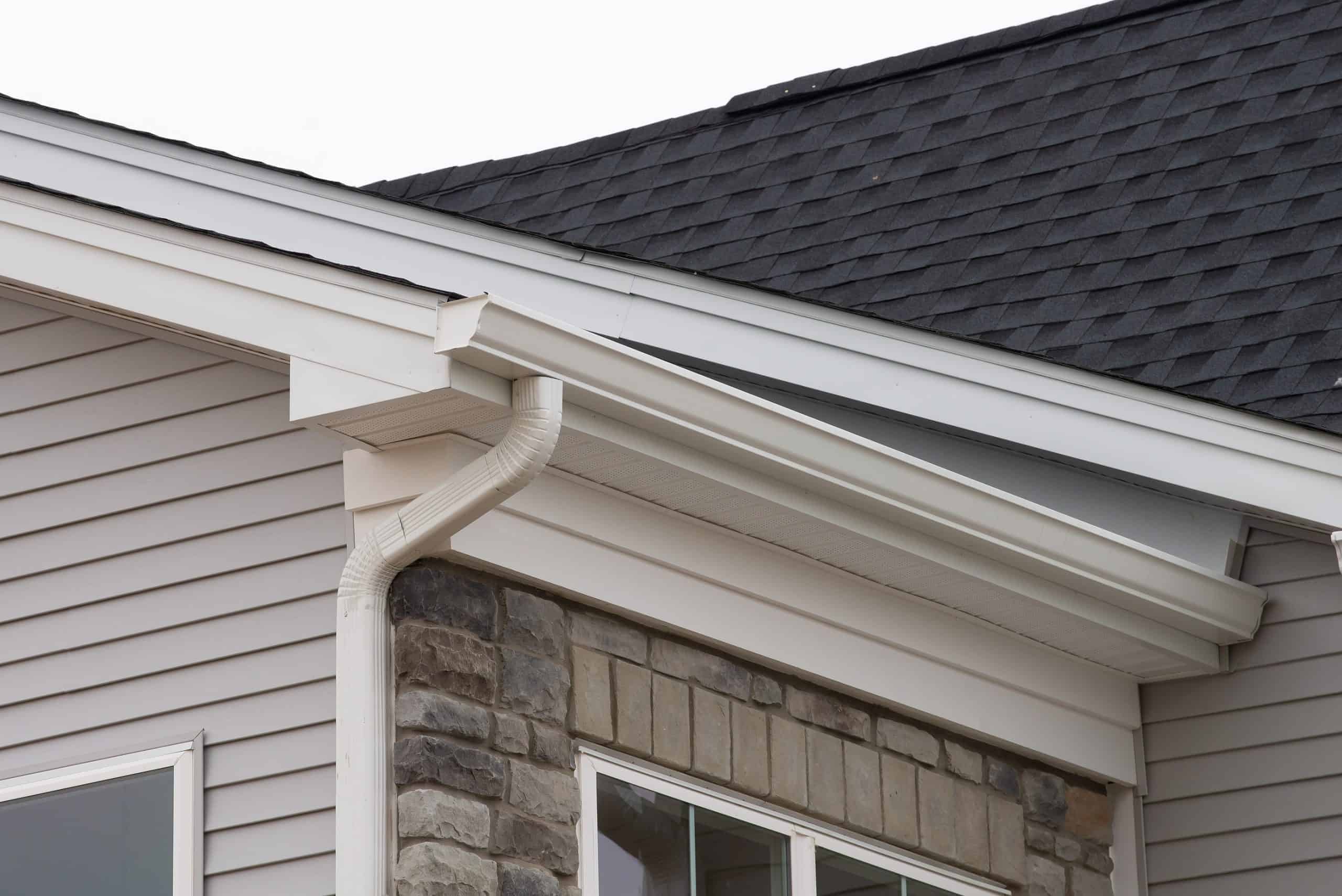
New gutters are an investment you’d like to make once. You want them sized right for the water your roof actually sheds, hung on solid wood and pointed in the right direction, so you don’t end up back where you started.
APC Roofing installs seamless rain gutters on homes across the Kansas City area. Because we’re a roofing company, the roof edge and fascia get checked before a single gutter goes up. We’re GAF Certified, licensed and insured, and your estimate is free. Call 913-398-5020 to get started.
Sizing starts with the roof, not the gutter
The amount of water a gutter has to carry depends on two things: how much roof drains into it, and how hard the rain falls. Annual rainfall doesn’t matter much. What matters is the heaviest few minutes of a thunderstorm, which is when gutters overflow. Shawnee gets plenty of those cloudbursts in spring and early summer.
So the first step in gutter installation is measuring how much roof area drains to each run, and how steep that roof is. A steep roof sends water down faster and harder than a shallow one. A big, steep back roof feeding one long gutter needs more capacity than a short run under a porch.
Gutter installation in Shawnee: the numbers that matter
Gutter width
Most homes get 5-inch or 6-inch K-style gutters. A 6-inch gutter carries roughly 50 percent more water than a 5-inch one. On a small, low-pitched roof, 5-inch may be plenty. On larger or steeper roofs, 6-inch is often the better choice.
Downspout size and count
This is the number that gets skipped, and it’s often the one that fails. A standard 2×3-inch downspout handles a lot less water than a 3×4-inch one, which carries roughly twice as much. Long runs need more than one downspout. A common rule of thumb is to add another once a run passes about 40 feet, and wherever a valley dumps water into a corner.
If a run needs three downspouts and has one, no amount of cleaning will keep it from overflowing.
Pitch
Gutters should slope gently toward the downspouts, about a quarter inch for every 10 feet of length is a common guideline. Too little slope and water sits in the gutter. Too much and it looks crooked from the street and can shoot past the outlet in a downpour.
Hanging the gutter
Hanger spacing
Hidden hangers hold the gutter to the fascia. They’re typically spaced every two to three feet, and closer is better in a climate like ours, where gutters can fill with heavy ice and snow for days at a time.
Room to expand
A long aluminum gutter grows and shrinks with the temperature. Over a hundred feet, the metal can move more than an inch between a hot July afternoon and a January night. On long runs, the installation has to give that movement somewhere to go, or the gutter will buckle, split a seam or pull fasteners loose over a few seasons.
The roof edge detail
The drip edge at the bottom of the roof should carry water off the shingles and into the gutter, not behind it. On some roofs, a longer piece called gutter apron flashing is added to close the gap completely. If water is staining your fascia behind the gutter today, this detail is usually the reason, and it needs to be fixed before new gutters go up.
Check the fascia first
Gutters hang from the fascia board. If years of overflow have softened that wood, new gutters screwed into it will sag within a year or two. Rotted fascia should be replaced before installation, and APC works on fascia and soffits, so it can be handled at the same time. You’ll see the soft wood and get a separate line on the estimate.
Where the water goes next
A well-sized gutter that empties at the foundation only moves the problem. Downspouts should carry water well away from the house, with extensions, splash blocks or a buried drain line, onto ground that slopes away. Our rain gutters in Shawnee page goes deeper on downspouts and drainage.
What your estimate should list
When you compare gutter installation quotes, look for:
- Gutter size and material
- Number and size of downspouts, and where they go
- Hanger type and spacing
- Drip edge or gutter apron work
- Any fascia replacement, priced separately
- How the water is carried away at ground level
If a quote is just a price per foot, you don’t know what you’re buying.
How it works
- Book your free estimate. Call 913-398-5020 or request a free estimate online.
- Get a clear, honest assessment and estimate. We measure the roof areas, check the fascia and roof edge, plan the downspouts and give you a written estimate with the details above.
- Your gutters go up and the site gets cleaned up. Old gutters, scraps and screws leave with the crew.
Gutter installation questions
How long does gutter installation take?
On most homes it’s a one- or two-day job, depending on the size of the house, the number of runs and the weather. Rain and high wind can push the schedule.
Should I replace my gutters before or after a new roof?
If a new roof is coming soon, it usually makes sense to replace the gutters at the same time or right after, since the roof edge and drip edge are part of both jobs. See roof replacement in Shawnee for the roofing side.
Do I need 6-inch gutters?
Not always. It depends on the roof area and pitch feeding each run. Larger, steeper roofs often need them. Smaller roofs may do fine with 5-inch gutters and well-placed downspouts.
Can my old downspouts be reused?
Usually not, if you’re installing new gutters. Old downspouts are often undersized, dented or the wrong color, and new ones are a small part of the job.
Gutters that just work
Call 913-398-5020 or book your free estimate online. You’ll get gutters sized for your roof and hung on solid wood, and the next hard rain will go where it’s supposed to: off the roof, through the downspouts and away from your house. More on our gutter work is on the gutters in Shawnee page.


















