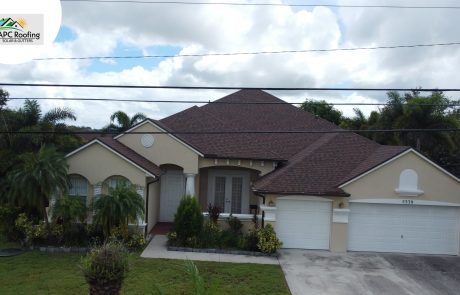
Planning Architectural Shingle Roofing in Kansas City Missouri?
APC Roofing mends torn, curled and lifted pieces and lays complete new coverings, from a small cottage to a large two-story house.
Dial 913-398-5020 and the findings are explained without jargon.
Inside the Product – Factory Details
A mat of glass fibers makes each shingle strong, while asphalt soaked through the sheet turns rain away, and stone granules pressed into the upper face block sunlight.
Seemingly similar products often follow very different recipes, and more heft commonly lets a covering weather more summers. A showroom sample tells nothing beyond appearance, but a specification sheet names the ratings.
Choosing a Profile: How the Designs Differ
The three-tab type is a single sheet notched twice along the bottom, so the overall look is orderly. Architectural shingles join a full base ply to a shaped upper one, so the extra depth gives relief.
Thicker double-layer shingles weigh more across a slope, and published wind ratings are commonly higher as a result. Nailing on a two-ply shingle aims at the strip where the plies are joined, and the maker marks the correct spot on each piece.
Keeping the Traditional Look: A Narrow Niche
Three-tab commonly goes on a shed, a carport or a covered porch, and a patch can match the rest of an older house. Fewer colors in that style are stocked than a generation ago, and some shades are no longer produced.
Laminated shingles hide small dips in an older deck better, while single-ply rows show every ripple. Underlayment and flashings are the same under either style, so the difference lives entirely in the top layer.
Loose Grit: Clues at Ground Level
Some surplus grains rinse off a recently installed covering, and the amount tapers off quickly. Thick deposits of grit below an old covering show that its surface is worn, and uncovered asphalt dries out and cracks in sunlight.
Faces that point south and west take the strongest sun, so the black asphalt often shows through there sooner.
Self-Sealing Designs – Cold-Weather Care
Glue is applied to every shingle at the plant as a narrow stripe, and bright sunshine activates it so the row above clings. Once the courses are stuck together, gusts struggle to lift the exposed edges, while the nails keep doing their share for decades.
At the colder end of our territory, shingles laid in late fall may not seal for weeks, and strong wind may raise tabs in the meantime. Manufacturers' instructions call for dabs of roofing cement in that situation, and a printed label spells out quantity and spacing.
Holding Pieces Down – Why Accuracy Counts
Nails are driven within a slim band set out by the manufacturer, where the shank also catches the headlap of the row below. A standard shingle gets four fasteners, while steep pitches and windy locations need six.
A nail driven high pins one layer instead of two, a head pounded too far breaks the mat, and a skewed shank tents the shingle on top. Published wind ratings assume the manufacturer's pattern was followed exactly, and an out-of-adjustment tool spreads one error across a whole face.
The Wood Below – Older Houses
The deck under asphalt shingles is usually plywood or OSB, and each shank has to land in solid material. Homes that once wore wood shakes may still have spaced slats up top, and full sheathing is added on top before any shingles.
Sections that are soft, delaminated or rotted get cut out and replaced during a tear-off, since a shank in crumbling fibers cannot hold. Adjacent sheets are spaced slightly apart at their edges, because wood swells in humid weather and buckles without room to move.
A Backup Barrier: Modern Options
Building rules in most places require a water-resistant membrane over the deck, and its seams are lapped so rain crosses them without entering. Most roofers now use synthetic sheet instead of felt, as the modern fabric is tougher and does not ripple after rain.
Rain forced past a loose shingle is shed by the membrane below, though sunlight breaks it down if it stays exposed too long.
Membrane at the Eaves: Width That Counts
At the colder end of our territory, heat leaking from the house thaws the snow on the upper slope, and meltwater goes solid again where the roof extends past the wall. Water pooling behind that buildup can back up under the shingles, and standard felt or synthetic sheet does not close around the nails.
A rubberized self-adhering membrane is laid along the eave where ice dams form, and it continues until it passes the wall line inside the house. Across every part of our service area, valleys and skylight curbs frequently get it too, because runoff slows and gathers at those spots.
Finishing the Borders: Order of Layers
A metal drip edge wraps the eaves and the rakes, so rain falls free beyond the woodwork. At the bottom of the roof, the flashing goes beneath the underlayment, whereas up the gable the sequence runs backward.
Many building codes now require edge metal on every border of a shingled plane, and without it water curls back under the shingles and soaks the deck.
Base Row Details: Uplift Concerns
A purpose-made starter strip lines the bottom of every slope, so the sealant is positioned right at the lip. A field piece set backward carries its adhesive uphill, out of reach, and the tabs at the low border are held only by nails.
The sloped gable edges frequently get starter strips too, because suction acts along the outer rims.
Junctions of Adjoining Planes: Construction Methods
A valley can be built open, with a metal channel left exposed down its center, while the closed-cut version clips one side's courses along a snapped line. A woven junction interlaces rows from both planes, which works with three-tab, though dimensional shingles rarely take to it because of their bulk.
Nailing close to the fold is avoided, and a peel-and-stick liner covers the wood below. Leaves and pine needles that settle in a valley hold moisture against the shingles, and heavy rain can then spill sideways under the edges.
Vertical Surfaces: Transitions Between Materials
Along a sidewall, a bent L-shaped step flashing is woven in with each course, and siding or counterflashing laps down over its upright leg. An angled kickout sits at the foot of the house face, and without one rain runs inside and rots the sheathing.
Chimney flashing combines a front apron, side steps and counterflashing cut into the brick joints, and a wide stack also needs a cricket upslope to split the flow.
Roof Penetrations – Upkeep Notes
A pipe boot combines a flat metal or plastic base with a rubber collar around the pipe, and ultraviolet exposure dries the gasket out and cracks it. The flange slips under the courses higher up, and the exposed foot lets water pass over rather than behind.
Collars frequently need attention while the rest of the covering is healthy, and a tear-off is the natural time to change every boot.
Finishing the Apex: Homemade Shortcuts
Cap shingles straddle the ridge and run down every hip, and laminated work calls for the maker's coordinated accessory. Tabs cut from single-layer shingles make a thinner substitute, and on frigid days at the colder end of our territory the crease may crack.
A continuous ridge vent frequently lies under the cap row, so the nails must be long enough to pass through it and bite the sheathing.
A Healthy Upper Story: Balance
Intake openings in the soffits let cool air in near the bottom, while a slot along the ridge lets it rise and exit. Blown fill crowding the corners can cut off movement, so a baffle in each rafter bay keeps the way clear.
Without airflow, an attic bakes the boards from below, while it also collects damp air from cooking, bathing and breathing. At the colder end of our territory, frost gathers on exposed nail points on a freezing night, and the melt soaks the insulation by afternoon. Mixing a ridge vent with gable louvers or a powered fan can short-circuit the flow, since the draft takes the quickest route rather than sweeping the whole space.
Around the Map: Algae and Hard Winters
The towns we cover run from hard-freeze country to places that barely see frost, and each setting wears on asphalt differently. At the coastal end of our territory, big storms off the ocean send steady wind across a house, and product sheets set out an enhanced nailing method. Constant heat pushes the lighter oils out of the asphalt, while muggy weather encourages dark streaks.
At the colder end of our territory, ice forming in hairline cracks forces them apart, and the weight of drifted snow adds its own strain.
Stones Out of a Thunderhead: Surface and Below
At the colder end of our territory, hail arrives most years with the thunderstorms, and manufacturers offer lines built to resist it. A strike strips the coating from a spot about the size of the stone, and a hard enough blow can crack the mat underneath.
The impact class on a bundle comes from a standard drop test with steel balls, and a higher grade means passing a tougher trial. Rubber-modified asphalt is common in these designs, so the material bends where an ordinary mix would crack.
Strong Gusts – The Damage Done
Uplift concentrates at the outer margins and the corners, and a loose shingle rises and slaps back down. A tab bent far back keeps a mark along the fold, and the damaged spot stays weak for good. A shingle hurt like that is replaced with a new one, while an unfolded one can be sealed again with roofing cement.
Blown-off tabs leave the underlayment uncovered, and daylight starts breaking it down at once.
Stains and Green Growth – Copper and Zinc
Blackish discoloration in long vertical bands is algae, and the microbes draw on limestone in the coating. Shady, slow-drying planes at the humid end of our territory tend to go dark soonest, and the stain itself is mostly a cosmetic problem.
Moss is a different matter, since it holds water against the surface, and as clumps thicken they wedge the tabs upward. A pressure washer blasts granules off along with the growth, so a gentle rinse with a cleaner made for roofing is the safer route. Some lines carry copper in the top layer to resist algae, and a zinc strip near the crest slows the streaks' return.
Color on the Slope – Blends and Batches
Deep tones take in more solar warmth and reach higher surface temperatures, and lighter shingles reflect more of the light. A few lines carry special granules that keep even a mid-tone from getting as hot, and a tested reflectance figure goes with them.
Stock can vary from one production lot to another, and makers advise mixing bundles across a slope. Blends that combine many colors mask small mismatches, while plain shades display every one of them.
Climbing Onto the Courses: Knowing When to Stay Down
On a hot afternoon the coating turns soft, and a twisting heel tears the mineral layer. At the colder end of our territory, cold tabs grow brittle and crack when stepped on, and a thin film of frost makes the slope a slide.
Owners do best to stay off the ladder altogether, and a look from across the street tells a great deal.
Covering What Is There: What Gets Missed
Many jurisdictions let a new roof go directly onto an earlier roof, provided there is only one and nothing beneath is rotted. Leaving the first layer on keeps the decking covered the whole time, and weak spots stay just as they were.
Every ripple below telegraphs to the surface, while aging flashing frequently stays put. A second covering adds weight to rafters that were sized for one, while the fasteners need more length to bite into the boards.
Early Warnings: Outside and In
- Granules pile up in the gutters, and the amount keeps growing year after year.
- A few tabs sit raised above their neighbors, so wind has broken the bond.
- Bottom corners curl upward, and the asphalt is drying out.
- Cracks run across the tabs, and moisture soaks into the mat.
- Shiny black spots stand out against the color around them, where the stone coating has worn off.
- The gasket at a vent has shrunk away from the stack, and drips may reach the ceiling below.
- Metal along a wall has pulled loose, so every storm can find a weak point.
- A damp patch shows up on the ceiling after heavy rain, but the place moisture enters may lie higher up.
How APC Roofing Works on Architectural Shingle Roofing in Kansas City Missouri – Plain and Careful
Every slope is walked first during an inspection, and the details at every valley, vent, flashing and edge are read. The attic is checked from inside for stains and light coming through, since the underside of the deck keeps the marks of any old leak.
Any problem is photographed, and damage is measured where size matters. A plain written account follows, and each recommendation carries its reasons. A little problem is never made to sound big, and a tired covering is spoken of honestly. The choice is the owner's, and waiting is one of the options.
Architectural Shingle Roofing Throughout Kansas City Missouri: a Careful Look Before Any Advice
Phone 913-398-5020 and describe what you are seeing.
Small Fixes and Full Jobs: Brittle Material
A failed vent collar, a lifted flashing or several damaged tabs calls for ordinary repair, and the sound shingles nearby stay in service. Even the same color from the same maker looks different once the old shingles have weathered, while the exact style may no longer be made.
On a worn covering, tabs are brittle and crack when lifted to reach the nails, so the disturbed zone keeps widening. When shedding and fractures appear on every face, a patch simply moves the problem along.
Expected Service Life: What Moves the Number
Three-tab work generally holds up for fifteen to twenty years, while architectural lines can go well beyond that. Attic airflow, sun exposure and the quality of the nailing move that figure, and a single violent storm may finish a covering off early.
Checking the flashings and pipe seals now and then is sensible upkeep, as prompt fixes keep water out of the wood.
For a roofer's view of Architectural Shingle Roofing in Kansas City Missouri, call APC Roofing at 913-398-5020. Each slope is walked and every detail checked, and a plain written report puts the next step in your hands.
Verified

Verified
Verified
Verified
Verified