Weighing 3-Tab Shingle Roofing Around Kissimmee Florida?
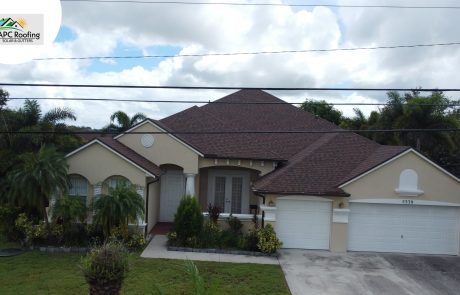
APC Roofing mends torn, curled and lifted pieces and lays complete new coverings, from a small cottage to a large two-story house.
Dial 407-270-1129 and someone will come out and explain what is up there.
Components and Construction – a Closer View
Each shingle is built on a fiberglass mat for strength, while the asphalt in the sheet makes it waterproof, and granules rolled into the surface shade everything beneath from ultraviolet rays.
Two lines that appear matched may be put together quite differently, and weight per square often tracks with durability. A sample board shows color alone, while published data covers the wind and impact classes.
Choosing a Profile – Setting Them Apart
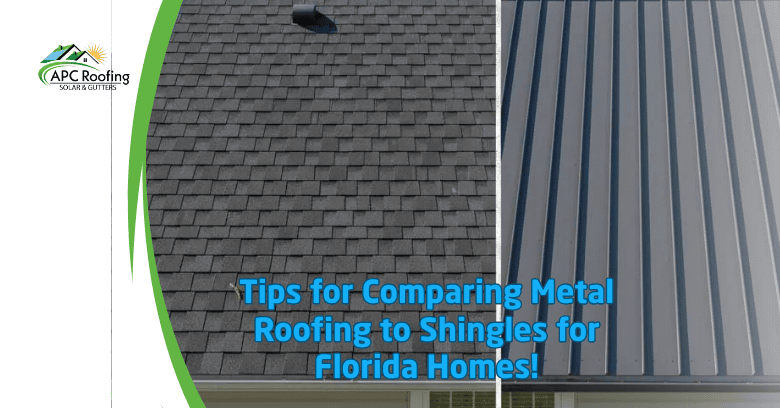
The three-tab type is a single sheet notched twice along the bottom, so the overall look is orderly. An architectural shingle has an irregular top ply fused to a whole base, and the offset design reads as depth from the street.
The heavier laminated construction puts more asphalt on the deck, and the rated wind resistance usually rises too. Nails on a dimensional shingle go through the zone where the plies meet, and a printed guide shows the right position.
Strip Products in Use – Narrower Choices
Three-tab commonly goes on a shed, a carport or a covered porch, and new work can blend with existing courses of that kind. Makers have pared back their tabbed lines, and some shades are no longer produced.
Uneven plywood is less noticeable under a dimensional product, while single-ply rows show every ripple. Either style goes over the same underlayment and flashings, while everything that differs is on top.
The Granule Surface – Normal or Worrying
Excess grains from the factory rinse off in the opening rains, and that is no cause for concern. On a covering with many years behind it, drifts of granules at the outlets mean real surface wear, and the unprotected asphalt soon cracks and curls.
Southern and western slopes absorb the hottest light, and dull patches gather there.
The Thermal Adhesive: Early Weeks
Every shingle arrives with a sticky asphalt stripe, and a stretch of warm, sunny days softens it until the overlying row sticks. Adhered courses keep their bottom edges down in a gust, but nails remain the main fastening for the life of the covering.
In the cold months at the colder end of our territory, sealing can take many weeks to happen, so a windy day can fold back tabs that have not taken hold. Manufacturers' instructions call for dabs of roofing cement in that situation, and each package shows how much to use and where.
How Courses Are Attached: Tools and Technique
Roofing nails go into a narrow band marked by the manufacturer, so the shank ties in the row beneath too. The basic schedule calls for four fasteners on each shingle, and six are required on steep slopes or in high-wind areas.
A high nail catches only a single layer, an overdriven head slices the fiberglass, and a crooked shank makes a bump that wears through the shingle above it. Published wind ratings assume the manufacturer's pattern was followed exactly, and an out-of-adjustment tool spreads one error across a whole face.
The Structural Base: Soft Spots
Shingles are fastened to a deck of plywood or OSB, and each shank has to land in solid material. Many older homes still have spaced boards left from a wood-shake era, so sheathing is laid across them before shingles.
Once the old covering is off, any soft or delaminated section is cut out and swapped for sound decking, since a nail in punky fibers pulls loose. Installers leave a slim gap where sheets meet, as boards butted tightly lift into ridges when they absorb moisture.
A Backup Barrier – What It Does
The deck gets a water-resistant membrane before shingles are laid, and its seams are lapped so rain crosses them without entering. Synthetic material has taken over from traditional felt on most jobs, because the newer product weighs less, tears less easily and lies flatter.
Water blown under a lifted tab runs down the membrane to the gutter, but it is meant for occasional water, not months of open sky.
Self-Adhered Eave Membrane: Seasonal Detail
At the colder end of our territory, heat leaking from the house thaws the snow on the upper slope, and the meltwater refreezes at the unheated lower margin. Pooled water behind the obstruction travels uphill under the courses, and standard felt or synthetic sheet does not close around the nails.
Colder-market codes call for a peel-and-stick membrane along the lower edge, and it is carried upslope far enough to clear the heated part of the house. Everywhere in our territory, it is also a regular choice for valleys and around chimneys, since runoff lingers at every such detail.
Where the Deck Ends: Order of Layers
Every eave and rake gets a formed strip of metal, and water sheds into the gutter instead of onto wood. On the lowest margin the underlayment laps over the flashing, while on the gable ends the sequence is flipped.
Many building codes now require edge metal on every border of a shingled plane, as water tends to wrap under an unprotected rim.
Beginning at the Gutter – No Substitutes
Before any exposed shingles, a starter strip is laid along the bottom, and its glue stripe sits at the extreme outer margin. A rotated field piece strands the adhesive several inches up, so the outermost tabs are pinned by nails only.
Makers often specify a starter product up the gable sides too, because wind catches the outer margins along with the eaves.
Junctions of Adjoining Planes: Debris and Flow
A valley can be built open, with a metal channel left exposed down its center, while the closed-cut version clips one side's courses along a snapped line. Woven work alternates rows from the two planes and suits three-tab, but thick laminated shingles bend poorly that way.
No nails are driven near the middle of the crease, and a waterproof underlayment is laid beneath along the full run. Leaves and pine needles that settle in a valley hold moisture against the shingles, so water starts finding a path under the sides.
Vertical Surfaces: Water Shedding Order
A separate step flashing is tucked under each course where the covering meets a wall, while the exterior finish overlaps the upright flange. An angled kickout sits at the foot of the house face, and without one rain runs inside and rots the sheathing.
The flashing around a chimney is an apron below, steps on each side and counterflashing embedded in mortar, while stacks above a certain width require a cricket upslope.
Where Drain Lines Exit – Sequence and Laps
A pipe boot combines a flat metal or plastic base with a rubber collar around the pipe, and ultraviolet exposure dries the gasket out and cracks it. Courses above lap over the flange's top edge, and water running down the slope passes over the exposed lower part.
Rubber collars commonly split long before the field gives out, and new boots are standard whenever the shingles are replaced.
Finishing the Apex: Homemade Shortcuts
Cap shingles straddle the ridge and run down every hip, and laminated work calls for the maker's coordinated accessory. Homemade substitutes trimmed from three-tab carry less material, and in winter at the colder end of our territory the fold is prone to cracking.
An exhaust vent commonly sits under the ridge caps, and the fasteners are sized to penetrate that channel and the wood below.
A Healthy Upper Story – Mixed Systems
Soffit vents are where outdoor air is supposed to enter, and a ridge exhaust lets it out. Insulation blown tight against the outer walls can choke the flow, and rafter baffles preserve a clear route.
An attic holding in heat warms the deck from underneath, while indoor humidity collects there with nowhere to go. On frigid nights at the colder end of our territory, condensation freezes on the nail tips, and the water runs down as the day goes on. A powered fan or gable vents alongside a ridge vent can scramble the pattern, and the soffits stop doing their job.
Around the Map: Algae and Hard Winters
The area we serve spans cold, dry high country and warm, wet flatlands, and asphalt meets a different set of stresses in each. At the coastal end of our territory, a hurricane can drive powerful gusts for many hours, and makers publish a tougher fastening pattern for that exposure. Strong sun, season after season, makes the coating brittle, and moist air lets algae take hold.
At the colder end of our territory, water that seeps into a crack freezes and widens it, and the weight of drifted snow adds its own strain.
Balls of Ice: Surface and Below
At the colder end of our territory, hail arrives most years with the thunderstorms, and manufacturers offer lines built to resist it. A strike scatters the grit from a small round area, and a violent one can split the reinforcement beneath.
Laboratories rate impact resistance by dropping steel balls from set heights, and the better lines survive rough treatment more often. Certain makers blend a rubbery polymer into the coating, which lets the shingle flex instead of shattering.
Gusty Days – Putting Things Right
Suction pulls hardest along the eaves, the rakes and the corners of a roof, so any piece that has come unstuck shakes in each blast. A tab flipped over by a gust carries a scar across it afterward, and the mat never regains its strength along that line. A shingle in that condition gets replaced, while a loose but unharmed one takes a few dabs of cement.
Blown-off tabs leave the underlayment uncovered, and ultraviolet rays wear it down fast.
Living Things Up Top: Slowing the Return
The inky bands seen on so many houses come from algae, which feeds on crushed limestone mixed into the product. Growth spreads quickest on shady faces at the humid end of our territory, and the stain itself is mostly a cosmetic problem.
Moss poses a real threat, as it traps moisture against the courses, and as it creeps it breaks the tabs' seal. Power washing tears granules loose as it goes, while a soft rinse with a roof-safe cleaner does the job without damage. Some lines carry copper in the top layer to resist algae, and a zinc strip near the crest slows the streaks' return.
Choosing a Color: Looks and Lots
A dark covering gains more warmth from sunshine, and pale shingles stay cooler. Certain companies make granules designed to scatter infrared rays, and a reflectance rating appears on the data sheet.
Shingles from separate production runs may not match exactly, so instructions call for pulling from several bundles as the work goes. Variegated patterns make those changes hard to see, while a solid, even finish reveals them more readily.
Getting Up There – Weighing the Risk
By midday in warm weather the material becomes tender, so a shoe sole scrapes away grit. At the colder end of our territory, a course stiff with cold can break under weight, and a thin film of frost makes the slope a slide.
Owners do best to stay off the ladder altogether, and a pair of binoculars shows most of what matters.
A Second Layer: What Gets Missed
A re-roof over a prior roof is legal in many towns, provided there is only one and nothing beneath is rotted. A layover keeps the worn shingles sitting on top, and weak spots stay just as they were.
Every ripple below telegraphs to the surface, and flashing past its prime is usually kept. Two layers put more pounds on the rafters than they were planned to hold, and the nails have to be long enough to pass through both into the deck.
Things to Watch For: A Short List
- Coarse granules wash onto the splash blocks, and the amount keeps growing year after year.
- Some tabs flap loose or are gone altogether, so the adhesive strip has given way.
- Corners turn up like an old leaf, as years of sun shrink the top.
- Straight breaks run through a few pieces, and the mat underneath takes on water.
- Dark, smooth patches appear on the surface, because the granules there are gone.
- A pipe boot has gaps between its collar and the pipe, which lets rain into the attic.
- The metal where a slope meets siding sits bent or pulled back, and gusts can push weather in behind it.
- Paint bubbles on a top-floor ceiling, and the source can lie well uphill of it.
APC Roofing and 3-Tab Shingle Roofing in Kissimmee Florida: What to Expect
An inspection begins with a walk across each slope, taking in the valleys, the vents, the flashings and the edges. From inside, the attic is searched for water stains and pinholes of light, since the underside of the deck keeps the marks of any old leak.
What turns up is photographed, and damage is measured where size matters. The findings are written up in plain language, with the reasons given for each recommendation. A modest problem is presented as modest, and a failing covering is not dressed up. What happens next is the owner's decision, including the option of doing nothing for now.
3-Tab Shingle Roofing Throughout Kissimmee Florida – Inspected, Photographed and Explained
Phone 407-270-1129 and say what you have noticed.
Mending or Starting Over: Where the Line Falls
A cracked boot, loose flashing or a handful of torn tabs is routine repair work, while everything else on the slope remains. New pieces will not match weathered ones exactly, while the manufacturer may have retired that design.
Old shingles snap when they are bent up to free a fastener, and one fix can turn into several. When curling edges and bald spots cover most slopes, a new covering is the sensible answer.
Time on the House: What Moves the Number
Flat three-tab designs usually run fifteen to twenty years, while laminated lines often reach close to thirty. Heat, ventilation and fastening all push the number up or down, while one bad storm can end the run early.
Boots, flashings and sealed joints are worth checking every few years, as prompt fixes keep water out of the wood.
When you are weighing 3-Tab Shingle Roofing in Kissimmee Florida, call APC Roofing at 407-270-1129. The covering is inspected from the gutters to the ridge, and the written findings let you decide.
Verified

Verified
Verified
Verified
Verified