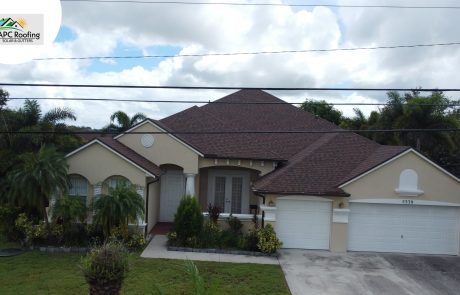
Exploring Tile Roof Installation on a Home in Orlando Florida?
APC Roofing lays kiln-fired and cement-based coverings and restores worn ones, from one cracked piece to a whole slope taken up and put back.
Call 407-270-1129 and somebody experienced with clay and concrete will explain what is needed.
How the Covering Is Built: The Basics
What shows from the yard is a run of heavy pieces that throws off the bulk of any rain, while a sheet laid over the decking is what actually stops a leak. Gusts can push a little moisture up under the courses during a downpour, so the layer beneath has to guide that seepage out at the eave edge.
A cracked piece of tile does not by itself put a stain on a ceiling, since the sheet beneath is normally intact. Water through torn underlayment can track across the boards before it lets go, and the wet spot may appear several feet off.
Choosing Between Materials: Differences Worth Knowing
A clay piece is formed from wet earth and fired at high heat, and the color runs all the way through the body. The sun can beat on a slope like this for decades with barely a visible change, while a properly made unit soaks up almost no rain.
A concrete piece is cast from a wet mix of sand and cement and left to harden, but the tint on many brands is only a surface finish. Years of strong light wash out the sunniest slopes, and a new nick exposes gray under the weathered skin. Any replacement dropped into an aged roof is easy to spot, and the contrast narrows as time ages the newcomer.
Cement-based pieces take in more rain than fired clay, and at the colder end of our territory, moisture held inside can freeze and expand. Over many seasons that cycle can spall the outer skin, and makers publish a rating for resistance to that kind of wear.
Shapes You Will See: How Water and Debris Move
The classic barrel pattern sets a curved pan on the deck and a curved cover over each seam, and the look echoes centuries-old Mediterranean houses. Modern S tile rolls the dip and the hump together, and it is widely used on newer houses.
Flat pieces lie close to the deck and can pass for slate or heavy shake from below, and rain runs over the face of each course instead of along a channel. Needles and leaves gather in the dips of a rolled pattern, while a smoother surface lets much less settle.
Weight and Support: Before Switching Materials
Standard tile puts several times as many pounds per square foot on a house as asphalt shingles do, and a home with tile from day one was built to bear it. A move up from a lighter covering adds weight the house was never meant to carry, and the ridge line can sag as the years pass.
An engineer needs to confirm what the rafters and supports can carry before that conversion goes ahead, and extra bracing or sistered joists are sometimes required. Lightweight concrete weighs noticeably less than the regular kind, so a modest house is sometimes a candidate after all.
Keeping Tile in Position: Edges and Middle
A fastener through the top of each piece is a long-standing approach, and plenty of installations hook the courses over wood strips set across the slope. Elsewhere a two-part foam bonds each tile to the underlayment, and mortar-set work beds every unit in a pad of mortar across the field. Certain systems add a clip that hooks the nose of each piece, and the maker's instructions and the local code set which combination applies.
Suction from wind is fiercest at the borders of a slope, so the perimeter courses receive additional fasteners. At the coastal end of our territory, hurricane codes set tougher requirements for keeping tile down, so adhesive coverage and screw spacing are engineered to comply. A repair has to work with whatever holds the neighboring courses, because levering out a glued unit without care snaps the next ones along.
The Underlayment: Aging and Exposure
Heavy asphalt felt is the classic product, and more recent work relies on synthetics or self-sealing modified bitumen. The pocket under the covering stays warm for months and wears on the underlayment, so the wrong sheet cracks years too soon.
The tile also shades what lies under it from direct sun, and wherever a gap opens, sunlight breaks the exposed patch down quickly. Even with the rooms dry, a missing piece deserves prompt action, because rain soon finds its way into the deck.
New Waterproofing – the Process
On a big project the pieces often come off one at a time and are stacked nearby, and sagging boards get repaired. Brand-new waterproofing follows, and the saved tile is relaid over it. The home keeps the appearance it was built with, while everything that stops water is starting over.
A share of the pieces cracks while being lifted, stacked or carried, and a brittle, weathered roof loses more than a younger one. Any new tile has to interlock with the courses around it, and a line still in production supplies an identical match. Discontinued tile is replaced with salvage or the nearest alternative, and weathered color is seldom duplicated.
Damaged Pieces – What Helps
Somebody's shoe accounts for a large number of the fractures, and the one responsible was often on the roof for some other job. Ladders propped against the lower edge snap the bottom row, while a standoff keeps the pressure elsewhere.
A falling limb can shatter a group of tiles in one blow, and pruning trees away from the house stops it before it happens. At the colder end of our territory, large hail can crack a tile outright, though pea-sized pellets usually do nothing.
Moving Across a Slope – Advice for Installers
Where a unit sits on the course beneath, it can take a person's weight, while the center has no backing and fractures under a shoe. A rolled covering is crossed by stepping in the pans, not on the crowns, while boards laid over the covering take the traffic.
A crack made by a boot often shows only on the underside, and harm accumulates over the years with no one aware. A solar or satellite installer headed up there should coordinate access with a roofer, so brackets land on the deck with the covering reset around them.
In the Valleys – Points Worth Knowing
An inside corner takes the drainage of the slopes beside it, and a tile roof puts a formed metal trough along it. How far back the pieces are trimmed sets the open width, and a cramped gap lets a hard rain climb out over the tile.
Edge pieces beside the metal end up short, without their fastening holes, and foam, clips or tie wire keep them from sliding. A buildup of debris in the trough backs water up against the pieces, and some of that water travels sideways beneath the pieces.
The Capping: Weather and Wear
The joints at the peak and the outside corners are covered with shaped trim, and on many homes it is set in mortar. Bedding that has seen years of temperature swings opens up in cracks, and loose pieces and crumbs of grit follow.
Many newer roofs mechanically fasten the trim to a raised support rail, with a flexible closure strip filling the space underneath. Breathable versions double as exhaust vents, while baffles inside turn back rain and insects.
Junctions With Walls – Common Faults
A vertical surface rising from a slope gets an angle of sheet steel turned up its face, while a counterflashing tucked in above covers its top. Under tile, the flashing widens into a pan with an upturned rim, while nearby tile is trimmed to leave a clear path for runoff.
Sealant smeared along the joint cracks within a few seasons, so the same spot takes on water again. The lasting fix takes up the pieces along the wall and rebuilds the flashing, and new underlayment goes in at the same time.
Pipes and Vents – Mounts and Skylights
Each plumbing stack has a base flashing attached to the underlayment below, with a lead jack beaten to the shape of the tile on top. A shingle-style rubber collar has no way to seal over curved tile, so water runs in under its flange.
Skylights, attic vents and solar mounts each need flashing made for a tile shape, and a bracket screwed through a piece without it lets water in.
The Lowest Course: What to Watch
At the gutter, each curved piece leaves an open mouth beneath it, where birds and wasps nest and blown rain enters if nothing blocks the way. A formed closure is set along the fascia, and weep holes in it still let water drain out.
The pieces in the lowest course have no course beneath to tilt them up, so a riser strip props them up. Low-set pieces at the gutter tend to pond water, and a visible droop shows from the driveway.
Built-In Cooling – When Debris Interferes
Rolled shapes and batten systems keep the pieces lifted above the boards, and air circulates in the opening left below. The draft strips heat away before it travels downward, which keeps the underlayment from baking.
Across a long summer, air conditioning tends to run less, and the mass of dense pieces also slows warmth on its way inside. Nests and litter at the lower edge, or solid mortar up top, stop the flow, and heat builds up in the dead space.
What Collects Up There: Upkeep Choices
Efflorescence, a pale mineral bloom, often appears on concrete in its early years, and it fades on its own with rain. Growth in the laps traps water against the pieces, and at the colder end of our territory freezing slowly flakes the surface.
Blasting a slope with a pressure washer takes the coating off concrete, and it drives water in beneath the courses. A roof cleaner and a light rinse loosen growth without force, while clearing litter from the valleys and gutters by hand prevents damming.
Clues Around the House – Easy to Spot
- A piece has slid down out of line with its row, and the hold under it has given way.
- One spot has lost its covering entirely, and the sun is reaching the membrane below.
- Broken shards lie on the ground below the eave, though the damaged spot may sit on a slope hidden from the yard.
- Small lumps of mortar sit near the porch, and the capping above may be working loose.
- A damp patch shows on the ceiling after heavy rain, while the opening that feeds it may lie higher up the slope.
- Plaster softens on the wall beside a dormer, and the metal along that joint may have failed.
- Moss has spread along the overlaps on the north side, so water lingers where it should run off.
- Part of the bottom row droops below the rest, and a missing riser or rotten fascia may lie behind it.
APC Roofing and Tile Roof Installation in Orlando Florida – Plain and Careful
Every slope is walked before anything else, and the material, the shape and the way the pieces are set are identified. The valleys, the ridge, every wall junction and the eave each get a close look, and a few pieces are lifted where the state of the sheet beneath decides the answer. From the attic, the underside of the deck is searched for stains and soft spots, as discolored wood traces where water traveled.
Every fault is photographed, with measurements taken of the extent. A plain written report sums up the findings, and each recommendation states why it is made. Broken pieces over a sound sheet are called a repair, and an underlayment that has failed is named as such. The owner has the final word, and holding off remains possible.
Tile Roof Installation for Houses in Orlando Florida – Looked at Closely
Dial 407-270-1129 and describe the problem.
Mending or Relaying – Sound Slopes and Failed Ones
A cracked piece, a loose cap or a leaking wall joint is usually a contained problem, so the effort is confined to that area. What decides between that and a relay is the state of the underlayment, while the appearance from the yard is a poor guide.
A slope whose sheet has given out throughout is taken up and put back over new underlayment, while the sound slopes are not disturbed. Where the whole roof got its underlayment together, it ages at a similar pace, so the untouched parts may need the same work before long.
Tile and Time: Staying Sound
Well-made clay can remain on a house for generations, and concrete holds up for many decades, as a rule not quite as long. The layer under the pieces ages much faster, and the timing of a relay usually follows it.
A roof checked regularly and kept clear of debris gets its full span, while a neglected one can lose its sheet early beneath a gap. A quoted number is an estimate rather than a promise, and the grade of the product, the fastening and the flashing work all move it.
Pitch and Decking: Minimum Conditions
Water leaves a tile roof by running over lapped courses rather than through sealed seams, so the roof must tilt enough to keep rain moving. Shallower pitches get a sturdier underlayment, while a roof flatter than the minimum is better off with a different product.
The deck beneath has to be sound, so spongy areas come out and new wood goes in. Gutters belong to the drainage of the house, and once they fill, water can climb under the front row.
To look into Tile Roof Installation in Orlando Florida, dial APC Roofing at 407-270-1129. The covering, the metal and the sheet beneath are inspected and written up, and the choice of what to do is yours.
Verified

Verified
Verified
Verified
Verified