Looking for Hail Damage Roof Repair on a Property in Shawnee Kansas?
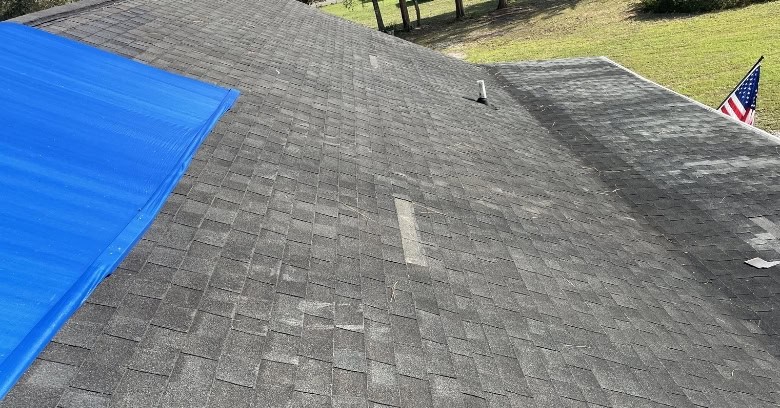
APC Roofing walks a slope after a hard night outdoors, recording what the recent weather left behind.
Dial 913-398-5020 and a roofer will come out for a closer look.
Airflow Over a Sloped Roof: Not Spread Out Evenly
The eaves, the rakes and the ridge carry the heaviest load of any gust, and a broad open middle carries far less of that duty. Blowing air reaching under a curled tab pushes on the course set above the tab, so a nail under a shingle ends up doing the whole job alone.
A building corner carries the turbulence a roofline creates, and hardware spacing shrinks at that point on a well-built roof. A row nearest a projecting edge takes on more force than a row set well off to the side, and a crew’s layout accounts for that extra pull in advance.
A Last Step the Sun Finishes – Made by Warm Weather
Asphalt shingles carry a line of sealant that fuses down to the row set beneath, which is what keeps a shingle from lifting in a light breeze. A sharp gust can tear a bond apart across a length of roof, and a parted shingle rests unmoved for the moment, nothing showing on the surface.
A broken seal stays hidden until the wind picks up again, and moisture finds fasteners a tight course used to shelter. A single shingle off a bond hurts nothing taken alone, while a broad run of parted shingles is a serious gap.
A Rating Printed on a Wrapper: Worth a Second Look
A test rig holds freshly made stock to a deck with every bond formed on purpose, and a known airspeed is pushed across the surface. A roof already carrying a season or two of harsh weather no longer behaves like unweathered asphalt, and a rating drawn from the original goods stops counting once weather sets in.
Placing a fastener above the strip reduces how much surface a nail can grip, and a section can then give way at a wind speed below the figure on the wrapper. A shingle ages from the moment installation finishes, and stiffness follows, so a rating measured on fresh stock says little about a roof carrying years of weather.
Hail Against a Shingle – a Mark With Depth
Storms crossing the colder end of our territory carry the largest stones, though a milder shower still reaches every market we serve. The force of a hailstone buries granules in the layer set below, and a dimple stays on a shingle after a storm passes.
A backing under the grit is where waterproofing happens, which is why a weak spot at that depth matters most. A struck shingle weathers faster than a sound shingle nearby, and small failures appear here and there once hail has covered a broad stretch.
What Else Takes a Beating: Where a Blow Registers
A jolt a covering absorbs still marks a gutter face nearby, and a mark like that does not heal the way flexible siding might. A boot opened by a strike lets water follow a pipe downward instead of around a pipe, and the water that follows shows up in a room below. A dented gutter can still carry water as designed, but a flattened downspout holds a run’s water behind a flattened point.
A roofer counts hollows in the flashing the same way a roofer counts marks on a slope, and measurements cover trim as carefully as the shingles. Dented metal parts rarely turn up where the asphalt above escaped unharmed, and the state of that hardware often hints at how hard the shingles were struck.
What Washes Off a Slope: Worth a Second Glance
Crushed rock on a shingle’s surface stands between sunlight and the asphalt below, and exposure without that finish shortens a shingle’s working life. Heavy rain sweeps freed grains down toward a downspout outlet, and the amount collected hints at the extent of a storm’s toll.
A section exposed like that shortens the years a covering has left, so a minor patch grows into a larger fault over time. Sand in a gutter run is material the roof no longer carries, and a roofer can trace the source back to the face above.
A Leak That Only Happens in a Blow: Why a Sound Roof Still Drips
An overlap performs because whatever comes from overhead obeys gravity, so an angled gust finds a route no course was designed for. A ridge vent can take in spray when wind blows straight along the peak, so the deck nearby can darken with no tear anywhere on the slope.
A Branch Across a Slope: Harder Than the Damage Looks
A hard knock concentrates pressure into a tight area, which puts extra strain on whatever framing lies beneath. Sheathing under a strike can split while the shingle above shows only a graze, which is why the attic gets a separate look after every storm.
Wood swinging in a gust wears shallow arcs into the mineral coat, and the width of the mark maps out how far the motion carried. Getting to a split panel calls for removing the covering above the crack first, so the finished work covers more area than the scar first suggested.
What the Attic Shows: Simple to Follow
A gleam between the boards signals a gap somewhere in the covering, so the precise place gets logged before anything else is disturbed. Damp sheathing stains in a pattern that follows the path water traveled, and every mark narrows on the way toward one likely spot.
A hollow pressed into batting shows a place where drips keep falling, and the fibers rarely spring back once squeezed that way. Wind forcing air through an opening can carry moisture well past the covering, and the fix there is a baffle rather than a shingle.
What Shows Up Indoors: Reading the Stain
A discolored area forms where a drop of rain finally let go, because water can travel the length of a rafter before any hint develops. Blistered coating shows paint pushed away from behind by trapped moisture, and appearance on that surface says almost nothing about the size of a break.
Water reaching a ceiling fan is reason enough to cut power to that circuit, since the shock risk outweighs anything a bucket below can fix. Wetness along a wall below a chimney tends to follow the masonry closely, and the upper joint where flashing meets brick gets checked in the same pass.
Thin, Exposed and Essential: What a Gale Finds
The assembly at a wall junction depends on staying tucked beneath the shingle layers while nailed in place at once, and one weak point undermines the protection for the entire span. A squall catching the end of a course can tear the drip edge loose, and the covering can begin to unzip from that corner inward.
Ridge caps sit in the roughest airflow on a roof and can still come away as a unit, and slack fastening opens the seal on the seam sitting beneath. A vent lifted at one end leaves a slot running the length of the piece, which wets structure over a much longer run than the opening suggests.
Glass Placed Into the Roof: Worth a Separate Look
A built-up curb keeps the glazing above the level of the covering, and every face of that structure gets a flashing cut just for that face. A heavy jolt can ruin the upper pane without touching the seal below, so a new cap goes in at the same time.
A dome struck by hail can splinter into a web of fine lines, and dampness can end up dripping into the shaft as seasons pass. Moisture trapped between the panes of a sealed glass unit means the edge seal has failed, and that fixture gets swapped rather than dried out.
When the Rate Climbs Too High: What Overflows and Why
A short, heavy burst can deliver more water than a gutter section was built to carry, which sends standing water toward the wall rather than clear of the house. Buildup at a drop point can turn an entire drain line into a stagnant pool, and dampness trapped that way can seep in wherever the metal meets the trim.
Getting Past the First Stretch: Made to Stay Put
Anything secured over a break can protect a house until the weather clears, so nobody should mistake that covering for a completed repair. A covering carried past the peak and pinned on each face sends water away, so a support strip backed by lumber spreads the load across a wider stretch.
A sheet weighted rather than tied down can lift the moment the wind returns, and a gap in the covering can scatter granules in the same blast. Fasteners set into an undamaged course create holes that need sealing afterward, and nothing gets fastened through material that was already solid.
Keeping Everything in Order: a Simple Trail
A camera goes over the roof while the marks a storm left are still fresh, and the record shows the roof exactly as things stood after the storm. Comments in everyday language accompany a description of each spot, because a mark’s true size is hard to judge without a reference point.
Conditions keep changing what a later look would actually find, so a fresh look afterward can turn up something different entirely. Anyone reviewing the file sees the same pictures and notes a homeowner already has, and none of that material gets altered for anybody’s benefit.
When Everyone Arrives Together – Why the Hurry
Vehicles with out-of-area plates can work a neighborhood for days after a big storm, and a portion of that traffic disappears once the season ends. What gets signed at a doorstep is a binding agreement, not a formality, so a careful reader takes that stack of pages inside before making any commitment.
A company with a local address can be found again months after a job ends, so a concern that comes up afterward has somewhere to go. Urgency coming from a salesperson rather than the condition of a roof deserves suspicion, and asking a second opinion before committing is always reasonable.
How Weakness Builds Up – What Gets Left Behind
A roof that lost some grip once needs less wind the next time to lose more, and a lighter storm can then do what a harder one did before. Where a course folded over once, the mat carries a break along that fold, and granules often shed heavily from exactly that spot.
Water reaching a deck a second time can carry on into insulation and drywall well beyond that point, which is how a small fault can grow into a much more sizable one. Repeated soaking softens the wood fibers surrounding every fastener, and new material fastened there in that state will not hold securely either.
What a Storm Leaves Behind – a List for a Homeowner
- Corners of shingles curled or torn loose, easy to spot from a sidewalk.
- A pitted cover on a stack or a vent, with a shape that holds for a long time afterward.
- Sandy drifts along a gutter run, more than a covering normally sheds.
- Pinpricks of light in the sheathing, with an attic lamp switched off.
- A spreading mark on drywall upstairs, in any room below the roofline.
- Peeling near the top of a wall, strongest on the side wind blew from.
- A skylight with bent flashing around the frame, on any unit facing the weather directly.
- A length of gutter holding trapped water, after a heavy limb came down.
APC Roofing and Hail Damage Roof Repair in Shawnee Kansas: From the Call to the Finish
A visit opens at ground level, crossing the yard and the driveway for anything that came down, so anything unusual gets flagged before the review wraps up. A roofer moves across every plane that can be walked safely, and a flashlight goes over the rafters from the attic hatch.
The results get measured, pictured and set down in writing for the file, and the phrasing stays everyday rather than technical trade terms. A recommendation comes with the reasoning laid out step by step, and what happens after that is entirely up to the homeowner.
Hail Damage Roof Repair Throughout Shawnee Kansas – Help From People Who Know Shingles
Call 913-398-5020 to arrange a visit.
Snow Banked on a Slope – A Sturdier Kind of Build
The colder end of our territory sees falls deep enough to press down on the framing, and wet, packed snowpack weighs far more than dry powder ever does. Ice built up along an eave can hold meltwater back behind that ridge of frost, so a leak from that kind of blockage can show up on an exterior wall.
At the colder end of our territory, drifts pile up in valleys and beside dormers, and one section can carry many times what the rest of the roof holds. A mass shedding off the eaves can strip away hardware never meant to hold that force, which can leave dents wherever a large piece comes down.
The Toll Taken Near the Water – More Upkeep for Fixtures
A house at the coastal end of our territory can face a gale from breakfast to dark, and exposed metal there can rust sooner than metal set inland. Repeated flexing over many hours can loosen what a quick gust would not touch, and fastening along the edges carries much of that extended strain.
Rain driven sideways can get behind siding as well as under shingles during a hard storm, so leaks during that kind of storm can show up in spots that never see water otherwise. Coastal practice generally asks more of every roof edge, and repair work there follows that same stricter approach.
New Work Beside Old – Getting as Near as Possible
Even identical products change tone after years spent outdoors, and the difference shows plainly in low, slanting light. A repair on the street-facing side can be noticeable from the sidewalk, and that contrast tends to soften somewhat as the new shingles settle in.
Where the original product is gone, the closest current shape takes over, so a gap in tone or texture remains even with careful selection. A slope covered in individual patches tends to read as pieced-together rather than one continuous surface, and redoing that whole slope from eave to ridge is sometimes the tidier outcome.
What Solid Work Looks Like – the Details That Hold Up
A repaired area lies flat against the deck with no humps showing through, and the courses run true with the shingles set on either side. New flashing gets woven into the shingles rather than smeared over the surface, and nothing on that patch depends on a single bead of sealant.
No fastener shows on the visible face of a completed area, and nothing sits crooked or cuts through the mat underneath. A picture of a fixed section during the first week is worth filing away, since a later inspection can see exactly what section was replaced and when.
If a search for Hail Damage Roof Repair brought you here after a storm in Shawnee Kansas, call APC Roofing at 913-398-5020 to arrange for a roofer to come out. The covering gets gone over, measured and pictured from every angle, and a homeowner gets walked through exactly what was found.
« All Services in Shawnee Kansas