Weighing 3-Tab Shingle Roofing in Shawnee Kansas?
APC Roofing strips worn coverings and lays fresh courses in their place on houses, garages and sheds.
Dial 913-398-5020 and a visit will show what condition everything is in.
Components and Construction: Plant to Pallet
A fiberglass mat gives each shingle its strength, and asphalt spread over the sheet stops water, and stone granules pressed into the upper face block sunlight.
Bundles that seem identical on the shelf can differ widely inside, and extra material usually means longer wear. A display board reveals the shade and little else, while a technical sheet sets out performance figures.
Comparing the Styles – Weight and Wind
A three-tab product is a single-layer piece with twin cutouts at the exposed edge, so the overall look is orderly. An architectural shingle has an irregular top ply fused to a whole base, and the covering appears textured and shadowed.
Laminated products carry more asphalt and weigh more per square, and the rated wind resistance usually rises too. A dimensional shingle is nailed through its double-thickness strip, and the maker marks the correct spot on each piece.
The Case for Strip Shingles: A Narrow Niche
Three-tab commonly goes on a shed, a carport or a covered porch, and an addition can blend with an older covering of that type. Fewer colors in that style are stocked than a generation ago, and a favorite shade may be gone for good.
Uneven plywood is less noticeable under a dimensional product, whereas a single-ply strip telegraphs each bump. Either profile sits on the same underlayment and flashings, so the difference lives entirely in the top layer.
Loose Grit: Clues at Ground Level
A freshly laid covering releases surplus grains during its opening months, and the amount tapers off quickly. Thick deposits of grit below an old covering show that its surface is worn, and the unprotected asphalt soon cracks and curls.
Planes aimed south or west receive the harshest sun, so bald patches tend to appear there sooner.
The Factory Sealant Band: Resisting Uplift
A narrow glue stripe runs across every shingle, and bright sunshine activates it so the row above clings. Once the courses are stuck together, gusts struggle to lift the exposed edges, and the nails stay just as essential for as many years as the covering lasts.
During cold stretches at the colder end of our territory, sealing is delayed, and strong wind may raise tabs in the meantime. The manufacturer's sheet calls for hand-applied cement, and each package shows how much to use and where.
Holding Pieces Down: Common Slips
Nails are driven within a slim band set out by the manufacturer, so the shank ties in the row beneath too. A standard shingle gets four fasteners, while steep pitches and windy locations need six.
Nails placed high skip the course below, a head sunk too deep tears the fiberglass, and a slanted shank lifts the shingle laid over it. Published wind ratings assume the manufacturer's pattern was followed exactly, and a pneumatic tool set wrong makes the same mistake again and again.
The Wood Below – Replacing Weak Sections
The deck under asphalt shingles is usually plywood or OSB, since shanks need continuous solid material to stay put. Houses built for wooden shakes often have gaps between their deck boards, and full sheathing is added on top before any shingles.
Rotted and spongy spots are replaced while the framing is open during a tear-off, since a nail in punky fibers pulls loose. Installers leave a slim gap where sheets meet, because expansion from humidity has to go somewhere.
A Backup Barrier – Types in Use
Before any shingles go down, a water-resistant membrane is rolled over the deck, and its runs are lapped so water flows over each joint. Synthetic material has taken over from traditional felt on most jobs, because the woven fabric resists tearing and stays flat when damp.
Rain forced past a loose shingle is shed by the membrane below, though sunlight breaks it down if it stays exposed too long.
Guarding Against Ice Dams – Around Every Shank
At the colder end of our territory, heat leaking from the house thaws the snow on the upper slope, and meltwater freezes solid at the unheated edge. Pooled water behind the obstruction travels uphill under the courses, and regular underlayment offers no seal where nails penetrate.
Where ice dams form, building codes require an adhered membrane at the eave, and it continues until it passes the wall line inside the house. Valleys and chimney sides often get that product too, anywhere in our territory, because runoff slows and gathers at those spots.
Border Protection – Guarding the Trim Board
Prefinished drip edge follows each eave and each rake, and a flange throws runoff away from the fascia. On the lowest margin the underlayment laps over the flashing, whereas up the gable the sequence runs backward.
Edge metal around the whole perimeter is a code requirement in many towns, because runoff can cling and curl back toward the wood.
The Lowest Row: A Common Shortcut
Before any exposed shingles, a starter strip is laid along the bottom, and it places sealant right at the drip line. A regular field piece simply turned around leaves its adhesive well back from the gutter, so nothing but nails holds the lowest border down.
Many manufacturers call for starter along the rakes as well, because gusts pry at a roof's perimeter.
Drainage Between Planes – Methods Compared
In an open design, a formed metal liner carries water down the valley, and the closed-cut type carries one side's courses through while the other side is cut back. Weaving rows from both planes together suits single-layer tab products, but thick laminated shingles bend poorly that way.
Installers keep nails several inches back from the centerline, and a waterproof underlayment is laid beneath along the full run. Leaves and pine needles that settle in a valley hold moisture against the shingles, so water starts finding a path under the sides.
Roof-to-House Joints – Chimney Aprons
Step flashing along a wall is set one to a course, while the exterior finish overlaps the upright flange. The corner where the eave reaches the house takes a kickout, since water left alone tracks into the sheathing.
A chimney gets an apron across its front, steps along its sides and counterflashing let into the mortar joints, and a broad stack calls for a saddle upslope.
Roof Penetrations – Upkeep Notes
Every pipe boot pairs a flat base of metal or plastic with a snug neoprene collar, and years of sun leave the seal brittle and split. The top portion of the flange goes under the uphill shingles, and the bottom margin stays exposed so rain rides over it.
Neoprene collars regularly fail well before the field shingles do, and new boots are standard whenever the shingles are replaced.
Along the Peak – Fastener Length
The ridge and every hip are closed with cap shingles, and on a laminated covering the manufacturer supplies a thicker matching version. Pieces cut from strip shingles are much thinner, and at the colder end of our territory they can crack along the fold in freezing weather.
An exhaust vent commonly sits under the ridge caps, so longer fasteners go through it to anchor in the decking.
Breathing Room Above the Ceiling – Mixed Systems
Air should be drawn in along the eaves through soffit openings, and the ridge releases it. Insulation blown tight against the outer walls can choke the flow, and baffles stapled between rafters maintain a clear lane.
A poorly vented attic turns into an oven under the deck, and it also holds moisture rising from the house. At the colder end of our territory, frost gathers on exposed nail points on a freezing night, and the melt soaks the insulation by afternoon. Combining different exhaust types can make one vent pull air in through another, and the soffits stop doing their job.
Across Our Range – Storms and Algae
The towns we cover run from hard-freeze country to places that barely see frost, and each setting wears on asphalt differently. At the coastal end of our territory, hurricanes bring hours of sustained wind, so a high-wind pattern with more nails is specified. Strong sun, season after season, makes the coating brittle, while streaks spread faster where the air stays sticky.
At the colder end of our territory, ice forming in hairline cracks forces them apart, and heavy snow adds weight on top of that.
Balls of Ice: What a Strike Does
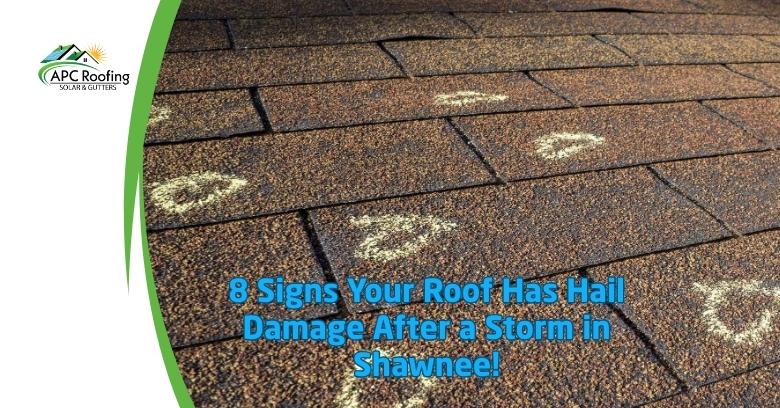
At the colder end of our territory, hail is a familiar part of the storm calendar, so shingle lines that stand up to it are common. A strike strips the coating from a spot about the size of the stone, and a hard enough blow can crack the mat underneath.
An impact class is assigned after steel balls are dropped on samples in a lab, and the stronger lines come through in better shape. Modified asphalt with added rubber is used by several makers, so the material bends where an ordinary mix would crack.
Blowing Weather – The Damage Done
Uplift concentrates at the outer margins and the corners, so a piece with a failed bond begins to lift and drop. Once a tab is doubled back, a crease forms where it bent, and the damage leaves it permanently weakened. Shingles harmed that way come out and new ones go in, while an unfolded one can be sealed again with roofing cement.
A missing tab leaves bare underlayment facing the sky, and ultraviolet rays wear it down fast.
Growth on the Surface: Cause and Care
Black lines trailing down a slope are usually algae, and it thrives on the limestone mixed into the asphalt. At the humid end of our territory, shaded north-facing roof planes grow it fastest, though the color change is mainly cosmetic.
Moss poses a real threat, as it traps moisture against the courses, and it works under the edges and raises them. A pressure washer blasts granules off along with the growth, so a light misting of a purpose-made solution is used instead. Algae-resistant designs mix copper into the surface, and a zinc strip near the crest slows the streaks' return.
What the Color Changes – Blends and Batches
A dark covering gains more warmth from sunshine, while pale ones stay cooler. Some product lines use specially coated granules that turn back more radiation, and a tested reflectance figure goes with them.
Material made on separate days is rarely a perfect match, so shingles from several bundles are mixed as the courses go on. Blends that combine many colors mask small mismatches, whereas a single flat shade gives them away.
Going Up Top: A Safer View
A sun-baked covering loses its firmness, so a shoe sole scrapes away grit. At the colder end of our territory, icy mornings leave the tabs ready to crack underfoot, while frost at dawn makes the footing treacherous.
The ground is the right place for anyone without roofing gear, and a look from across the street tells a great deal.
Laying Over the Old Covering – Hidden Trade-Offs
Local regulations commonly accept an overlay over an old roof, but not where two are already stacked or the wood is damp and decayed. A layover keeps the worn shingles sitting on top, so a spongy section just stays put.
An uneven base gives the new shingles a wavy face, and flashing past its prime is usually kept. Stacking one covering on another adds mass that the framing must bear, while the fasteners need more length to bite into the boards.
Things That Turn Up – Worth a Closer Look
- Coarse granules wash onto the splash blocks, and the drifts get deeper each season.
- Some tabs flap loose or are gone altogether, so the adhesive strip has given way.
- Shingle ends lift into curls, and the asphalt is drying out.
- Tabs show fine breaks from edge to edge, and the layer below begins to soak up water.
- Dark, smooth patches appear on the surface, because the granules there are gone.
- The seal around a plumbing stack has cracked, and drips may reach the ceiling below.
- The metal where a slope meets siding sits bent or pulled back, so every storm can find a weak point.
- A brown ring shows on a ceiling, while the opening outside can be several feet off.
How APC Roofing Approaches 3-Tab Shingle Roofing in Shawnee Kansas: What to Expect
An inspection first covers every slope on foot, and each valley, vent, flashing and edge is looked at closely. From inside, the attic is searched for water stains and pinholes of light, since the underside of the deck keeps the marks of any old leak.
Any problem is photographed, and damage is measured where size matters. A plain written account follows, and each suggestion is explained. A minor job is presented as minor, and a worn-out covering is identified as such. The choice is the owner's, be it a repair, a replacement or no work yet.
3-Tab Shingle Roofing Around Shawnee Kansas: Straight Answers From Up Top
Dial 913-398-5020 to have someone come out.
Patching Versus a New Covering: Brittle Material
A cracked boot, loose flashing or a handful of torn tabs is routine repair work, and the rest of the shingles stay where they are. Fresh shingles stand out against faded neighbors at first, and that earlier shade may simply not exist anymore.
Stiff, dried-out shingles split when raised for nailing, so the disturbed zone keeps widening. When shedding and fractures appear on every face, a full tear-off is the honest recommendation.
Life Expectancy: Care Along the Way
A three-tab product commonly gives around fifteen to twenty years, and laminated types frequently see nearly thirty. The ranges shift with attic ventilation, climate and installation care, and a single violent storm may finish a covering off early.
The vent collars and flashings deserve an occasional look, since spotting a fault quickly keeps the damage small.
If you are planning 3-Tab Shingle Roofing in Shawnee Kansas, dial APC Roofing at 913-398-5020. Someone will walk every slope and look over the details, and you get the findings in writing and choose.
Verified

Verified