Searching for EPDM Roofing in Shawnee Kansas?
APC Roofing puts down and mends single-ply and rolled sheets, and the jobs are often over garages, porches and sunrooms.
Phone 913-398-5020 and a roofer will walk the surface and tell you what needs doing.
Designed to Shed – a Question of Shape
The flat roof over a porch or garage is laid with a gentle fall toward an outlet, and codes commonly ask for at least a quarter inch of drop per foot. Carpenters can set the change in height into the rafters, or a tapered insulation layout can produce the difference during a reroof.
On a steep roof a storm drains away in moments, whereas a near-flat surface takes far longer to empty, so each seam sits in moisture long afterward. A ridge called a cricket turns runoff aside at a chimney or curb, so no pool can build on the uphill side.
Where Shingles Stop Working: Where Membranes Begin
An asphalt roof is allowed by code only at two in twelve and up, and tile calls for a steeper plane still. Below the limit, a gusty storm pushes water upward beneath each course, and the plywood soaks up moisture and softens.
Plenty of homes pair a shingle main roof with a membrane over the addition, because the incline under each section sets the material. Sheet roofing is one continuous skin with sealed joins, so water can linger without reaching the deck.
Kinds of Sheet – Names and Differences
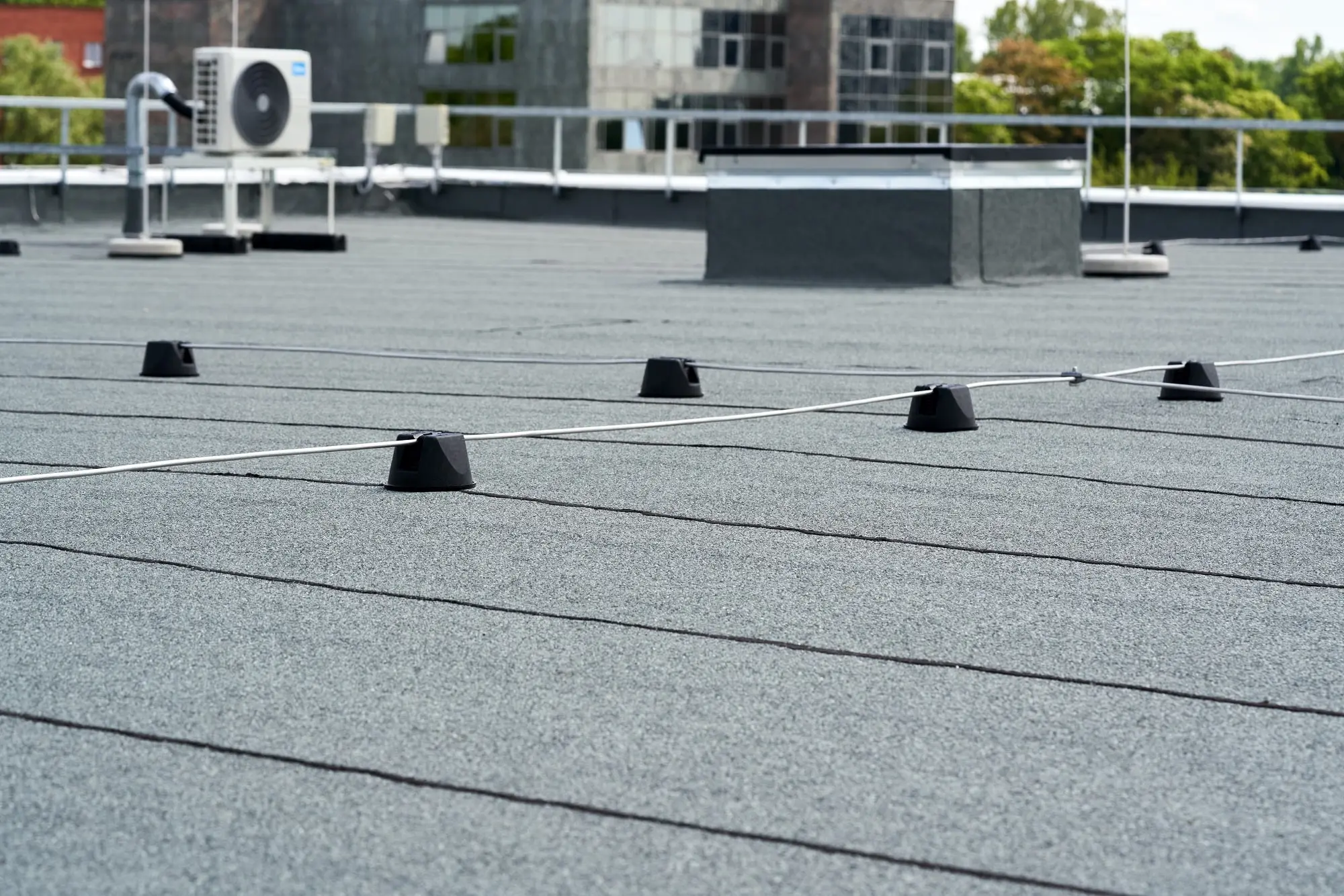
TPO and EPDM arrive as wide single-ply rolls, and modified bitumen comes in narrower strips of polymer-blended asphalt, and built-up roofing stacks felt and hot tar beneath gravel. Porch and garage framing carries a light membrane easily, and a roofer can inspect each join along the full length.
TPO is typically a bright white plastic, while EPDM is a dark synthetic rubber. Which product fits depends on the deck, the drains and any rooftop gear, and we put forward a recommendation, and the decision stays with the homeowner.
Closing the Joins: Care at Every Edge
Leaks seldom start in the open area of a sheet, and the overlap between neighboring widths is where problems sit. TPO seams are melted into one piece by a machine blowing hot air, and each joint is probed by hand for gaps.
EPDM laps depend on primer under adhesive tape, and moisture or grime trapped at installation leaves weak adhesion. A tired rubber join frequently pulls up at the edge, and a cover strip across the opening keeps water out once more.
Pale or Dark – Beyond Looks
A bright TPO surface bounces much of the sun’s heat back skyward, so the space under a porch or addition runs cooler. A black EPDM membrane absorbs radiant energy, and the deck under the sheet stays warm into the evening. A bright surface helps a lot in the hot parts of our service area, but the difference is modest at the colder end of our territory.
Gauge: Sorting the Options
Single-ply material is specified by the mil, a thousandth of an inch, and 45 and 60 are everyday figures on houses, with heavier rolls sold for demanding service. A beefier membrane shrugs off a dropped screw better, and the deeper body endures ultraviolet aging for longer. From the yard, a slim grade and a heavy grade look alike, so the written scope lists the mil rating.
What Sits Underneath: How the Pieces Fit
Right against the membrane there is often a cover board, and rigid insulation panels come after, and the deck at the base is usually plywood on a porch. Polyiso slows heat passing into or out of the rooms, and more thickness means a higher R-value. Saturated insulation stops doing the job and grows heavy, and trapped dampness under a sealed membrane has no way out. Meter readings, infrared images and a small core show the size of the affected area, because the membrane can appear sound from end to end.
Where Shingles Give Way – a Mixed Detail
The membrane is carried up the steeper plane and under the asphalt, and rain sheds from above onto the membrane. No part of the sheet’s top edge faces the sky, and the joint does not rely on caulk at all.
When the membrane is run on the bottom course, water slides beneath the lip, and wind-driven rain reaches the framing below. A porch ceiling that drips beside the house usually has a junction built upside down, and the proper repair redoes the detail from the eave up.
Termination and Trim – Held Tight
Wind crossing a low roof pulls upward at corners and along the perimeter, and an opening can let the membrane peel back across a wide area. Bent metal grips the sheet all along the outside, and a drip lip turns runoff down into the gutter.
A termination bar anchors the membrane along a wall, and a continuous bead of sealant seals the top edge, and counterflashing overhead shades the joint from rain. Rattling trim and raised fasteners deserve a repair, since a quick refix spares the membrane a blow-off.
The Parapet – Masonry or Framing
On the inside, the membrane climbs the face as base flashing, and counterflashing set higher overlaps the turned-up edge. A coping covers the upper surface of the parapet, with an inward pitch that drains runoff onto the roof.
Open joints along the crest let rain inside the wall, and the leak can appear a long way from the source. Masonry with open mortar lines also calls for repointing, and a stucco-covered frame needs sealed corners and a tight top.
Drainage Hardware – Clear and Working
Runoff departs a low roof through an inside outlet, a wall scupper or an edge gutter, and leaves or grit can choke any opening. The interior drain rests in a shallow sump beneath a dome-shaped strainer, and piping in the house leads down to the yard or a storm line.
An overflow scupper sits higher than the main outlet, and code requires another way out where parapets could trap water. Maintenance means lifting debris off strainers and out of gutter throats, and a missing or shifted dome is replaced.
Water That Stays Put – the Trouble Explained
Rainfall that remains on the membrane forty-eight hours after a storm counts as a defect in the trade, and a sagging deck or a plugged outlet sits behind the problem. Constant immersion speeds the aging of the sheet beneath, and algae and silt take hold on the wet stretch. Rain a few inches deep bears down hard enough to bend the joists, and the bigger dip catches more rain next time.
A new covering alone does nothing for a misshapen deck, so the true correction is tapered insulation, a cricket or an added drain. The framing and the routes open to new piping decide the remedy, and a level laid across the low area confirms the plan.
Holes in the Field – Small but Serious
A single-ply sheet can be breached by a sharp object at any age, and a dropped screw or a dragged ladder foot is enough. Large hail at the colder end of our territory can crack a brittle old membrane, and wind-thrown branches can gash a surface anywhere.
A small hole found early needs only a patch, but a season of rain through the gap leaves the insulation soaked. Finding pinholes means a slow walk across every foot of the field, because tiny punctures escape a glance from the ladder.
Protected Paths: Where the Boots Go
A membrane serves as a waterproof skin rather than a floor, and repeated trips to the air conditioner on the roof grind at the surface. Thick pads are welded or adhered along the path to rooftop units, so the strips absorb the abrasion instead of the membrane. Where mechanical gear sits up top, the scope includes traffic protection, and heating and cooling technicians are directed to the marked lane.
Rooftop Flooring: Heavy Loads, Easy Access
Pavers set on pedestals keep furniture legs off the membrane, and runoff flows beneath to the outlets. Planters full of soil need the joists checked beforehand, because wet earth weighs far more than dry earth.
Every paver can be raised by hand one at a time, so the membrane below can be reached without tearing anything out.
Penetrations – Detail Work
Plumbing vents are sealed with molded boots of matching membrane, and a steel band secures the collar to the stack. Units and skylights rest on curbs that rise from the deck, and the membrane turns up all four faces beneath metal. A bracket or cable bundle that no boot fits goes into a pitch pocket, which is a little dam of poured sealant.
The fill shrinks and cracks over the years, and a periodic top-up is standard upkeep.
Mend or Start Over: How the Call Is Made
Water usually enters a membrane at a single small area, and a matching piece sealed around the gap restores the surface. TPO overlays are heat-welded and probed along the edges, and an EPDM cover is primed and taped with rounded corners.
Full replacement is justified when seams are opening everywhere, or the membrane has hardened and split, or wide areas of insulation are saturated. We say plainly which way to go, and photographs and meter readings back up the verdict.
A Second Layer or a Clean Start – Settled by What Is Underneath
An existing roof can take a new membrane on top with a separator board, and code allows the method only where one covering is in place. Laying a sheet over the top needs dry insulation, because trapped moisture under the new sheet keeps harming the deck.
Removal down to the deck is what a tear-off means, and damaged boards can be patched and pitched correctly, and a roof with two coverings must be stripped by code. Test readings and the number of layers present decide the route, and the findings reach the owner on paper ahead of any choice.
How Age Shows – What Hastens Wear
Daily cycles of heat and cold, ultraviolet light and pooled rain steadily degrade a membrane, and technicians walking to units scuff paths across the field. A yearly round of strainer clearing and pocket refills extends the working span, and early patching of small cuts protects the insulation.
Clues Worth Heeding – Plain to See
- A tea-colored stain on the ceiling below the low section, meaning moisture has worked past the insulation.
- Rain gushing from an overflow scupper in heavy weather, which often points to a clogged main outlet.
- Edge metal bent or lifted after high wind, where the membrane can begin to peel.
- Moss gathering where the roof meets the gutter, which reveals runoff that never clears.
- A section that bows when seen from the street, a possible sign of a deck bending under pooled water.
- Puffy blisters glimpsed from a window overlooking the membrane, which suggest trapped moisture or loose adhesion.
- Dark trails on the exterior under a parapet, typically from separated joints along the coping.
- A wet stripe on the porch ceiling next to the house, often due to a leaking tie-in.
The Way APC Roofing Takes On EPDM Roofing in Shawnee Kansas – What Happens, in Order
We look first at the drainage: outlets, strainers and low spots, and the laps are probed from end to end next. The perimeter metal, parapets, curbs and pockets are inspected after, and where a leak is present, a meter and a core cut test the insulation.
Findings are set out in a written report with pictures, and every part is rated in plain words. If patching solves the problem, we recommend patching, and a worn-out membrane is described without softening.
EPDM Roofing Across Shawnee Kansas: Careful Membrane Work
Phone 913-398-5020 and we will set a time to come out.
The Right Conditions – Reading the Sky
The primer and tape used on EPDM need a dry surface, and cold slows how quickly the adhesive grabs. Hot-air welding on TPO copes with brisk mornings, but rain stops all membrane installation.
A small repair can be done in a brief pause between showers, whereas a full replacement depends on several settled days. Each section opened for installation is made watertight before the crew departs, so the rooms below are covered through the night.
For work on EPDM Roofing in Shawnee Kansas, get in touch with APC Roofing at 913-398-5020. A roofer examines the membrane, the drainage and the edges, and you get the findings in writing and make the decision.
« All Services in Shawnee Kansas