
Every hard rain, water sheets over the front edge of your gutters and lands right next to the house. Maybe there’s a damp corner in the basement, a stain creeping down the siding, or a bare trench in the mulch bed under the downspout. Gutters in the Missouri Ozarks have a big job, and when they fall behind, the water ends up where you least want it.
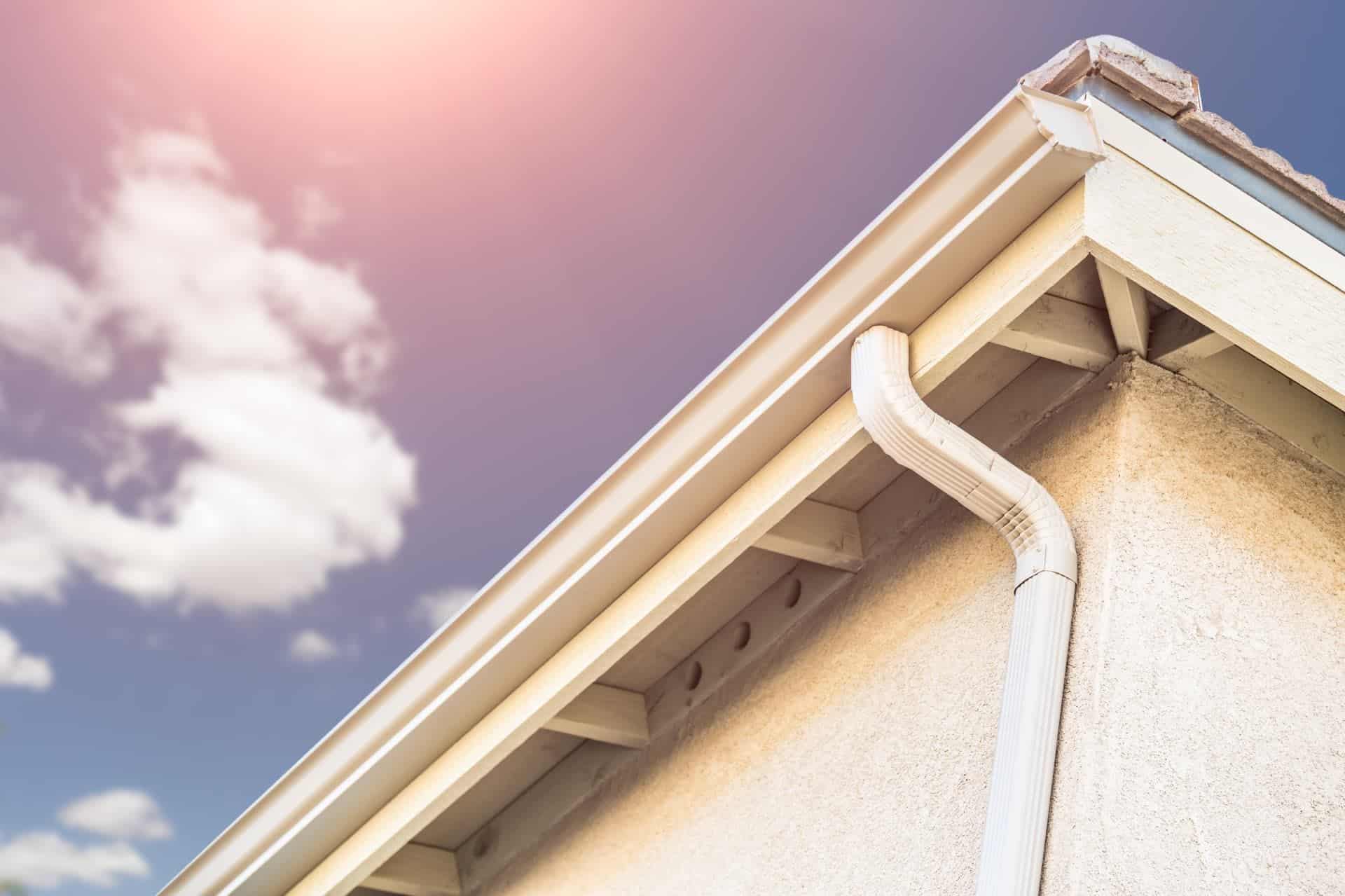
It’s easy to leave gutters at the bottom of the list. But a gutter system that’s too small, pitched wrong or clogged can quietly damage your fascia, siding and foundation, and every one of those costs more to fix than the gutters do.
APC Roofing installs rain gutters and seamless gutters on homes across southwest Missouri, often alongside a new roof. We’re GAF Certified, licensed and insured, and your estimate is free. Call 913-398-5020.
What your gutters protect
A roof collects a surprising amount of water. Every inch of rain that falls on it has to go somewhere, and your gutters decide where. When they work, water runs off the roof edge, into the trough, down the downspouts and away from the house.
When they don’t, the damage tends to show up slowly:
- Water spilling behind the gutter rots the fascia board and the roof deck edge.
- Overflow splashes against siding and window trim.
- Water dumped at the foundation soaks the soil, which can lead to a wet basement or crawl space and settling over time.
- On sloped lots, uncontrolled runoff carves gullies and washes out landscaping.
Gutters in the Missouri Ozarks: what makes this area different
Trees. A lot of Ozarks homes sit among oaks, hickories and other hardwoods. Every fall, leaves and seeds fill gutters fast, and twigs jam the downspout openings. A gutter that’s always clogged overflows no matter how well it was sized.
Hills. Homes on sloped lots need extra thought about where downspouts empty. Water discharged on the uphill side can run right back toward the foundation. On the downhill side, it can erode the yard.
Storms. Spring thunderstorms in southwest Missouri can drop a lot of rain in a short window. Gutters and downspouts sized for an average shower get overwhelmed.
Ice. Winter ice storms add real weight to gutters and hangers, and snow melting on a warm roof can refreeze at a cold eave. Gutters that are already loose or sagging are the first to pull away.
Your gutter options
Seamless gutters are made in one continuous piece for each run, so there are no joints along the length to leak. They’re the most common choice for homes today.
Rain gutters is the general term, and that page covers choosing a system: gutter size, profile, materials, downspout size and where the water goes once it leaves the house.
Gutter installation covers how a new system is planned and put up, including when it makes sense to replace gutters at the same time as your roof.
New gutters, a repair, or a new roof first?
If your gutters are mostly sound and the trouble is one leaking corner or a sagging section, a targeted fix may be all you need. If they’re undersized, rusted through, pitched backward in several places or pulling off rotted fascia, new gutters usually make more sense.
Your roof matters here, too. If the roof is near the end of its life, it’s often smart to replace the roof and gutters together. The gutters come off anyway when the roof edge is redone, and new ones can be fitted to the new drip edge.
Signs your gutters need attention
- Water pouring over the front edge during a steady rain
- Gutters pulling away from the house, or hangers visibly loose
- Drips or rust at the seams and corners
- Peeling paint or dark stains on the fascia and siding below
- Puddles, erosion or a soggy patch near the foundation
- Plants growing out of the gutter
You can spot most of these from the yard during a rain. If you see a few, it’s worth having someone take a closer look.
How it works with APC Roofing
- Book your free estimate. Call 913-398-5020 or request a free estimate online.
- Get a clear, honest assessment. You’ll get a look at your roof size and pitch, gutter size, downspout locations, fascia condition and where the water ends up, with a written estimate.
- Get the work done and the site cleaned up. Your gutters go up, and the crew cleans up before leaving.
Financing is available through Aqua Finance, Fortifi, Hearth and Home Run Finance if you’re pairing gutters with a bigger roofing project.
Gutter questions from Ozarks homeowners
Do I need gutters on every side of the house?
Not always. Gutters matter most along roof edges that drain toward walkways, entries, decks and the foundation. Some roof edges shed onto areas where it does little harm. An estimate looks at each side.
Why do my gutters overflow even after I clean them?
Usually the gutter or downspouts are too small for the roof area feeding them, the pitch is off, or a valley sends a big stream of water to one spot. Cleaning won’t fix any of those.
Can you replace the fascia behind my gutters?
Yes. APC works on fascia and soffits, and rotted fascia needs to be replaced before new gutters go on. Hangers can’t hold in soft wood.
Should I replace my gutters when I get a new roof?
Often, yes, especially if they’re older or undersized. Doing both together lets the new gutters fit the new roof edge properly.
Dry walls and a dry basement
The goal is a home where rain runs off the roof and away from the house, with no overflow, no stained siding and no water in the basement after a spring storm. Call 913-398-5020 to book your free gutter estimate. Your satisfaction is our reputation.


















