In Need of Steel Roofing Within Independence Missouri?
APC Roofing puts up and mends screw-down sheet and clip-held panels, from a pole barn to a family home.
Phone 913-398-5020 and you will hear in plain words what condition the roof is in.
Telling Systems Apart: Visible Clues
Ribbed and corrugated panels take screws through a flat or a crest, whereas standing seam hangs on clips hidden under tall ribs. Nearly every residential job uses coated steel, though aluminum and copper have a place too.
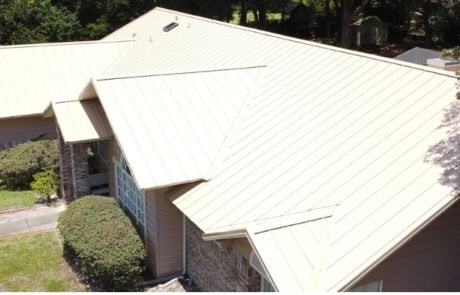
A glance from a lawn at lines of screw heads points to a through-fastened roof, while plain pans and tall ribs with nothing in sight are standing seam. Pole buildings, sheds and porches frequently get ribbed sheet, and dwellings use both.
Cross-Section Choices – Span and Style
Corrugated goods swell and dip in gentle, repeating arcs, and ribbed panels pair tall square ribs with broad flat areas. Side by side, adjoining lengths overlap by one crest, and a maker’s pattern says where screws go.
A ribbed profile stands up to flexing and can bridge wider gaps, and corrugated suits older buildings and a farmhouse look. High ribs carry a heavy downpour across an extended slope, and a lean-to or porch manages fine with a gentle pattern.
Fastener Hardware: Small Parts, Big Job
A screw pulls the metal tight against a purlin or the deck, while a washer at each head keeps rain from following a shank. Sun and temperature swings dry out neoprene over time, and the panels usually last a great deal longer.
A screw set too tight crushes a washer out sideways, and a fastener stopped short or angled leaves a gap for rain.
Hardware Swaps – Benefits and Gaps
On corrugated or ribbed sheet, every washer ages at one pace, and a whole-roof re-screw is routine over the years. Old fasteners are backed out one at a time, and a bigger diameter is driven in to grip where an old thread stripped.
A re-screw ends drips and steadies sheets that rattle in wind, but red rust, gaping laps and cracked flashing need other remedies. New screws are matched to whatever framing lies beneath, with wood threads for lumber and drill points for steel, and color-matched tops blend in with a painted finish.
A Covering in Motion: Why Slack Matters
A steel sheet grows in afternoon heat and shrinks back by dawn, and a forty-foot run can shift a quarter inch or more, with aluminum going about twice as far. Where nothing lets a panel slide, the metal elongates screw holes, and a washer stops sealing.
Creaks as the day warms come from steel adjusting, and a careful installation suffers no damage.
Holding Down a Seamed Covering: Tucked Away
One short stretch of every long pan is pinned tight, and floating clips farther along give the metal freedom to shift. Trim at an end that travels is bent with clearance underneath, and a pan held rigid throughout tears loose or buckles.
As a pan is laid, clips are driven into the deck along one leg, so nothing that holds the roof down is left exposed.
Seam Styles: Choosing Between Options
Some profiles snap together under hand pressure as each pan goes down, while other designs are crimped over by a machine. A double-locked joint stands up to gales and to water sitting against the metal, and approvals extend to flatter roofs.
Widths between ribs and the height of each rib differ by line, and architecture and a buyer’s eye decide. Clips, trim and closures are bought to suit one particular panel, and a substitute from elsewhere leaves gaps.
Choosing a Weight: Reading a Label
Steel thickness is given as a gauge, and higher numbers mean thinner sheet. Farm structures often use twenty-nine, and residential work leans on twenty-six and twenty-four.
Aluminum sheet is measured in decimal inches, and more material means fewer marks and less waviness. A view from below reveals nothing about grade, so a label on a bundle shows what was delivered.
Protection Built In – Aging in Sunlight
Raw steel is galvanized, or given an aluminum-zinc treatment, before shipping, and a baked primer goes on before a color coat. Scrapes confined to paint are harmless, whereas a gouge through to bare metal soon shows red.
High-end fluoropolymer finishes keep a bright look for years, but silicone-modified polyester goes dull and powdery earlier. An aluminum-zinc surface is damaged by contact with fresh mortar, so metal and new brick are kept apart.
Picking an Alloy: Near the Water
Aluminum carries less weight and does not redden, but a dropped tool or a falling branch dents a soft sheet sooner. Along the coastal end of our service area, salt in the air shortens the life of zinc-based coatings, and some makers limit steel products by distance from a shoreline.
Copper is usually kept to small accent roofs over a bay or a porch, and years outdoors take bare metal to brown and then green.
Metals That React – Matching or Separating
Water that has crossed copper wears away any steel coating below, and discoloration arrives well before a panel gives way. Aluminum on pressure-treated boards turns white and pits, and an ordinary screw of an unsuited alloy fails as well.
New flashing or trim has to match the metals already in place, or an isolating layer separates unlike metals.
Looks, Not Leaks – Why Installation Counts
Oil canning is a gentle waviness across the flat of a standing seam pan, and faint hollows show at sunrise and fade by noon. A panel that looks uneven sheds rain as well as a perfect sheet, and the roof ages no faster.
Thicker metal, a slimmer width and striations rolled into every pan tame rippling, and careful handling on a true deck makes a difference. Images of real houses show oil canning from obvious to barely there, and you decide what to order.
Everyday Comfort: Noise and Heat
Panels laid straight over bare purlins ring out in a downpour, because a single thin skin vibrates freely. A dwelling puts decking, a membrane and insulation between the panels and any bedroom, and indoors, few people notice more noise than under asphalt.
Cool-pigment coatings return the bulk of the sunshine, so the space under the roof runs cooler. A charcoal or black panel gets hot, and vents and insulation weigh as heavily as the choice of color. Panels cool fast at nightfall, so evenings indoors feel better sooner.
Guard Rows – Only Where Needed
Where winters bring real snow in our territory, slick panels shed a snowpack quickly, and a single release can take out a gutter or strike someone nearby. Guards set along a roof hold a load in place until a thaw, with placement over doorways, decks and equipment.
For standing seam, bolted clamps grip each upright joint, whereas on corrugated sheet, mounts go into solid wood with gasketed fasteners, and in milder markets roofs do without.
Damage From Above: Documented Plainly
Hail is common across the colder end of our territory, and stouter panels with striations hold shape better. Where a blow splits paint, bare metal can corrode, and a bent seam or a dislodged trim piece can let water in.
Once a storm has moved on, affected spots get photographed and measured, so the extent of damage is clear.
Uplift: Trim Held Tight
Wind load concentrates at corners, rakes and eaves, and an unfastened edge lets pressure build beneath. Finishing trim is hemmed and caught on a cleat for a whole run, and nothing is left free to flap.
Screw and clip spacing tightens at corners and around a perimeter, per manufacturer guidance for local conditions. Along the coastal end of our service area, hurricane risk raises fastener counts again, and a whole assembly has to carry a matching rating.
Breaking Through the Metal: Sealant as Backup
A plumbing pipe gets a flexible boot with a base that bends to a panel profile, and placement is down in a pan rather than on a crest. A skylight, chimney or larger unit sits on a raised curb with a cricket uphill, and water from higher up is divided and sent past.
Caulk plays a supporting role to folded metal, as ultraviolet light turns soft compounds brittle in a few seasons.
Channels Between Roof Planes – No Screws in the Water
A broad flashing lines each valley in advance, and panels are sheared to a matching slant. Ends are hemmed and held by cleats, and fasteners stay clear of wherever rain concentrates.
Where a long run needs more than one length, a lap is sealed between layers, and fasteners through both thicknesses keep water from backing up.
Shallow Sections: Gentle Spots on a House
Through-fastened sheet generally wants about three inches of rise per foot, and on flatter roofs, water works under side laps. Mechanically seamed panels are approved much lower, and some products are allowed on nearly flat decks.
Nearly level spots over sunrooms and porches turn up on plenty of houses, and a measured angle decides what goes on, and an area that metal cannot serve is given a membrane.
A Base Layer: Rot and Spacing
Metal on a dwelling is installed over full sheathing, and a synthetic barrier made for high heat sits on top, since ordinary felt dries out under sun-heated steel. Pole buildings commonly have metal spanning between purlins with air below, and support distance dictates grade.
A stripped roof is probed, and weak sections are replaced, because crumbling plywood cannot anchor a clip.
Tear-Off First: Seeing the Deck
We tear the old roof off down to the deck before any metal goes on, so we can see and fix the wood first. If the decking flexes, or earlier leaks show from the attic, those boards get replaced before the panels go down.
Finishing Off – Fillers and Trim
Shaped closures fill spaces under every rib at an upper line and a lower line, and wind-driven rain, wasps and birds stay out. A ridge cap may be vented or sealed, as existing ventilation requires.
Drip edge, rake trim and a gutter apron finish every outer line, and fascia boards are kept out of runoff.
Care on Site – Carrying and Stepping
A seamed panel comes off a forming machine cut to the length of a run, and nothing overlaps partway up. Carrying an extended panel takes people spaced along the metal, and a pan that gets bent should not go on the roof.
On panels, a step belongs in a flat above a purlin or deck, as a seam under a boot can bend open. Wet or dewy panels offer almost no grip, and a homeowner is better off staying on the ground.
What Homeowners Can Spot – No Ladder Needed
- Brown rings at fastener heads, near the top of a run.
- Hardware sticking up, at an eave.
- Trim bent up at a corner, after a windstorm.
- A boot pulled away from a pipe, over a kitchen.
- A sheared end streaked orange, next to a skylight.
- Uneven fading, on one panel more than on panels nearby.
- A leak tracking one line of fasteners, over a closet.
- A lock pulled apart, where slopes meet.
How APC Roofing Tackles Steel Roofing in Independence Missouri: What Happens on a Visit
We begin by figuring out which system is up there and how the panels are anchored, and then every screw or clip, edge, opening, valley and lap is checked. Gauge, finish and hardware are noted as we go, while the underside of the deck is inspected from the attic.
What we find goes into a report with photographs, and every piece of advice comes with an explanation. Where a reseal will do, a reseal is what we propose, and a roof at the end of service life is named as such.
Steel Roofing for Property Owners in Independence Missouri – Details Read Closely
Reach us at 913-398-5020 and a visit gets put on the calendar.
Fix or Redo – Knowing Limits
A lone bad pan can be taken out and exchanged, but brand-new paint stands out against faded neighbors. A properly resealed lap closes a drip, and new screws restore a roof full of aged seals.
Perforation across many panels means replacement, and metal torn loose over entire slopes is no better off. Redoing one face of the house is a middle path, provided trouble goes no further.
Planning Ahead – Exposed Screws Versus Hidden Clips
Properly installed panels regularly reach forty years, though any figure is an estimate, not a promise. Concealed-clip panels require less upkeep because no rubber seal sits in the sun, while ribbed sheet gets new fasteners once washers tire.
Mixed metals, raw cut edges and caulk doing the job of flashing all shorten a roof’s service, and a visit now and then spots trouble early. Pine needles packed into a valley trap water against coated steel, so getting debris off the panels is worth the effort.
If Steel Roofing in Independence Missouri is on the table, dial APC Roofing at 913-398-5020. Someone will go over every panel, fastener and piece of trim, and a written report puts options in front of you.
« All Services in Independence Missouri