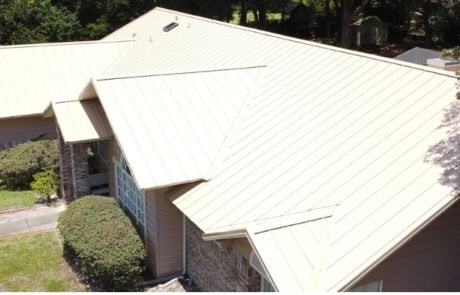
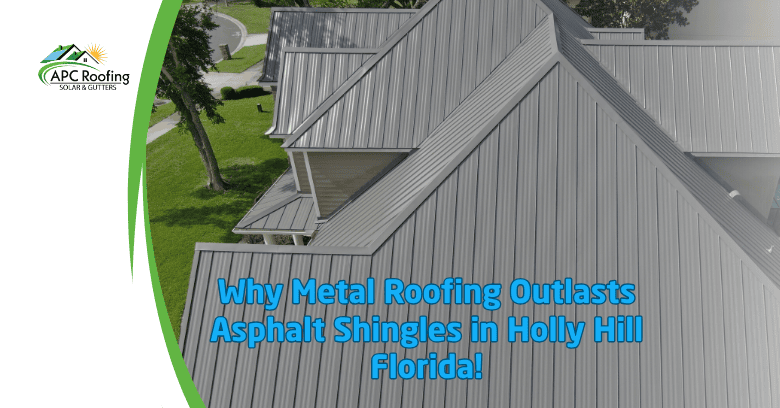
Looking Into Roof Installation on a House in Holly Hill Florida?
APC Roofing removes coverings past their service life and rebuilds the details at the walls, valleys and peak.
Reach us at 386-356-2111 to arrange a visit to measure the roof.
Putting Shingles on Shingles – and What We Do Instead
Rules in many areas allow one more layer of asphalt above the present one, which spares the crew the demolition. Going over the top conceals the deck and its flashing, and any damage down there keeps spreading.
A doubled layer telegraphs every lifted edge up through it, and the extra thickness traps heat from the sun. A true tear-off removes the old layers right down to the deck, which puts any rot where a carpenter can cut it out.
The Bare Deck: Fixing the Base
When the shingles are gone, each sheet of plywood is in plain view. Spongy areas come out and fresh wood goes in, and the framing gets extra fasteners where the originals let go.
Houses built with plank decks can have wide gaps between the boards, and a solid overlay is fastened over the whole surface. Fasteners driven into punky wood do not hold, so wind finds the weak patch within a few seasons.
The Layer Beneath the Covering: Why Felt Gave Way
A woven polymer roll is spread across each open slope, which protects the sheathing if the top course is ever damaged. The felt that used to be standard tore under foot traffic, while current products lie flat through summer heat.
Every run of underlayment overlaps the one below it, top over bottom, and the spacing of the capped nails matches the label. What the covering rests on is worth asking about, because identical-looking roofs can part ways under the shingles.
The Sticky Membrane: Sealed Around the Nails
A self-adhering sheet grips the deck on contact, and it stays pliable as the deck moves. The tacky compound hugs each nail shank, which stops a wind-driven drip from tracking down into the attic.
At the colder end of our territory, the eave strip reaches well up the slope, as frozen gutters send trapped meltwater upward. A sealed deck, with tape over each joint, is sometimes specified, and that keeps water out after high winds take tabs off.
Metal at the Eaves and Rakes – Lapped in the Right Order
Light-gauge flashing is nailed along the bottom line and the slanted ends, and it prevents water wicking back toward the wood. Down at the eave, the underlayment laps over the metal, while up the rakes the order is reversed.
Numerous houses were finished without any flashing at the border, which often leaves the fascia spongy. Fresh metal goes on around the whole outline, and damaged lumber beneath it is repaired.
Holding the Bottom Row Down: Where Shortcuts Show
A dedicated piece with its own sealant runs along the gutter side, and its outer border overhangs the drip metal slightly. A homemade version made from reversed stock puts the sticky line out of position, and the lowest course can lift in a storm.
Manufacturers print a target band for the nails on each shingle, because only there does each hit pass through both plies. A slanting or deep-set head slices the mat, and the shingle around it can then rip loose in a storm.
Letting the Attic Breathe: Planned With the Rest
Fresh outdoor currents belong in at the overhang and out along the top, with the inlet and outlet openings in proportion. Bottom vents blocked by insulation starve the attic of supply, and a fan in the roof then pulls conditioned air out of the rooms.
Moving currents stop the wood beneath the covering from overheating, so the asphalt above does not cook from below. At the colder end of our territory, a vented attic prevents house warmth from thawing the snowpack, so dams of ice are much less likely.
Fan Duct Runs – Capped Outside
Many bathroom and range hood vents empty into the space below the sheathing, and the vapor they move condenses overhead. Rusty nail points and darkened panels give the problem away, and the structure slowly decays from the underside.
While the sheathing is bare, the fan lines are simple to follow, so each one can receive a cap of its own. Hose that has dropped away from the housing is clamped back on, and a wrapped jacket prevents drips forming in cold weather.
Step Flashing at the Walls: No Salvaged Pieces
A small bent plate is interleaved with every row that runs into a dormer or second story, and trim or building wrap overlaps its upright leg. The previous flashing has rusted edges and holes from past nailing, and every scrap is swapped for fresh stock.
A diverter where the wall meets the eave pushes water out and away, because without it the framing gets soaked. Plenty of older homes were built with none, so decay appears just under the roofline.
Around the Chimney: Where Roofer and Mason Meet
On a masonry flue, an apron wraps the downhill face and stepped pieces climb both flanks, with counterflashing tucked into the joints above them. Wide chimneys get a cricket on the uphill end, and that splits runoff to left and right.
A peaked diverter can be added to a stack that never had one, since the plywood there is off or exposed. Spalling brick or a split crown is a mason's job, since the counterflashing holds only as well as what surrounds it.
Daylight Units – Removing the Ones Nobody Wants
Every frame is sealed with a package from its own manufacturer, which lets the courses on every side lap over or under correctly. A skylight with fogged panes or rot around it is worth replacing during the job, since pulling it next year means tearing into sound work.
An overhead light the owners no longer want can be taken out, with new framing and decking laid across the gap. Droplets in the shaft after a cool night tend to be condensation, and that calls for ventilation work, not reflashing.
Valleys: Open or Closed-Cut
Where neighboring planes join, their runoff gathers into a single channel, so it is taken down to the sheathing and redone. The low line receives a length of sticky membrane end to end, and then either sheet metal or shingles are laid over it.
An open channel shows bare steel between neat margins, while the closed-cut style carries tabs from one side across and cuts the opposite side straight. The right option follows the shingle selected and the house, and both drain well when built by the book.
Roof Penetrations – Old Brackets Removed
Every plumbing riser gets a fresh flashing unit, and the covers over the fans are changed out. Unused vent stacks and satellite brackets are removed, and new decking fills each opening.
Caulk around a boot is only a backup, and the overlapping shingles and the flange do the real work. Lead or silicone pipe flashings outlast the standard neoprene kind in strong sun, so they pair well with a covering that will be there for decades.
Nearly Level Areas – Why Shingles Fail There
A carport or sunroom on many homes sits under a top with little rise, and it often got the same asphalt as the rest. Shingled courses only work when water drains off fast, so a gentle grade lets it linger and seep under the edges.
The section can convert to a single-ply or modified bitumen membrane when the roof is redone, and its upper end is sealed under the shingles above. The junction between the coverings takes dedicated metal, since caulk alone fails there as the materials move.
Choosing the Covering: Looks Within Limits
A low pitch eliminates several products, since every lapped system states the least rise it accepts. Architectural asphalt shingles suit the majority of homes, metal panels stay put in hard gusts, and tile only makes sense where the building was designed to take it.
The color and profile matter to the look of the whole property, while a pale finish holds less heat in the sun. You get our suggestion along with the thinking behind it, and it is your call.
No Single Recipe – Labels and Lab Tests
At the colder end of our territory, hail is what bruises coverings, and shingles rated for impact resist cracking. The grade reflects a laboratory drop of steel balls on sample pieces, so it tells you about toughness, not about what any storm will do.
At the coastal end of our territory, high wind decides what goes on, so products are picked for their uplift performance. More nails go into each piece, placed by the maker's pattern, with adhesive applied along the rakes and eaves.
Where the Planes Meet Up High: Exhaust Along the Crest
Shingles manufactured to fold go over the apex and every outside corner, because everyday tabs split when doubled over. A continuous slot is sawn through the deck along an exhausting ridge, and a vent product is nailed over the channel and capped.
End plugs are pressed into both ends of the run, which stops sideways rain entering. The channel is made to the size the maker requires, as a cut too wide leaks while one too narrow barely breathes.
Beds, Lawn and Driveway: Before and After
Gardens and patio pieces along the walls should be covered, while the condenser and the windows below need boards leaning over them. A dumpster or trailer is ideally parked where the tear-off can fall straight in, with runners under the wheels to spare the concrete.
Grit and shingle scraps end up in the troughs, so a clean-out before the next storm matters. A nail hidden in the turf can catch a mower blade or a paw, so a careful sweep pays off once the roof is done.
Step by Step: the Ridge at the End
The existing covering comes off in stages, so a sudden shower meets only a small patch of bare wood. Carpentry is finished before the underlayment and membrane are laid, with the rake edges and starter strip nailed in next.
Row after row, the shingles rise toward the top, and caps and vents close off the highest line. The factory adhesive lines set as the sun heats the new shingles, so the covering holds better after a few sunny days.
Home During the Work – What to Move Beforehand
The pounding overhead echoes through every room, and photos or shelves on upper walls can shake loose. Fine grit filters down between the boards into the attic, and belongings stored there fare well under drop cloths.
Cars do better parked away from the driveway, since supplies get unloaded there. Pets that dislike racket settle in a far room or elsewhere, and youngsters should stay out of the drop zone until the tear-off is over.
The Permit and the Inspection – Why the Filing Matters
Local authorities usually require sign-off for a complete tear-off, with a code official reviewing the finished job. The roofing contractor typically files for the permit, since the record names whoever does the work.
Anyone who offers to skip the approval step wants nobody checking, so a second opinion is sensible. A signed-off record tells a future buyer the roof met code, which helps once the property is listed.
How Long a New Roof Lasts: More Than the Label
A quality architectural shingle is rated in decades, while metal and tile can carry on beyond that. The outcome rests on careful detail work, along with the local climate.
Next-door houses with identical coverings often reach the end at very different ages, because one had its intake kept open while the other was starved of air. A visit every year after the rough months spots issues early, so the roof is more likely to see out its rated life.
Clues From the Yard and the Attic – Worth a Closer Look
- Cupped, buckled tabs – on the sides that face the sun.
- Bald patches here and there, and granules collecting where the downspouts empty.
- Small repairs that keep failing – each one somewhere else.
- A wavy look to the surface – a sign the wood below has moved.
- Sunshine peeking into the attic – across the field, not at a vent.
- Pieces that crumble at a touch, a sign the asphalt has dried out.
- A carpet of growth on the north side – on a roof near its end.
- An old layover now wearing thin, with the upper one now curling.
How APC Roofing Goes About Roof Installation in Holly Hill Florida: In Plain Terms
Our inspection opens with a walk over every slope, and the attic gets a look from the hatch. Our notes turn into a written proposal, and it spells out the layers, the metal and the vents.
Deck repairs and flashing are photographed before shingles cover them, which shows what sits under the covering.
Roof Installation Throughout Holly Hill Florida – Planned, Then Built
Phone 386-356-2111 and ask for a measurement of every slope.
Gutters at the Eave – Rehung Where Needed
Every storm's worth of rain leaves the shingles and lands in the troughs, so the drip metal controls how it arrives. Sections that sag, leak at the seams or pull from the fascia are noted, because standing water there rots the wood behind.
A trough lifted off for the tear-off is rehung with the right pitch, with new fasteners set in firm wood. At the colder end of our territory, a plugged gutter lets ice creep over the edge, and leaf guards or bigger leaders are worth a look.
Beyond the Roofing: Who Handles What
A sagging ridge or a cracked rafter is a structural job, and that happens before shingling. An underinsulated attic floor stays that way after a tear-off, which leaves rooms that were hard to heat just as hard.
Loose or scorched wiring in the attic is work for an electrician, which we say plainly. The homeowner knows ahead of time what a new roof will solve, and what stays as it is.
To line up Roof Installation in Holly Hill Florida, reach APC Roofing at 386-356-2111. Every slope gets measured and the details written down, and each choice is explained.
Verified

Verified
Verified
Verified