Searching for Flat Roof Installation in Holly Hill Florida?
APC Roofing puts down and mends single-ply and rolled sheets, and on a residence the job tends to be a porch, a garage or a wing.
Reach us at 386-259-8425 and a roofer will walk the surface and tell you what needs doing.
Designed to Shed: Why Shape Counts
A roof described as flat carries a slight fall toward the exits for rain, and codes commonly ask for at least a quarter inch of drop per foot. Carpenters can set the change in height into the rafters, or a tapered insulation layout can produce the difference during a reroof.
Water races off a steep main roof during a storm, yet the porch membrane may still be shining an hour later, which puts extra strain on each joint. A ridge called a cricket turns runoff aside at a chimney or curb, and no dam of water forms against the upslope face.
Where Shingles Stop Working – Why Membranes Take Over
An asphalt roof is allowed by code only at two in twelve and up, and clay or concrete tile needs a steeper plane again. Below the limit, a gusty storm pushes water upward beneath each course, and the plywood soaks up moisture and softens.
Many homes combine a shingle main roof with a sheet-covered porch, since the steepness under each section decides the covering. Sheet roofing is one continuous skin with sealed joins, which lets rain rest on the surface without finding a gap.
Low-Slope Choices – What Each Is
The single-ply group, TPO and EPDM, is installed from broad rolls, and modified bitumen is asphalt improved with polymers and sold in narrower strips, and built-up roofing stacks felt and hot tar beneath gravel. Porch and garage framing carries a light membrane easily, and a roofer can inspect each join along the full length.
TPO is a plastic membrane usually made in white, whereas EPDM is a black synthetic rubber. The right choice turns on the deck, the outlets and the equipment up top, and we put forward a recommendation, and the decision stays with the homeowner.
Welds and Splices – Heat and Adhesive
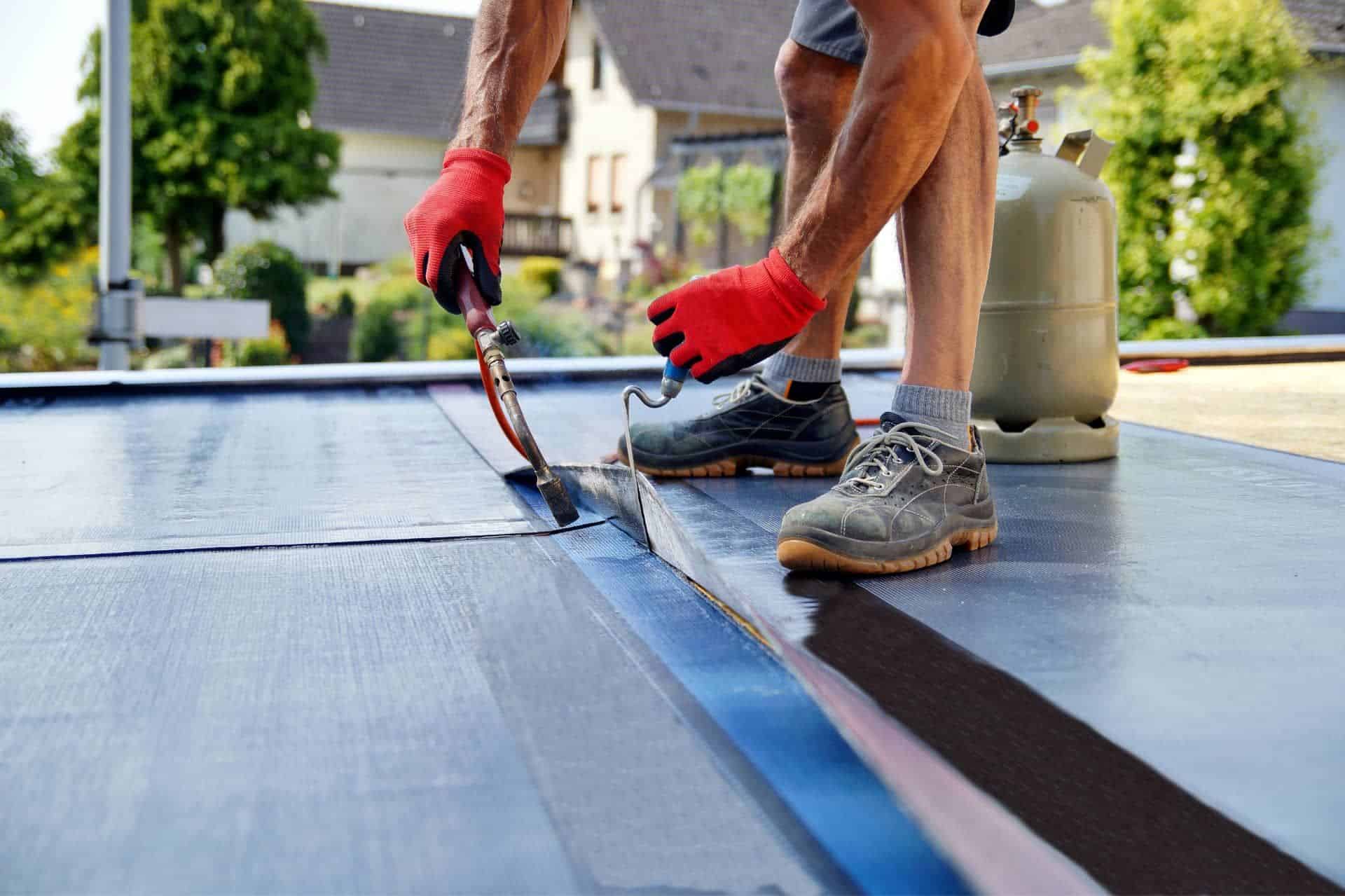
Leaks seldom start in the open area of a sheet, and the meeting lines between widths are where defects gather. A TPO seam is melted together with a stream of hot air, and a probe pulled the full length of the joint reveals any opening.
EPDM laps are fastened with primer and adhesive tape, so the surface is scrubbed and dried before installation. On an old rubber roof, joins tend to curl at the ends, and a fresh cover strip across the gap restores the barrier.
Picking a Shade – Beyond Looks
A glossy TPO finish turns away much of the summer sun, and the ceiling inside runs cooler. A black EPDM membrane absorbs radiant energy, and the deck under the sheet stays warm into the evening. A bright surface helps a lot in the hot parts of our service area, while the payoff falls at the colder end of our territory.
Sheet Thickness – Where the Difference Shows
Membranes are measured in mils, each a thousandth of an inch, and 45 and 60 appear on a great many homes, and stouter rolls are made for busier roofs. A denser covering tolerates a dropped wrench far better, and the added body weathers longer under ultraviolet light. From the ground, an owner cannot read the gauge, so the written scope lists the mil rating.
What Sits Underneath: How the Pieces Fit
The membrane usually rests on a thin cover board, and rigid insulation panels come after, and plywood, steel or concrete forms the deck at the bottom. A foam core cuts heat moving through the ceiling, and each extra inch adds R-value. Water-filled insulation loses performance and burdens the deck, and trapped dampness under a sealed membrane has no way out. Meter readings, infrared images and a small core show the size of the affected area, since nothing on the surface may look wrong.
Joining the Shingles – a Mixed Detail
The membrane is carried up the steeper plane and under the asphalt, so water coming down ends up on the membrane. The sheet’s top edge is shielded from the weather, and the joint does not rely on caulk at all.
If the membrane sits on the last course, rain runs in behind, and a hard storm drives moisture into the framing. Wet drywall where the porch ceiling meets the house often leads back to a reversed junction, and relaying the detail correctly is the fix.
Termination and Trim – the Finished Rim
Wind crossing a low roof pulls upward at corners and along the perimeter, and a loose section can be peeled back like a sticker. A formed metal strip pins the sheet along the outside, and an angled lip carries rain clear of the fascia into the gutter.
A termination bar anchors the membrane at the wall line, and a sealant bead keeps water from getting in behind, and tucked-in counterflashing protects the joint. Bent trim or nails backing out along the rim are a repair item, since tightening everything keeps wind from prying underneath.
Parapet Walls – Masonry or Framing
The membrane turns up the inner face as base flashing, and metal counterflashing sheds water off the upturned edge. The parapet is topped with a coping, with a lean toward the roof that keeps water off the exterior.
Gaps between crest sections let water travel down inside the wall, and the stain may appear well below the opening. Brick with crumbling mortar needs repointing as well, and framed construction under stucco needs sealed corners and a tight top.
Drainage Hardware – Clear and Working
Water from a low roof goes out through an inside outlet, a scupper or a gutter along the edge, and a blockage at any opening leaves water standing. The interior drain rests in a shallow sump beneath a dome-shaped strainer, and the pipe descends through the house to the yard or a storm sewer.
An overflow opening is placed above the main outlet, and code requires another way out where parapets could trap water. Leaves and grit come out of strainers and gutter throats during maintenance, and a dome knocked loose is fastened back down.
Ponding: Why Shape Matters
Roofers treat rain still sitting on a membrane two days after a storm as a defect, and a sagging deck or a plugged outlet sits behind the problem. Sheet material kept underwater for days breaks down sooner, and dirt and algae build up there. Inches of rain spread over a roof put real strain on the joists, so the dip deepens with every downpour.
Swapping the membrane leaves the contours of the deck untouched, so the true correction is tapered insulation, a cricket or an added drain. The joists and the path for new pipe steer the choice of remedy, and measurements taken with a level settle the plan.
Holes in the Field: How Harm Happens
A single-ply membrane can be sliced through while still new, and a stray screw or a slipped tool can do the damage. At the colder end of our territory, big hailstones can split a brittle sheet, and branches carried by wind can gouge a surface anywhere.
A small hole found early needs only a patch, but the same gap left through a rainy season soaks the insulation underneath. Pinholes show up only on a slow, close walk of the field, and a view from the eave overlooks tiny punctures.
Walkway Pads – Sparing the Sheet
A membrane serves as a waterproof skin rather than a floor, and each technician’s trip to the air conditioner on the roof roughens the surface slightly. Thick pads are welded or adhered along the path to rooftop units, so the strips bear the abrasion rather than the membrane. The written scope includes traffic protection wherever mechanical gear sits up top, and heating and cooling technicians are directed to the marked lane.
Platforms and Planters – Load and Drainage
Pavers on adjustable pedestals keep chairs and tables off the membrane, and the gap below lets rain reach the outlets. Planters full of soil need the joists checked beforehand, since damp earth is far heavier than dry.
A paver lifts straight off a pedestal by hand, so the membrane under a patio stays within reach for repairs.
Penetrations – Detail Work
A plumbing vent gets a molded boot of matching membrane, and a steel band secures the collar to the stack. Units and skylights rest on curbs that rise from the deck, and the membrane runs up every side under metal capping. Brackets or bundled cables of odd shape go into a pitch pocket, which is a small collar holding sealant.
The fill shrinks and cracks over the years, and adding more is routine maintenance.
Patch or Replace – the Honest Verdict
Membrane leaks tend to trace to one small spot, and a matching piece set over the gap closes the membrane properly. TPO overlays are heat-welded and probed along the edges, and on EPDM the cover is primed, taped and cut with rounded corners.
Replacement is the better choice once many seams are failing, or the sheet has become brittle with age, or broad sections of insulation hold water. We state clearly which option fits, and photographs and meter readings back up the verdict.
Recover or Tear-Off: What the Base Decides
A new sheet can be laid over the current roof on a separator board, and codes limit the method to houses with a single covering. An overlay calls for insulation that is dry, because moisture closed in continues to rot the wood below.
With a tear-off, every old ply comes off to the deck, so spongy boards get replaced and the grade corrected, and code demands the method where a house carries two coverings. Readings from a meter and a tally of layers point to the route, and the owner gets the findings in writing before choosing.
How Age Shows – Sun, Feet and Standing Water
A membrane slowly degrades under ultraviolet light, temperature swings and pooled rain, and technicians walking to units scuff paths across the field. A yearly round of strainer clearing and pocket refills extends the working span, and quick patches over small cuts spare the insulation.
Warning Signs Worth Knowing – Noticed Around the House
- A brown ring on a ceiling beneath the low roof, proof that rain has reached past the insulation.
- Runoff shooting from the backup scupper during a downpour, usually because the main outlet is stopped.
- A section of perimeter metal raised after a windstorm, which can let the membrane be pulled back.
- Algae creeping along the rim, a clue that runoff lingers up top.
- A drooping line above the porch from outside, an indication that pooled water is bending the deck.
- Bubbles in the membrane noticed from a second-floor window, from moisture caught beneath or a broken bond.
- Discolored lines running down beneath a parapet, commonly caused by open coping joints.
- Moisture where the porch ceiling joins the main structure, which often comes from a faulty tie-in.
How APC Roofing Goes About Flat Roof Installation in Holly Hill Florida – Step by Step
Our first check is the drainage, from each outlet to every low spot, and next comes a probe along every lap. The perimeter metal, parapets, curbs and pockets are inspected after, and during an active leak, meter readings and a core cut test the insulation.
Findings are set out in a written report with pictures, and each component gets a plain verdict. Where a patch will do, we say so, and a failing membrane is described frankly.
Flat Roof Installation Around Holly Hill Florida: Practical Help With Low Roofs
Phone 386-259-8425 and we will set a time to come out.
The Right Conditions – Reading the Sky
EPDM tape and primer must go onto a dry surface, and cool temperatures slow the adhesive’s grab. Hot-air welding on TPO copes with brisk mornings, but any rain puts membrane installation on hold.
A small repair fits into a short dry spell, whereas a full replacement needs several settled days. Every opened section is closed up watertight at the end of each shift, so the house is protected until the next day.
For help with Flat Roof Installation in Holly Hill Florida, contact APC Roofing at 386-259-8425. A roofer goes over the membrane, the outlets and the edge metal, and you get the findings in writing and make the decision.
« All Services in Holly Hill Florida