
Flat roofs are easy to forget about. They sit over the Florida room, the carport or the back addition, nobody can see them from the street, and they seem fine until water starts dripping through a light fixture during an afternoon storm. Then you’re left wondering if it’s a patch, a new membrane or something bigger.
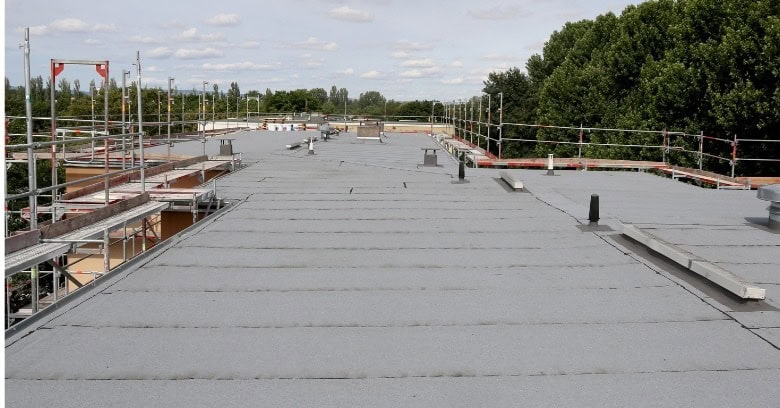
Flat roofing in Central Florida has a harder life than most people expect. Water doesn’t run off a flat roof as fast as it runs off a pitched one, the sun beats on it all year, and every seam and edge is exposed. You deserve a roofer who explains what’s going on in plain words and tells you what your roof needs, not what’s easiest to sell.
APC Roofing is GAF Certified, licensed in Florida (CCC1337030) and insured, and we work on flat and low-slope roofs across the greater Orlando area from our base in Clermont. Your inspection is free.
Where flat roofs show up on Central Florida homes and buildings
On houses, flat and low-slope roofs usually cover the parts added on later: screened porches, Florida rooms, carports, garages and room additions. On businesses, they often cover the whole building. Either way, the job is the same. Keep water moving to the edge or a drain, and keep every seam sealed.
One common problem on homes is shingles on a roof that’s too flat for them. Shingles shed water by overlapping downhill, and on a very low slope, wind-driven rain can push water back up under the laps. If a low section over a porch or addition keeps leaking, that’s often why. The fix is a proper low-slope membrane tied in under the shingles of the main roof above it.
Flat roofing in Central Florida: picking the right membrane
There are a few main options, and each has its place.
- TPO is a white single-ply membrane with heat-welded seams. It reflects a lot of sunlight, which keeps the roof surface cooler in Florida heat. See our TPO roofing page.
- EPDM is a rubber membrane, usually black, with taped or glued seams. It’s flexible and holds up well, though a dark surface absorbs more heat.
- Modified bitumen is an asphalt-based roll roofing common on homes and small buildings, often used over porches and additions.
- Built-up roofing (BUR) uses layers of felt and asphalt, often finished with gravel. It’s mostly found on older commercial buildings.
The right choice depends on the size of the roof, how much foot traffic it gets, how it drains and what’s underneath. Color matters more here than in most places. A light, reflective surface stays cooler in the afternoon sun, and the rooms under it often feel the difference.
What the weather does to a flat roof here
Summer storms drop a lot of rain fast. If the roof doesn’t drain well, water ponds, and water that’s still sitting there a couple of days after rain wears the membrane faster and adds weight to the structure. Clogged drains, scuppers and gutters are the most common cause, followed by low spots where the deck has sagged.
The sun works on everything else. Seams loosen, sealant around pipes and edges dries out, and older membranes crack and shrink. During hurricane season, from June 1 through November 30, wind pulls at the edges and corners first, so the metal trim around a flat roof matters more than it looks.
Repair or replace?
Plenty of flat roof leaks can be repaired: a split seam, failed flashing at a wall, a puncture from a dropped tool or a blocked drain. If the roof is dry underneath and in decent shape overall, a flat roof repair is usually the right call.
Replacement makes sense when the membrane is cracked across the whole surface, the insulation or decking underneath is soaked, or the roof keeps leaking in new places. That’s when a new flat roof installation, done with proper slope and drainage, ends the cycle. For a business with a large flat roof, our commercial roofing page covers recover and reroof options.
How it works with APC Roofing
- Book your free inspection. Call 407-270-1129 or request your free estimate online.
- Get a clear, honest assessment and estimate. You’ll get photos of the seams, edges and drains, a plain answer on repair or replacement, and a written estimate.
- Your roof gets done and the site gets cleaned up. Work is planned around the forecast so a summer storm doesn’t catch the roof open, and the crew cleans up before leaving.
A small leak on a flat roof can soak the insulation under it for months before you see a stain. Getting it checked early keeps it a small job.
Flat roofing questions from Orlando-area homeowners
Is my porch roof flat or low-slope?
Most “flat” roofs have a slight slope so water can drain. If yours looks level from the ground and water sits on it after rain, it needs a low-slope membrane, not shingles.
What’s the best flat roof material for a Florida home?
For many homes, a light-colored membrane like TPO is a strong pick because it reflects the sun. The right answer depends on your roof’s size, drainage and what’s there now.
Why does my flat roof keep leaking in different spots?
Water can travel under a flat roof’s surface before it drips, and an aging membrane often has more than one weak spot. Repeated leaks in new places usually mean it’s time to look at replacement.
Can a new flat roof go over the old one?
Sometimes, if the old roof is dry and code allows another layer. If the insulation is wet, it has to come off.
A low roof you don’t have to think about
Call 407-270-1129 to book your free inspection. The goal is a dry porch, a cooler room underneath and a roof you can forget about again. Your satisfaction is our reputation.


















