
The afternoon storm hits, and water sheets right over the front of the gutter and onto the walkway by your door. Or one section has started to sag away from the house, and there’s a dark stain on the fascia board behind it. Gutters in Greater Orlando take a real beating, and when they stop working you want to know whether you need a small fix, a new system or a closer look at the roof edge.
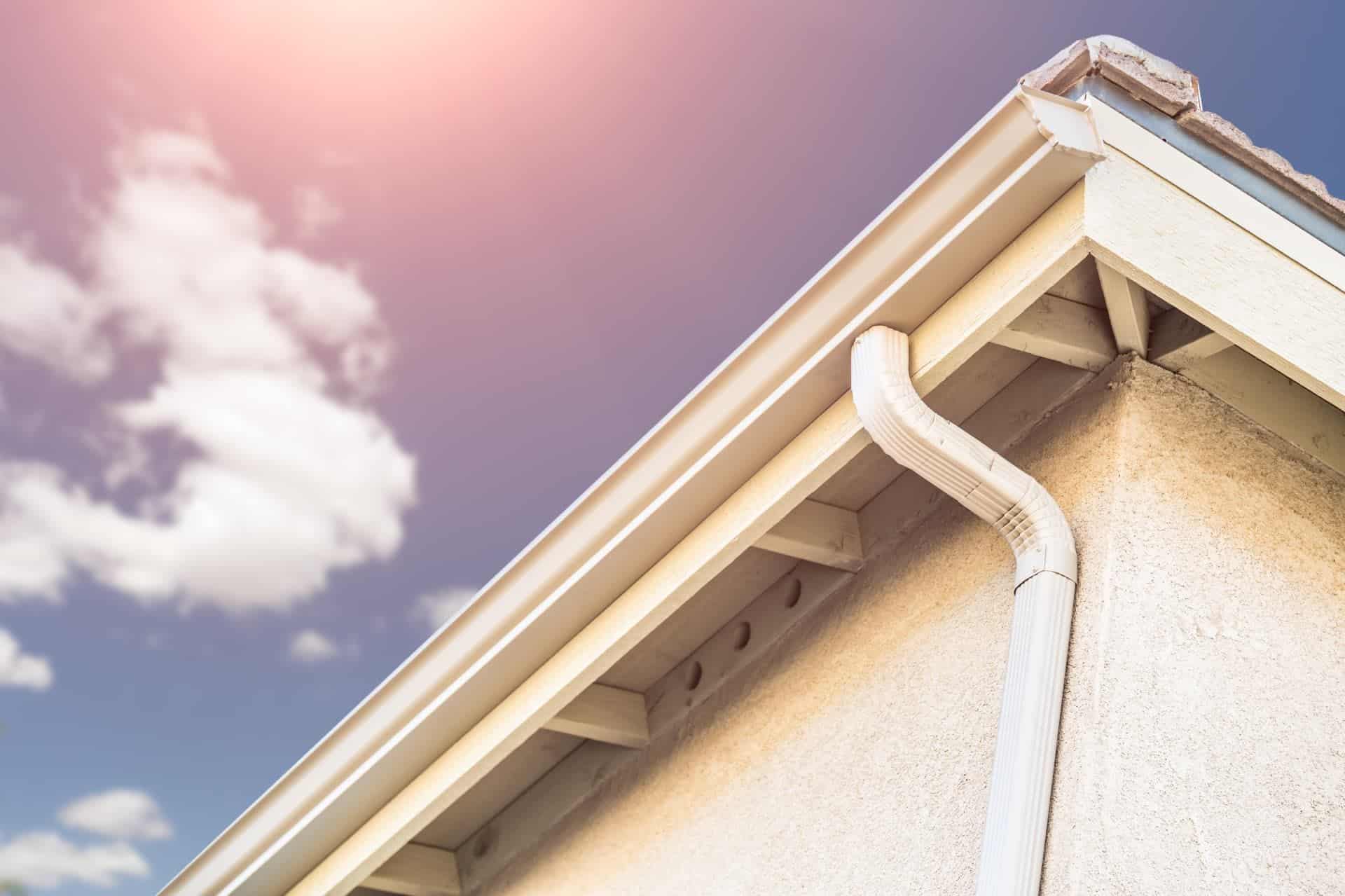
That’s a fair thing to worry about. Gutters look simple, yet two quotes for the same house can be far apart and nobody explains why. You should get a straight answer about what your house needs and what it doesn’t.
APC Roofing installs gutters as part of our roofing work across the Orlando metro, from our headquarters in Clermont. We’re GAF Certified, licensed in Florida (CCC1337030) and insured, and your gutter estimate is free.
What gutters in Greater Orlando are up against
Central Florida summers don’t bring much gentle, all-day rain. They bring short, heavy storms that drop a lot of water in a few minutes and then move on. A gutter here can sit nearly idle for a week, then have to carry more water than it was built for in a single storm. That burst is what overflows a gutter, not the yearly rainfall total.
Most homes around Orlando, Kissimmee and Sanford sit on a concrete slab with sandy soil around it. When roof water drops straight off the eave, it digs a trench in the mulch, splashes dirt onto the stucco and keeps the ground along the slab soaked. Over the years that shows up as stained walls, washed-out beds and water creeping into the garage or under a door.
Hurricane season adds wind. A gutter that’s hung loosely, or fastened into soft wood, is one of the first things a strong storm pulls off a house. Then there are the trees. Live oaks drop their old leaves in late winter and spring, and pines shed needles almost all year, so a gutter under either one fills up faster than the usual twice-a-year cleaning advice assumes.
Which gutter service fits your house
Most gutter projects fall into one of four situations. Knowing which one you’re in makes the rest of the conversation easier.
Your house has no gutters
Plenty of Florida homes were built without them. If water is landing on a front entry, a lanai or the driveway, or the beds along the house keep washing out, adding rain gutters where they’re needed can fix it. That doesn’t always mean every edge of the roof. Sometimes a few well-placed runs do the job.
Your gutters are old, leaking or too small
Gutters that overflow every storm, leak at the joints or keep pulling loose usually need replacing rather than another round of patching. Our gutter installation page walks through how a new system gets measured and sized.
You want seamless aluminum
Seamless gutters are formed on site from a coil of aluminum, so each run is one continuous piece with joints only at the corners, ends and downspouts. Fewer joints means fewer places to leak. The seamless gutters page covers sizes, styles and colors.
You’re getting a new roof
If a roof replacement is coming up, that’s the best time to deal with the gutters too. The drip edge and the gutter have to line up, and handling both together means one company is responsible for how water leaves your roof.
Fascia and soffit come first
A gutter is only as solid as the board it hangs on. When a gutter has overflowed or leaked for years, the fascia behind it often goes soft, and a new gutter screwed into rotten wood won’t stay put through a summer of storms.
So before we quote new gutters, we check the fascia and soffit along each run. If there’s soft or rotted wood, you’ll see where it is, and it gets priced as its own line so you know exactly what you’re paying for. APC replaces fascia and soffits too, so the wood and the gutters don’t have to be split between two contractors.
Getting the size right
Gutter size depends on the roof, not on how long the house is. The two numbers that matter most are how much roof drains into each run and how many downspouts are there to empty it. Five-inch K-style gutters work on many homes. Six-inch gutters carry a lot more water and make sense on big or steep roofs.
Downspouts are where a lot of gutter systems come up short. A run that overflows in the middle of every storm often needs another downspout, or a larger one, more than it needs a bigger gutter. Valleys, where two roof slopes meet and pour into one corner, are a common trouble spot for the same reason.
Then there’s where the water lands. A downspout that empties against the slab hasn’t solved much. An extension that carries the water out onto ground sloping away from the house finishes the job.
Signs your gutters aren’t keeping up
You can spot most gutter problems from the yard, ideally during or right after a heavy rain:
- Water spilling over the front edge in the same spots every storm
- A gutter pulling away from the house or sagging in the middle
- Stains or peeling paint on the fascia even though the gutter looks fine
- Washed-out mulch or bare dirt under a downspout
- Puddles along the foundation hours after the rain stops
A stained fascia behind a sound gutter usually means water is getting behind the gutter at the roof edge. That’s a flashing detail, and it’s the kind of thing a roofer should check during a gutter estimate.
How it works with APC Roofing
- Book your free estimate. Call 407-270-1129 or request one online.
- Get a clear, honest assessment and quote. We measure the roof area feeding each run, check the fascia and roof edge, and explain what size gutter and how many downspouts your house needs, and why.
- Your gutters go up and the site gets cleaned up. The crew cleans up before leaving.
If you’d like to spread out the cost, financing is available through Aqua Finance, Fortifi, Hearth and Home Run Finance.
Gutter questions from Orlando-area homeowners
Does my Florida home really need gutters?
Not every house needs them on every edge. They help most over entries, walkways, patios and lanais, along beds that keep washing out, and anywhere water is getting into the garage or staining the walls. We’ll tell you where they’d help and where they wouldn’t.
Can you match my trim color?
Aluminum gutters come in a range of factory-finished colors. You’ll see the options at your estimate, so the gutters can blend with your trim or your roof.
Should I replace my gutters when I replace my roof?
Often, yes. A new roof changes the roof edge, and older gutters may not line up with the new drip edge. If your gutters are fairly new and sized right, they may be fine to keep. We’ll check and tell you.
Why does water get behind my gutter?
Usually because of the roof edge, not the gutter. If the flashing at the edge doesn’t carry water into the gutter, it can run back under the roof edge and down the fascia. Getting that detail right is part of a proper install.
Rain that ends up where it belongs
Every summer storm that sends water over the gutter and onto the slab adds a little more wear to your walls, beds and fascia. With gutters sized for your roof, the next downpour runs off the roof, through the downspouts and out into the yard, and your walkway and garage stay dry. Call 407-270-1129 or book your free estimate online.


















