Considering Architectural Shingle Roofing Anywhere in Denver Colorado?
APC Roofing puts down granule-surfaced coverings from the deck up on houses, garages and sheds.
Call us at 720-902-6940 and the findings are explained without jargon.
Components and Construction – Raw Ingredients
Strength in a shingle comes from a glass-fiber mat, while asphalt soaked through the sheet turns rain away, and granules rolled into the surface shade everything beneath from ultraviolet rays.
Products that seem alike from the driveway can vary a good deal underneath, and extra material usually means longer wear. A swatch offers the look and nothing more, but the manufacturer’s printed sheet gives the test results.
Strip Versus Laminated – Setting Them Apart
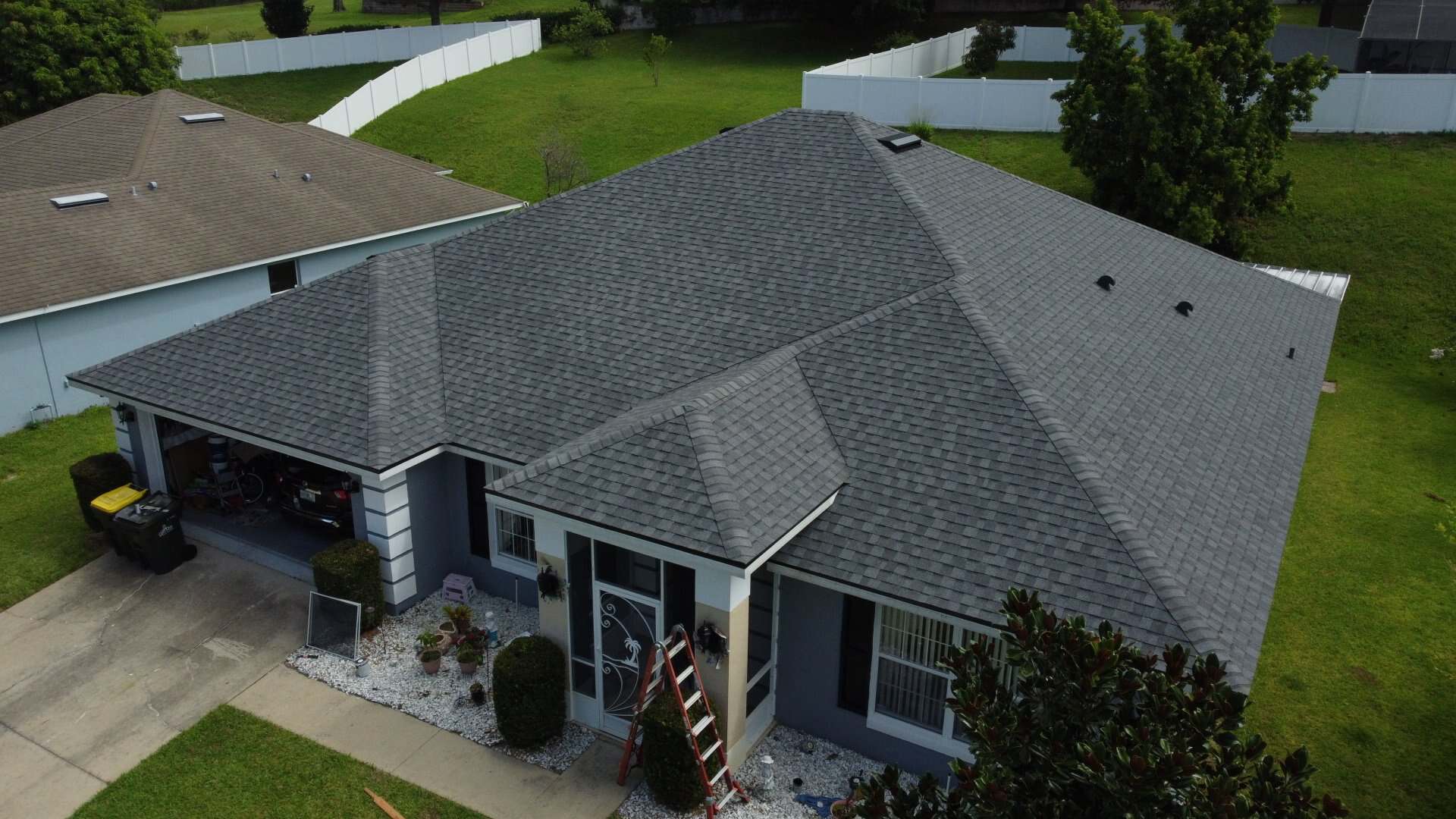
A three-tab shingle is one thin layer with two slots cut into its lower half, and a slope covered this way shows even, repeating rows. An architectural shingle has an irregular top ply fused to a whole base, so the uneven profile casts shadows.
The double-ply build adds material and weight, and the rated wind resistance usually rises too. A dimensional shingle is nailed through its double-thickness strip, and a printed guide shows the right position.
Strip Products in Use: Sensible Settings
A detached garage, a shed or a porch often suits three-tab well, and an addition can blend with an older covering of that type. Several makers now offer that style in fewer colors than before, so an exact replacement can be hard to find.
Textured shingles mask slight waves in the boards beneath, whereas a single-ply strip telegraphs each bump. Either style is laid over identical underlayment and metal details, and the shingle itself is the only part that changes.
Surface Wear Over Time: Clues at Ground Level
A freshly laid covering releases surplus grains during its opening months, and the amount tapers off quickly. When an older covering sends piles of grit down the spouts, its mineral shield is wearing thin, and the naked asphalt goes on to crack.
Planes aimed south or west receive the harshest sun, so the black asphalt often shows through there sooner.
Courses Held Together – Wind Resistance
Each shingle carries a stripe of heat-activated glue, and a stretch of warm, sunny days softens it until the overlying row sticks. Once the courses are stuck together, gusts struggle to lift the exposed edges, and nailing still carries the load year after year.
At the colder end of our territory, shingles laid in late fall may not seal for weeks, and wind can peel back the tabs before then. Makers’ directions cover this with cement placed by the installer, and a drawing on each wrapper gives the amount and location.
Placement on the Shingle: Tools and Technique
Roofing nails go into a narrow band marked by the manufacturer, where the shank also catches the headlap of the row below. The basic schedule calls for four fasteners on each shingle, while steep pitches and windy locations need six.
A misplaced high nail leaves the lower course loose, an overdriven head cuts into the mat, and a skewed shank tents the shingle on top. Published wind ratings assume the manufacturer’s pattern was followed exactly, while one misadjusted compressor can spoil every drive on a job.
What Supports the Covering: Types and Condition
A deck of plywood or OSB lies beneath every shingle, and every fastener needs solid material there to hold. Many older homes still have spaced boards left from a wood-shake era, and new sheathing bridges them before any shingles.
Sections that are soft, delaminated or rotted get cut out and replaced during a tear-off, because nails in weakened material back out over time. A small gap is left between neighboring panels, as moisture makes the wood expand and ridge up when butted tight.
A Backup Barrier – What It Does
Shingles never go straight onto bare decking, since a water-resistant membrane comes between, and it goes on in overlapping runs starting at the eave. Synthetic sheet has largely replaced asphalt-saturated felt, as the newer option is lighter, stronger and less prone to wrinkling.
Water blown under a lifted tab runs down the membrane to the gutter, yet the maker limits how long it may be left uncovered.
Membrane at the Eaves: Seasonal Detail
Across the colder end of our territory, snow over a warm attic turns to water, and meltwater hardens again once it reaches the cold rim. Pooled water behind the obstruction travels uphill under the courses, and plain underlayment admits it around each nail hole.
Colder-market codes call for a peel-and-stick membrane along the lower edge, and it runs past the interior face of the outside wall. Everywhere in our territory, it is also a regular choice for valleys and around chimneys, since flow concentrates in such places.
Border Protection: Order of Layers
Prefinished drip edge follows each eave and each rake, and a flange throws runoff away from the fascia. The underlayment covers the lower flashing, while at the gable side the order flips.
Many building codes now require edge metal on every border of a shingled plane, because runoff can cling and curl back toward the wood.
Base Row Details: Installation Order
The first exposed course rests on a dedicated starter strip, so tacky asphalt ends up at the very brink of the deck. A field piece set backward carries its adhesive uphill, out of reach, and the tabs at the low border are held only by nails.
A starter run along each rake is common practice under current instructions, since uplift is not limited to the eaves.
Where Slopes Meet: Debris and Flow
An open valley shows a strip of metal running down the crease, while the closed-cut version clips one side’s courses along a snapped line. Interlacing rows from each plane suits single-layer products, but thick laminated shingles bend poorly that way.
Nailing close to the fold is avoided, and a waterproof underlayment is laid beneath along the full run. Leaves and pine needles that settle in a valley hold moisture against the shingles, so water starts finding a path under the sides.
Brick and Framing Edges – Frequent Leak Points
Every course that meets a wall gets its own folded step flashing, and a counterflashing or trim board covers the raised leg. At the low corner by the house, a kickout piece bends outward, and without one rain runs inside and rots the sheathing.
Around a chimney, step pieces line the sides, an apron covers the front and counterflashing is set into the masonry, while stacks above a certain width require a cricket upslope.
Plumbing Protrusions: Wear Over Time
Standard boots join a flat metal or plastic plate to a rubber sleeve, and the sealing ring stiffens and cracks as it weathers. The flange slips under the courses higher up, and the bottom margin stays exposed so rain rides over it.
Rubber collars commonly split long before the field gives out, and a tear-off is the natural time to change every boot.
Along the Peak – Vents Beneath
A line of cap shingles covers the ridge and the hips, and makers of two-ply lines sell a purpose-built companion. Homemade substitutes trimmed from three-tab carry less material, and on frigid days at the colder end of our territory the crease may crack.
Many peaks hide an exhaust vent under the cap row, and the fasteners are sized to penetrate that channel and the wood below.
Breathing Room Above the Ceiling: Common Problems
Outside air should come in through vents under the eaves, while a slot along the ridge lets it rise and exit. Blown fill crowding the corners can cut off movement, so a baffle in each rafter bay keeps the way clear.
An attic with poor airflow runs hot under the decking, and it also holds moisture rising from the house. At the colder end of our territory, frost can form on the nail tips poking through overhead, and the melt soaks the insulation by afternoon. Combining different exhaust types can make one vent pull air in through another, since the draft takes the quickest route rather than sweeping the whole space.
Across Our Range: Wind, Sun and Winter
Our service area stretches from high plains to subtropical towns, and asphalt meets a different set of stresses in each. At the coastal end of our territory, a hurricane can drive powerful gusts for many hours, and makers publish a tougher fastening pattern for that exposure. Strong sun, season after season, makes the coating brittle, while muggy weather encourages dark streaks.
At the colder end of our territory, ice forming in hairline cracks forces them apart, while deep snow loads the deck for weeks.
Balls of Ice: What a Strike Does
At the colder end of our territory, big hail visits many neighborhoods, so shingle lines that stand up to it are common. A strike strips the coating from a spot about the size of the stone, while a sharp jolt can split the mat itself.
The impact class on a bundle comes from a standard drop test with steel balls, and the better lines survive rough treatment more often. Plenty of makers use a polymer-modified coating, so the surface gives a little under a strike.
Storm Winds: Bare Patches of Sheet
The border of a roof and its corners see the greatest upward force, and a shingle no longer stuck down lifts again and again. A tab folded back far enough creases along its width, and the break in the mat will not heal. Pieces left in that condition are taken out and replaced, but a piece that simply came unstuck can be glued down by hand.
Gaps where tabs tore away expose the membrane to sunlight, and daylight starts breaking it down at once.
Roof Growth – Copper and Zinc
Black lines trailing down a slope are usually algae, which survives by feeding on limestone filler. At the humid end of our territory, faces under trees and out of the sun collect it soonest, though the staining does little harm on its own.
Moss is a different matter, since it holds water against the surface, and it works under the edges and raises them. Power washing tears granules loose as it goes, so a gentle rinse with a cleaner made for roofing is the safer route. Shingles sold as algae-resistant carry copper in their top layer, while rain running over a zinc band near the ridge holds the stain back.
What the Color Changes: Beyond Looks
A dark covering gains more warmth from sunshine, and lighter shingles reflect more of the light. Specially coated granules now come in a range of hues, and a measured reflectance number comes with them.
Material made on separate days is rarely a perfect match, so instructions call for pulling from several bundles as the work goes. A multi-tone blend disguises minor variations well, while plain shades display every one of them.
Getting Up There: Knowing When to Stay Down
A sun-baked covering loses its firmness, and each tread can leave a mark. At the colder end of our territory, cold tabs grow brittle and crack when stepped on, while frost at dawn makes the footing treacherous.
Staying down below is wiser for a homeowner, and a good pair of field glasses picks up loose or missing pieces.
A Second Layer: The Deck Question
Building rules in many places allow a new roof on top of an existing one, provided there is only one and nothing beneath is rotted. A layover keeps the worn shingles sitting on top, and damaged sheets end up sealed beneath the added material.
Irregularities beneath carry up into the finished roof, while tired metal at walls and chimneys tends to stay. Two layers put more pounds on the rafters than they were planned to hold, while longer fasteners are needed to reach solid sheathing.
Things That Turn Up: A Homeowner’s Guide
- Mineral grains build up in the gutter troughs, and the drifts get deeper each season.
- Gaps appear where pieces have blown off, which tells you the glue line failed.
- Courses have started to buckle and warp, since age and heat have stiffened the material.
- Fractures cross the exposed face, and the layer below begins to soak up water.
- Dark, smooth patches appear on the surface, and bare asphalt now meets the weather.
- The seal around a plumbing stack has cracked, so water works its way indoors.
- Flashing at a chimney has lifted off the brick, and gusts can push weather in behind it.
- Paint bubbles on a top-floor ceiling, though the entry is often some distance off.
How APC Roofing Goes About Architectural Shingle Roofing in Denver Colorado: Our Method
An inspection first covers every slope on foot, taking in the valleys, the vents, the flashings and the edges. Inside the house, the attic is searched for stains and daylight, and the underside of the deck shows where water has been.
Trouble of any kind is photographed, and damage is measured where size matters. A written summary lays out what was found, with a reason beside every recommendation. A modest problem is presented as modest, while a spent covering is named for what it is. What happens next is the owner’s decision, including the option of doing nothing for now.
Architectural Shingle Roofing Around Denver Colorado – Help From People Who Know the Details
Call us at 720-902-6940 and describe what you are seeing.
Fix or Replace: Knowing the Limit
Changing a boot, resealing a flashing or swapping a few torn tabs is everyday repair work, and the rest of the shingles stay where they are. Even the same color from the same maker looks different once the old shingles have weathered, and the tone that went on years ago may be out of production.
A sun-dried tab breaks as soon as it is pried back, so a small job can spread to the pieces next to it. Where the whole field is cupped and losing grit, replacement makes more sense than more patching.
Expected Service Life – Estimates, Not Promises
Flat three-tab designs usually run fifteen to twenty years, while laminated lines often reach close to thirty. The real number depends on sun, attic air movement and how the nails went in, and heavy weather can end the span ahead of schedule.
Checking the flashings and pipe seals now and then is sensible upkeep, as prompt fixes keep water out of the wood.
For a roofer’s opinion on Architectural Shingle Roofing in Denver Colorado, reach APC Roofing at 720-902-6940. The covering is inspected from the gutters to the ridge, and you get the findings in writing and choose.
« All Services in Denver Colorado