The flat roof over your garage or rear addition has been patched more times than you can remember, and every spring there’s a new spot that seeps. You’ve decided it’s time to stop patching. Now you’re facing a list of materials you’ve never heard of and quotes that don’t line up, and you just want flat roofing in Hilltop, Denver that stays dry.
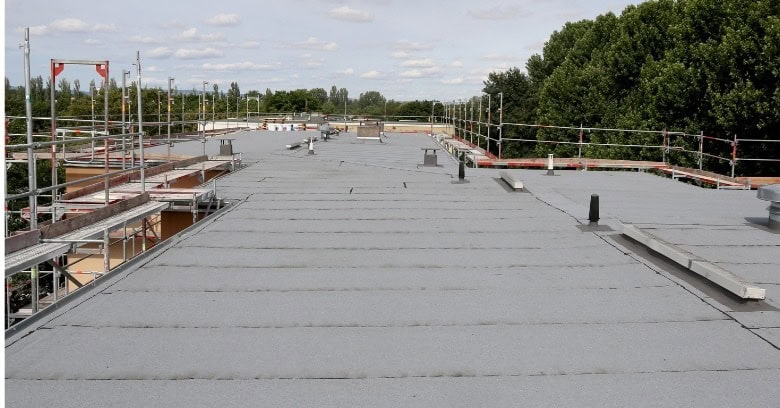
That’s a reasonable thing to want. A low-slope roof that’s built right should handle Denver’s snow, hail and sun for a long time. One that’s built wrong starts leaking at the seams and edges within a few seasons.
APC Roofing is GAF Certified, licensed and insured, and your inspection and estimate are free. Call 720-902-6940 and we’ll look at your roof, the deck under it and how it drains before recommending anything.
Why low-slope roofs need a different system
Shingles need a slope of at least 2 inches of rise per foot to shed water. On anything flatter, water and wind push under the overlaps. So a flat or low-slope roof gets a membrane instead: a continuous waterproof sheet with sealed seams.
On most homes, that means a section of the roof, not all of it. Porches, attached garages, sunrooms, dormers and rear additions are the usual spots. Some modern homes have mostly flat roofs, and those follow the same rules on a larger scale.
Comparing low-slope roofing systems
There’s no single best membrane. The right one depends on your deck, how the roof drains, what sits on it and how it meets the rest of the house.
TPO
TPO is a single-ply membrane, usually white, with seams that are heat-welded into one piece. The white surface reflects a lot of Denver’s strong sun, which keeps the roof cooler and can help the room below. Welded seams are strong when they’re done well, and a careful installer probes each one for gaps. See more on TPO roofing in Denver.
EPDM
EPDM is a black rubber membrane that stays flexible in the cold, which suits Denver winters. Its seams are glued or taped rather than welded, so seam prep is everything. A seam that was installed dirty or damp will start lifting at the edge. Read more about EPDM roofing in Denver.
Modified bitumen
Modified bitumen is an asphalt-based roll roofing, often with a granule surface. It’s tough and common on older flat roofs and small additions, and it handles foot traffic well.
What goes into a low-slope roof installation in Denver
A new membrane is only as good as what’s under it and around it. A proper install covers each of these.
Tear-off and deck check. The old roofing comes off, and soft or rotted decking gets replaced. Wet insulation comes out too, since it stops insulating and keeps rotting the wood under a sealed roof.
Drainage. A good flat roof isn’t truly flat. It needs enough pitch, often about a quarter inch per foot, to move water to a drain, scupper or gutter. If water sits for days after a storm now, a new membrane alone won’t fix it. Tapered insulation or a new outlet might.
Insulation board. Rigid insulation goes down under most membranes. It gives the roof a smooth, firm base and helps the room below stay comfortable.
Edges and the tie-in. Metal edging clamps the membrane down so wind can’t peel it back. Where the flat roof meets a shingled slope, the membrane runs up under the shingles so water from above lands on top of it. Get that order backward and water gets driven behind it.
Penetrations. Plumbing vents, flues and anything else that comes through the roof get fitted flashing, not just a blob of sealant.
Membrane work needs dry weather, so the job gets scheduled around the forecast.
When a repair is enough
Not every flat roof needs to be replaced. If the leak comes from one puncture, one lifted seam or one cracked boot, and the rest of the membrane is still flexible and dry underneath, a matching patch can fix it for a lot less. Our flat roof repair in Denver page covers that side.
Replacement makes more sense when seams are failing in many places, the membrane has gone hard and cracked, or water has soaked the insulation. We’ll check for moisture and show you what we find.
Hail and insurance
Hail hits a flat roof straight on, and older membranes can crack or puncture. If you file a claim, you file it with your insurer and pay your own deductible. We document the damage, give you a written estimate and work with your adjuster.
How it works
- Book your free inspection. Call 720-902-6940 or request a free estimate online.
- Get a clear, honest assessment and estimate. We check the drains, seams, edges, the tie-in and the deck, and recommend a system with the reasons behind it. Financing is available through Aqua Finance, Fortifi, Hearth and Home Run Finance.
- Your roof gets done and the site gets cleaned up. You’ll know the schedule before work starts.
Flat roofing questions from Hilltop homeowners
Which lasts longer in Denver, TPO or EPDM?
Both hold up well when installed correctly. The bigger factor is the install: seams, edges and drainage. We’ll recommend one based on your roof and explain why.
Can a new membrane go over my old flat roof?
Sometimes, if there’s only one existing layer and the insulation underneath is dry. If there’s trapped moisture or more than one layer, a tear-off is the better way to go.
My flat roof holds water after storms. Is that a problem?
Water that’s gone within a day or two is usually fine. Water that sits longer wears the membrane faster and points to a sagging deck or a blocked drain.
Do you install flat roofs on homes or only businesses?
Both. Most of the flat roofs we see on homes are over porches, garages and additions.
Flat roofing in Hilltop, Denver starts with an inspection
Call 720-902-6940 or book your free inspection online. You can also see our other Hilltop roofing services.
The goal is a flat roof you can forget about: dry ceilings, water that drains and no surprise bill.