Planning Shingle Roof Repair Around Deltona Florida?
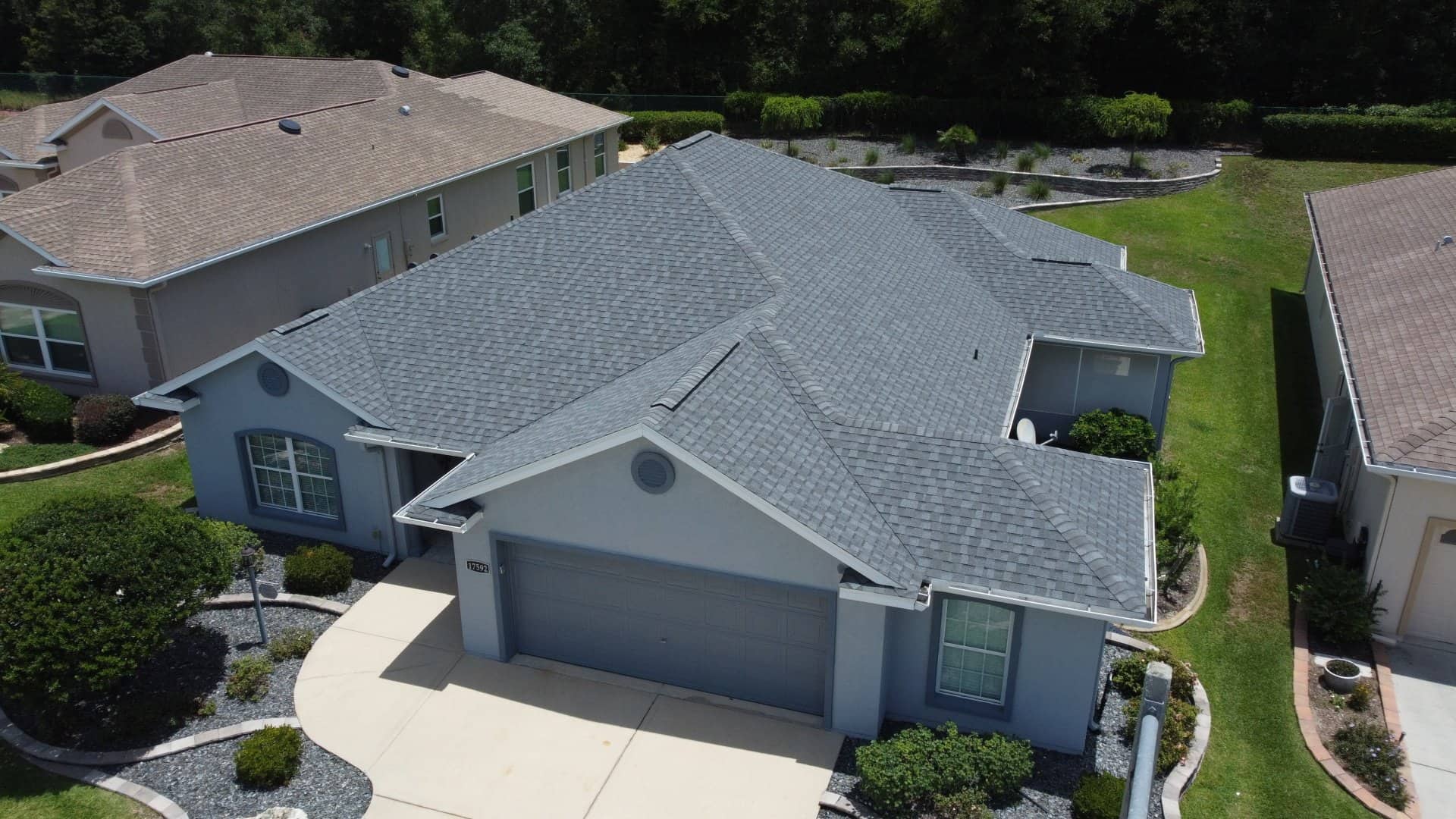
APC Roofing puts down granule-surfaced coverings from the deck up for homes of every age and size.
Reach us at 386-259-8425 and you will hear in plain terms what is needed.
Components and Construction – Raw Ingredients
Each shingle is built on a fiberglass mat for strength, while asphalt soaked through the sheet turns rain away, and granules rolled into the surface shade everything beneath from ultraviolet rays.
Seemingly similar products often follow very different recipes, and more heft commonly lets a covering weather more summers. A swatch offers the look and nothing more, while published data covers the wind and impact classes.
Traditional and Textured – Setting Them Apart
A three-tab shingle is one thin layer with two slots cut into its lower half, and a slope covered this way shows even, repeating rows. Architectural shingles are built as a base with a second, trimmed ply fused on top, and the staggered outline throws shadows that suggest depth.
Thicker double-layer shingles weigh more across a slope, and a higher wind rating typically comes along. A dimensional shingle is nailed through its double-thickness strip, and a wrapper diagram shows the exact position.
A Place for the Plain Option – Narrower Choices
Three-tab commonly goes on a shed, a carport or a covered porch, and new work can blend with existing courses of that kind. Many manufacturers have narrowed their ranges of that style, and some shades are no longer produced.
Uneven plywood is less noticeable under a dimensional product, whereas a single-ply strip telegraphs each bump. Either style goes over the same underlayment and flashings, while the shingle alone sets the two apart.
The Granule Surface – Early and Late Stages
A recently installed covering lets go of leftover grains for a while, and that shedding is expected. When an older covering sends piles of grit down the spouts, its mineral shield is wearing thin, and the naked asphalt goes on to crack.
Planes aimed south or west receive the harshest sun, so the damage is usually heaviest on them.
The Thermal Adhesive – Wind Resistance
A shingle comes from the plant with a glue stripe already applied, and on a hot day it softens and grips the row laid over it. An adhered course resists gusts that try to pry up its lower edge, and nailing still carries the load year after year.
During cold stretches at the colder end of our territory, sealing is delayed, and wind can peel back the tabs before then. The manufacturer’s sheet calls for hand-applied cement, and a drawing on each wrapper gives the amount and location.
How Courses Are Attached – Frequent Errors
Nails are driven within a slim band set out by the manufacturer, and from there the shank reaches the top of the underlying row too. A standard shingle gets four fasteners, and six go in where the slope is steep or the wind is strong.
A nail set too high misses the row underneath, an overdriven head cuts into the mat, and a crooked shank makes a bump that wears through the shingle above it. A listed wind class is valid only for the pattern the manufacturer specifies, while a bad compressor setting repeats itself on every shot.
Sheathing Choices: Soft Spots
Plywood or OSB panels form the deck under a shingle roof, since shanks need continuous solid material to stay put. Many older homes still have spaced boards left from a wood-shake era, and full sheathing is added on top before any shingles.
During a tear-off, weak or water-damaged pieces are swapped for sound ones, because nails in weakened material back out over time. A small gap is left between neighboring panels, because swelling in damp seasons buckles anything laid too tight.
The Middle Layer – What It Does
The deck gets a water-resistant membrane before shingles are laid, and its seams are lapped so rain crosses them without entering. Asphalt felt is less common now that synthetic sheet has taken hold, because the newer product weighs less, tears less easily and lies flatter.
Rain forced past a loose shingle is shed by the membrane below, yet the maker limits how long it may be left uncovered.
Peel-and-Stick Protection – How Far Up
Across the colder end of our territory, snow over a warm attic turns to water, and a frozen band builds along the chilly lower edge. Trapped water behind the blockage creeps higher beneath the courses, and nails through ordinary underlayment give it an easy path.
A self-sealing ice barrier goes down along the bottom of each slope where winters freeze, and it reaches up the slope past the inside line of the exterior wall. In all of our territory, installers also lay it in valleys and around penetrations, since runoff lingers at every such detail.
Finishing the Borders: Order of Layers
Prefinished drip edge follows each eave and each rake, and water sheds into the gutter instead of onto wood. The underlayment covers the lower flashing, but on the gable sides the order reverses.
Codes across much of the country list edge metal as required on every perimeter of the covering, since rain creeps back onto the decking where nothing guards it.
Base Row Details – No Substitutes
Under the first visible course lies a starter strip, so tacky asphalt ends up at the very brink of the deck. A field piece set backward carries its adhesive uphill, out of reach, and the tabs at the low border are held only by nails.
The sloped gable edges frequently get starter strips too, because gusts pry at a roof’s perimeter.
Where Slopes Meet: Construction Methods
In an open design, a formed metal liner carries water down the valley, while in the closed-cut type one side crosses over and the opposite side is trimmed neatly. Woven work alternates rows from the two planes and suits three-tab, though dimensional shingles rarely take to it because of their bulk.
Fasteners stay out of the center of the channel, and a sealed membrane is placed below as backup. Debris packed into a valley stays damp long after rain ends, and heavy rain can then spill sideways under the edges.
Tie-Ins to the Structure – Frequent Leak Points
Every course that meets a wall gets its own folded step flashing, and a counterflashing or trim board covers the raised leg. At the low corner by the house, a kickout piece bends outward, so water is thrown clear into the gutter.
Chimney flashing combines a front apron, side steps and counterflashing cut into the brick joints, and a large stack gets a saddle that sheds water both ways.
Roof Penetrations: Aging Components
A pipe boot is built from a flat base plate and a stretchy neoprene collar, and sun eventually opens cracks where the seal wraps the stack. Shingles uphill cover the top of the flange, so the lower edge sheds onto the shingles beneath.
A cracked collar is common on a covering that is otherwise sound, and new boots are standard whenever the shingles are replaced.
Along the Peak: Homemade Shortcuts
Each hip and the ridge get a row of cap shingles across the joint, and on a laminated covering the manufacturer supplies a thicker matching version. Improvised pieces from cut tabs are lighter and thinner, and on frigid days at the colder end of our territory the crease may crack.
The caps often conceal a vent along the peak, so the nails must be long enough to pass through it and bite the sheathing.
The Space Under the Deck – Mixed Systems
Intake openings in the soffits let cool air in near the bottom, while an exhaust at the peak lets it escape. Loose-fill insulation piled into the corners can smother the flow, and baffles stapled between rafters maintain a clear lane.
A poorly vented attic turns into an oven under the deck, and moisture from the living areas lingers up there. At the colder end of our territory, frost gathers on exposed nail points on a freezing night, and the water runs down as the day goes on. Mixing a ridge vent with gable louvers or a powered fan can short-circuit the flow, which leaves the eaves without movement.
One Product Everywhere – Sunlight and Storms
The towns we cover run from hard-freeze country to places that barely see frost, so the forces working on a shingle change from city to city. At the coastal end of our territory, big storms off the ocean send steady wind across a house, and product sheets set out an enhanced nailing method. Constant heat pushes the lighter oils out of the asphalt, while muggy weather encourages dark streaks.
At the colder end of our territory, water that seeps into a crack freezes and widens it, while deep snow loads the deck for weeks.
Pelting From Above: What a Strike Does
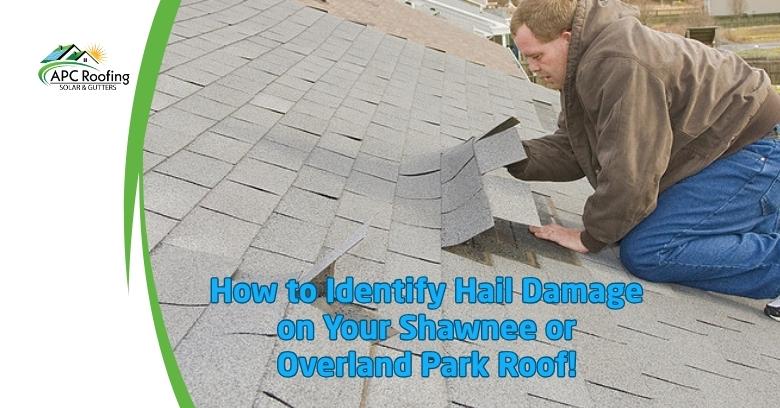
At the colder end of our territory, hail arrives most years with the thunderstorms, and manufacturers offer lines built to resist it. A hailstone knocks granules loose where it lands, while a sharp jolt can split the mat itself.
Manufacturers earn an impact rating by dropping steel balls onto test panels, and the better lines survive rough treatment more often. Certain makers blend a rubbery polymer into the coating, and the extra give absorbs part of each blow.
Blowing Weather: Folded Tabs
The eaves, rakes and corners take the heaviest upward pull, and a shingle no longer stuck down lifts again and again. Once a tab is doubled back, a crease forms where it bent, and the break in the mat will not heal. A shingle in that condition gets replaced, while an unfolded one can be sealed again with roofing cement.
Where a tab has blown away, the underlayment beneath lies open to the sun, and ultraviolet light breaks that layer down quickly.
Roof Growth: Shade and Damp
The inky bands seen on so many houses come from algae, and the microbes draw on limestone in the coating. At the humid end of our territory, faces under trees and out of the sun collect it soonest, though the staining does little harm on its own.
Moss poses a real threat, as it traps moisture against the courses, and as it creeps it breaks the tabs’ seal. A jet under high pressure scours the protective stone off, so a mild product rinsed on softly is the better choice. Some lines carry copper in the top layer to resist algae, and zinc bands near the top release traces that discourage regrowth.
What the Color Changes – Blends and Batches
A dark covering gains more warmth from sunshine, and pale shingles stay cooler. Some product lines use specially coated granules that turn back more radiation, and a reflectance rating appears on the data sheet.
Stock can vary from one production lot to another, so maker directions say to draw from more than one bundle at a time. A multi-tone blend disguises minor variations well, while a solid, even finish reveals them more readily.
Getting Up There – Frost and Footing
Strong sunshine warms the bitumen until it goes pliable, and each tread can leave a mark. At the colder end of our territory, frozen tabs split beneath a person’s weight, while dew that freezes overnight leaves a slippery glaze.
A homeowner is far safer staying on the ground, and a good pair of field glasses picks up loose or missing pieces.
A Second Layer: Pitfalls
Rules across much of the country accept an overlay over an original roof, though not where two are already down or the sheathing is soft. A layover keeps the worn shingles sitting on top, and damaged sheets end up sealed beneath the added material.
Every ripple below telegraphs to the surface, while aging flashing frequently stays put. A second covering adds weight to rafters that were sized for one, and short nails end up anchored only in the old shingles.
Clues to Notice – When to Call
- Mineral grains build up in the gutter troughs, and the drifts get deeper each season.
- Some tabs flap loose or are gone altogether, which means the seal has let go.
- Bottom corners curl upward, as years of sun shrink the top.
- Cracks run across the tabs, and the mat underneath takes on water.
- Some spots look dull and flat, where the stone coating has worn off.
- A pipe boot has gaps between its collar and the pipe, which lets rain into the attic.
- Counterflashing at a chimney has worked out of its joint, so a downpour can run in underneath.
- A brown ring shows on a ceiling, even though the leak may start far from the spot.
How APC Roofing Works on Shingle Roof Repair in Deltona Florida: Our Method
Every slope is walked first during an inspection, with a close look at the valleys, vents, flashings and edges. The attic is checked from inside for stains and light coming through, and the underside of the deck shows where water has been.
Anything wrong is photographed, with measurements taken of the extent. The findings are written up in plain language, and each recommendation carries its reasons. Small faults are labeled as small, while a spent covering is named for what it is. What happens next is the owner’s decision, including the option of doing nothing for now.
Shingle Roof Repair Around Deltona Florida: Findings in Plain Words
Reach us at 386-259-8425 and say what you have noticed.
Patching Versus a New Covering – Reading the Signs
A split collar, a gap at a wall or some torn tabs makes a routine repair, and the rest of the shingles stay where they are. Fresh shingles stand out against faded neighbors at first, while the manufacturer may have retired that design.
A sun-dried tab breaks as soon as it is pried back, so a small job can spread to the pieces next to it. If hard, curled courses run from eave to ridge, a new covering is the sensible answer.
Time on the House: Extending the Span
Flat three-tab designs usually run fifteen to twenty years, while architectural lines can go well beyond that. Attic airflow, sun exposure and the quality of the nailing move that figure, and heavy weather can end the span ahead of schedule.
Checking the flashings and pipe seals now and then is sensible upkeep, because small faults caught in time never reach the deck.
If you are thinking about Shingle Roof Repair in Deltona Florida, call APC Roofing at 386-259-8425. Someone will walk every slope and look over the details, and the written findings let you decide.
« All Services in Deltona Florida