A new tile roof is one of the biggest projects you’ll take on for your house. Maybe your old tile roof has leaked one too many times, or you’re replacing shingles and want something heavier and longer-lasting for the coast. Before you sign anything for a tile roof installation in Daytona Beach, you want to know what you’re actually paying for and how the job will go.
That’s a reasonable thing to want. Most of a tile roof’s quality is hidden under the tiles, so two bids can look alike on paper and produce very different roofs. You deserve to understand every layer before the work starts.
APC Roofing is GAF Certified, licensed in Florida (CCC1337030) and insured, and we’ve been installing roofs since 2017. Your estimate is free. Call 386-259-8425 to get started.
Before installation: the decisions that come first
Concrete or clay. Concrete tile offers a wide range of colors and profiles and usually costs less. Clay holds its color in the sun and resists salt air. Our page on clay tile roofing in Daytona Beach covers clay in more depth.
Profile and color. Flat, low-profile or barrel tile changes how the house looks from the street. If you’re in a neighborhood with an HOA, check its rules before you choose.
Structure. Tile is heavy. If your home has tile now, the framing was built to carry it. If you’re switching from shingles or metal, the roof structure has to be checked to confirm it can take the load, and some homes need an engineer’s review.
Permit. Re-roofing work generally needs a permit and inspections through the local building department, and those steps are part of planning the schedule.
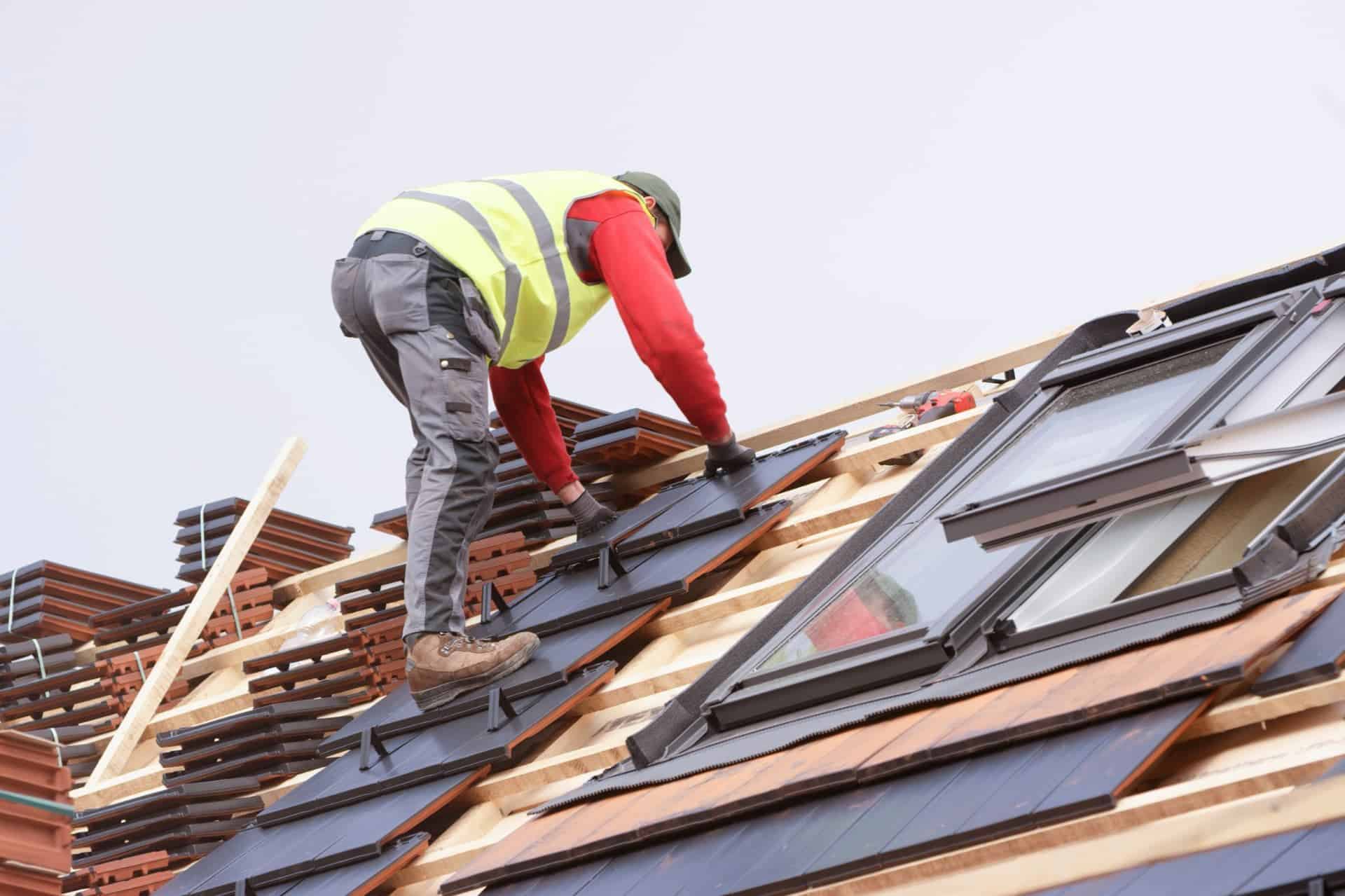
How a tile roof installation in Daytona Beach goes
Tear-off
The old roof comes off down to the deck. If your existing tile is in good shape and you’re keeping the same tile, some of it may be saved for reuse. Otherwise it’s hauled away.
Deck repair
With the deck exposed, soft, rotted or damaged sections are cut out and replaced, and the deck is fastened down properly. A tile roof is only as solid as the wood it sits on, so this step can’t be rushed.
Underlayment
This is the part that keeps your house dry. On a tile roof, the underlayment does more of the waterproofing work than it does under shingles, because water can get past the tiles in heavy, wind-driven rain. Florida tile roofs typically use a heavier underlayment system than a shingle roof, sealed well at valleys, walls and penetrations.
Flashing
New metal goes in at walls, chimneys, valleys, roof edges and around pipes. On the coast, the type of metal matters, because salt air corrodes some flashings much faster than others.
Tile attachment
Each tile is fastened or adhered to the deck following the manufacturer’s instructions and the wind requirements for the house. Depending on the tile and the design, that can mean screws, nails, roof tile adhesive or a combination. Attachment is what keeps tiles on the roof in a hurricane, so it’s worth asking about.
Eaves, hips and ridges
At the eaves, closures fill the open ends of curved tile to keep out birds, pests and wind-driven rain. Hip and ridge tiles go on last, secured so they can handle the strongest wind on the roof.
Final inspection and cleanup
The building department inspects the work, and the crew clears debris and broken tile from the property.
How long does tile roof installation take?
Longer than a shingle roof. Tile is heavy, it’s set piece by piece, and the underlayment and flashing take careful work. Weather plays a part too, since summer storms can interrupt work on any given afternoon. You’ll get a realistic timeline with your estimate, based on your roof’s size and shape.
What to ask any tile roofer
- What underlayment system are you using?
- How will the tiles be attached?
- What metal are you using for flashing this close to the ocean?
- Who pulls the permit, and who schedules the inspections?
- How will you protect my landscaping and driveway during the job?
A good contractor will answer each of these plainly. If you’re still deciding whether tile is right for your home, our main Daytona Beach tile roofing page compares repair, re-lay and replacement, and our roof replacement in Daytona Beach page covers other materials.
How it works
- Book your free inspection. Call 386-259-8425 or request a free estimate online.
- Get a clear, honest assessment and estimate. We check the existing roof and structure and give you a written estimate that lists the underlayment, flashing and attachment method.
- Get your roof installed and the site cleaned up. The crew installs the new tile roof and cleans up before leaving.
Financing is available through Aqua Finance, Fortifi, Hearth and Home Run Finance if you’d like to spread out the cost.
Waiting on a roof that’s already leaking tends to cost more in the end. Water that gets past failing underlayment soaks the deck, and soft decking adds to the job when you finally replace.
Tile roof installation questions from Daytona Beach homeowners
Can I reuse my existing tiles?
Sometimes. If the tiles are sound and still a style that can be matched for broken pieces, they can be removed, stacked and reinstalled over new underlayment.
Can I switch from shingles to tile?
Often, but the framing has to be checked first, because tile is much heavier than shingles.
How does a tile roof handle hurricanes?
When it’s attached to the manufacturer’s and code requirements, a tile roof holds up well in high wind. Flying debris can still crack individual tiles.
Will I need to be home during installation?
Not the whole time. We’ll talk through access, parking and anything we need from you before the job starts.
A new tile roof built the right way
Call 386-259-8425 or start your free estimate online. You’ll know what goes into every layer, the roof will be built for the coast, and you can look forward to a home that stays dry and looks great for years. Trust matters.