The shingles on your house have gone flat and faded, a few curled edges are showing near the ridge, and the last windstorm left some tabs in the yard. You’re starting to price out a new roof, and you keep hearing about architectural shingle roofing in Altamonte Springs. Is it worth it, and how do you know the job will be done right?
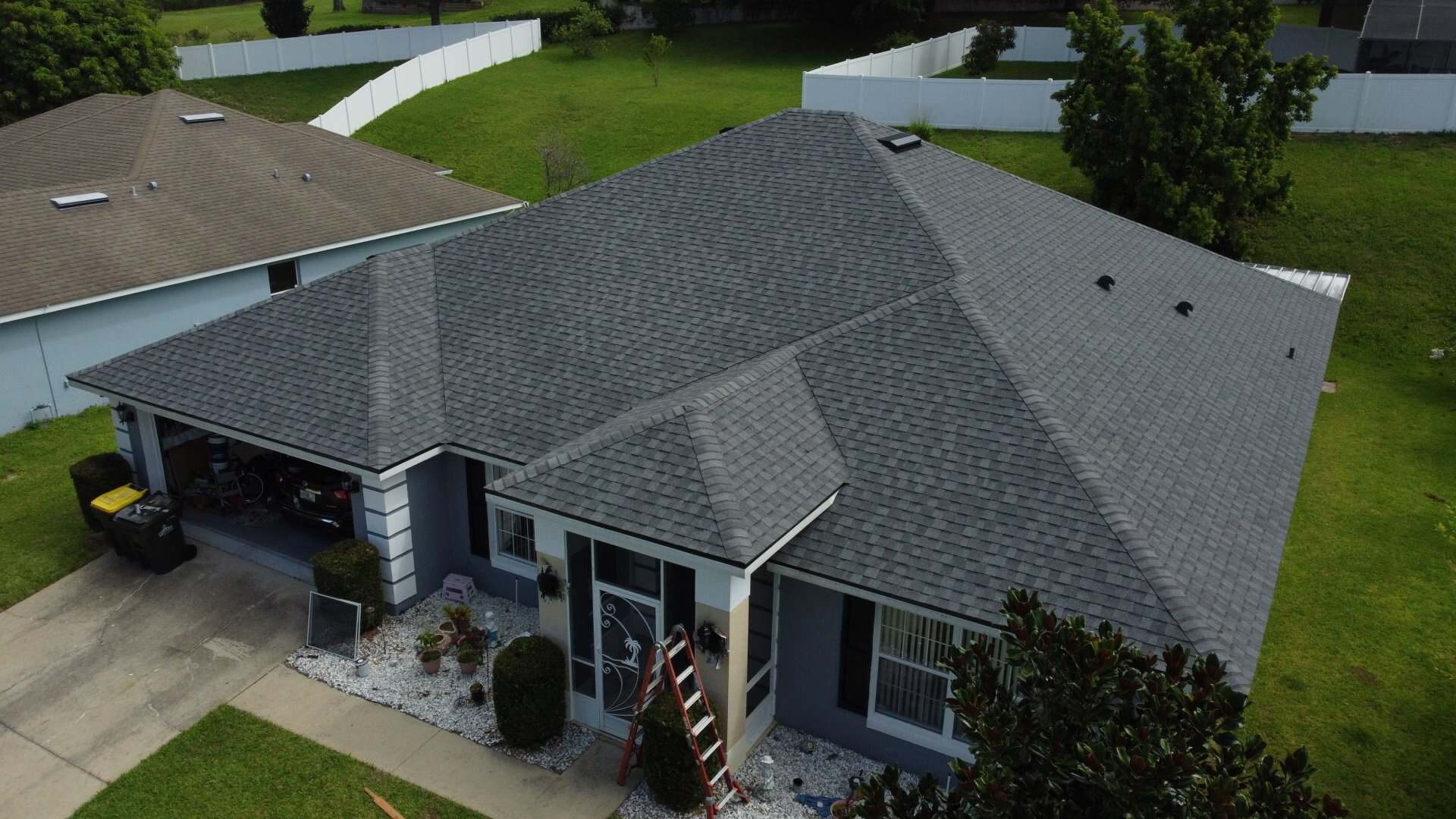
Those are fair questions. A shingle roof looks simple from the street, but how well it holds up in Florida wind comes down to the product and a lot of small installation details you’ll never see once it’s on.
APC Roofing is a GAF Certified contractor, licensed in Florida (CCC1337030) and insured, and has been replacing Central Florida roofs since 2017. Your inspection and estimate are free.
What makes a shingle “architectural”
Architectural shingles, also called laminated or dimensional shingles, are made from two or more layers of asphalt-coated mat bonded together. The extra layer makes them thicker and heavier than the old flat 3-tab shingles, and it gives the roof a textured, shadowed look that reads more like wood shake or slate from the street.
Traditional 3-tab shingles are a single flat layer cut into three tabs. They still exist, but architectural shingles have largely replaced them on Florida homes. If you’re comparing the two, our 3-tab shingle roofing page explains where the simpler option still fits.
Why architectural shingle roofing in Altamonte Springs makes sense
Wind. Central Florida roofs face strong gusts from summer thunderstorms and, some years, hours of tropical-storm or hurricane wind. Architectural shingles generally carry higher wind ratings than 3-tab, and their weight helps them lie flat. On the back of each shingle is a strip of sealant that the sun softens after installation, bonding each course to the one below. Florida’s building code also sets how shingles must be nailed in high-wind areas.
Sun and heat. Thicker shingles have more asphalt and more granule coverage to take the daily UV beating. Granules are what shield the asphalt from the sun, so when you start finding them in your gutters, the shingles are aging.
Humidity and algae. Many architectural shingles are made with algae-resistant granules, which help slow the dark streaking that’s so common on roofs around Seminole County.
What a proper installation includes
A shingle roof is a system. The shingles get the attention, but these details decide whether it keeps water out:
- Deck repair. After tear-off, soft or rotted plywood gets replaced so nails have solid wood to hold.
- Underlayment. A synthetic underlayment goes over the whole deck as a second line of defense under the shingles.
- Drip edge and starter strip. Metal drip edge protects the fascia, and a sealed starter course along the eaves and rakes keeps wind from catching the first row.
- Valleys and walls. Valleys get a leak barrier, and new flashing goes in where the roof meets walls and chimneys.
- Pipe boots. New boots go around every plumbing pipe, since the old ones are usually cracked from the sun.
- Nailing. Every shingle is nailed in the manufacturer’s nail zone with the correct number of nails for high-wind installation.
This is where a GAF Certified installer earns their keep: following the manufacturer’s installation requirements for the shingles on your roof.
Choosing a color
Color is more than looks in Florida. Lighter shingles reflect more of the sun and run cooler on the surface, while dark shingles absorb more heat. Many homeowners pick a mid-tone that hides dirt and streaks well. If you live in a community with an HOA, check its approved color list before you choose. It also helps to look at samples against your house in daylight, since colors shift outdoors.
Repair or replace your shingle roof?
Not every worn roof needs replacing. A few missing or wind-lifted shingles, a failed pipe boot or a bad section of flashing can usually be repaired.
Replacement makes more sense when shingles across the roof are brittle and crack when lifted, when bald patches show where granules are gone, or when leaks keep showing up in new places. Florida insurers also pay close attention to roof age and condition. An inspection with photos shows you which side of the line you’re on.
If you go ahead with a new roof, see shingle roof installation in Altamonte Springs for how the install day goes.
How it works with APC Roofing
- Book your free inspection. Call 407-270-1129 or request a free estimate online.
- Get a clear, honest assessment and estimate. You’ll see photos of your roof, hear whether repair or replacement makes sense and get a written estimate. Financing is available through Aqua Finance, Fortifi, Hearth and Home Run Finance.
- Your new roof goes on and the site gets cleaned up. Many shingle replacements are finished in a single day, and the crew cleans up before leaving.
Architectural shingle questions from Altamonte Springs homeowners
Are architectural shingles better than 3-tab shingles?
For most Florida homes, yes. They’re thicker, generally carry higher wind ratings and have a more dimensional look.
Can new shingles go over my old roof?
It’s usually better to tear off the old roof. That lets the deck be inspected and repaired, and Florida code limits when a new layer can go over an existing one.
How do I know if my shingles have storm damage?
Look for missing or creased shingles, pieces in the yard and granules in the gutters. Wind damage often isn’t visible from the ground, so an inspection is the surest way to know.
Do you install GAF shingles?
Yes. APC Roofing is GAF Certified and installs GAF architectural shingles.
A roof that holds up when the wind picks up
An old shingle roof doesn’t usually fail all at once. It loses granules, the sealant lets go, and one storm finally lifts enough tabs to let water in.
Call 407-270-1129 to book your free inspection. You’ll know exactly what your roof needs, and if it’s time, you’ll have a good-looking roof that’s ready for the next hurricane season.