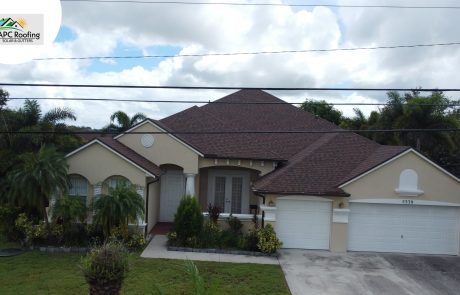
Exploring Architectural Shingle Roofing in Altamonte Springs Florida?
APC Roofing lays new courses of strip and laminated products for homes of every age and size.
Call us at 407-270-1129 and the findings are explained without jargon.
How the Pieces Are Made – Factory Details
Each shingle takes its strength from a fiberglass mat, while asphalt soaked through the sheet turns rain away, and a layer of granules on top screens out ultraviolet light.
Seemingly similar products often follow very different recipes, and a heavier build generally adds years on a house. A display board reveals the shade and little else, but the manufacturer's printed sheet gives the test results.
Traditional and Textured – Weight and Wind
The three-tab type is a single sheet notched twice along the bottom, and a slope covered this way shows even, repeating rows. An architectural shingle has an irregular top ply fused to a whole base, so the extra depth gives relief.
A laminated bundle holds considerably more asphalt than a strip bundle, and a higher wind rating typically comes along. Fasteners on an architectural shingle must catch the overlap of both plies, and a printed guide shows the right position.
A Place for the Plain Option: A Narrow Niche
Three-tab commonly goes on a shed, a carport or a covered porch, and new work can blend with existing courses of that kind. Several makers now offer that style in fewer colors than before, so an exact replacement can be hard to find.
Textured shingles mask slight waves in the boards beneath, whereas straight single-ply lines reveal each flaw. Either profile sits on the same underlayment and flashings, and the shingle itself is the only part that changes.
Aging of the Top Coat: Clues at Ground Level
A freshly laid covering releases surplus grains during its opening months, which is harmless. Heavy grit at the downspouts of an older covering means the protective coat is thinning, and asphalt left bare hardens and fractures in the heat.
Southern and western slopes absorb the hottest light, and bald spots usually show up there ahead of the rest.
The Thermal Adhesive: Resisting Uplift
A narrow glue stripe runs across every shingle, and a stretch of warm, sunny days softens it until the overlying row sticks. Adhesion keeps air from getting under the exposed edge of each course, while nails hold every shingle for its whole life on the house.
At the colder end of our territory, a covering installed in freezing temperatures can wait months to bond, so tabs stay at risk from wind for a while. Dabs of asphalt cement applied by the installer are what makers specify in that case, and each bundle label marks the right locations.
Attachment Basics: Tools and Technique
Every nail belongs inside a narrow stripe the manufacturer marks, and from there the shank reaches the top of the underlying row too. A standard shingle gets four fasteners, and high-wind or steep work moves the number to six.
A high nail catches only a single layer, an overdriven head slices the fiberglass, and a tilted shank props up the shingle resting on it. Every wind rating on a wrapper presumes the pattern was met, and a poorly adjusted pneumatic tool repeats its error across an entire plane.
Sheathing Choices: Soft Spots
A deck of plywood or OSB lies beneath every shingle, since shanks need continuous solid material to stay put. Some older homes have spaced planks installed originally for cedar shakes, so sheathing is laid across them before shingles.
Rotted and spongy spots are replaced while the framing is open during a tear-off, since a nail in punky fibers pulls loose. A small gap is left between neighboring panels, because wood swells in humid weather and buckles without room to move.
Old Paper, New Fabric: Known Limits
A water-shedding membrane covers the deck ahead of the shingles, and its seams are lapped so rain crosses them without entering. Most roofers now use synthetic sheet instead of felt, because the woven fabric resists tearing and stays flat when damp.
A membrane catches wind-driven rain that slips under the shingles, though sunlight breaks it down if it stays exposed too long.
Membrane at the Eaves – How Far Up
Across the colder end of our territory, snow over a warm attic turns to water, and meltwater goes solid again where the roof extends past the wall. Water pooling behind that buildup can back up under the shingles, and nails through ordinary underlayment give it an easy path.
A rubberized self-adhering membrane is laid along the eave where ice dams form, and it extends upslope beyond the point directly above the heated interior. Everywhere in our territory, it is also a regular choice for valleys and around chimneys, since flow concentrates in such places.
Finishing the Borders: Sequence Matters
Every eave and rake gets a formed strip of metal, so rain falls free beyond the woodwork. Down low, the flashing is installed before the underlayment, while at the gable side the order flips.
Codes across much of the country list edge metal as required on every perimeter of the covering, because runoff can cling and curl back toward the wood.
The Launch Point of Each Plane: Installation Order
A starter strip goes down beneath the first visible course, so the sealant is positioned right at the lip. A field piece set backward carries its adhesive uphill, out of reach, so the lowest run relies entirely on its nails.
Most instruction sheets extend starter up both rakes, since uplift is not limited to the eaves.
Junctions of Adjoining Planes: Choosing a Style
A valley can be built open, with a metal channel left exposed down its center, and the closed-cut approach laps one side across and trims the other straight. Weaving rows from both planes together suits single-layer tab products, while makers generally advise against it for architectural shingles.
The middle of the trough is kept free of fasteners, and an adhered membrane lies underneath the whole length. Debris packed into a valley stays damp long after rain ends, which can push rain beneath the trimmed shingles.
Vertical Surfaces: Transitions Between Materials
An individual step flashing, one to a course, climbs beside a wall, and the exterior finish hangs down across the standing half. A kickout diverter belongs where the lowest course runs into the face of the house, so water is thrown clear into the gutter.
Masonry chimneys take a base apron, side step flashing and counterflashing grooved into the joints, while a wide one gets a small peaked cricket behind it.
Holes for Plumbing: Aging Components
Standard boots join a flat metal or plastic plate to a rubber sleeve, and sun eventually opens cracks where the seal wraps the stack. Courses above lap over the flange's top edge, and water running down the slope passes over the exposed lower part.
A cracked collar is common on a covering that is otherwise sound, and new boots are standard whenever the shingles are replaced.
Where Slopes Crest: Homemade Shortcuts
Each hip and the ridge get a row of cap shingles across the joint, and laminated work calls for the maker's coordinated accessory. Improvised pieces from cut tabs are lighter and thinner, and at the colder end of our territory a freeze can open splits along the bend.
A continuous ridge vent frequently lies under the cap row, so longer fasteners go through it to anchor in the decking.
Attic Airflow: Balance
Outside air should come in through vents under the eaves, while a slot along the ridge lets it rise and exit. Insulation blown tight against the outer walls can choke the flow, and foam or cardboard baffles hold a channel clear.
A poorly vented attic turns into an oven under the deck, and it traps humidity that drifts up from the living space. At the colder end of our territory, frost can form on the nail tips poking through overhead, and the thaw sends droplets onto the ceiling. Combining different exhaust types can make one vent pull air in through another, and the soffits stop doing their job.
Regional Demands: Wind, Sun and Winter
The towns we cover run from hard-freeze country to places that barely see frost, and asphalt meets a different set of stresses in each. At the coastal end of our territory, hurricanes bring hours of sustained wind, so a high-wind pattern with more nails is specified. Strong sun, season after season, makes the coating brittle, and moist air lets algae take hold.
At the colder end of our territory, ice forming in hairline cracks forces them apart, and packed snow sits on the slopes for days.
Frozen Pellets: Surface and Below
At the colder end of our territory, hail falls in many storm seasons, and several makers build shingles meant to take the hits. A strike scatters the grit from a small round area, and a hard enough blow can crack the mat underneath.
The impact class on a bundle comes from a standard drop test with steel balls, and a tougher product shows less damage afterward. Modified asphalt with added rubber is used by several makers, so the material bends where an ordinary mix would crack.
Storm Winds – The Damage Done
Uplift concentrates at the outer margins and the corners, and a shingle whose seal has let go starts to flap. A tab bent far back keeps a mark along the fold, and the damage leaves it permanently weakened. A shingle hurt like that is replaced with a new one, while a loose but unharmed one takes a few dabs of cement.
A missing tab leaves bare underlayment facing the sky, and ultraviolet rays wear it down fast.
Living Things Up Top – Cleaning Without Harm
Algae is what paints the long black marks on many slopes, which survives by feeding on limestone filler. Growth spreads quickest on shady faces at the humid end of our territory, though the color change is mainly cosmetic.
Moss is a different matter, since it holds water against the surface, and as clumps thicken they wedge the tabs upward. A jet under high pressure scours the protective stone off, so a gentle rinse with a cleaner made for roofing is the safer route. Copper-bearing mineral is blended into algae-resistant lines, and a zinc strip near the crest slows the streaks' return.
What the Color Changes: Looks and Lots
A dark covering gains more warmth from sunshine, while pale ones stay cooler. Certain companies make granules designed to scatter infrared rays, and a tested reflectance figure goes with them.
A pallet from one batch can look a touch off from another, so shingles from several bundles are mixed as the courses go on. Blends that combine many colors mask small mismatches, while a uniform finish lets them stand out.
Standing on a Slope – Weighing the Risk
On a hot afternoon the coating turns soft, and a twisting heel tears the mineral layer. At the colder end of our territory, a course stiff with cold can break under weight, and a glaze of ice leaves nothing to grip.
Keeping both feet in the yard is safer for an owner, and a look from across the street tells a great deal.
Covering What Is There: Pitfalls
Local regulations commonly accept an overlay over an old roof, but not where two are already stacked or the wood is damp and decayed. The current shingles stay on top of the decking throughout the job, so any weakened patch gets buried under the added courses.
Irregularities beneath carry up into the finished roof, and step and valley metal commonly remains in service. Stacking one covering on another adds mass that the framing must bear, and every nail must travel through the old material before it grips.
Signs on the House – Worth a Closer Look
- Grit collects at the foot of a downspout, and the heaps come back after each cleaning.
- A few tabs sit raised above their neighbors, and wind has pried the adhesive apart.
- Bottom corners curl upward, because the material has lost its flexibility.
- Splits open across the middle of a tab, and the layer below begins to soak up water.
- Some spots look dull and flat, where the stone coating has worn off.
- A rubber collar around a vent pipe has split, so water works its way indoors.
- The metal where a slope meets siding sits bent or pulled back, so a downpour can run in underneath.
- A water mark appears near a light fixture or a closet, but the place moisture enters may lie higher up.
APC Roofing and Architectural Shingle Roofing in Altamonte Springs Florida – Plain Talk, Clear Photos
An inspection begins with a walk across each slope, and each valley, vent, flashing and edge is looked at closely. Inside, the attic is checked for stains and daylight, and darkened boards on the underside show past leaks.
Anything wrong is photographed, with measurements taken of the extent. Everything found is set down in writing, with the reasons given for each recommendation. A small fix is described as small, and a failing covering is not dressed up. What happens next is the owner's decision, and waiting is one of the options.
Architectural Shingle Roofing in Altamonte Springs Florida – Inspected, Photographed and Explained
Call us at 407-270-1129 to have someone come out.
Fix or Replace: Brittle Material
A split collar, a gap at a wall or some torn tabs makes a routine repair, and the remaining shingles are untouched. Even the same color from the same maker looks different once the old shingles have weathered, and the original product line may have been discontinued.
Old shingles snap when they are bent up to free a fastener, and one fix can turn into several. Where the whole field is cupped and losing grit, repairs no longer hold for long.
Life Expectancy: What Moves the Number
Three-tab work generally holds up for fifteen to twenty years, and laminated types frequently see nearly thirty. Heat, ventilation and fastening all push the number up or down, and heavy weather can end the span ahead of schedule.
Seals around pipes and walls benefit from a periodic check, as prompt fixes keep water out of the wood.
For a roofer's view of Architectural Shingle Roofing in Altamonte Springs Florida, dial APC Roofing at 407-270-1129. Every slope, edge and flashing gets a close look, and the findings reach you in writing so the decision stays yours.
Verified

Verified
Verified
Verified
Verified