Your shingles are curling at the edges, there’s a pile of granules at the bottom of every downspout, and the last hailstorm didn’t help. You know a new roof is coming, or at least some serious repairs, and asphalt shingle roofing in the Denver metro is the obvious choice. But every roofer seems to recommend something different, and you’re not sure which shingle is worth it or how to tell a good install from a sloppy one.
You don’t need to become a roofer to make a good call. You just need someone to lay out the options plainly and show you what’s going on with your roof right now.
APC Roofing is a GAF Certified roofing contractor, licensed and insured, and in business since 2017. We repair and replace asphalt shingle roofs on homes and garages around the Denver metro, and your inspection and estimate are free. Call 720-902-6940 to set one up.
Asphalt shingle roofing in the Denver metro: picking a shingle
Asphalt shingles come in a few main types, and the choice matters more here than in milder places.
Three-tab shingles are flat, single-layer shingles with a uniform look. They’re the lightest option and still show up on older homes, sheds and garages. Most homeowners replacing a full roof today move up from them. Our 3-tab shingle roofing page explains where they still make sense.
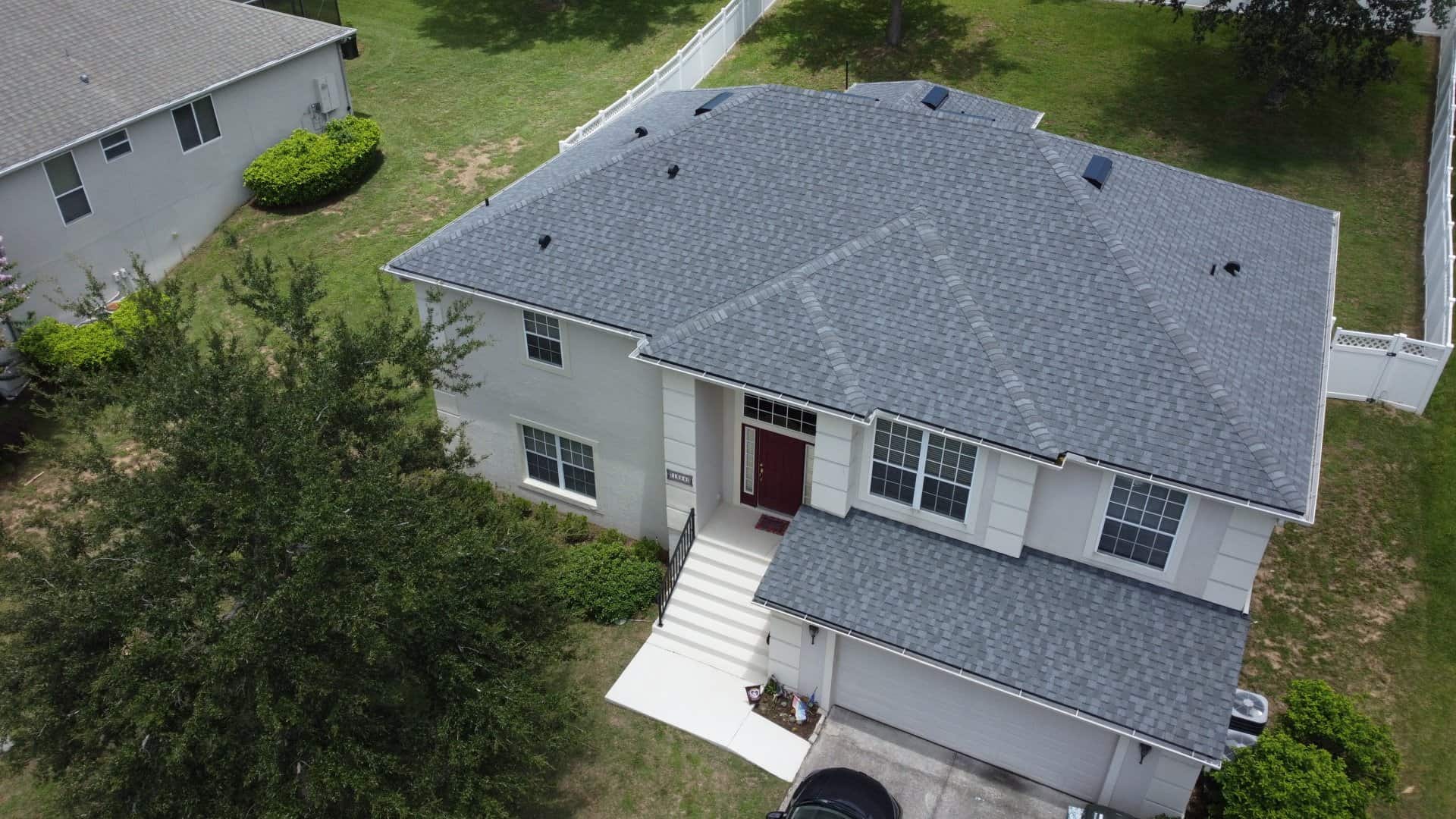
Architectural shingles, also called dimensional or laminated shingles, have two layers bonded together. They’re thicker, hold up better to wind and give the roof more depth and shadow. They’re the most common choice on Denver-area homes today.
Impact-resistant shingles are built to take a harder hit before they crack or bruise. The ones rated Class 4 under the UL 2218 impact test are the top rating. They cost more upfront, but in a place where hail comes through most years, many homeowners decide they’re worth it. If you’re considering them, ask your insurance agent whether your policy treats them differently.
What goes into an asphalt shingle roof
The shingles are the part you see, but a shingle roof is a system, and the parts under the shingles do a lot of the work.
The deck. Plywood or OSB boards that everything is nailed to. Soft, rotted or delaminated sections get replaced before anything goes on top.
Ice-and-water barrier. A sticky, waterproof membrane along the eaves and in the valleys. In Denver, this is what keeps water out when snow melts, refreezes at the roof edge and backs up under the shingles.
Underlayment. A layer of felt or synthetic material over the rest of the deck, a backup in case water gets past the shingles.
Drip edge and starter strip. Metal at the edges directs water into the gutters, and a starter row seals down the first course of shingles so wind can’t catch them.
Flashing. Metal at walls, chimneys and valleys. It should be new or properly reworked on a replacement, not just caulked over.
Ridge cap. Thicker shingles that finish the peak, where wind comes from both sides.
How Denver weather ages asphalt shingles
The sun is stronger at altitude, and UV dries out the asphalt and wears away the granules that protect it. Once the granules thin out, shingles age much faster. That’s why granules in your gutters are worth paying attention to.
Hail bruises shingles, crushing the mat under the granules. A bruise may not leak right away, but that spot ages faster and eventually cracks. Wind lifts shingle edges and can break the seal strip that glues each course down, leaving shingles that flap in the next storm.
Cold matters too. Shingles have a heat-activated seal strip, and on a roof installed in cold weather the strips may not bond until the sun warms them. Careful installers account for that in cold months, sometimes by hand-sealing shingles in spots that need it.
Repair or replace an asphalt shingle roof?
A shingle roof repair makes sense when the damage is limited to a few areas: some missing or creased shingles, a cracked pipe boot or loose flashing on a roof that’s otherwise in good shape. Replacement makes more sense when shingles are curling, cracking or losing granules across the whole roof, when hail bruised every slope or when leaks keep coming back.
You’ll see photos of what’s going on and hear the reasoning either way. If replacement is the answer, our shingle roof installation page walks through what the install looks like.
If hail or wind caused the damage and you choose to file an insurance claim, you file it yourself and pay your own deductible. APC Roofing documents the damage, provides a written estimate and works with your adjuster.
How it works with APC Roofing
- Book your free inspection. Call 720-902-6940 or request a free online estimate.
- Get a clear, honest assessment and estimate. You’ll get photos, a plain explanation of what you’re looking at and a written estimate with shingle options.
- Your roof gets done and the site gets cleaned up. Many residential shingle roofs are installed in a single day, and the crew cleans up before leaving.
Financing is available through Aqua Finance, Fortifi, Hearth and Home Run Finance if you’d like to spread out the cost.
Asphalt shingle questions from Denver-area homeowners
Can asphalt shingles be installed in winter around Denver?
Yes, on mild enough days. Shingles get stiffer in the cold, and the seal strips need warmth to bond, so cold-weather installs take extra care. Your estimate will cover timing.
Do impact-resistant shingles stop all hail damage?
No shingle is hail-proof. Impact-resistant shingles take a much harder hit before they’re damaged, but very large hail can still damage them.
Why are there granules in my gutters?
A few granules are normal on a new roof. A steady pile, especially after a hailstorm or on an older roof, means the shingles are losing their protective layer and are worth having checked.
Can new shingles go over my old ones?
Sometimes, but a tear-off is usually the better choice. It lets the deck be inspected and repaired, and it lets the ice barrier and flashing be done properly.
A shingle roof you can stop worrying about
An aging shingle roof doesn’t usually fail all at once. It leaks a little, then a little more, and by the time the ceiling stains, the decking may be soft. Getting ahead of it keeps your options open.
Call 720-902-6940 to book your free inspection. The goal is a sound roof, a dry house, no surprise bill and the confidence that you picked the right shingle for where you live. You can see all our services on the Denver metro roofing page.